Rubella is a contagious systemic viral infection that may cause a short-lived generalized rash, swollen lymph nodes and mild systemic symptoms, although some infected people have few or no noticeable symptoms. The illness is sometimes called German measles, but rubella and measles are caused by different viruses and are separate diseases.
The virus spreads through respiratory secretions, and suspected infection is more reliably confirmed with laboratory testing than by rash appearance alone. Most uncomplicated illness is managed supportively, but pregnancy changes the risk dramatically because maternal infection—especially early in pregnancy—can cause miscarriage, fetal loss or congenital rubella syndrome.
Medical disclaimer: This article is for educational purposes only. Suspected rubella during pregnancy or after a significant exposure requires prompt medical assessment.
What Is Rubella and What Does the Rash and Illness Look Like?
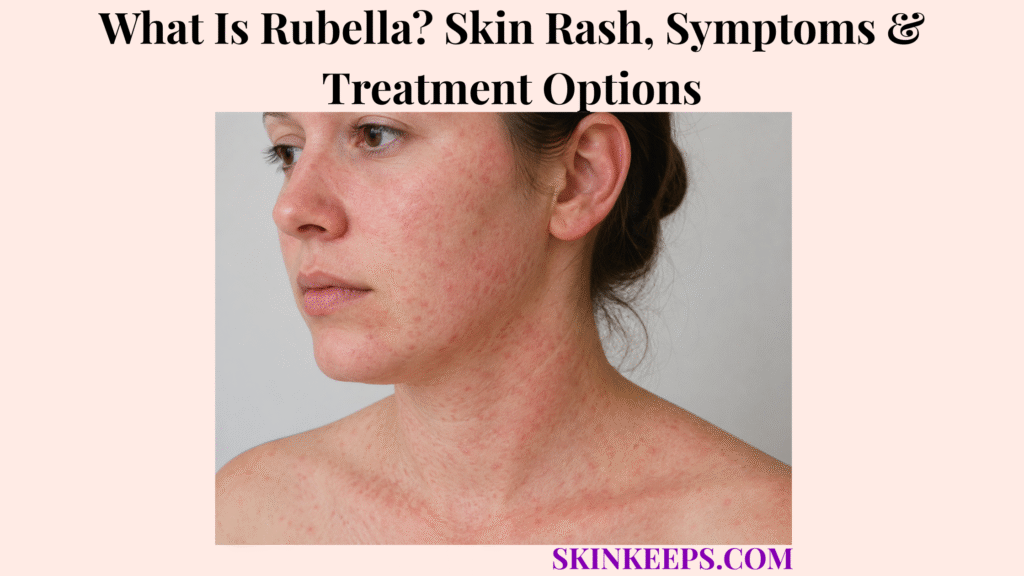
Rubella is a systemic viral infection that can cause a fine generalized rash, mild fever, swollen lymph nodes and other relatively mild symptoms, while some infections cause no obvious illness at all. Because the rash overlaps with many other illnesses, its appearance is useful for recognition but not sufficient for confirmation.
What Virus Causes Rubella?
Rubella is caused by rubella virus, which initially infects through respiratory exposure and then spreads systemically. The resulting immune response can produce fever, lymph-node enlargement, respiratory symptoms and a rash, although the visible features vary from person to person.
Is Rubella the Same as Measles?
No; rubella and measles are distinct viral infections even though rubella has historically been called German measles. Their causes, clinical patterns and public-health management are not interchangeable.
What Does the Rubella Rash Look Like and Where Does It Spread?
The rubella rash usually begins on the face and then spreads quickly to the neck, trunk and extremities as a fine maculopapular eruption. In typical symptomatic cases it can become generalized within about 24 hours and is usually short-lived, often lasting around three days. Color can appear pink or red on lighter skin and may be subtler, darker or less visually obvious on deeper skin tones, so distribution and associated symptoms matter more than one expected shade.
What Symptoms Can Occur With or Before the Rash?
Rubella can cause low-grade fever, headache, sore throat, runny nose, mild conjunctivitis and characteristic lymph-node swelling before or alongside the rash. Posterior auricular and suboccipital lymph nodes are useful clinical clues. Adults—especially women—may develop arthralgia or arthritis, while some infected people remain asymptomatic.
How Does Rubella Spread and When Is Someone Contagious?
Rubella spreads mainly through infected respiratory secretions and can be transmitted before the rash appears as well as after it develops. This means visible-rash avoidance alone cannot fully prevent transmission.
How Do Respiratory Droplets Spread Rubella?
Rubella can pass through respiratory secretions during coughing, sneezing or close contact with an infected person. A susceptible person can become infected after exposure to virus-containing nasopharyngeal secretions.
When Is Someone With Rubella Contagious?
A person with rubella can transmit the virus from roughly seven days before the rash appears until about seven days after rash onset. Infectiousness is greatest around the time the rash is erupting, but the transmission window extends beyond the visibly obvious stage.
Can Rubella Spread Before the Rash Appears?
Yes; rubella can spread before visible rash onset, so transmission prevention cannot rely on waiting until someone looks obviously ill. This presymptomatic spread is one reason suspected cases should be handled with public-health awareness.
Can Someone Without Symptoms Still Spread Rubella?
Yes; asymptomatic rubella infection can still be transmissible, which is one reason vaccination is more reliable than symptom-based avoidance alone. A lack of rash or fever does not guarantee that exposure was harmless.
How Is Rubella Diagnosed and Distinguished From Other Rash Illnesses?
Rubella cannot be reliably diagnosed from rash appearance alone, so suspected cases require clinical assessment plus appropriate laboratory confirmation. Exposure, vaccination history, travel context and the overall symptom pattern help determine how strongly rubella should be considered.
Why Is the Rubella Rash Not Enough for Diagnosis?
The rubella rash overlaps with many other viral and inflammatory eruptions, while some rubella infections produce no rash at all. A fine facial-to-generalized rash may raise suspicion, but visual recognition by itself is not specific enough for confirmation.
Which Laboratory Tests Can Confirm Suspected Rubella?
Laboratory confirmation may use rubella viral RNA testing such as RT-PCR together with appropriately interpreted serology and epidemiologic context. Test timing matters because different methods answer different questions about current infection and prior immunity.
What Is the Difference Between Rubella IgM and IgG?
Rubella IgM may support evaluation of recent infection, while IgG is mainly used to assess previous immunity from vaccination or past infection. IgM should not be interpreted in isolation as automatic proof of acute rubella because timing, vaccination history, exposure and other laboratory evidence can change its meaning.
What Conditions Can Resemble Rubella?
Measles, parvovirus B19 infection, roseola, scarlet fever, medication eruptions and other viral exanthems can resemble rubella. These differentials matter because a similar-looking rash can have a different cause, risk profile and management pathway.
How Is Rubella Treated and Managed?
Uncomplicated rubella has no specific antiviral treatment, so management is mainly supportive while transmission is reduced through isolation and appropriate public-health measures. Clinical care focuses on comfort, hydration, observation and identification of complications or high-risk exposure.
Is There a Specific Antiviral Treatment for Rubella?
No; there is currently no specific antiviral therapy for uncomplicated rubella infection. Antibiotics also do not treat the virus itself.
How Is Uncomplicated Rubella Managed?
Most uncomplicated rubella is managed with supportive care such as rest, adequate fluids and clinician-appropriate symptom relief while the immune system clears the infection. Medical advice remains important when symptoms are atypical, severe or occurring in a high-risk setting.
Why Is Isolation Part of Rubella Treatment?
Isolation helps prevent rubella transmission to susceptible people, especially pregnant people who face much greater risk from infection. Current CDC clinical guidance recommends isolating people with rubella for seven days after rash onset, while local public-health instructions may add context for specific settings.
When Do Rubella Complications Need Additional Treatment?
Serious neurologic, bleeding or other unusual complications require medical assessment and complication-specific care rather than routine home management. Worsening illness, unusual bleeding, severe headache, neurologic symptoms or pregnancy exposure should move care beyond simple supportive management.
Why Is Rubella Dangerous During Pregnancy, and How Can Infection Be Prevented?
Rubella is especially dangerous during pregnancy because maternal infection—particularly early in pregnancy—can disrupt fetal development and cause miscarriage, fetal death or congenital rubella syndrome. This pregnancy risk is the most important reason suspected exposure must be taken seriously even when the mother has mild or no symptoms.
How Can Rubella During Pregnancy Affect the Baby?
Maternal rubella can cross to the fetus and cause severe developmental injury, with risk greatest when infection occurs early in pregnancy. Possible outcomes include miscarriage, stillbirth or lifelong congenital abnormalities affecting hearing, vision, the heart and development.
What Is Congenital Rubella Syndrome?
Congenital rubella syndrome occurs when maternal rubella infection affects fetal development and can cause lifelong multisystem abnormalities. Recognized problems include hearing impairment, cataracts or other eye disease, congenital heart defects, developmental or intellectual disability and liver or spleen abnormalities.
What Should Someone Do After Rubella Exposure During Pregnancy?
A pregnant person with suspected rubella exposure or illness should contact a healthcare professional promptly rather than waiting to see whether a rash develops. Assessment may consider vaccination history, immunity, exposure timing and appropriate laboratory testing.
How Does MMR Vaccination Prevent Rubella?
MMR vaccination is the main prevention strategy because population immunity reduces both rubella transmission and the risk of congenital rubella syndrome. MMR is not recommended during pregnancy. It also should not be presented as treatment for rubella already acquired; CDC guidance notes that it is not effective as rubella post-exposure prophylaxis, although vaccination after exposure may protect against future exposure when medically appropriate.
What Should You Remember About Rubella?
Rubella is a contagious systemic viral infection that is often mild or asymptomatic but requires accurate diagnosis and transmission control because infection during pregnancy can cause severe fetal harm. The core sequence is to recognize a compatible illness, consider exposure and immunity, isolate a suspected case, confirm the diagnosis, manage supportively and protect pregnant contacts.
- Rubella is caused by rubella virus and is not the same disease as measles.
- Some infections are asymptomatic, so no rash does not exclude rubella.
- A typical rash starts on the face, spreads quickly and is usually short-lived.
- Posterior auricular and suboccipital lymph-node swelling can be useful clues.
- Respiratory secretions spread rubella before and after rash onset.
- Clinical appearance alone is unreliable; laboratory confirmation matters.
- RT-PCR/RNA testing and correctly interpreted serology can support diagnosis.
- IgM and IgG answer different questions and should not be treated as interchangeable.
- There is no specific antiviral treatment for uncomplicated rubella.
- Pregnancy—especially early pregnancy—creates the highest risk for severe fetal harm.
- MMR vaccination is the main prevention strategy and is not given during pregnancy.
Frequently Asked Questions About Rubella
The main rubella questions concern measles confusion, rash absence, contagiousness, treatment and pregnancy risk.
Is Rubella the Same as Measles?
No; rubella and measles are separate viral diseases even though rubella has historically been called German measles.
Does Rubella Always Cause a Skin Rash?
No; rubella can cause very mild or completely asymptomatic infection, so absence of rash does not exclude it.
How Long Is Someone With Rubella Contagious?
Rubella can generally be transmitted from about seven days before rash onset until roughly seven days afterward.
Is There a Specific Treatment or Cure for Rubella?
There is no specific antiviral treatment for uncomplicated rubella, so care is usually supportive while the infection resolves.
Why Is Rubella Dangerous During Pregnancy?
Rubella during pregnancy can infect the developing fetus and cause miscarriage, fetal death or congenital rubella syndrome, especially when infection occurs early in pregnancy.
CDC — Clinical Overview of Rubella
Used for clinical features, asymptomatic infection, contagious period, isolation, diagnosis limits and treatment overview.
CDC — Rubella Symptoms and Complications
Used for rash progression, lymph-node swelling, adult joint symptoms and serious complications.
CDC — Laboratory Testing for Rubella
Used for RT-PCR/RNA testing and the distinct roles of IgM and IgG.
CDC — Pregnancy and Rubella
Used for pregnancy urgency, congenital rubella syndrome and MMR pregnancy safety.
World Health Organization — Rubella Fact Sheet
Used for global prevention, vaccination and congenital rubella syndrome context.