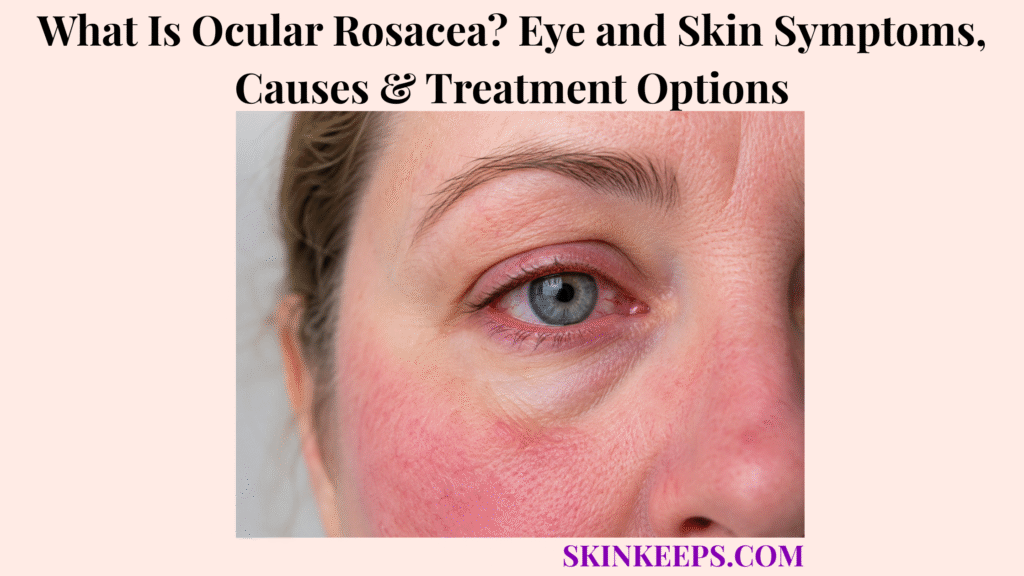
Ocular rosacea is the eye and eyelid manifestation of rosacea, commonly causing chronic burning, grittiness, dryness, redness and eyelid inflammation through meibomian-gland and tear-film dysfunction. Symptoms can include stinging, watering, foreign-body sensation and fluctuating or blurred vision, while rosacea-associated blepharitis and meibomian-gland dysfunction are major examination clues.
Facial rosacea can be obvious, subtle or not yet recognized when eye disease begins, and ocular severity does not reliably match facial severity. Most disease can be controlled with ongoing care, but significant pain, marked photophobia or declining vision can indicate corneal involvement and changes the urgency from routine symptom management to prompt ophthalmologic assessment.
This article is for educational purposes only and does not constitute medical advice, diagnosis, or treatment. Significant eye pain, marked light sensitivity, sudden or worsening blurred vision, reduced vision, a very painful or rapidly worsening red eye, or suspected corneal ulceration should be evaluated promptly by an ophthalmologist or other qualified healthcare professional because severe ocular rosacea can involve the cornea and threaten vision.
How Can You Recognize Ocular Rosacea?
Ocular rosacea commonly causes chronic burning, stinging, dryness, grittiness, watering or redness together with eyelid-margin inflammation and meibomian-gland dysfunction.
What Do Ocular Rosacea Symptoms Feel Like?
Ocular rosacea can cause burning, stinging, dryness, grittiness, foreign-body sensation, itching, watering, redness, light sensitivity and fluctuating or blurred vision.
Symptoms can vary from mild irritation to persistent discomfort and can fluctuate from day to day. Blurring may vary with tear-film instability, so temporary visual fluctuation does not necessarily mean permanent vision loss.
One symptom alone is not diagnostic because ordinary dry eye, allergy, infection and other forms of blepharitis can overlap.
What Happens to the Eyelids and Meibomian Glands?
Ocular rosacea commonly causes blepharitis and meibomian-gland dysfunction, producing inflamed eyelid margins, abnormal oil secretion and faster tear evaporation.
The eyelid margins can become red, swollen or crusted and may show visible telangiectasia. Meibomian gland openings can become plugged, and their normally clear oily secretion can become thicker or turbid.
Meibomian-gland dysfunction weakens the lipid layer of the tear film, increasing evaporation and producing evaporative dry-eye symptoms.
Can Ocular Rosacea Cause Recurrent Styes or Chalazia?
Yes; chronic obstruction and inflammation of eyelid glands can contribute to recurrent styes or chalazia.
Repeated hordeola or chalazia become more diagnostically useful when they occur together with chronic lid-margin inflammation, meibomian dysfunction, dry-eye symptoms or compatible facial rosacea. A single stye does not establish ocular rosacea.
Can Ocular Rosacea Occur Without Obvious Facial Rosacea?
Yes; ocular rosacea can be clinically prominent even when facial redness is subtle or the skin disease has not yet been recognized.
Associated rosacea can produce central facial colour change, flushing, telangiectasia, papules, pustules, burning or sensitivity, but none must be dramatic before eye disease is recognized.
Eye severity does not reliably mirror facial severity, so mild facial findings cannot safely be used to judge the seriousness of ocular disease.
Figure 1. Ocular rosacea is recognized by eyelid-margin inflammation, meibomian-gland dysfunction and tear-film symptoms rather than dryness alone.
Why Does Ocular Rosacea Develop, and What Can Trigger Flares?
The exact cause of ocular rosacea is not fully understood, but inflammatory, vascular, neurovascular, environmental and microbial factors can contribute to eyelid and ocular-surface disease.
How Does Meibomian-Gland Dysfunction Create Dry-Eye Symptoms?
Inflamed or obstructed meibomian glands produce an inadequate or abnormal oily tear layer, allowing tears to evaporate more quickly and exposing the ocular surface to irritation.
The practical mechanism is meibomian dysfunction → deficient tear lipid → faster evaporation → dryness and irritation → more ocular inflammation. Chronic inflammation can then further impair gland function and make the cycle self-sustaining.
Do Demodex Mites or Bacteria Cause Ocular Rosacea?
Demodex and altered eyelid microbial factors may contribute to inflammation in some patients, but neither should be presented as the single proven cause of ocular rosacea.
Demodex density and chronic blepharitis can overlap with rosacea, and microbial factors may influence local immune activation. The disease itself remains a multifactorial chronic inflammatory disorder rather than simply a bacterial or mite infection.
The use of antibiotics in ocular rosacea can reflect anti-inflammatory effects as well as selected antimicrobial effects, so antibiotic response does not prove that bacteria are the sole cause.
Which Triggers Can Worsen Ocular or Facial Rosacea?
Rosacea flares can be worsened by individual triggers such as sun exposure, heat, emotional stress, alcohol, spicy foods and temperature extremes.
Wind, strenuous exercise and selected topical exposures can also aggravate some patients. Trigger identification should be personal rather than based on a universal avoidance list or an unnecessarily restrictive diet.
Can Skin Rosacea and Eye Rosacea Flare at Different Times?
Yes; ocular inflammation and facial rosacea can fluctuate independently, so mild skin disease does not reliably indicate mild eye disease.
The eyes should therefore be assessed according to ocular findings rather than facial appearance alone, and treatment intensity should follow eyelid, tear-film and corneal disease severity.
Figure 2. Meibomian inflammation or obstruction weakens the tear-film lipid layer, increasing evaporation and ocular-surface irritation that can further worsen gland dysfunction.
How Is Ocular Rosacea Distinguished and Diagnosed?
Ocular rosacea is diagnosed clinically by combining eye symptoms with eyelid, meibomian-gland, tear-film and facial findings while excluding other common causes of chronic red or irritated eyes.
How Is Ocular Rosacea Different From Ordinary Dry Eye or Blepharitis?
Ocular rosacea becomes more likely when chronic dry-eye symptoms occur with meibomian-gland dysfunction, eyelid-margin inflammation or telangiectasia, recurrent styes or chalazia and compatible facial rosacea.
Ordinary dry eye can produce burning, grittiness and fluctuating vision without rosacea. Tear instability therefore belongs inside the ocular-rosacea pattern but does not define it by itself.
Blepharitis has several possible causes, while rosacea-associated blepharitis often has a strong posterior or meibomian component with thickened secretions, plugged gland openings and lid-margin vascular change.
How Is Ocular Rosacea Different From Allergy or Recurrent Conjunctivitis?
Allergic conjunctivitis typically emphasizes itching and allergic context, while ocular rosacea more characteristically combines burning, dryness, meibomian disease and chronic eyelid inflammation.
Repeated episodes labelled “conjunctivitis” deserve reconsideration when redness, watering and irritation recur without a clear infectious cause and coexist with blepharitis, MGD, lid telangiectasia or facial rosacea.
Overlap is possible, so chronic redness should not automatically be reclassified as ocular rosacea without examination.
Is There a Specific Test for Ocular Rosacea?
No; there is no single laboratory test that confirms ocular rosacea, so diagnosis depends mainly on history and examination of the eyes, eyelids and facial skin.
The history looks for recurrence, chronic burning or grittiness, rosacea features, eyelid problems and individualized triggers. Examination assesses lid margins, meibomian glands, tear-film quality, conjunctiva and facial skin.
What Does the Eye Examination Look For, and When Is Ophthalmology Needed?
Eye examination looks for lid-margin inflammation, meibomian dysfunction, tear-film instability, conjunctival inflammation and corneal damage, with ophthalmology becoming essential when disease is persistent, moderate-to-severe or potentially sight-threatening.
Slit-lamp assessment can identify eyelid telangiectasia, obstructed gland openings, abnormal secretions, tear-film instability, conjunctival inflammation, corneal staining, epithelial defects or keratitis.
Substantial eye pain, marked photophobia, worsening or reduced vision, severe redness or suspected corneal disease should move directly toward prompt ophthalmologic assessment rather than routine dry-eye treatment.
Figure 3. Significant persistent ocular rosacea warrants slit-lamp assessment, while pain, marked photophobia or visual decline should prompt ophthalmology.
How Is Ocular Rosacea Treated?
Ocular rosacea treatment usually begins with consistent eyelid care and tear-film support, then adds prescription ocular or systemic anti-inflammatory therapy according to severity and response.
Why Are Warm Compresses, Eyelid Hygiene and Artificial Tears First-Line Foundations?
Warm compresses and gentle eyelid hygiene support meibomian-gland function, while lubricating eye drops reduce dryness, burning and gritty discomfort.
Warmth can soften thickened meibomian secretions and support gland drainage. Gentle eyelid hygiene removes debris and supports lid-margin health.
Artificial tears support the ocular surface and reduce friction. Eye-appropriate products should be used rather than ordinary skin cleansers or facial rosacea medicines placed near or inside the ocular surface without guidance.
When Are Prescription Eye Treatments Used?
Prescription ophthalmic treatment is used when supportive care does not adequately control ocular-surface or eyelid inflammation.
Selected patients can benefit from cyclosporine ophthalmic therapy for persistent ocular-surface inflammation. Ophthalmic antibiotic treatment can be used for selected lid-margin disease or bacterial burden without implying that ocular rosacea is fundamentally an infection.
Only medications formulated for ocular use should be placed in or around the eye when indicated.
When Is Oral Doxycycline Used, and What About Steroid Eye Drops?
Oral doxycycline is an important systemic option for more significant or treatment-resistant eyelid and meibomian inflammation, while ocular corticosteroids require eye-care supervision because of their potential complications.
Doxycycline is used partly for anti-inflammatory effects in rosacea-associated MGD and should be prescribed according to the patient’s medical context rather than from a universal self-directed dose.
Ocular corticosteroids can suppress significant inflammation but can raise intraocular pressure and cause other complications, so they belong in a short, supervised ophthalmic treatment context rather than routine self-treatment.
Can IPL or Treatment of Facial Rosacea Improve Overall Control?
IPL is an increasingly supported specialist option for selected rosacea-associated meibomian-gland dysfunction, while controlling facial rosacea can support comprehensive disease management.
In experienced hands, intense pulsed light may improve gland function and periocular inflammation in selected patients with persistent MGD. It remains a specialist option rather than a universal first-line cure.
Associated facial rosacea is managed in parallel with gentle skin care, sun protection and phenotype-directed dermatologic treatment, but facial treatment should not replace direct ocular management.
Figure 4. Treatment starts with eyelid and tear-film care, then escalates through prescription ophthalmic or systemic therapy; selected refractory MGD may be considered for IPL.
What Complications Can Ocular Rosacea Cause, and How Is It Managed Long Term?
Severe ocular rosacea can progress from chronic eyelid and tear-film inflammation to keratitis, corneal neovascularization, ulceration or thinning, making pain, photophobia and declining vision important warning signs.
How Can Ocular Rosacea Damage the Cornea?
Persistent ocular-surface inflammation can cause keratitis and, in more severe disease, corneal infiltrates, abnormal blood-vessel growth, ulceration, thinning and rarely perforation.
The progression is conceptual rather than inevitable: chronic ocular-surface inflammation can injure the corneal epithelium, which can progress to keratitis and structural corneal disease in severe cases.
Most ocular rosacea does not progress to these complications when recognized and managed appropriately.
Which Symptoms Suggest Urgent Corneal Involvement?
Significant eye pain, marked light sensitivity, persistent or sudden worsening of vision, severe redness or rapid deterioration should prompt urgent ophthalmologic assessment.
Severe unilateral redness, visible corneal abnormality or worsening despite treatment also raises concern. These symptoms should not be treated as routine dry-eye discomfort because corneal injury can threaten vision.
Can Ocular Rosacea Be Permanently Cured?
No definitive permanent cure currently exists for rosacea, but ocular symptoms can often be controlled effectively with maintenance eyelid care, trigger management and treatment adjusted to disease activity.
Rosacea is chronic and can recur after periods of good control. Neither doxycycline nor IPL should be framed as a guaranteed permanent cure.
Why Does Long-Term Follow-Up Matter?
Long-term follow-up helps detect persistent meibomian dysfunction, tear-film instability and recurrent or progressive corneal inflammation before complications become more difficult to manage.
Follow-up tracks eyelid health, tear-film stability, symptom burden, treatment response and the cornea. Closer ophthalmic monitoring becomes especially important after previous keratitis, corneal disease or recurrent visual symptoms.
What Should You Remember About Ocular Rosacea?
Ocular rosacea is a chronic inflammatory eye-and-eyelid manifestation of rosacea in which meibomian-gland dysfunction and tear-film instability can produce persistent irritation and, in severe cases, vision-threatening corneal disease.
- Ocular rosacea affects the eyes and eyelids.
- Burning, grittiness, dryness and redness are common.
- Blepharitis and meibomian-gland dysfunction are central.
- Tear evaporation contributes to symptoms.
- Recurrent styes or chalazia can be clues.
- Facial rosacea may be obvious or subtle.
- Eye disease may appear before skin disease is recognized.
- Eye and skin severity can differ.
- Demodex may contribute but is not the sole cause.
- Ocular rosacea is inflammatory rather than simply infectious.
- Diagnosis is clinical.
- Slit-lamp examination checks the ocular surface and cornea.
- Warm compresses, lid hygiene and artificial tears are foundational.
- Prescription ophthalmic or systemic treatment may be needed.
- Ocular steroids require supervision.
- IPL remains selected rather than universal.
- Pain, photophobia and declining vision require prompt eye care.
- Long-term maintenance may be needed.
Recognize → Inspect eyelids/MGD → Check facial rosacea → Distinguish common mimics → Restore tear-film function → Escalate treatment by severity → Protect the cornea → Maintain long-term control.
Frequently Asked Questions About Ocular Rosacea
The most important ocular-rosacea questions concern early symptoms, disease without obvious facial redness, dry-eye differentiation, treatment and the risk of corneal damage.
What Are the First Signs of Ocular Rosacea?
Early ocular rosacea often causes burning, grittiness, dryness, watering or redness together with subtle eyelid-margin inflammation or meibomian-gland dysfunction. Recurrent styes or chalazia and fluctuating vision can provide additional clues.
Can Ocular Rosacea Occur Without Facial Rosacea?
Yes; ocular rosacea can be significant even when facial rosacea is subtle or has not yet been recognized. Eye severity and skin severity do not necessarily match.
How Is Ocular Rosacea Different From Ordinary Dry Eye or Blepharitis?
Ocular rosacea is more likely when dry-eye or blepharitis symptoms occur with chronic meibomian dysfunction, eyelid vascular changes, recurrent styes or compatible facial rosacea. Ordinary dry eye can overlap without the full rosacea pattern.
Which Treatments Are Used for Ocular Rosacea?
Treatment commonly begins with warm compresses, eyelid hygiene and ocular lubrication, with prescription eye therapy, oral doxycycline or selected procedures added when disease is more significant. Only eye-appropriate medicines should be used in the ocular treatment pathway.
Can Ocular Rosacea Damage Eyesight?
Yes; severe ocular rosacea can damage the cornea through keratitis, neovascularization, ulceration or thinning and can threaten vision if not treated appropriately. Pain, photophobia or declining vision requires prompt ophthalmologic assessment.
Which Sources Support This Ocular Rosacea Guidance?
2025 Review — Ocular Rosacea: An Updated Review — Used for chronic inflammatory ocular rosacea, skin-eye severity mismatch, blepharitis/MGD, tear-film instability, systemic treatment and corneal complications.
American Academy of Ophthalmology EyeWiki — Ocular Rosacea — Used for symptoms, lid-margin telangiectasia, MGD, recurrent chalazia, evaporative dry eye, slit-lamp findings and corneal complications.
American Academy of Dermatology — Rosacea Diagnosis and Treatment — Used for warm compresses, eyelid hygiene, artificial tears, ophthalmic antibiotics, cyclosporine eye drops, doxycycline, IPL and ophthalmology referral when eyesight is threatened.
American Academy of Ophthalmology EyeWiki — Blepharitis — Used specifically for posterior blepharitis/MGD, obstructed gland openings, thickened secretions and tear-film instability.
American Academy of Ophthalmology EyeWiki — Intense Pulsed Light Therapy — Used specifically to frame IPL as a selected specialist treatment rather than a universal first-line cure.