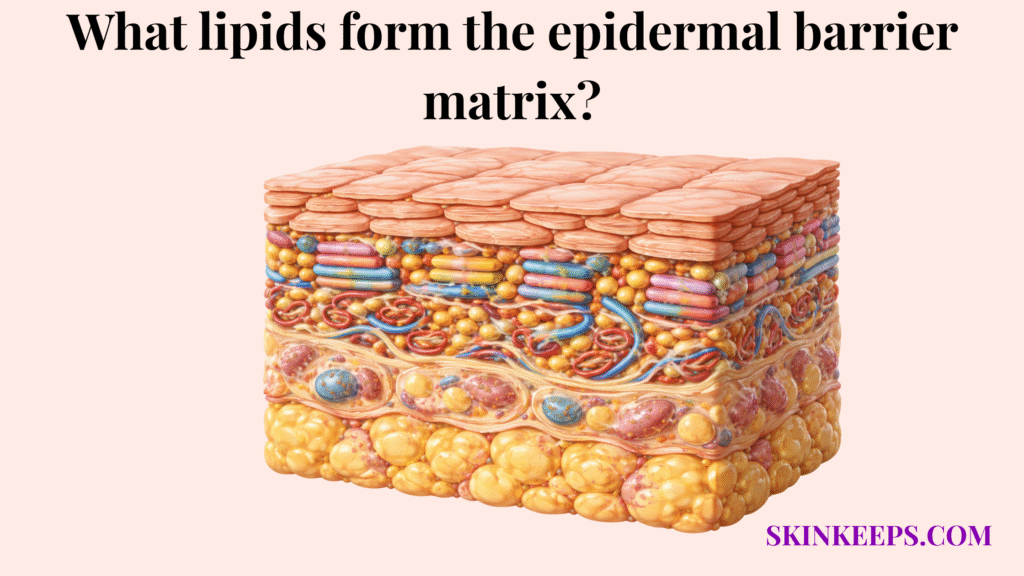
The epidermal barrier matrix is formed primarily by ceramides, cholesterol, and free fatty acids arranged between the outer skin cells of the stratum corneum. Together, these lipids create the skin’s waterproof seal, helping reduce transepidermal water loss and limiting the entry of irritants. The role of these three main lipid classes and their lamellar organization is described consistently in major barrier reviews.
A damaged skin barrier cannot be fixed by hydration alone. If the lipid matrix is depleted or disorganized, the skin may feel tight, sting more easily, lose water faster, and become more reactive to cleansers, weather, and active ingredients. Lipid-replenishing products are a standard part of skin care for eczema-prone barrier dysfunction, which supports the broader repair logic of this article.
Understanding what the epidermal barrier matrix is made of makes product selection much easier. The sections below explain where these lipids sit, how they work together, what a compromised matrix looks like, when to switch into repair mode, and how to rebuild the barrier with smarter topical choices.
Quick Answers to Common Questions About the Epidermal Barrier Matrix
To provide immediate clarity, this section answers the most common questions about the epidermal barrier matrix using concise, clinically grounded explanations.
What is the epidermal barrier matrix?
The epidermal barrier matrix is the lipid system that sits between corneocytes in the stratum corneum and helps the skin act like a seal. It forms the essential “mortar” around the outer skin cells, holding them together to maintain a stable, resilient surface structure.
What lipids form the barrier matrix?
The epidermal barrier matrix is formed mainly by ceramides, cholesterol, and free fatty acids. These three primary lipid classes do not operate independently; they organize together to build the highly structured lamellar layers required to sustain the skin’s daily defensive functions.
Why does the barrier matrix matter?
The barrier matrix matters because it helps reduce water loss and limits the entry of irritants. A functional barrier depends entirely on this dense physical structure, proving that healthy skin relies on cohesive architecture rather than simply temporary softness or surface hydration.
What does a compromised matrix feel like?
A compromised matrix often feels tight, reactive, dry, stinging, or flaky, especially after cleansing or active-product use. This distinct pattern of discomfort strongly indicates that the protective lipids have become depleted or disorganized, leaving the underlying tissue exposed and highly vulnerable to stress.
What is the epidermal barrier matrix and where does it sit in the skin?
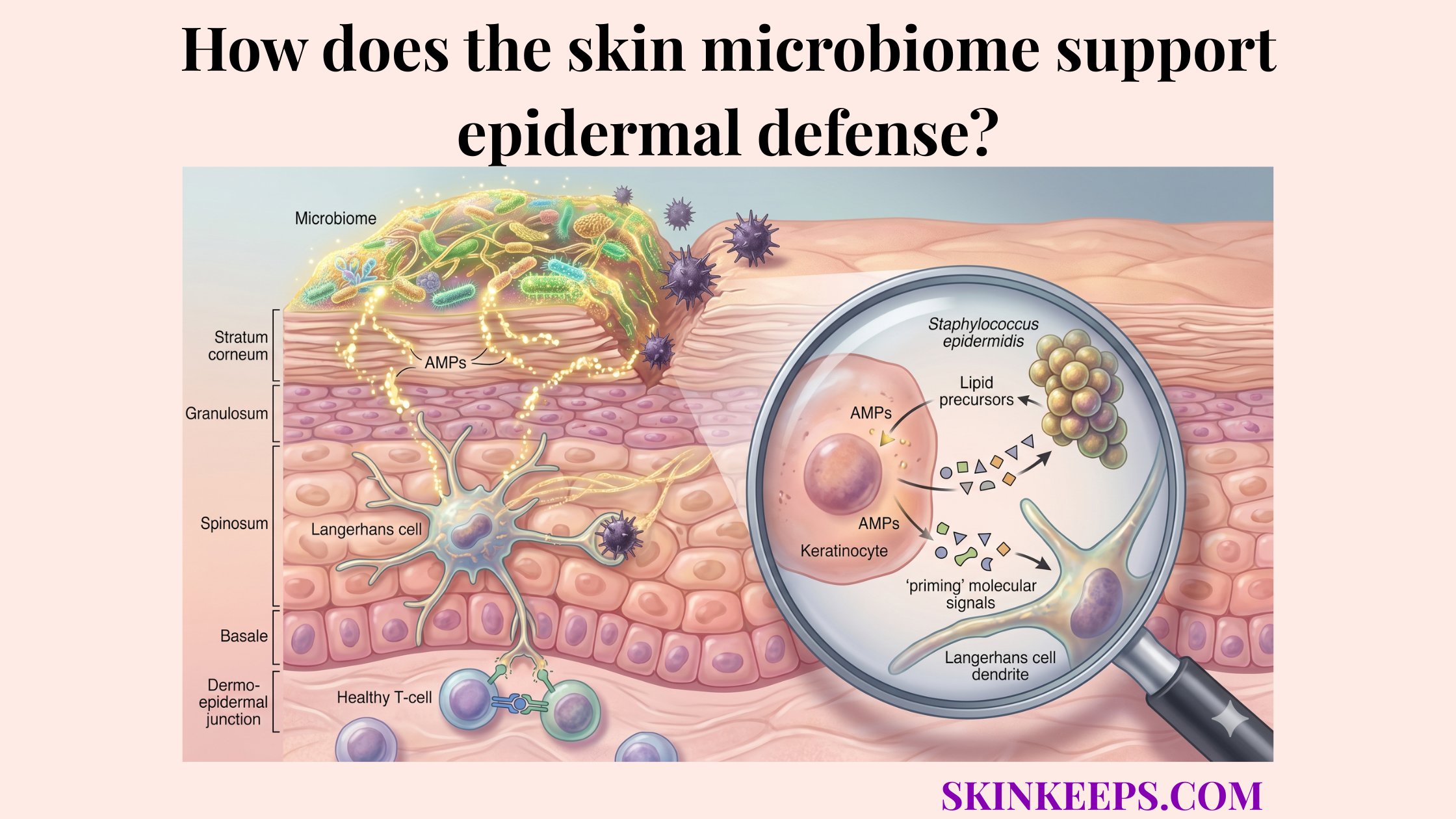
The epidermal barrier matrix sits in the stratum corneum, the outermost part of the epidermis, where it surrounds corneocytes and functions like the “mortar” in the classic brick-and-mortar model.
In this anatomical framework, the hardened, protein-rich corneocytes act as the solid “bricks.” Understanding how corneocytes limit water evaporation in the epidermis helps clarify why the lipid matrix completely surrounds these cells, acting as the flexible but impermeable “mortar” that binds the entire structure together into a continuous protective sheet.
It is crucial to clarify that the core barrier problem usually sits between the outer skin cells, not simply resting on top of them. While surface oils provide some temporary comfort, true barrier integrity relies on the deep organization of the stratum corneum lipid matrix itself.
- The Bricks → Corneocytes
- The Mortar → Epidermal barrier matrix
- The Main Lipids → Ceramides, cholesterol, free fatty acids
Key Takeaway: Before you can repair the barrier, you need to understand that the problem usually sits between the outer skin cells, not just on top of them.
How does the epidermal barrier matrix work as the skin’s waterproof seal?
The epidermal barrier matrix works as the skin’s waterproof seal by organizing lipids between corneocytes into a tight, water-resistant structure that slows water loss and reduces external penetration.
When this matrix remains intact and perfectly organized, it drastically slows moisture escape from the deeper layers and actively reduces penetration by aggressive external irritants. This bidirectional seal is what keeps the skin internally hydrated and externally calm.
Conversely, when harsh cleansers or environmental stressors strip or disorder this delicate lipid mortar, the skin immediately feels tighter, drier, and significantly more reactive. If you are wondering why barrier disruption increases TEWL in the epidermis, it is simply because without this organized lipid seal, hydration rapidly evaporates and irritants effortlessly slide between the unprotected cells.
Rule: The skin barrier depends on lipid “mortar.”
Reason: Corneocytes need a surrounding lipid seal to hold structure and retain water.
Example: Harsh cleansing can disrupt this mortar and leave the skin tight or stinging.
Key Takeaway: The epidermal barrier matrix is not just about softness. It is the structure that makes the skin function like a seal.
What lipids form the epidermal barrier matrix?
The epidermal barrier matrix is formed mainly by ceramides, cholesterol, and free fatty acids, which together create the lipid system that supports barrier integrity.
Ceramides, cholesterol, and free fatty acids operate as the three core lipid classes responsible for barrier survival. As you explore which layer of the epidermis drives continuous cell renewal, you will discover that these essential lipids are naturally synthesized within the living layers of the epidermis and subsequently secreted into the extracellular spaces to form the protective mortar.
The clinical goal is understanding how this barrier lipid trio functions, not memorizing a rigid percentage split. A healthy matrix relies on their combined synergy rather than isolating one single ingredient as a miracle cure. Major reviews agree on the three main lipid classes and their ordered lamellar organization. Certain formulations use equimolar or physiologic repair mixtures, proving that a healthy barrier relies on the complete ceramide–cholesterol–free-fatty-acid trio rather than one universally fixed natural percentage split [PubMed, 2016].
What do ceramides do in the lipid matrix?
Ceramides are a major structural lipid class in the stratum corneum and help form tightly packed lamellar layers that support barrier integrity. They form the dense backbone of the lipid mortar between corneocytes. When clinical observation reveals reduced ceramide content or altered ceramide organization, it is consistently associated with significantly worse barrier performance and elevated water loss.
What does cholesterol do in the epidermal barrier matrix?
Cholesterol supports membrane organization and barrier flexibility within the epidermal barrier matrix. Without adequate cholesterol, the lipid structure risks becoming too brittle or too disordered to withstand daily facial movement. It works best as part of the trio rather than in isolation, ensuring the seal remains pliable yet secure against environmental friction.
What do free fatty acids do in the lipid matrix?
Free fatty acids help support lamellar organization and contribute to the conditions associated with healthier barrier performance. They act as the vital stabilizing component that helps complete the barrier trio, allowing ceramides and cholesterol to pack tightly together. By supporting the structural packing, they ensure the skin’s waterproof seal remains optimally defensive.
Key Takeaway: The strongest version of this section is not “memorize one percentage.” It is “understand the three core lipid classes and how they work together.”
How do ceramides, cholesterol, and fatty acids work together to reduce water loss and block irritants?
Ceramides, cholesterol, and free fatty acids work together by organizing between corneocytes into lamellar layers that reduce water loss and make irritant penetration more difficult.
Actual barrier performance depends heavily on lipid organization, not just lipid presence. Pouring disorganized oils onto the skin surface provides temporary lubrication, but true resilience requires the lipids to stack into highly ordered, dense sheets.
The trio functions in a precise sequence: ceramides provide the rigid structural order, cholesterol contributes necessary balance and fluidity, and free fatty acids support the dense packing and optimal barrier conditions. When this alignment is achieved, the skin’s defenses solidify.
- Lipids organize between corneocytes
- Lamellar structure becomes more coherent
- Water loss is reduced
- Irritant penetration is harder
- Skin feels calmer, less tight, and more resilient
Key Takeaway: A healthy matrix is not just “more oil.” It is a properly organized lipid system.
How can you tell if your epidermal barrier matrix is compromised?
You can often tell the epidermal barrier matrix is compromised when the skin becomes tight, stings more easily, flakes, reacts more quickly, and does not improve with hydration alone.
Translating barrier compromise into real-life signs makes the problem highly recognizable: your face may feel incredibly tight immediately after patting it dry, or a basic, previously safe moisturizer may suddenly provoke a burning sensation upon application.
These specific reactions strongly suggest that the problem may be severe lipid depletion or deep structural disorganization rather than a simple lack of surface water. The mortar has fractured, leaving the underlying nerves fully exposed.
- Tightness after cleansing
- Stinging when basic products are applied
- Flaking or rough texture
- Increased redness or reactivity
- Dehydrated skin that does not improve with humectants alone
- Reduced tolerance for acids, retinoids, or harsh weather
Key Takeaway: If hydration alone is not enough and the skin is becoming reactive, the problem may be lipid depletion or disorganization in the epidermal barrier matrix.
What is the difference between a healthy lipid matrix and a compromised epidermal barrier matrix?
The difference between a healthy lipid matrix and a compromised epidermal barrier matrix lies in lipid organization, water-retention performance, irritant tolerance, and how the skin looks and feels.
| Matrix status | Lipid condition | Physical appearance | TEWL tendency | Common triggers |
|---|---|---|---|---|
| Healthy epidermal barrier matrix | Well-organized ceramides, cholesterol, and fatty acids | Smooth, comfortable, resilient | Lower | Balanced routine, gentle cleansing |
| Compromised epidermal barrier matrix | Depleted or disorganized lipid matrix | Tight, flaky, reactive, dull | Higher | Harsh cleansers, over-exfoliation, irritation, eczema-prone skin |
Structure, appearance, and trigger patterns must be viewed together to fully understand barrier failure. Tight, reactive flaky skin consistently correlates with a depleted lipid state, confirming that structural disorganization drives visible discomfort.
Key Takeaway: This section works best when the reader can compare structure, appearance, and trigger pattern at a glance.
When should you switch to a barrier-repair routine?
You should switch to a barrier-repair routine when early signs of lipid depletion or barrier disorganization begin to appear, because earlier repair is usually easier than waiting for reactivity to escalate.
Timing matters significantly because persistent irritation is much easier to calm before the barrier becomes fundamentally unstable. Ignoring the early warning signs almost always leads to a compounding cycle of chronic inflammation and severe transepidermal water loss.
The practical timing tiers below map out exactly when to intervene based on the skin’s daily feedback.
When do early signs deserve immediate action?
Early signs deserve immediate action when mild tightness, slight sensitivity, or dull dehydration begin to appear despite routine moisturizing. Do not wait for severe peeling to begin.
Action: Simplify the routine and add barrier-supportive lipids early.
When do moderate signs need a stricter repair phase?
Moderate signs need a stricter repair phase when flaking, stinging, redness, or poor tolerance for actives becomes more persistent. The lipid mortar is actively failing at this stage.
Action: Pause irritating actives, reduce cleansing stress, and prioritize ceramide-cholesterol-fatty-acid support.
When do severe signs need professional input?
Severe signs need professional input when barrier damage keeps recurring or the skin develops cracking, marked inflammation, or persistent burning. Topical skincare has limits when deep tissue inflammation takes over.
Action: Consider dermatologist guidance, especially if the barrier is not recovering with gentler care.
Key Takeaway: The earlier you move into repair mode, the easier it is to calm the skin before reactivity escalates.
How can you rebuild a damaged epidermal barrier matrix with topical skincare?
You can rebuild a damaged epidermal barrier matrix with topical skincare by choosing barrier-supportive formulas that replenish the lipid system rather than relying on hydration alone.
The repair goal is to actively support the compromised matrix with lipids that better match the barrier’s innate biological needs. Smarter topical barrier repair moves beyond simply trapping moisture and focuses on rebuilding the physical architecture.
To execute a true barrier repair routine, you must look closely at how the moisturizer’s ingredient list addresses the core lipid trio.
Which ceramides should you look for on an ingredient label?
You should look for ceramide ingredients in barrier-repair moisturizers because ceramides are central to the matrix itself. Ceramides act as the anchor lipid for recovery. Formulations containing multiple ceramide precursors (like Ceramide NP, AP, or EOP) are usually significantly stronger and more effective than products relying on vague “barrier cream” positioning alone.
Why should cholesterol be present in a true barrier-repair formula?
Cholesterol should be present in a true barrier-repair formula because it belongs to the barrier trio and helps create a more skin-like lipid blend. It must remain distinct from generic plant emollients. A formula packed with ceramides but completely lacking cholesterol or its functional equivalents may ultimately be less complete from a true barrier-mimicking standpoint.
Which fatty acids help complete the repair picture?
Fatty acids help complete the repair picture because they are part of the core barrier trio rather than just generic nourishment. The vital point is whether the product supports the deep lipid matrix, not whether it merely adds surface shine or basic emollience. While squalane is an excellent, comforting emollient, it should not be treated as a direct functional replacement for cholesterol or the core fatty acids inside the barrier trio.
Problem: Tight, reactive, flaky skin
Implication: Lipid matrix may be depleted or disorganized
Solution: Use a gentle routine with barrier-supportive formulas containing ceramides, cholesterol, and fatty acids
What are the key takeaways about the lipids forming your epidermal barrier matrix?
The key takeaways about the epidermal barrier matrix are that it is built mainly from ceramides, cholesterol, and free fatty acids, and that barrier repair works best when skincare supports this lipid system directly.
- The epidermal barrier matrix is built mainly from ceramides, cholesterol, and free fatty acids.
- These lipids work together as the skin’s outer waterproofing and irritant-defense system.
- Barrier repair works better when skincare replenishes the lipid system instead of relying on hydration alone.
Ultimately, lasting barrier repair is fundamentally a lipid-organization problem, not just a surface hydration problem.
What steps can you take to nourish and repair your epidermal barrier matrix today?
You can nourish and repair your epidermal barrier matrix today by reducing stripping behaviors and using skincare that supports the core lipid system more directly.
- Stop using products that leave the skin tight, stripped, or burning
- Choose a moisturizer that emphasizes ceramides, cholesterol, and fatty acids
- Apply barrier-supportive products consistently, especially when the skin is damp and the routine is simplified
A strong version of this article should leave the reader with one clear decision: stop treating barrier damage as a water-only problem and start treating it as a lipid-repair problem.
Use this framework to evaluate your current moisturizer or move to a dedicated barrier-repair routine built around the core lipid trio.