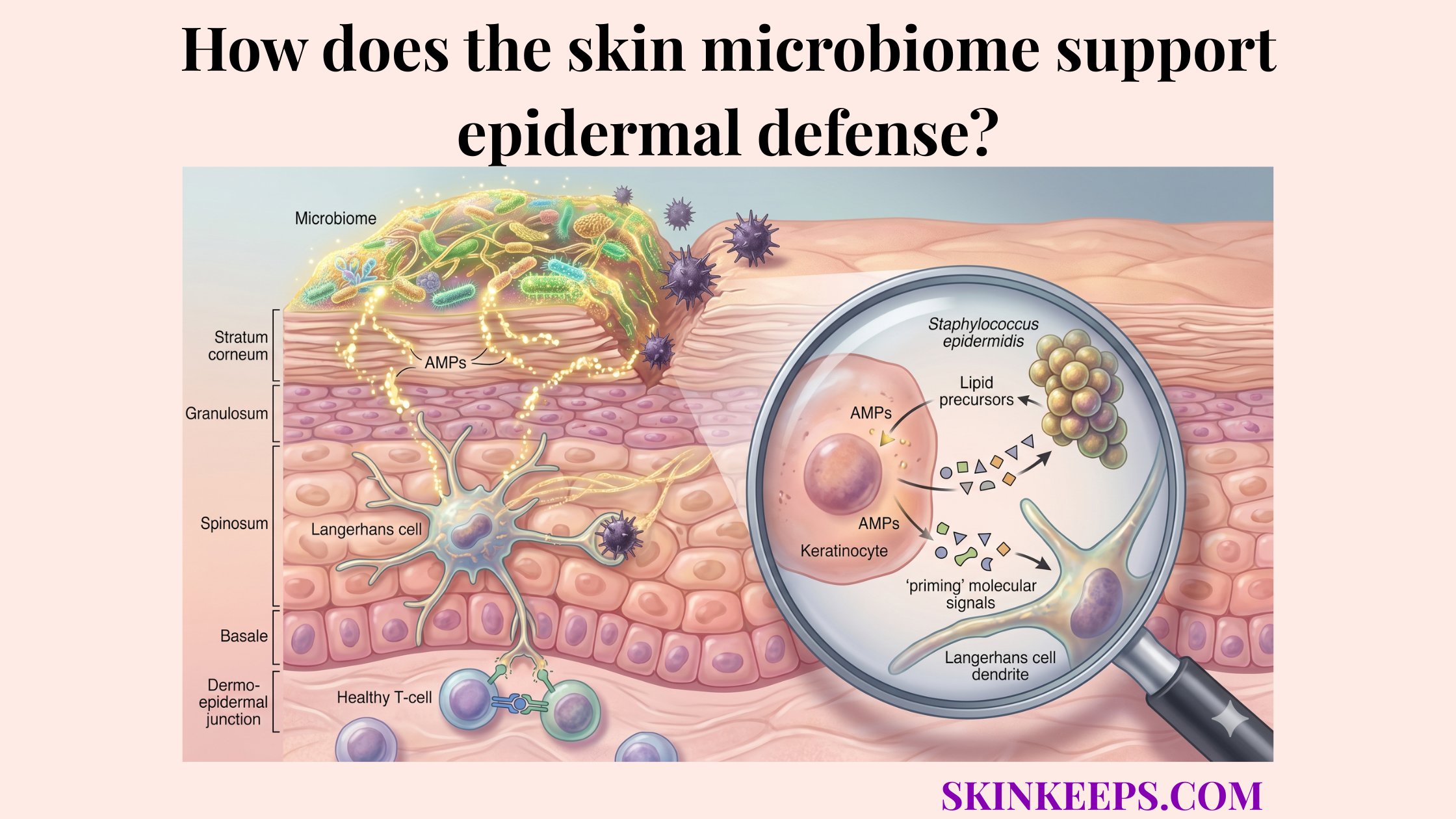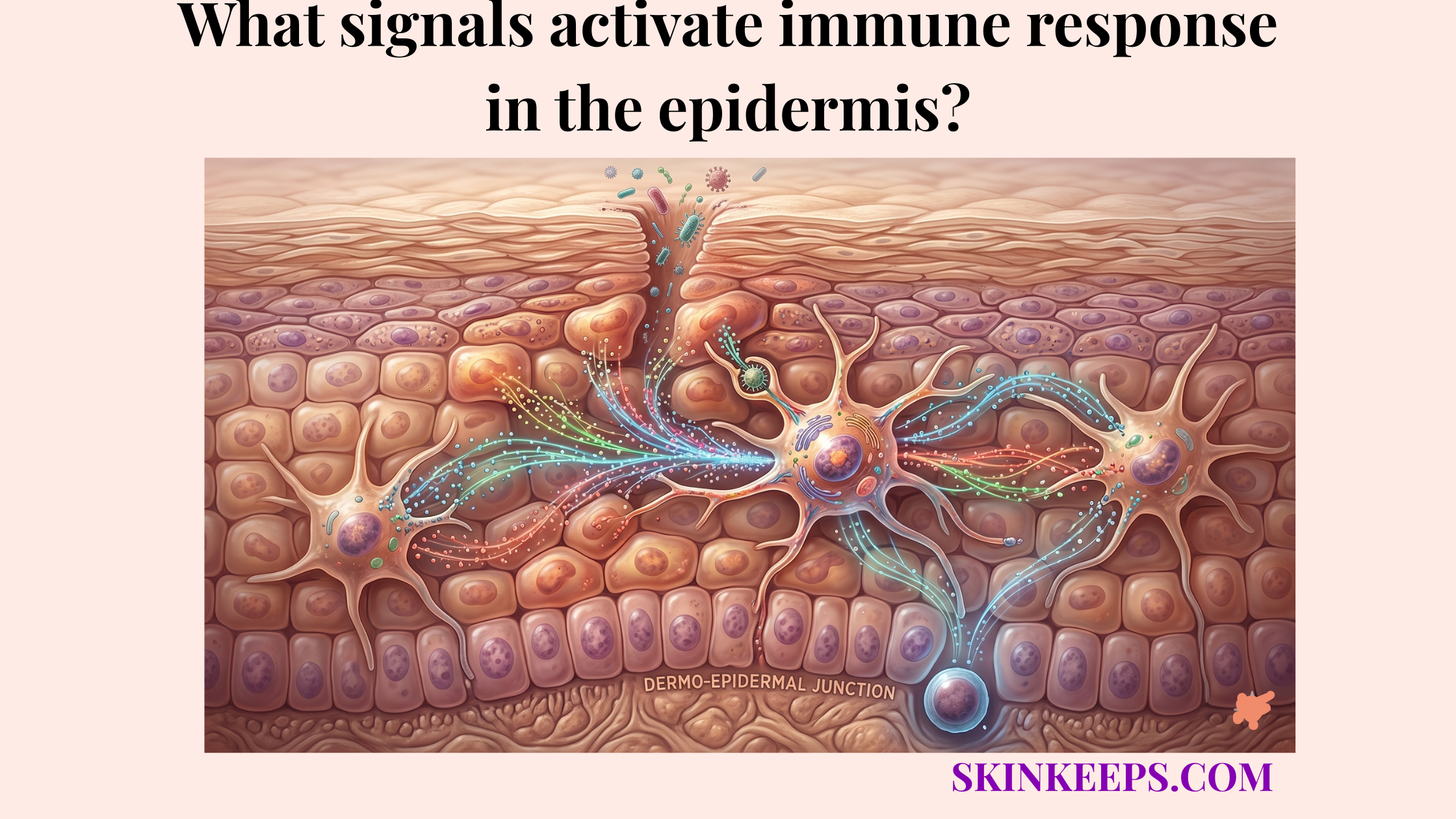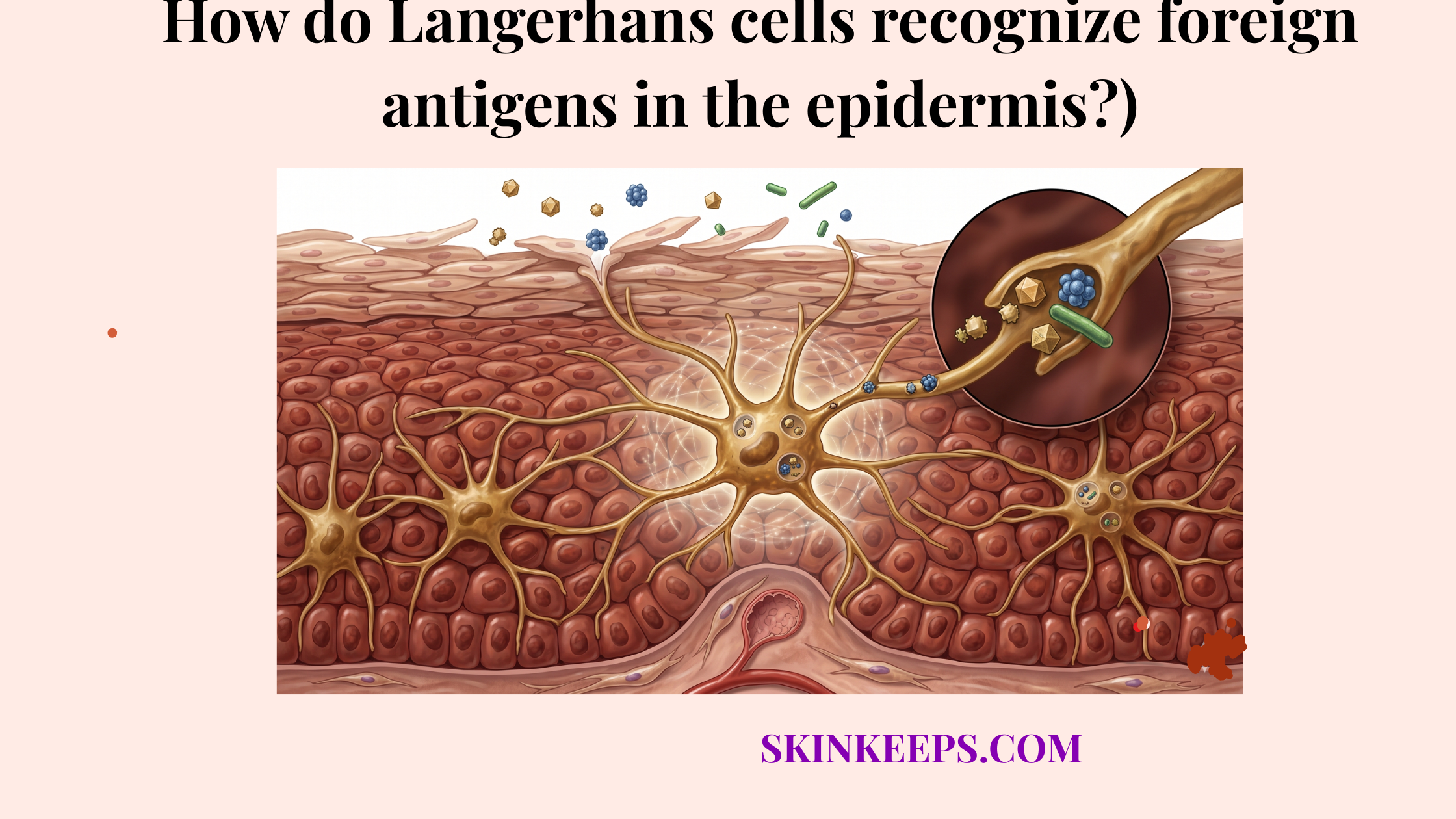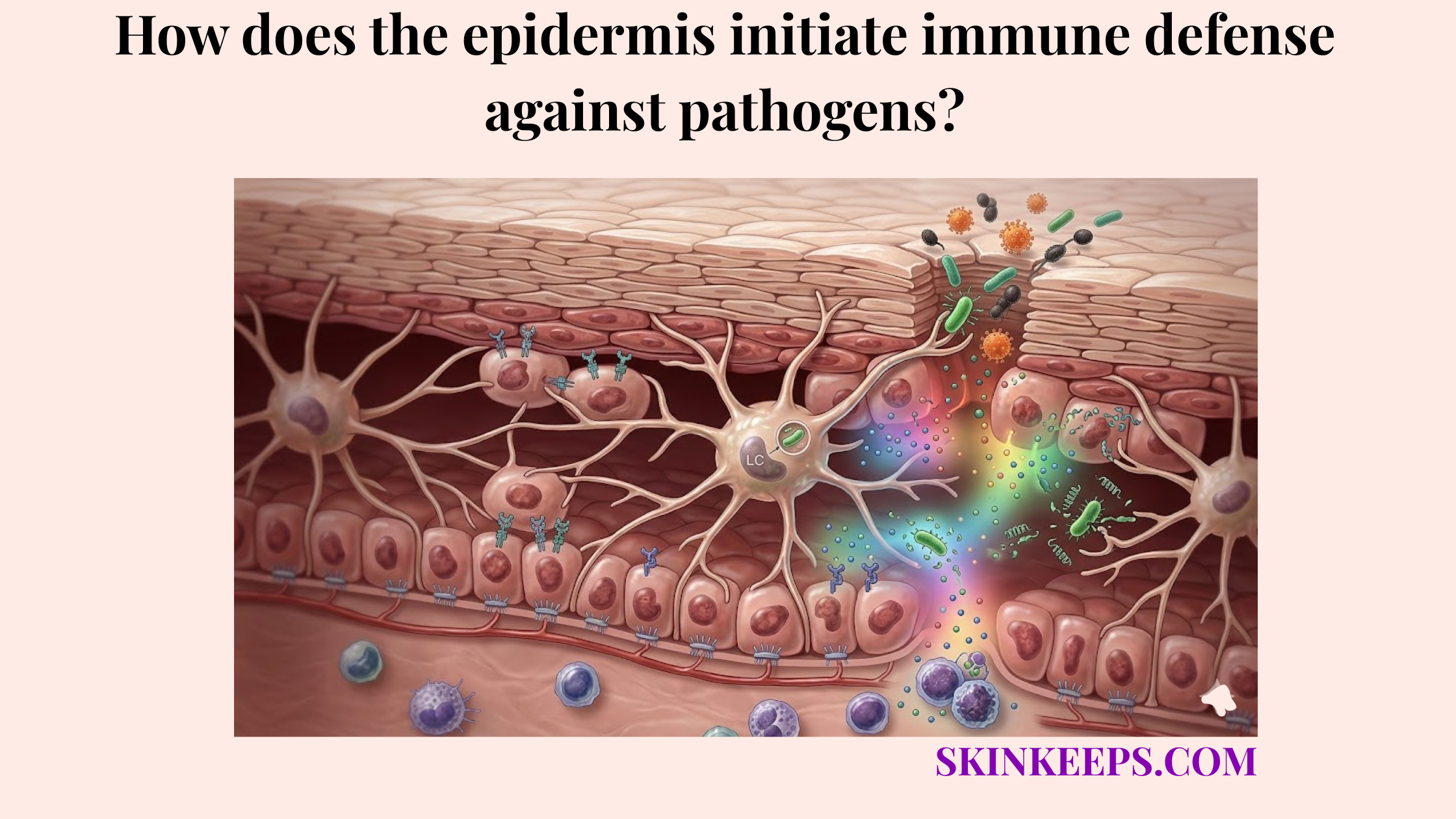
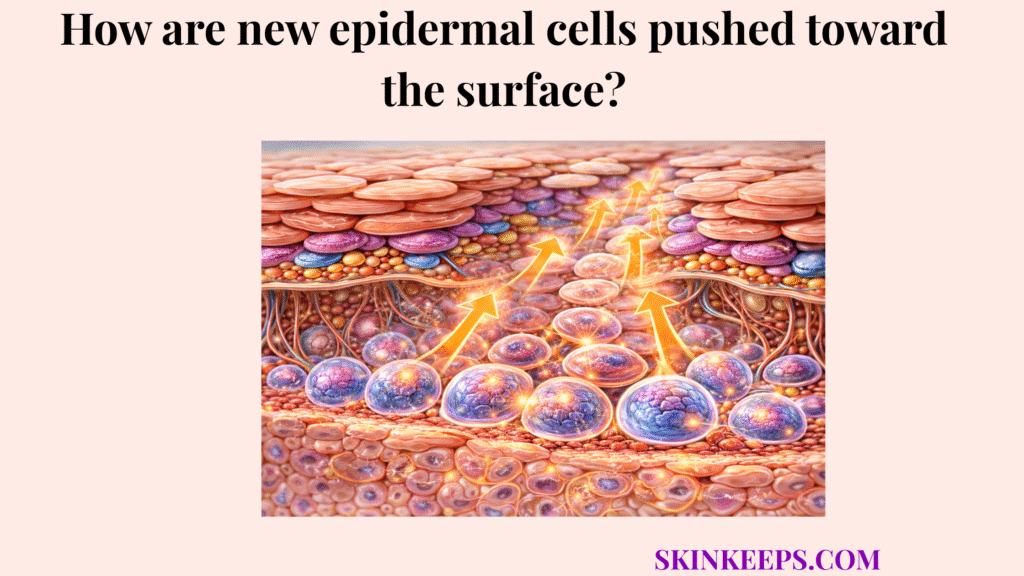
New epidermal cells are pushed toward the surface when fresh cells are created in the stratum basale and physically displace the cells above them, initiating a continuous escalator-like movement through the three main layers of the skin. This constant production, followed by upward migration and keratinization, moves newer cells toward the surface while older cells are eventually shed away.
This upward movement is the primary mechanism behind smooth, fresh-looking skin. When it slows, older cells linger longer than they should, causing a dull, rough, and congested appearance that no longer reflects light efficiently.
Understanding how new epidermal cells are pushed toward the surface makes it easier to explain why healthy skin looks brighter, why sluggish skin looks more congested or tired, and what actually helps maintain this renewal flow.
What is the biological engine that ensures new epidermal cells are pushed toward the surface?
The biological engine that ensures new epidermal cells are pushed toward the surface is the stratum basale, the deepest layer of the epidermis where continuous mitotic division creates the fresh tissue that fuels the renewal cycle.
In this production zone, each new cell formed at the base occupies a fixed amount of space. This process is driven fundamentally by the role basal keratinocytes play in epidermal cell division, where their constant activity forces existing tissue to move upward.
This constant manufacturing process turns the basal layer into a relentless production engine, generating the required volume of tissue to sustain the skin’s surface shield indefinitely.
Why are new epidermal cells pushed toward the surface instead of staying in place?
New epidermal cells are pushed toward the surface instead of staying in place because the epidermis is architecturally organized as a one-way renewal system where surface shedding requires a constant supply of rising replacement tissue.
The basal layer has a strictly finite capacity for cell occupancy. To maintain structural balance, newly formed cells must be redistributed upward into the higher strata rather than being stored in their place of origin.
This upward movement is a functional necessity; skin cells are born as soft living units at the bottom, mature as they rise through the middle layers, and eventually exit at the top as hardened protection.
How does mitosis create the pressure that pushes new epidermal cells toward the surface?
Mitosis creates the pressure that pushes new epidermal cells toward the surface by continuously generating daughter cells in the basal compartment, creating a physical crowding effect that forces older tissue into the layers above.
The key driving force here is not external suction or active lifting by the upper layers. Instead, it is the result of repeated, high-frequency cell birth occurring within a confined, organized basal compartment.
This relentless crowding effect converts cellular division into organized upward displacement. As the population at the base increases, the path of least resistance is upward toward the surface.
How does cell birth in the basal layer create upward pressure?
Cell birth in the basal layer creates upward pressure through mechanical displacement, as each newly formed cell takes up limited space in the basal layer and shoves existing cells toward the stratum spinosum. Empirical epidermal-kinetics work has estimated cellular replacement rates at about 69.3 keratinocytes per mm² per hour, illustrating how constant basal-cell production can generate sustained upward displacement [ScienceDirect, 2003].
This is a crowding-based pressure system where new occupancy at the base requires older cells to shift their position. Every successful division acts as a microscopic “shove” to the cells directly above, maintaining the constant flow required for skin vitality.
How do cellular attachments guide the upward path?
Cellular attachments guide the upward path by keeping cells linked through desmosomes as they move, ensuring that upward migration remains an organized tissue movement rather than chaotic cellular drifting.
The migration is coordinated because cells remain structurally connected to their neighbors during the entire journey. This coordination allows the entire epidermis to rise as a single, cohesive unit through successive layers of the skin.
| Component | Role in movement | Why it matters |
|---|---|---|
| Basal mitosis | Creates the push | Starts the escalator |
| Desmosomes | Keep cells linked | Preserves organized movement |
| Differentiation | Directs the route | Prevents chaotic drift |
How does keratinization help new epidermal cells pushed toward the surface survive the journey?
Keratinization helps new epidermal cells pushed toward the surface survive the journey by transforming them from soft, living cells into tough, protective, keratin-filled barrier cells as they rise through the epidermal strata.
Upward movement would be biologically useless without this differentiation. This transformation is part of the broader mechanism explaining how corneocytes limit water evaporation in the epidermis, as they must become structurally suited to barrier work.
As they rise, cells systematically strengthen their internal scaffolding, flatten their shape, and ultimately lose their nuclei. This process ensures they are “surface-ready” by the time they reach the top.
How can you tell when new epidermal cells are not being pushed toward the surface efficiently?
You can tell when new epidermal cells are not being pushed toward the surface efficiently by the appearance of a dull, ashy complexion, rough tactile texture, and a persistent buildup of surface congestion.
Sluggish upward movement means that older, light-blocking cells accumulate visibly on the surface long before they are cleared. The skin effectively suffers a “backlog” at the surface, which causes a loss of internal luminosity.
This visual pattern indicates delayed surface refresh rather than immediate barrier failure. The “escalator” hasn’t broken, but it has slowed down to a crawl due to age or environmental factors.
| Symptom | Description |
|---|---|
| Dull tone | Lacks internal luminosity because surface turnover is delayed. |
| Rough texture | Reflects accumulated outer cells that haven’t shed. |
| Surface buildup | Congestion or enlarged-looking pores increase. |
| Slow refresh | Slower fading of marks suggests reduced cell replacement speed. |
When should you support the process that pushes new epidermal cells toward the surface?
You should support the process that pushes new epidermal cells toward the surface the moment you observe a stalled appearance where the skin remains rough and dull despite basic hydration.
Early support is significantly more useful and comfortable than waiting for chronic buildup to become highly visible. It is better to maintain flow than to fix a complete renewal stall.
When do early signs suggest epidermal migration needs support?
Early signs suggest epidermal migration needs support when you notice a mild loss of radiance and a slight roughness that hydration alone cannot resolve.
Action: Begin gentle renewal-supportive habits early before sluggish turnover becomes more visible.
When do moderate signs suggest new epidermal cells are not being pushed toward the surface efficiently enough?
Moderate signs suggest new epidermal cells are not being pushed toward the surface efficiently when marks take weeks to fade and you feel a recurring need to exfoliate just to see fresh skin.
Action: Shift toward structured renewal support instead of relying only on occasional surface smoothing.
When do advanced signs justify stronger support?
Advanced signs justify stronger support when chronic dullness, age-related cycle lengthening, and ongoing buildup persist regardless of your surface-level routine.
Action: Use a more consistent renewal-support plan centered on stimulation, protection, and gentle maintenance.
How does youthful skin compare to aging skin in how new epidermal cells are pushed toward the surface?
Youthful skin pushes new epidermal cells toward the surface faster than aging skin, resulting in a shorter cycle that helps keep the complexion smoother and brighter.
Aging skin often shows a significantly slower upward flux. Consequently, older, more damaged cells remain on the surface for a much longer duration, leading to a decline in visible freshness. Intrinsic aging has been described as causing slower epidermal turnover of 60 days or more in older adults, compared with faster renewal in younger skin [Wiley, 2024].
What skincare habits help new epidermal cells get pushed toward the surface more efficiently?
Skincare habits help new epidermal cells get pushed toward the surface more efficiently by combining deep cellular stimulation with strategic surface clearance to keep the escalator moving.
Support works best when deeper renewal (the engine) and upper-layer clearance (the exit) are coordinated with the epidermal barrier matrix. Treating them as unrelated steps usefully prevents barrier damage or persistent dullness.
How do chemical exfoliants help new epidermal cells get pushed toward the surface?
Chemical exfoliants help new epidermal cells get pushed toward the surface by removing the surface backlog of dead cells, clearing the physical pathway for newer tissue to appear.
It is vital to state that exfoliants do not create new cells. Instead, they reduce the structural obstruction above them, making it easier for the rising tissue to reach the surface visibly.
How do retinoids help new epidermal cells get pushed toward the surface?
Retinoids help new epidermal cells get pushed toward the surface by binding to nuclear receptors that directly stimulate basal cell mitosis, effectively powering up the biological engine. Histological studies of topical retinoids have reported epidermal changes such as stratum corneum compaction and increased epidermal thickness after about 15 days of treatment [PMC, 2006].
Retinoids work significantly lower in the pathway than exfoliants. They influence the actual production of new cells rather than only clearing away the older cells at the very top, providing a long-term solution to sluggish renewal.
How do supportive routines keep upward migration more consistent?
Supportive routines help basal keratinocytes function more consistently by maintaining a calm, un-irritated barrier that allows the epidermis to cycle efficiently without inflammatory stress.
Routine stability matters because chronic irritation can interrupt the visible benefits of renewal support. Supportive care is the environment-preserving part of the strategy, not the primary driver.
| Flow problem | Surface effect | Support strategy |
|---|---|---|
| Slower basal production | Dullness & delayed refresh | Support deeper renewal |
| Surface backlog | Roughness & congestion | Use gentle chemical exfoliation |
| Irritation or instability | Inconsistent migration | Stabilize and hydrate the barrier |
What are the key takeaways about how new epidermal cells are pushed toward the surface?
The key takeaways focus on the physical pressure of mitosis and the structural necessity of constant upward flow to maintain a glowing, healthy complexion.
- ● New epidermal cells are pushed toward the surface because basal mitosis creates upward displacement.
- ● Their journey depends on organized migration plus keratinization as they move through the epidermis.
- ● When this process slows, the skin often looks duller, rougher, and more built up.
- ● The strongest support strategy combines renewal stimulation, gentle exfoliation, and a stable barrier environment.
What daily steps can you take to support how new epidermal cells are pushed toward the surface?
You can support how new epidermal cells are pushed toward the surface daily by prioritizing consistent cellular stimulation and strictly avoiding routines that over-irritate the barrier.
Self-Assessment Checklist: Daily Habits
Closing insight: Healthier-looking skin depends on keeping the epidermal escalator moving, not just forcing the surface to look smoother for a day or two.
Build your routine around long-term renewal support if you want to improve texture, radiance, and visible turnover more effectively.
Ultimately, when you support the engine of your skin, the surface takes care of itself.