Chickenpox, or varicella, is the illness caused by a person’s first infection with varicella-zoster virus (VZV). It typically produces an intensely itchy generalized rash in successive crops, so flat spots, raised bumps, clear blisters and crusted lesions can be visible at the same time.
Most uncomplicated cases in otherwise healthy children are managed with supportive care, but chickenpox is not automatically harmless. Adolescents, adults, pregnant people, infants and people with weakened immune systems have greater complication risk, and vaccination, isolation, risk-based antiviral treatment and early recognition of respiratory, neurologic or bacterial complications are central to safe care.
Medical note: This article is for educational purposes only. Breathing difficulty, neurologic symptoms, severe dehydration, rapidly worsening infected-looking skin lesions, pregnancy, immunosuppression or severe chickenpox symptoms require prompt medical assessment.
What Is Varicella / Chickenpox and What Does the Rash Look Like?
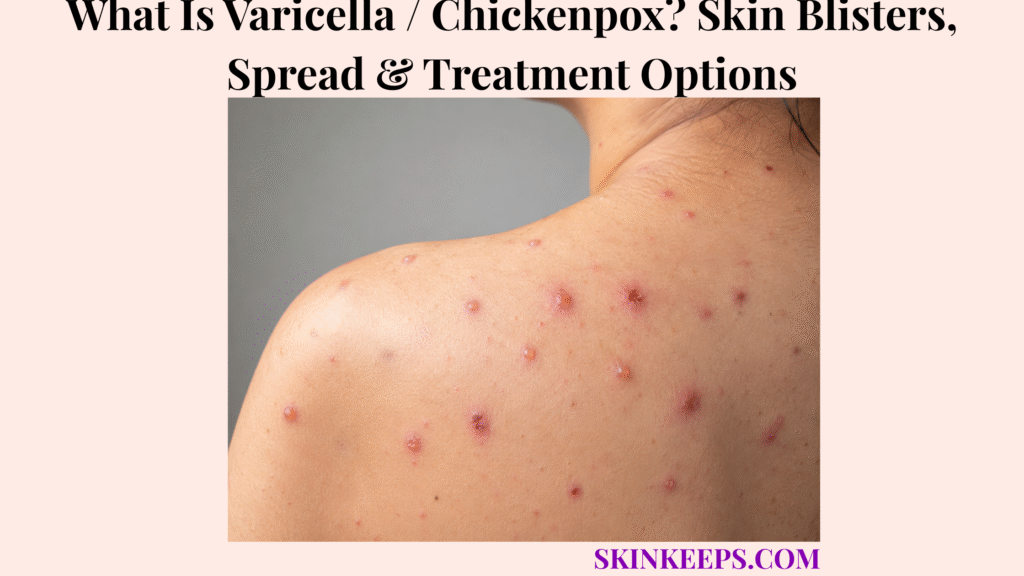
Chickenpox is primary infection with varicella-zoster virus and typically causes a generalized itchy eruption in which macules, papules, fluid-filled vesicles and crusts may all be present together.
What Happens After Someone Is Infected With VZV?
VZV first causes chickenpox, a systemic primary infection. After the immune system controls the illness, the virus does not disappear completely; it remains latent in sensory nerve tissue and can reactivate later in life.
Is Chickenpox the Same as Shingles?
No. Chickenpox is the first VZV infection, whereas shingles is later reactivation of latent VZV. A susceptible person exposed to infectious shingles can acquire VZV and develop chickenpox; they do not directly “catch shingles.”
How Does a Typical Chickenpox Spot Change?
A typical chickenpox lesion progresses from a flat macule to a raised papule, then to a clear or cloudy fluid-filled vesicle and finally to a crust or scab. This evolution can happen quickly, so the appearance of individual lesions changes over a short period.
Why Are New Spots Appearing While Older Ones Are Crusting?
Chickenpox lesions appear in successive crops rather than all at once. New papules and vesicles can therefore develop while older blisters are already crusting, creating the mixed-stage eruption that is one of the most useful clinical clues.
Where Does the Chickenpox Rash Usually Appear?
The eruption often starts on the chest, back or face and then spreads more widely. Lesions can also involve the scalp and mucosal surfaces such as the mouth, and some patients develop lesions around the eyelids or genital region.
What Symptoms Can Occur With the Rash?
Fever, tiredness, headache, loss of appetite and malaise can accompany the rash. Adults and adolescents may have a more noticeable febrile prodrome before skin lesions appear, while in many children the rash is the first obvious sign.
What Does Breakthrough Chickenpox Look Like?
Breakthrough varicella occurs in a vaccinated person and is commonly milder than classic disease. It often produces fewer lesions, few or no typical vesicles, more macules or papules, low or absent fever and a shorter illness, which can make visual diagnosis less certain.
How Does Chickenpox Spread and When Is Someone Contagious?
Chickenpox spreads through airborne or respiratory exposure and contact with infectious vesicle material, and a person can transmit VZV before the rash is visible.
How Is Varicella-Zoster Virus Transmitted?
VZV spreads through inhalation of infectious particles from respiratory secretions or vesicular material and through direct contact with blister fluid. The disease is highly contagious among people who lack immunity.
How Long After Exposure Does Chickenpox Appear?
The incubation period is usually 10–21 days after exposure, with symptoms most often appearing around 14–16 days later. A person can feel completely well during much of that interval.
When Does Chickenpox Become Contagious?
Typical chickenpox is generally contagious from about 1–2 days before rash onset until every lesion has crusted. Infectiousness therefore begins before many families realize the illness is chickenpox.
When Is Breakthrough Chickenpox No Longer Contagious?
Vaccinated people can develop lesions that remain maculopapular and do not crust. In that situation, current CDC criteria consider the person contagious until no new lesions have appeared for 24 hours.
Can Someone With Shingles Spread Chickenpox?
Yes. Active shingles lesions can transmit VZV to a person without immunity, and that newly infected person develops chickenpox rather than shingles. This distinction matters for susceptible household contacts, pregnant people and immunocompromised individuals.
Who Is More Likely to Develop Severe Chickenpox?
Complication risk is higher in infants, adolescents, adults, pregnant people and those with weakened immune systems. These groups should receive earlier clinical guidance after significant exposure or when symptoms develop.
How Is Chickenpox Diagnosed and Distinguished From Other Blistering Rashes?
Classic chickenpox can often be diagnosed from exposure history plus a generalized itchy eruption with lesions in several stages, while VZV PCR is especially useful when disease is atypical, breakthrough or confirmation is important.
How Is Typical Chickenpox Diagnosed?
Clinicians often recognize classic varicella from the combination of a compatible exposure history, generalized itch, successive crops and mixed lesion stages. Laboratory testing is not required for every straightforward presentation.
When Is PCR Testing Used?
VZV PCR is the preferred laboratory method when confirmation is needed. Vesicular material and scabs are strong specimens, and appropriately collected maculopapular lesions can also be tested, including in vaccinated patients with atypical disease.
Why Can Breakthrough Varicella Be Harder to Diagnose?
Breakthrough disease can have few vesicles, more papules and little fever, so it may resemble insect bites, other viral rashes or dermatitis. Because its morphology is less classic, PCR becomes more valuable when the diagnosis affects isolation, outbreak control or treatment decisions.
How Is Chickenpox Different From Shingles?
Chickenpox is generalized primary VZV infection with lesions appearing in successive crops, while shingles is reactivation that is usually localized to one or several adjacent dermatomes and is commonly accompanied by pain, burning or tingling.
How Can Chickenpox Be Distinguished From Impetigo?
Impetigo is a bacterial skin infection that tends to cause localized blisters, erosions or crusted sores rather than a generalized mixed-stage varicella eruption. Chickenpox lesions can, however, become secondarily infected with bacteria.
What Other Rashes Can Resemble Chickenpox?
Disseminated herpes simplex, hand-foot-and-mouth disease, insect-bite reactions, selected drug eruptions and mpox can overlap with parts of the presentation. Distribution, lesion quality, exposure history, vaccination status and PCR testing help resolve uncertain cases.
How Is Chickenpox Treated?
Most uncomplicated chickenpox in otherwise healthy children is treated supportively, while antiviral therapy is considered earlier for people at increased risk of moderate, severe or disseminated disease.
How Is Mild Chickenpox Treated at Home?
Supportive care focuses on fluids, comfort, itch relief and reducing scratching. Keeping fingernails short and using gentle soothing skin measures can lower excoriation and secondary bacterial infection risk, while fever treatment should follow age-appropriate medical guidance.
Why Should Children With Chickenpox Not Take Aspirin?
Aspirin should not be given to children or adolescents with chickenpox because its use during varicella is associated with Reye syndrome, a rare but serious disorder affecting the brain and liver.
Should Ibuprofen Be Used Routinely in Children With Chickenpox?
Current CDC guidance, reflecting American Academy of Pediatrics advice, recommends avoiding ibuprofen if possible in childhood chickenpox because it has been associated with serious bacterial skin and soft-tissue infections. Fever and pain choices should be individualized with appropriate clinical or pharmacy guidance.
Who May Need Antiviral Treatment?
Early antiviral treatment may be considered for people at increased risk of moderate-to-severe disease, including otherwise healthy people older than 12 years, people with selected chronic skin or lung conditions, certain corticosteroid or long-term salicylate exposure, pregnant patients and immunocompromised patients.
Why Does Antiviral Timing Matter?
When an oral antiviral is clinically indicated, benefit is greatest when treatment starts early—ideally within the first 24 hours after rash onset. This timing point is a reason for higher-risk patients to contact a clinician promptly rather than self-starting medication.
Do Healthy Children With Typical Chickenpox Need Routine Acyclovir?
Usually not. Routine oral acyclovir or valacyclovir is not recommended for otherwise healthy children with uncomplicated typical varicella, because supportive care is generally sufficient for this lower-risk group.
When Is Intravenous Antiviral Therapy Needed?
Intravenous antiviral therapy is used for severe or disseminated varicella and for selected immunocompromised patients requiring hospital-level treatment, including serious complications such as pneumonia, encephalitis or other visceral involvement.
How Can Chickenpox Spread Be Prevented, and When Does It Need Urgent Medical Care?
Chickenpox prevention relies on vaccination and isolation during the contagious period, while high-risk exposure and signs of bacterial, respiratory or neurologic complications require prompt medical assessment.
How Does Varicella Vaccination Prevent Chickenpox?
Varicella vaccination is the main preventive strategy and substantially reduces both chickenpox and severe disease. In the United States, CDC recommends a two-dose series for people without evidence of immunity; vaccination elsewhere should follow the relevant national immunization schedule.
Can Vaccination Help After Exposure?
For eligible people without evidence of immunity, post-exposure varicella vaccination can reduce the chance or severity of illness when given promptly. CDC recommends vaccination within 3–5 days after exposure when there is no contraindication, although later vaccination can still provide protection against future exposure.
Who Needs Special Post-Exposure Assessment Instead of Routine Live Vaccination?
Pregnant people and selected significantly immunocompromised patients need individualized post-exposure management because live varicella vaccine may be contraindicated. Some high-risk exposed people without immunity who cannot receive vaccine may qualify for varicella-zoster immune globulin.
How Long Should Someone With Chickenpox Stay Away From Others?
People with typical chickenpox should avoid close contact with susceptible people until every lesion has crusted. For breakthrough disease in which lesions do not crust, isolation continues until no new lesions have appeared for 24 hours.
What Skin Complications Can Chickenpox Cause?
Scratching and skin-barrier disruption can allow secondary bacterial infection. Spreading warmth, swelling, increasing pain, pus or expanding redness/discoloration around lesions can signal cellulitis or another bacterial complication rather than uncomplicated viral rash.
Can a Chickenpox Lesion Develop a Localized Abscess?
Yes, although this is not routine. A secondary bacterial infection can occasionally form a localized pus-filled collection; a true skin abscess needs separate medical assessment and treatment rather than more antiviral therapy.
Which Other Chickenpox Complications Need Prompt Attention?
Serious varicella complications include pneumonia, encephalitis and other neurologic disease, severe dehydration, bacterial bloodstream or deep-tissue infection and disseminated VZV disease. These complications are particularly important in high-risk patients.
Which Symptoms Need Urgent or Emergency Assessment?
Difficulty breathing, severe persistent cough, confusion, marked drowsiness, new weakness, difficulty walking, repeated vomiting, inability to maintain hydration, hemorrhagic lesions or rapidly worsening infected-looking skin lesions warrant urgent evaluation.
Why Do Pregnancy, Newborn Exposure and Immunosuppression Need Prompt Assessment?
Pregnancy, perinatal exposure and significant immunosuppression can increase the risk of severe varicella and may create time-sensitive decisions about antiviral treatment or post-exposure immune protection. These situations should be managed promptly by a clinician rather than through routine home care alone.
What Should You Remember About Varicella / Chickenpox?
Chickenpox is primary VZV infection characterized by successive crops of itchy lesions, contagiousness beginning before the rash, supportive treatment for many uncomplicated cases and greater treatment urgency in high-risk or complicated disease.
- Chickenpox and varicella are the same primary VZV infection.
- Shingles is later reactivation of latent VZV, not the same clinical illness.
- Macules, papules, vesicles and crusts can coexist because lesions appear in successive crops.
- The rash commonly starts on the trunk, back or face and spreads more widely.
- Fever, malaise, headache, appetite loss and itching may occur.
- Breakthrough chickenpox can occur after vaccination and is often milder or less vesicular.
- Chickenpox can spread through airborne or respiratory exposure and infectious blister material.
- Incubation is generally 10–21 days.
- Contagiousness usually starts 1–2 days before the rash.
- Typical infectiousness ends after all lesions crust.
- Breakthrough lesions that do not crust use the 24-hour no-new-lesion rule.
- Exposure to active shingles can cause chickenpox in a susceptible person.
- Infants, adolescents, adults, pregnant people and immunocompromised patients have higher complication risk.
- Classic cases can often be diagnosed clinically.
- PCR is the preferred laboratory confirmation when testing is needed.
- Supportive care is sufficient for many uncomplicated healthy children.
- Aspirin should not be given to children with chickenpox.
- Ibuprofen is best avoided if possible in childhood varicella under current U.S. guidance.
- Antiviral treatment is risk- and severity-based, not routine for every child.
- Severe or disseminated disease may require IV antiviral therapy.
- Vaccination is the main preventive strategy.
- Post-exposure vaccination can help eligible susceptible people.
- Pregnancy and significant immunosuppression require individualized post-exposure planning.
- Secondary bacterial skin infection, pneumonia, neurologic complications and dehydration require prompt recognition.
Frequently Asked Questions About Varicella / Chickenpox
The main chickenpox questions concern contagiousness, breakthrough infection, shingles, safe fever treatment and antiviral use.
How Long Is Chickenpox Contagious?
Chickenpox is generally contagious from about 1–2 days before the rash starts until all lesions have crusted. In breakthrough disease with lesions that do not crust, infectiousness is considered to continue until no new lesions have appeared for 24 hours.
Can a Vaccinated Person Still Get Chickenpox?
Yes. Breakthrough chickenpox can occur after vaccination, but it is usually milder and may produce fewer lesions, fewer classic blisters and little or no fever.
What Is the Difference Between Chickenpox and Shingles?
Chickenpox is the first infection with varicella-zoster virus, while shingles is later reactivation of virus that remained latent after the original infection.
Should Children With Chickenpox Take Aspirin or Ibuprofen?
Aspirin should not be given to children with chickenpox because of the risk of Reye syndrome, and current U.S. guidance recommends avoiding ibuprofen if possible because of an association with serious bacterial skin infections.
When Does Chickenpox Require Antiviral Treatment?
Antivirals are considered mainly for people at increased risk of moderate-to-severe disease or those with severe or complicated varicella, with benefit greatest when indicated treatment starts early.
CDC — Clinical Features of Chickenpox. Supports the macule-to-papule-to-vesicle-to-crust progression, mixed lesion stages, typical distribution, complications and breakthrough-varicella morphology.
CDC — Clinical Overview of Chickenpox. Supports incubation, airborne/contact transmission, contagiousness beginning before rash, the crusting endpoint and the 24-hour no-new-lesion rule for non-crusting breakthrough cases.
CDC — Laboratory Testing for VZV. Supports PCR as the preferred confirmation method and the use of vesicles, scabs and appropriately collected maculopapular lesions.
CDC — How to Treat Chickenpox. Supports supportive care, the aspirin and ibuprofen safety boundaries, risk-based antiviral treatment and the importance of early treatment when antivirals are indicated.
CDC — Clinical Guidance for People at Risk for Severe Varicella. Supports higher-risk groups, oral versus IV antiviral use and varicella-zoster immune globulin for selected high-risk exposed patients unable to receive vaccine.
CDC — Varicella Vaccine Recommendations. Supports the U.S. two-dose recommendation and post-exposure vaccination for susceptible people without contraindications.
World Health Organization — Chickenpox. Supports primary VZV infection, the chickenpox-versus-shingles relationship, clinical recognition, incubation, spread and supportive treatment.