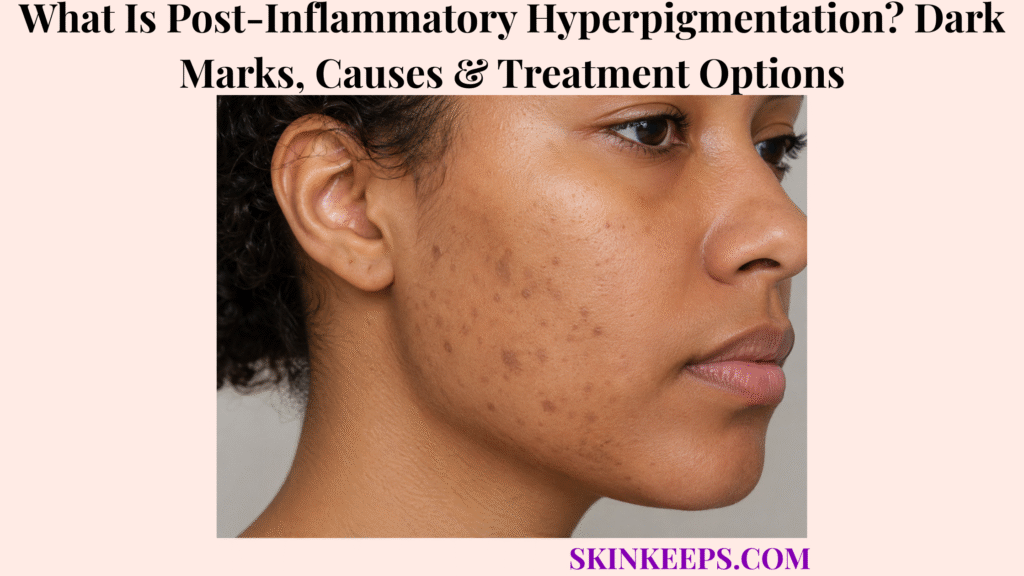
Post-inflammatory hyperpigmentation is flat residual discoloration that develops after skin inflammation or injury stimulates excess or misplaced melanin. It appears after problems such as acne, eczema, irritation, burns or other inflammatory skin events improve, leaving a darker mark where the original inflammation occurred.
PIH is not an active rash or a structural scar. Understanding whether a mark is pigment, redness or a true scar helps guide treatment. The priority is controlling ongoing inflammation first, then supporting gradual fading with appropriate pigment treatments and consistent photoprotection.
This article is for educational purposes only and does not constitute medical advice, diagnosis, or treatment. Persistent, changing or unexplained pigmentation should be evaluated by a qualified healthcare professional.
What Is Post-Inflammatory Hyperpigmentation and Why Do Dark Marks Form?
Post-inflammatory hyperpigmentation is flat residual discoloration that develops after skin inflammation or injury stimulates excess or misplaced melanin.
How Does Skin Inflammation Trigger Excess Pigment Production?
Skin inflammation can stimulate melanocytes to increase pigment production, leaving excess melanin behind after the original inflammation improves.
The sequence is inflammation or injury → melanocyte stimulation → increased or displaced melanin → persistent dark mark.
What Is the Difference Between Epidermal and Deeper PIH?
PIH can remain within the epidermis or extend deeper into the skin, and deeper pigment may appear grey-brown or blue-grey and fade more slowly.
What Does PIH Look Like?
PIH usually appears as a flat tan, brown, dark-brown or grey-toned mark that follows the location of the previous inflammation or injury.
For broader pigment information, see hyperpigmentation.
Figure 1. PIH begins with inflammation or injury, which stimulates pigment production; the original rash can settle while excess or displaced melanin remains visible.
What Causes Post-Inflammatory Hyperpigmentation, and Why Is It More Noticeable in Darker Skin?
Any sufficiently inflammatory skin condition or injury can produce PIH, with acne, eczema, irritation and trauma among common triggers and darker skin tones generally showing greater susceptibility.
Which Skin Conditions Commonly Leave PIH Dark Marks?
Acne, eczema or dermatitis, inflammatory rashes, infections and insect bites can all leave PIH after active inflammation settles.
Inflammatory acne is a common trigger. Chronic inflammation from atopic dermatitis can also leave pigment after a flare improves.
Can Scratching, Picking, Burns or Procedures Cause PIH?
Yes. Scratching, picking, irritation, burns and some procedures can trigger PIH because they create additional inflammation or injury.
Why Is PIH Often More Noticeable in Darker Skin Tones?
PIH occurs in every skin type but tends to be more frequent, prominent and persistent in darker skin phenotypes.
How Is Post-Inflammatory Hyperpigmentation Distinguished and Diagnosed?
PIH is usually identified from a flat pigment change that appears where a previous inflammatory lesion or injury occurred.
How Is PIH Different From a Scar or Post-Inflammatory Erythema?
PIH changes skin colour, a scar changes skin structure, and post-inflammatory erythema produces predominantly red or pink discoloration.
Flat dark acne marks are not automatically acne scars. Texture changes such as depression or elevation suggest structural scarring instead.
Figure 2. Different inflammatory triggers can converge on the same PIH pathway, which is why controlling the active trigger is more important than treating pigment alone.
What Conditions Can Be Mistaken for PIH?
Melasma, lentigines, medication-related pigmentation and other acquired pigment disorders can resemble PIH when there is no clear preceding inflammatory event.
When Is Further Evaluation Needed?
Professional evaluation is more important when pigmentation develops without an obvious trigger, changes progressively, has an unusual appearance or remains uncertain.
Figure 3. PIH is flat pigment, PIE is mainly red or pink vascular change, and a scar alters skin structure; these should not be treated as interchangeable “marks.”
How Is Post-Inflammatory Hyperpigmentation Treated?
PIH treatment should begin by controlling the inflammation that caused it and only then target remaining pigment with appropriately selected therapy.
Why Should Underlying Skin Inflammation Be Treated First?
Ongoing acne, eczema or irritation can continually create new PIH, so stopping the inflammatory cycle is the first priority.
Which Topical Treatments Can Help Fade PIH?
Topical PIH therapy can include retinoids, azelaic acid, hydroxy acids and hydroquinone where medically appropriate.
Treatments should be selected carefully because irritation itself can worsen pigmentation.
When Are Chemical Peels, Lasers or Other Procedures Considered?
Procedures can help selected PIH cases, but excessive procedure-related inflammation can worsen pigmentation, especially in darker skin.
How Can Post-Inflammatory Hyperpigmentation Be Prevented and Helped to Fade?
PIH is less likely to darken or recur when inflammation is controlled, sun exposure is managed and repeated picking, scratching or irritation is avoided.
How Does Sun Protection Help PIH?
Consistent photoprotection helps prevent existing PIH from becoming more pronounced and supports gradual fading.
Why Should Picking, Scratching and Skin Irritation Be Avoided?
Repeated trauma creates more inflammation, which increases the chance of additional or darker PIH.
How Long Does PIH Take to Fade?
PIH usually fades gradually rather than quickly. Many marks take months, and some deeper pigmentation can persist for a year or longer.
When Should Persistent PIH Be Evaluated by a Dermatologist?
Assessment is appropriate when PIH worsens, remains persistent despite appropriate care, develops with uncontrolled inflammation or reacts badly to treatment.
Figure 4. PIH management works in sequence: stop new inflammation, protect the skin, then use pigment-directed treatment while allowing time for gradual fading.
What Should You Remember About Post-Inflammatory Hyperpigmentation?
Post-inflammatory hyperpigmentation is residual melanin-related discoloration left after skin inflammation or injury and is best managed by preventing new inflammation while allowing gradual fading.
- PIH follows inflammation or injury.
- PIH is not an active rash.
- PIH is not the same as a scar.
- Acne and eczema are common triggers.
- Picking and irritation can worsen PIH.
- Photoprotection is foundational.
- Fading is gradual and can take months.
Frequently Asked Questions About Post-Inflammatory Hyperpigmentation
Does Post-Inflammatory Hyperpigmentation Go Away on Its Own?
Yes. Many PIH marks gradually fade, although improvement can take months and deeper pigment may persist longer.
Is Post-Inflammatory Hyperpigmentation the Same as an Acne Scar?
No. PIH is a flat pigment change, while a scar involves structural alteration of the skin.
Can Post-Inflammatory Hyperpigmentation Become Permanent?
PIH often improves gradually, but some marks can remain for a long time.
Does Sun Exposure Make Post-Inflammatory Hyperpigmentation Darker?
Yes. Sun exposure can make existing dark marks more noticeable, which is why photoprotection matters.
Can Treating PIH Too Aggressively Make It Worse?
Yes. Excessive irritation or aggressive procedures can create more inflammation and worsen PIH.
Which Sources Support This Post-Inflammatory Hyperpigmentation Guidance?
DermNet — Post-inflammatory hyperpigmentation — Used for PIH definition, epidermal versus dermal pigment, common causes, darker-skin susceptibility, diagnosis, treatment options and natural fading.
American Academy of Dermatology — Dark Spots and Skin Care Guidance — Used for photoprotection, irritation avoidance and practical dark-mark prevention principles.