
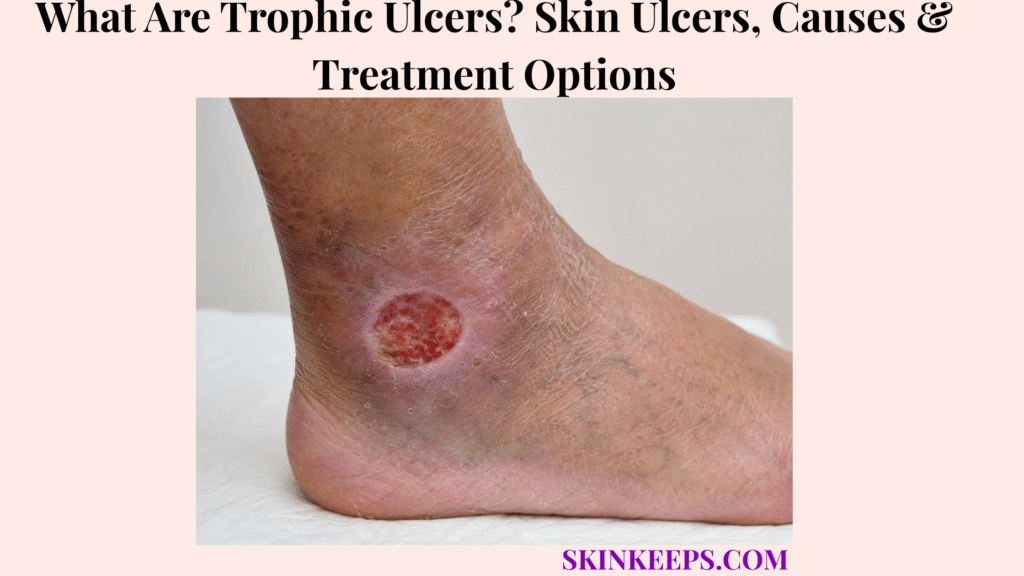
Trophic ulcers are chronic neuropathic wounds that most often develop when loss of protective sensation allows repetitive pressure, friction or minor trauma to damage skin without being noticed. They are especially important on weight-bearing areas of the foot, where callus and concentrated pressure can continue injuring tissue during normal walking.
A trophic ulcer can be deep yet surprisingly painless, and its management depends on more than a dressing. Clinicians need to classify the ulcer, assess sensation and circulation, remove damaging pressure, treat infection only when it is actually present and address the neurologic, metabolic or structural problem that allowed the wound to form.
Medical disclaimer: This article is for educational purposes only. A new ulcer on a numb foot, spreading infection, black tissue, worsening swelling, suspected poor circulation or systemic illness requires prompt professional medical assessment.
What Are Trophic Ulcers and What Do Neuropathic Ulcers Look Like?
Trophic ulcers are chronic wounds that typically form when impaired protective sensation allows repeated pressure or trauma to damage skin without triggering normal warning pain. In this article, the term primarily refers to neuropathic trophic ulceration rather than every type of chronic wound.
What Happens When Protective Sensation Is Lost?
Peripheral nerve damage can reduce pain, pressure and temperature awareness, so a person may continue walking on an injured area instead of automatically protecting it. Repetitive microtrauma can then progress from superficial skin stress to an open ulcer.
Why Do Trophic Ulcers Form Over Pressure Points?
Neuropathic ulcers commonly form where body weight, footwear or deformity concentrates force onto insensate skin, especially over bony prominences. Callus can be a marker of repeated mechanical stress and can increase focal pressure beneath the surface.
Where Do Trophic Ulcers Usually Develop?
Neuropathic trophic ulcers frequently occur on plantar pressure-bearing areas such as the forefoot, metatarsal heads, heel and toes, although other insensate body sites can ulcerate when repetitive trauma is present.
What Does a Typical Trophic Ulcer Look Like?
A typical neuropathic ulcer is an open wound centered on a pressure point, often with surrounding callus, recurrent breakdown and reduced sensation. The wound can look sharply defined or “punched out,” but appearance alone should not be used to determine depth or severity.
Why Can a Deep Trophic Ulcer Be Painless?
A deep trophic ulcer can cause little pain because the same sensory neuropathy that allowed the injury to progress also reduces the ability to feel tissue damage. Lack of pain therefore does not mean the wound is mild or safe.
Can Trophic Ulcers Become Deep?
Yes; a neglected or repeatedly loaded ulcer can extend through skin into subcutaneous tissue and, in severe cases, involve tendon, joint structures or bone. Deep or poorly healing wounds raise concern for complications such as osteomyelitis.
What Causes Trophic Ulcers and Which Factors Make Them Harder to Heal?
Trophic ulcers usually develop from sensory neuropathy plus repetitive pressure, while diabetes, foot deformity and poor arterial blood flow can increase the chance of ulceration or make healing more difficult. Infection may occur later, but it is not the defining cause of every neuropathic ulcer.
How Does Diabetes Contribute to Trophic Ulcers?
Diabetes can damage peripheral nerves and blood vessels, combining loss of protective sensation with impaired tissue perfusion and wound-healing capacity. A blister or small cut may therefore go unnoticed while continued weight-bearing turns it into a larger ulcer.
Which Other Neurologic Problems Can Cause Trophic Ulcers?
Any disorder that substantially reduces protective sensation can increase neuropathic-ulcer risk when the affected skin remains exposed to repetitive pressure or trauma. Causes can include non-diabetic peripheral neuropathy, traumatic nerve injury and selected spinal, neurologic or infectious conditions.
How Can Poor Blood Flow Make a Trophic Ulcer Worse?
Peripheral arterial disease can coexist with neuropathy and reduce oxygen delivery to injured tissue. Neuropathy allows damage to go unnoticed, while ischemia lowers healing capacity, creating a higher-risk mixed neuro-ischemic ulcer.
Can Pressure Alone Produce a Similar Ulcer?
Yes, but a pressure injury is a different clinical entity. Pressure injuries usually arise from sustained external compression, often with immobility and shear, while ambulatory neuropathic ulcers commonly result from repetitive loading of an insensate foot during walking.
Can a Trophic Ulcer Become Infected?
Yes; an open trophic ulcer can develop a secondary bacterial infection, but ulceration itself does not prove infection. Spreading erythema, warmth, swelling, purulent drainage and systemic features can increase concern for true infection.
When bacterial infection spreads through surrounding skin and soft tissue, Cellulitis is the better-owner condition; antibiotics are used for clinically infected tissue rather than simply because an ulcer is open.
Can Deep Infection Form an Abscess?
Yes; a deeper bacterial complication can sometimes form a localized pus collection, which requires a different assessment and treatment pathway from uncomplicated neuropathic ulceration.
A discrete collection of pus is better considered under Skin Abscess rather than being assumed to be the normal center of a trophic ulcer.
How Are Trophic Ulcers Diagnosed and Distinguished From Other Chronic Ulcers?
Trophic-ulcer diagnosis requires assessment of the wound location, depth, surrounding callus, protective sensation, foot structure, circulation and signs of infection. Classifying the ulcer mechanism is essential because neuropathic, arterial, venous and pressure ulcers do not share the same treatment priorities.
How Does a Clinician Evaluate a Suspected Trophic Ulcer?
Evaluation combines wound inspection with neurologic and vascular assessment. Clinicians may document size and depth, test protective sensation, look for callus or deformity, examine footwear and gait, assess pulses and perfusion and check for evidence of infection or deeper tissue involvement.
How Is a Trophic Ulcer Different From an Arterial Ulcer?
A neuropathic trophic ulcer commonly occurs on a numb pressure-bearing surface with callus, whereas an arterial ulcer is driven primarily by inadequate blood flow and often occurs on distal toes, the heel or other poorly perfused sites. Neuropathy and ischemia can coexist, so pain alone is unreliable.
How Is a Trophic Ulcer Different From a Venous Ulcer?
Venous ulcers usually develop in the lower leg or ankle region with chronic edema and venous-stasis skin changes, rather than the plantar callused pressure-point pattern typical of neuropathic ulcers.
How Is a Trophic Ulcer Different From a Pressure Ulcer?
Pressure injuries are typically associated with prolonged compression, immobility and shear over bony prominences, whereas neuropathic trophic ulcers often appear in people who are still walking but cannot feel the repetitive stress under the foot.
When Is Bone or Imaging Evaluation Needed?
Bone-focused evaluation becomes important when an ulcer is deep, long-standing, poorly healing or clinically suspicious for osteomyelitis. Imaging and laboratory studies are selected by clinicians according to the wound and overall risk rather than being automatically required for every ulcer.
How Are Trophic Ulcers Treated and Helped to Heal?
Successful trophic-ulcer treatment requires relieving the mechanical pressure that caused the wound, providing appropriate wound care, assessing blood flow, treating infection only when present and addressing the underlying neuropathic, metabolic or structural cause.
Why Is Pressure Offloading Central to Treatment?
Offloading is essential because a pressure-bearing neuropathic ulcer cannot heal reliably while the same force that caused the wound continues damaging tissue. Clinician-selected offloading may involve casts, walkers, pressure-relieving footwear, insoles or activity modification depending on the wound and circulation.
How Is the Wound Itself Managed?
Wound care can include cleansing, measurement, moisture-balanced dressings and clinician-directed removal of callus or devitalized tissue when appropriate. People should not cut callus, probe a deep wound, remove black tissue or perform deep debridement themselves.
Do All Trophic Ulcers Need Antibiotics?
No; antibiotics are indicated for clinically infected ulcers, not simply because a chronic wound is present. A clinically uninfected neuropathic ulcer is treated with pressure relief, wound care and correction of healing barriers rather than prophylactic antibiotics.
What If Poor Circulation Prevents Healing?
Significant arterial insufficiency requires vascular assessment because wound care and dressings cannot compensate for critically inadequate tissue perfusion. A neuro-ischemic ulcer usually needs both pressure management and attention to arterial blood flow.
Why Must the Underlying Medical Cause Be Addressed?
Long-term healing depends on reducing the condition that allowed repetitive injury to occur. This may include diabetes management, neuropathy protection, correction of pressure from deformity, appropriate footwear and vascular care when arterial disease is present.
Why Are Dressings Alone Often Not Enough?
Dressings can protect the wound surface and manage moisture, but they do not remove abnormal plantar pressure. If loading continues, tissue can keep breaking down beneath an otherwise well-dressed wound.
How Can Trophic Ulcers Be Prevented From Returning, and When Are They an Emergency?
Recurrence prevention depends on detecting new damage early and reducing the same mechanical forces that caused the first ulcer. Daily inspection of numb skin, appropriate footwear, pressure redistribution and professional callus or deformity management are important, while infection, severe ischemia or gangrene requires urgent escalation.
Why Are Daily Foot and Skin Checks Important?
People with reduced sensation may not feel a blister, crack or cut, so visual inspection is needed to identify injury before continued walking turns it into another ulcer. Changes in skin color, drainage, swelling, callus, cracking or a new wound deserve attention.
Dry, fissured skin can add another route for barrier damage, so Dry Skin / Xerosis care can support skin integrity, while any open wound in an insensate foot still needs appropriate clinical assessment.
How Do Footwear and Pressure Control Reduce Recurrence?
Appropriate footwear and pressure redistribution reduce repeated stress at sites that have ulcerated before. A wound may close while neuropathy and abnormal pressure remain, so recurrence risk persists unless those forces are controlled.
Why Should Callus or Foot Deformity Be Professionally Managed?
Callus and structural deformity can concentrate force onto a small area of numb skin. Professional assessment is safer than home cutting, razor trimming or digging into callused tissue, which can create a new wound in a foot that may not feel injury normally.
When Does a Trophic Ulcer Need Prompt Medical Evaluation?
A new ulcer in an insensate foot, increasing depth, drainage, warmth, swelling, discoloration, foul odor, suspected poor circulation or failure to heal warrants prompt professional assessment. Early evaluation matters because neuropathy can hide pain that would otherwise signal severity.
When Can Spreading Infection Become More Serious?
Rapidly progressive redness, swelling, tissue destruction, severe tenderness outside the numb area or systemic illness can indicate infection extending beyond the original ulcer and requires urgent medical evaluation.
Rapidly progressive deep soft-tissue infection is uncommon but dangerous; Necrotizing Fasciitis is a separate emergency condition and should not be treated as routine ulcer care.
When Does Black Tissue or Gangrene Require Urgent Care?
Black, necrotic or gangrenous tissue can indicate severe ischemia, tissue death or advanced infection and requires urgent specialist assessment rather than home observation or self-debridement.
When tissue death is present, Gangrene is the better-owner condition because it can represent a limb-threatening ischemic or infectious complication.
Which Findings Can Signal a Limb-Threatening Emergency?
Ulceration with fever or sepsis, rapidly spreading infection, severe limb ischemia, gangrene or suspected deep soft-tissue or bone infection can represent limb- or life-threatening disease and should be assessed urgently.
What Should You Remember About Trophic Ulcers?
Trophic ulcers are primarily neuropathic pressure-related wounds: sensory loss allows repetitive injury to continue, and healing depends on removing pressure as well as treating the wound. Infection and poor circulation can make the situation more dangerous, but neither should be assumed from the presence of an ulcer alone.
- Loss of protective sensation is a core mechanism.
- Pressure-bearing areas of the foot are common sites.
- A deep ulcer may be painless and still be serious.
- Callus and deformity can concentrate damaging pressure.
- Neuropathy and arterial ischemia can coexist.
- Offloading is a treatment step, not optional comfort advice.
- Dressings alone cannot overcome continued mechanical loading.
- Antibiotics are reserved for clinically infected ulcers.
- Daily inspection and pressure control remain important after closure.
- Gangrene, severe ischemia, sepsis or deep infection requires urgent assessment.
Frequently Asked Questions About Trophic Ulcers
The main trophic-ulcer questions concern diabetic foot ulcers, painless wounds, healing, recurrence and the warning signs that make a chronic ulcer urgent.
Are Trophic Ulcers the Same as Diabetic Foot Ulcers?
Not exactly. Diabetes is a major cause of neuropathic foot ulceration, but trophic ulcers can also develop when other neurologic conditions reduce protective sensation and repetitive pressure continues.
Why Can a Trophic Ulcer Be Painless Even When It Is Deep?
Peripheral nerve damage can reduce pain and pressure sensation, so important tissue injury may progress without the normal warning discomfort that would make a person stop loading the area.
Can a Trophic Ulcer Heal Completely?
Many neuropathic ulcers can heal when damaging pressure is effectively removed and wound care, circulation and underlying medical problems are appropriately managed, but healing cannot be guaranteed.
Why Do Trophic Ulcers Keep Coming Back?
Recurrence can occur when sensory loss, abnormal pressure, callus, deformity or unsuitable footwear remains after the wound surface has closed.
When Does a Trophic Ulcer Become an Emergency?
Urgent or emergency assessment is needed when an ulcer is associated with rapidly spreading infection, systemic illness, severe ischemia, black tissue, gangrene or suspected deep soft-tissue or bone infection.
NCBI Bookshelf / StatPearls — Neuropathic Ulcer. Supports the sensory-loss mechanism, pressure-point distribution, callus and bony-prominence risk, painless presentation, vascular and neurologic assessment, offloading and recurrence prevention.
IWGDF/IDSA — Diagnosis and Treatment of Diabetes-Related Foot Infections. Supports clinical infection diagnosis, the recommendation not to use antibiotics for clinically uninfected ulcers, osteomyelitis assessment principles and urgent escalation for severe infection, gangrene or severe ischemia.
International Working Group on the Diabetic Foot — 2023 Guidelines. Supports offloading as a major treatment component for neuropathic plantar ulcers and integrated management of pressure, wound healing, peripheral artery disease and prevention.
NICE — Diabetic Foot Problems: Prevention and Management. Supports evaluation of neuropathy, ischemia, callus, deformity and infection; standard ulcer care including offloading; and immediate referral for sepsis, limb ischemia, deep infection or gangrene.
NHS — Peripheral Neuropathy: Complications. Supports the pathway from numbness to unnoticed blister or injury, continued walking, ulceration, reduced healing with impaired blood supply and the risk of gangrene when infection becomes severe.
IWGDF — Prevention Guideline 2023. Supports ongoing prevention after healing through risk assessment, protective foot care and reduction of recurrent ulcer risk.