
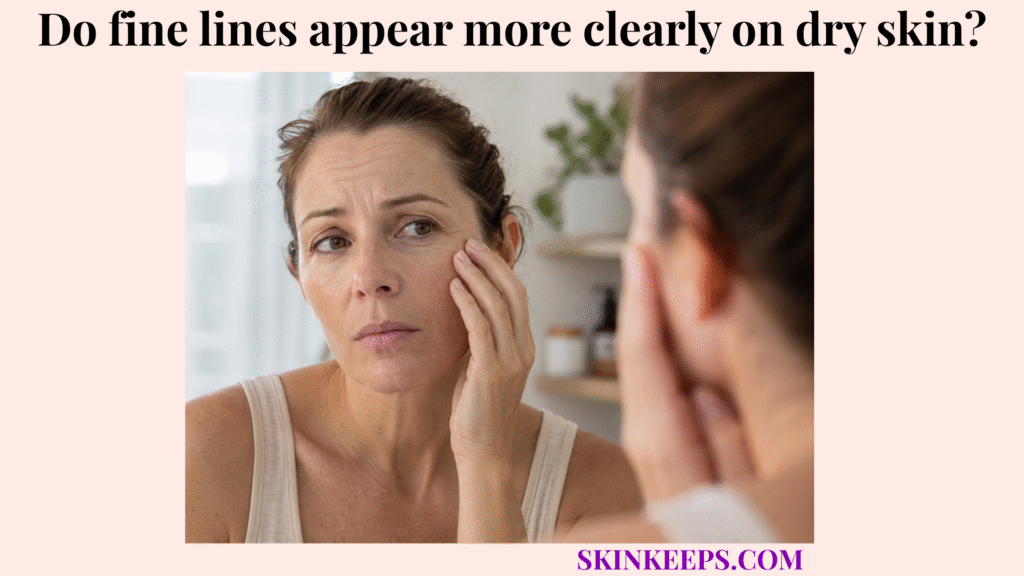
Yes, Fine lines appear more clearly on dry skin because moisture loss makes the outer surface tighter, rougher, and less flexible, causing shallow creases to look sharper. These visible lines often become more noticeable when dryness makes the surface look stretched, dull, or uneven.
This guideline explains why dry skin makes fine lines look clearer, how surface dryness differs from deeper wrinkles, where dryness-related lines often appear, what makes them look worse, how to soften their appearance through barrier support, and when visible lines suggest more than ordinary dryness.
Why do fine lines appear more clearly on dry skin?
Fine lines appear more clearly on dry skin because the dry outer layer loses moisture, flexibility, and smoothness, making shallow creases stand out more sharply. This dry surface cannot reflect light as evenly as a comfortable, hydrated surface. As a result, small lines look more defined even when they are mainly surface-level dryness lines.
This effect is visual and surface-based. Dry skin can make fine lines look worse without proving that every visible line is a deep wrinkle. If the main concern is broader surface dullness or roughness, the guide on dull or rough dry skin can help separate texture dryness from line visibility.
How moisture loss makes shallow lines look sharper
Moisture loss makes shallow lines look sharper by reducing the flexibility of the outer skin layer and making small creases easier to see. The dry surface can look tighter because it is not moving as smoothly. This does not mean moisture loss creates every wrinkle; it means dryness can increase the visibility of shallow lines.
Why dry skin reflects light less evenly around small creases
Dry skin reflects light less evenly around small creases because rough texture creates more tiny shadows along the surface. Those shadows make small lines look more defined. The effect is visual, so it should be understood as surface-line visibility rather than automatic structural aging.
| Dry-Skin Change | What Happens | Visible Result |
|---|---|---|
| Lower moisture | Surface becomes less flexible | Fine lines look sharper |
| Tightness | Skin looks stretched or uncomfortable | Small creases stand out |
| Rough texture | Surface reflects light unevenly | Lines appear more defined |
| Flaking or scaling | Dry buildup disrupts smoothness | Texture looks older or more lined |
| Dullness | Surface looks flat and less fresh | Lines become easier to notice |
| Irritation | Skin looks redder or more reactive | Creases may look harsher |
How are dryness lines different from deeper wrinkles?
Dryness lines are different from deeper wrinkles because they are usually shallow surface lines made more visible by moisture loss, while deeper wrinkles involve structural changes below the surface. Dryness lines may look sharper when the skin is tight, rough, or dehydrated. Deeper wrinkles tend to remain visible even after the surface is moisturized.
This distinction protects the reader from over-interpreting every line as aging. Dry skin can exaggerate surface creases, but collagen, elastin, facial movement, and UV exposure shape deeper wrinkle patterns. This page explains the difference without offering cosmetic wrinkle-treatment claims.
| Feature | Dryness-Related Fine Lines | Deeper Wrinkles |
|---|---|---|
| Main driver | Surface moisture loss and tightness | Collagen, elastin, movement, age, and UV damage |
| Depth | Shallow and surface-level | Deeper and more structural |
| Appearance | Often sharper when skin is dry | Remain visible even when skin is moisturized |
| Response to moisturizer | May look softer with hydration support | May soften slightly but does not disappear |
| Common areas | Around eyes, mouth, forehead, cheeks | Expression areas, folds, sun-exposed zones |
| Main care logic | Barrier support and hydration | Long-term photoaging prevention and dermatologic care |
Where do fine lines from dry skin usually show most clearly?
Fine lines from dry skin usually show most clearly on thin, mobile, exposed, or frequently washed areas such as the eyes, mouth, forehead, cheeks, neck, and hands. These areas move often or lose surface comfort quickly. Dryness makes small creases in these zones easier to see.
Location helps interpret the pattern. Fine lines around the eyes may look sharper when the skin is dry, while lines on the hands may become more noticeable after washing or cold exposure. If the visible lines appear with flakes, the page on flaking and scaling in dry skin can help explain that overlapping sign.
| Area | Why Fine Lines May Look Clearer |
|---|---|
| Around the eyes | Thin skin and frequent movement |
| Around the mouth | Movement, wiping, weather, and dryness |
| Forehead | Expression movement and surface tightness |
| Cheeks | Dullness, roughness, and dry texture |
| Neck | Thin surface and exposure |
| Hands | Frequent washing and environmental exposure |
| Cold-exposed areas | Weather-related moisture loss |
| Over-exfoliated areas | Barrier stress and tight-looking texture |
What makes fine lines look worse on dry skin?
Fine lines look worse on dry skin when cold weather, hot water, harsh soaps, over-exfoliation, sun exposure, skipped moisturizer, or irritation makes the surface tighter and rougher. These triggers reduce surface comfort and make shallow creases easier to see. The result is sharper-looking lines, not necessarily deeper wrinkles.
The trigger pattern matters because it helps guide care. Hot showers and harsh soaps may make lines appear after cleansing, while cold weather may make lines look clearer throughout the day. If harsh cleansing is a major trigger, the guide on harsh soaps remove natural lipids can help explain why the surface becomes tighter.
| Trigger | How It Makes Fine Lines Clearer |
|---|---|
| Cold or dry weather | Increases surface moisture loss |
| Hot showers | Strips surface oils and worsens tightness |
| Harsh soaps | Disrupts barrier comfort |
| Over-exfoliation | Makes surface look shiny, tight, or irritated |
| Sun exposure | Adds long-term aging damage and uneven texture risk |
| Skipping moisturizer | Leaves surface less flexible |
| Flaking or scaling | Breaks up surface smoothness |
| Irritating products | Makes the skin look redder, rougher, or more reactive |
How can dry-skin fine lines look less noticeable?
Dry-skin fine lines can look less noticeable when the surface is gently cleansed, moisturized after washing, protected from sun exposure, and kept away from harsh scrubbing or over-exfoliation. These steps improve the look of dryness-related surface lines by supporting flexibility and smoothness. They do not erase deeper structural wrinkles.
Moisturizer should be framed as surface support, not a wrinkle cure. Hydrating and barrier-supportive products can make dryness lines look less sharp because the surface becomes more comfortable. If visible lines are paired with split skin, the guide on cracked riverbed appearance can help explain when dryness has become more severe.
Why moisturizer can soften dryness-related fine lines
Moisturizer can soften dryness-related fine lines by improving surface flexibility and reducing the tight, rough texture that makes shallow creases stand out. This support can make the surface look smoother and less shadowed. It should not be described as erasing deeper structural wrinkles.
Why sunscreen matters when dry skin shows visible lines
Sunscreen matters when dry skin shows visible lines because UV exposure can worsen long-term texture changes while dryness makes surface lines look sharper. Sun protection addresses a different part of the problem than moisturizer. Together, surface support and sun protection help keep the care direction realistic.
Why over-exfoliating dry, lined skin can backfire
Over-exfoliating dry, lined skin can backfire because friction and irritation can make the surface tighter, rougher, and more visibly lined. A shiny or tight post-exfoliation look is not the same as healthy smoothness. Dry, lined skin usually needs calmer barrier support before more aggressive resurfacing.
| Care Step | Why It Helps Dry-Skin Fine Lines |
|---|---|
| Use a gentle cleanser | Reduces extra tightness after washing |
| Use lukewarm water | Avoids harsh moisture loss from hot water |
| Moisturize after washing | Supports surface flexibility |
| Choose creams or ointments when dryness is obvious | Gives stronger barrier support |
| Use humectants | Helps improve water support in the outer layer |
| Avoid harsh scrubbing | Prevents irritation and roughness |
| Use daily sunscreen | Helps prevent UV-driven texture aging |
| Reduce over-exfoliation | Keeps the surface calmer and smoother-looking |
When do visible fine lines suggest more than ordinary dryness?
Visible fine lines may suggest more than ordinary dryness when they appear with cracking, bleeding, severe itching, burning, scaling, swelling, crusting, oozing, rash-like patches, or dryness that does not improve. These signs suggest the surface may be irritated, inflamed, or affected by more than simple dryness. The safest response is professional evaluation without diagnosing the cause from appearance alone.
Persistent dryness around visible lines should not be managed with stronger exfoliation or harsh cleansing. If the skin burns, flakes repeatedly, cracks, or bleeds, the safer next step is professional guidance. If the reader is unsure, the page on persistent dry skin needs a dermatologist can guide the next step.
Warning Signs Checklist
What should you remember about fine lines and dry skin?
The main point to remember is that dry skin can make fine lines look clearer by reducing surface moisture, flexibility, and smoothness. Dryness makes shallow lines look sharper by reducing surface flexibility and smoothness. Dryness-related fine lines are not always the same as deeper structural wrinkles.
Final Takeaways
- Fine lines can appear more clearly on dry skin.
- Dryness makes shallow lines look sharper by reducing surface flexibility and smoothness.
- Dryness-related fine lines are not always the same as deeper structural wrinkles.
- Moisturizer can soften the look of dryness-related lines, but it does not erase deeper wrinkles.
- Cold weather, hot showers, harsh soaps, over-exfoliation, skipped moisturizer, and sun exposure can make fine lines look more noticeable.
- Fine lines that appear with cracking, bleeding, burning, severe itching, scaling, swelling, oozing, or persistent irritation should be checked professionally.
FAQs
Do fine lines appear more clearly on dry skin?
Yes, fine lines can appear more clearly on dry skin because moisture loss makes the surface tighter, rougher, and less flexible.
Are dryness lines the same as wrinkles?
No, dryness lines are usually shallow surface lines, while deeper wrinkles involve structural changes below the surface.
Can moisturizer make dry-skin fine lines look softer?
Yes, moisturizer can make dryness-related fine lines look softer by improving surface flexibility and reducing tightness.
Does dry skin permanently cause wrinkles?
Dry skin can make lines look more visible, but deeper wrinkles are influenced by collagen, elastin, movement, age, and UV exposure.
Where do dry-skin fine lines show most often?
Dry-skin fine lines often show around the eyes, mouth, forehead, cheeks, neck, and hands.
Can over-exfoliation make fine lines look worse?
Yes, over-exfoliation can make dry-skin fine lines look worse by increasing tightness, irritation, and rough surface texture.
When should visible fine lines on dry skin need professional care?
Visible fine lines should be checked when they appear with cracking, bleeding, severe itching, burning, swelling, crusting, oozing, rash-like patches, or persistent dryness.
Conclusion
Fine lines can appear more clearly on dry skin because the surface becomes tighter, rougher, and less flexible when moisture support drops. These lines are often dryness-related and surface-level, not always deeper structural wrinkles. Gentle cleansing, consistent moisturizer, sunscreen, and avoiding harsh exfoliation can make dryness-related lines look less sharp, while cracking, bleeding, burning, or persistent inflammation should be evaluated professionally.
The safest interpretation is simple: dry skin can sharpen the look of shallow lines, but it should not be treated as proof that every visible line is a deep wrinkle. Support the dry outer layer gently, protect against avoidable triggers, and seek professional care when visible lines appear with more severe dry-skin warning signs.