
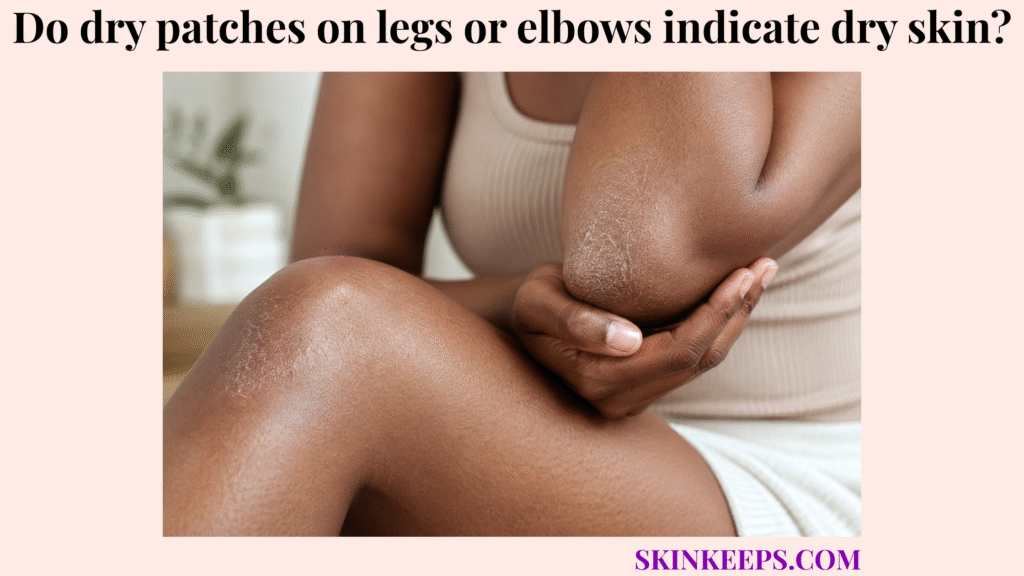
Dry patches on legs or elbows often indicate dry skin when they look rough, flaky, scaly, ashy, tight, or itchy. These patch patterns usually show that the outer surface has lost smoothness and comfort in a specific body area.
This guideline explains what dry patches on legs or elbows usually mean, why those areas commonly dry out, how ordinary dryness differs from inflammatory patch patterns, what can trigger localized dryness, how to care for the patches gently, and when persistent patches should be checked professionally.
What do dry patches on legs or elbows usually mean?
Dry patches on legs or elbows usually mean localized surface dryness when the area looks rough, flaky, scaly, ashy, tight, or mildly itchy. This pattern often appears when the outer skin layer becomes dry enough to shed unevenly or lose its smooth appearance. If the patch remains mild and improves with gentle care, ordinary dry skin is the most likely explanation.
Dry patches can mean more than simple dryness when they become thick, painful, bleeding, inflamed, sharply defined, or repeatedly return in the same area. These features suggest the patch may involve inflammation or another skin condition. If the reader wants the broader visual context, the guide on visible characteristics of dry skin can help compare the surface pattern.
When dry patches suggest ordinary dry skin
Dry patches suggest ordinary dry skin when they are mildly rough, flaky, scaly, ashy, or tight without severe pain, bleeding, swelling, or oozing. This pattern usually means the surface has become dry and uneven rather than deeply inflamed. The patch should still be watched, but mild improvement with gentle care supports an ordinary dry-skin explanation.
When dry patches suggest more than simple dryness
Dry patches suggest more than simple dryness when they become persistent, painful, thick, bleeding, inflamed, oozing, crusted, or sharply defined. These changes may overlap with eczema-like, dermatitis-like, psoriasis-like, or infection-looking patterns that need evaluation. The safer decision is to avoid self-diagnosis and seek professional care when the patch becomes severe or recurring.
| Patch Feature | Likely Meaning |
|---|---|
| Rough, flaky, or scaly surface | Common dry skin pattern |
| Tight or itchy patch | Dryness or irritation |
| Gray, ashy, or chalky surface | Visible dryness, especially on darker skin |
| Cracked or painful patch | More severe dryness or irritation |
| Thick, inflamed, recurring patch | May need evaluation for eczema, psoriasis, dermatitis, or another condition |
| Oozing, swelling, or crusting | Should be checked professionally |
Why do the legs commonly develop dry patches?
The legs commonly develop dry patches because lower-leg skin is often exposed to dry air, hot water, harsh cleansing, friction from clothing, and reduced surface oil compared with oilier body areas. This combination makes shins, calves, and ankles more likely to feel rough or look flaky. The pattern is especially common when weather, bathing habits, or friction repeatedly challenge the outer surface.
Leg patches may look different depending on skin tone and severity. On some skin tones, they may appear red or irritated, while on deeper skin tones they may look gray, chalky, or ashy. When the patch looks dusty or pale, the page on ashy skin on darker skin tones can help clarify the visual pattern.
Why lower legs are vulnerable to dryness
Lower legs are vulnerable to dryness because they often have less surface oil and more exposure to cold air, dry air, washing, and friction. This makes shins, calves, and ankles more likely to look rough, flaky, or tight. The pattern may become more visible during cold weather or after frequent hot showers.
How cold weather, hot showers, and harsh soaps worsen leg dryness
Cold weather, hot showers, and harsh soaps worsen leg dryness by removing surface comfort and making the outer layer rougher and more visibly flaky. When the surface is repeatedly stripped, small dry patches can become larger or more obvious. This is why dry lower legs often improve only when the trigger pattern is reduced.
| Leg Area | Common Dry Patch Appearance | Common Contributor |
|---|---|---|
| Shins | Rough, flaky, ashy, or tight patches | Cold air, dry air, hot water |
| Calves | Patchy dryness or dull texture | Weather, clothing friction |
| Ankles | Rough or scaly patches | Socks, shoes, friction |
| Knees | Thicker roughness or ashiness | Bending and friction |
| Feet | Thick, dry, cracked texture | Pressure and lower surface moisture |
Why do elbows commonly become dry, rough, or scaly?
Elbows commonly become dry, rough, or scaly because the elbow surface is thicker, bends frequently, and experiences repeated friction from leaning, clothing, and contact surfaces. This mechanical stress can make dryness look more textured on elbows than on smoother body areas. The result is often a rough patch that feels thicker than ordinary flaking.
Dry elbows may also look darker, ashier, or more uneven because friction and dryness appear together. This does not automatically mean a serious condition, but recurring thick plaques or painful cracking should be assessed carefully. If the elbow surface begins to split or form deep lines, the guide on cracked riverbed appearance can help describe the visible pattern.
How friction and bending thicken elbow dryness
Friction and bending thicken elbow dryness because repeated movement and pressure make the outer surface rougher and more resistant to smooth shedding. This can create a patch that feels tougher than ordinary dry skin. The same area may also look scaly because dry cells collect where the elbow repeatedly bends or rubs.
Why elbows may look darker, ashier, or rougher when dry
Elbows may look darker, ashier, or rougher when dry because friction, thick surface texture, and loose dry cells can make the area look uneven. Ashiness may appear when dry cells sit on top of the skin, while darker tone can appear when friction and texture make the area look more shadowed or thickened. A recurring, painful, or sharply defined patch should be reviewed rather than scrubbed harder.
| Elbow Sign | What It Suggests |
|---|---|
| Rough surface | Common elbow dryness pattern |
| Ashy cast | Visible dry cells on the surface |
| Thick scale | More advanced dryness or possible inflammatory pattern |
| Cracking | More severe dryness or friction stress |
| Pain or bleeding | Needs professional evaluation |
| Recurring plaques | Should not be treated as simple dryness only |
How can ordinary dry patches be separated from eczema or psoriasis-like patterns?
Ordinary dry patches can be separated from eczema or psoriasis-like patterns by looking at persistence, inflammation, thickness, pain, bleeding, oozing, and whether the patch improves with basic care. Ordinary dryness is usually rough, flaky, or mildly scaly without intense inflammation. A possible condition becomes more likely when the patch is persistent, sharply defined, very itchy, thickened, cracked, or recurrent.
This page does not diagnose eczema, dermatitis, or psoriasis from appearance alone. It describes warning signs and directs the reader to evaluation when the pattern looks inflammatory or does not improve. If dryness keeps returning despite consistent care, the guide on persistent dry skin needs a dermatologist can help clarify the next step.
| Feature | Ordinary Dry Skin | Possible Eczema / Psoriasis / Dermatitis Pattern |
|---|---|---|
| Texture | Rough, flaky, mildly scaly | Thick, inflamed, sharply defined, or recurring |
| Itch | Mild or occasional | Intense, persistent, or sleep-disrupting |
| Pain | Usually mild or absent | May sting, burn, crack, or bleed |
| Pattern | Often improves with moisturizer and gentler washing | Persists or returns despite basic care |
| Inflammation | Mild redness or ashiness may appear | Swelling, oozing, crusting, plaques, or thick patches may appear |
| Action | Home care may help | Dermatology evaluation may be needed |
What triggers dry patches on legs and elbows?
Dry patches on legs and elbows are commonly triggered by cold or dry weather, hot showers, harsh soaps, friction, aging-related dryness, over-scrubbing, and repeated irritation. These triggers either remove surface comfort or increase roughness in areas already prone to dryness. When the surface becomes rougher, patches look more obvious.
The most common mistake is treating rough patches as something that must be scrubbed away. Scrubbing may remove some loose flakes temporarily, but it can irritate the area and make the patch more persistent. If hot bathing is a major trigger, the guide on hot showers worsen dryness can help explain the bathing connection.
| Trigger | How It Contributes |
|---|---|
| Cold or dry weather | Increases dryness and makes patches more visible |
| Hot showers | Remove surface oils and worsen tightness |
| Harsh soaps | Irritate and dry the barrier |
| Friction from clothing or leaning | Worsens rough elbows, knees, or ankles |
| Aging | Skin may become less oily and less resilient over time |
| Over-scrubbing | Irritates rough patches further |
| Frequent washing | Can make hands, legs, or elbows drier |
| Low moisturizer use | Allows patches to stay rough and flaky |
How should dry patches on legs or elbows be cared for?
Dry patches on legs or elbows should be cared for with gentle cleansing, lukewarm bathing, immediate moisturizing, thicker support on rough areas, and less friction or scrubbing. This care direction works because localized dry patches need surface support rather than aggressive removal. The goal is to make the rough patch smoother and less irritated.
Elbows and lower legs often need more support than lightly dry facial skin because the surface is thicker or more exposed. Creams or ointments may help rough body patches more than thin lotions when the patch is visibly flaky or scaly. The care approach should stay consistent instead of switching products every time a patch looks rough.
Why moisturizer timing matters for dry patches
Moisturizer timing matters for dry patches because applying it soon after bathing helps support the surface before tightness and flaking return. The patch is often easier to support when the surface is not already extremely dry. Consistent timing also helps rough elbows and lower legs stay smoother between washes.
Why rough patches should not be aggressively scrubbed
Rough patches should not be aggressively scrubbed because friction can irritate the dry surface and make the patch more inflamed or persistent. Scrubbing may remove loose flakes for a short time, but it does not correct the dryness pattern. A gentler approach protects the surface while moisturizer supports comfort.
Why thicker creams or ointments may suit elbows and legs
Thicker creams or ointments may suit elbows and legs because these body areas often need stronger surface support than areas with only mild dryness. Elbows have thicker texture, while lower legs may dry repeatedly from weather, washing, and friction. A richer product can stay on rough patches longer than a thin lotion.
| Care Step | Why It Helps |
|---|---|
| Use a gentle cleanser | Reduces irritation and dryness from harsh washing |
| Keep showers lukewarm | Avoids stripping surface oils |
| Moisturize after bathing | Supports dry patches before tightness returns |
| Use creams or ointments on rough patches | Provides stronger support for elbows and lower legs |
| Avoid scrubbing flakes | Reduces irritation and patch persistence |
| Reduce friction where possible | Helps rough elbows, knees, or ankles calm down |
| Reapply moisturizer to rough zones | Supports areas that dry out repeatedly |
When should dry patches on legs or elbows be checked by a dermatologist?
Dry patches on legs or elbows should be checked by a dermatologist when they crack, bleed, hurt, itch severely, spread, ooze, crust, swell, thicken, or keep returning despite consistent care. These warning signs suggest the patch may involve inflammation, infection-looking changes, or another skin condition. This is a safety step, not a reason to panic.
Recurring patches deserve special attention because ordinary dryness usually improves when triggers are reduced and moisturizer is used consistently. A patch that returns in the same place or becomes sharply defined should not be repeatedly scrubbed or ignored. It may need diagnosis before stronger products are used.
Dermatologist-Level Signs
What should you remember about dry patches on legs and elbows?
The main point to remember is that dry patches on legs or elbows often indicate localized dry skin, but persistence, pain, bleeding, inflammation, or recurrence changes the meaning. Lower legs commonly become dry because of dry air, hot water, harsh cleansing, friction, and lower surface oil. Elbows commonly become rough because of bending, pressure, friction, and thicker surface texture.
Final Takeaways
- Dry patches on legs or elbows often indicate localized dry skin.
- Lower legs commonly become dry because of dry air, hot water, harsh cleansing, friction, and lower surface oil.
- Elbows commonly become rough because of bending, pressure, friction, and thicker surface texture.
- Rough, flaky, scaly, ashy, tight, or mildly itchy patches often fit ordinary dry skin.
- Thick, painful, bleeding, inflamed, oozing, crusted, or recurring patches may need professional evaluation.
- Dry patches should be moisturized and protected from friction rather than aggressively scrubbed.
- The best interpretation comes from the patch’s texture, location, persistence, discomfort, and response to gentle care.
FAQs
Do dry patches on legs usually mean dry skin?
Dry patches on the legs often mean dry skin, especially when they look rough, flaky, scaly, ashy, or tight.
Why do my elbows get dry and rough?
Elbows often get dry and rough because they bend frequently, experience friction, and have thicker surface skin than many other body areas.
Are dry patches on elbows always eczema or psoriasis?
No, dry patches on elbows are not always eczema or psoriasis. Mild roughness or flaking can be ordinary dryness, but thick, recurring, painful, or inflamed patches should be evaluated.
Why do dry patches on darker skin look ashy?
Dry patches on darker skin can look ashy because loose dry cells create a gray, white, or chalky surface cast against melanin-rich skin.
Should I scrub dry patches off my elbows or legs?
No, dry patches should not be aggressively scrubbed because friction can irritate the area and make roughness more persistent.
When should dry patches on legs or elbows need medical care?
Dry patches should be checked when they crack, bleed, hurt, itch severely, ooze, crust, swell, spread, or keep returning despite care.
Conclusion
Dry patches on legs or elbows often point to localized dry skin, but the meaning changes when the patches become persistent, painful, inflamed, bleeding, or recurring. Lower legs often dry out because of weather, bathing habits, and lower surface oil, while elbows become rough because of friction, bending, and thicker texture.
Mild roughness or flaking usually fits ordinary dryness, but severe or repeated patches deserve professional evaluation. The safest approach is to support the dry surface gently, reduce friction and harsh washing, and avoid treating every rough patch as something that should be scrubbed away.