
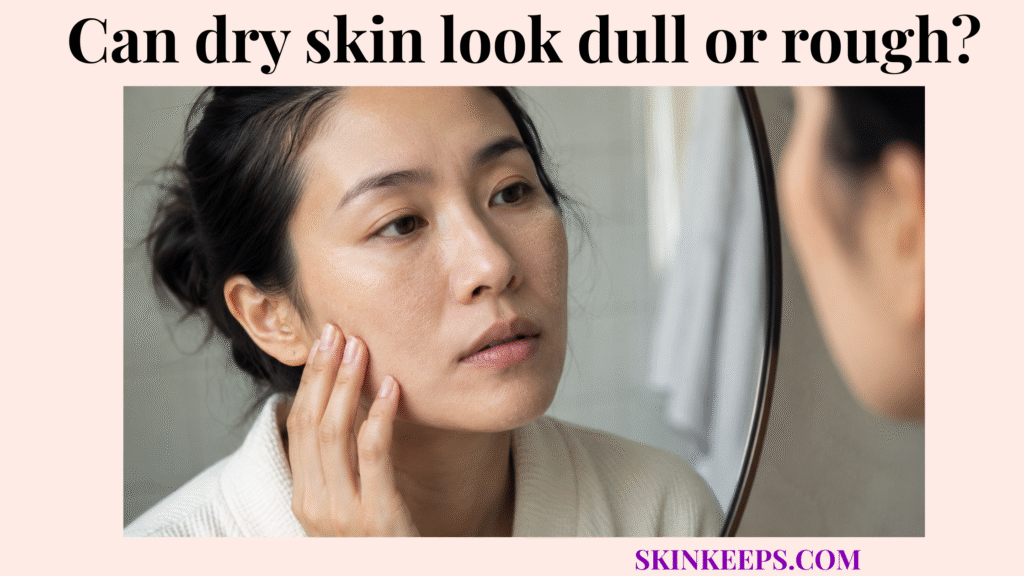
Yes, Dry skin can look dull and feel rough because the outer surface loses smoothness, holds less moisture, and reflects light less evenly. This surface change makes the skin look flat, tired, ashy, or less fresh while also making it feel coarse or uneven to the touch.
This guideline explains why dry skin can look dull, why it can feel rough, how dullness differs from flaking or scaling, where dull or rough dryness often appears, what triggers it, how to care for it gently, and when rough dry skin may need professional evaluation.
Why can dry skin look dull?
Dry skin can look dull because the outer surface becomes uneven, so light scatters across rough dry areas instead of reflecting smoothly. This dullness often appears as a flat, tired, ashy, or less radiant finish. The visual issue is not that the skin has lost all health, but that the dry surface no longer looks smooth.
Dullness is usually an early visual clue before dryness becomes more visibly flaky or scaly. The skin may look less fresh even when flakes are not obvious yet. Readers who need a broader recognition guide can compare this with the page on visible characteristics of dry skin.
How uneven dry texture disrupts light reflection
Uneven dry texture disrupts light reflection by creating tiny surface irregularities that scatter light instead of letting the skin look smooth and even. This means the skin can appear flat or tired even before obvious flakes appear. The dull look comes from the surface pattern rather than from one single color change.
Why dry skin may look flat, tired, or ashy
Dry skin may look flat, tired, or ashy when rough surface cells create a dull cast that reduces the appearance of freshness. On deeper skin tones, that dull cast may look gray or chalky rather than simply flat. When the visual clue is mostly gray or powdery, the page on ashy skin on darker skin tones can help explain the surface cast.
Why can dry skin feel rough?
Dry skin can feel rough because low surface moisture and barrier dryness make the outer layer less flexible, less smooth, and more uneven under the fingers. This roughness may appear before flakes become obvious. A person may first notice that the skin feels coarse, tight, or less soft than usual.
Roughness often becomes more noticeable on body areas exposed to friction or repeated washing. Elbows, knees, shins, feet, and hands can feel especially coarse when the outer layer dries. If roughness appears as localized body patches, the guide on dry patches on legs or elbows can help explain the pattern.
How low moisture changes skin from soft to coarse
Low moisture changes skin from soft to coarse by reducing flexibility in the outer layer and making dry surface cells feel uneven. The skin may feel tight, resistant, or less elastic. This texture change can happen before visible scaling or cracking develops.
Why dry patches can feel uneven under the fingers
Dry patches can feel uneven under the fingers because loose dry cells and rough surface buildup interrupt the skin’s normal smoothness. The patch may feel grainy, bumpy, or slightly raised compared with nearby skin. This roughness is a tactile sign that the dry surface is no longer lying evenly.
| Feature | What It Looks or Feels Like | What It Suggests |
|---|---|---|
| Dullness | Flat, tired, ashy, or less radiant surface | Uneven light reflection from dryness |
| Roughness | Coarse or uneven texture | Low moisture and surface barrier dryness |
| Flaking | Loose visible skin pieces | Dry outer layer shedding |
| Scaling | Thicker dry surface buildup | More advanced dryness |
| Tightness | Stretched or uncomfortable feel | Water loss or barrier stress |
| Cracking | Small splits or fissures | More severe dryness |
How are dullness, roughness, flaking, and scaling different?
Dullness, roughness, flaking, and scaling are different dry-skin signs because each one describes a separate stage or surface pattern of dryness. Dullness is mainly visual, while roughness is mainly tactile. Flaking and scaling become more obvious when the dry outer layer starts shedding visibly.
This difference matters because mild dry skin may only look dull or feel rough before flakes appear. More advanced dryness may show scaling, cracks, or discomfort. If the surface begins to form visible loose pieces or thicker dry buildup, the page on flaking and scaling in dry skin can help separate those signs.
| Dry-Skin Sign | Main Clue | Typical Meaning |
|---|---|---|
| Dullness | Skin looks less bright or less fresh | Light reflection is disrupted |
| Roughness | Skin feels uneven or coarse | Surface moisture and smoothness are reduced |
| Flaking | Tiny loose pieces of dry skin appear | Dry outer layer is shedding visibly |
| Scaling | Dry patches become thicker or more visible | Dryness is more advanced |
| Tightness | Skin feels stretched or uncomfortable | Water loss or barrier stress may be present |
| Cracking | Skin starts splitting | Dryness may be severe |
Where does dry skin usually look dull or rough?
Dry skin usually looks dull or rough on areas that are exposed to weather, washed frequently, rubbed often, or naturally prone to lower surface moisture. The face may look flat or less fresh, while elbows, knees, shins, hands, and feet may feel rougher. Around the mouth can also look dry when wiping, saliva, weather, or irritation affects the surface.
Location helps interpret the sign. Dullness on the face may appear as a flat complexion, while roughness on the elbows or shins may appear as textured patches. When dullness appears with a gray or chalky cast on deeper skin tones, the page on ashy skin on darker skin tones can help clarify that visual clue.
| Area | Common Dull or Rough Pattern |
|---|---|
| Face | Flat, tired, less fresh, or less radiant appearance |
| Hands | Roughness from frequent washing or exposure |
| Elbows | Coarse, thick, or ashy texture |
| Knees | Rough or dry surface from bending and friction |
| Shins | Dull, flaky, or ashy dry patches |
| Feet | Thick, rough, or cracked dryness |
| Around the mouth | Dull, rough, irritated, or flaky surface |
| Exposed areas | Weather-related dullness or roughness |
| Frequently washed areas | Tight, dull, or rough texture |
What triggers dull or rough dry skin?
Dull or rough dry skin is commonly triggered by cold or dry weather, hot showers, harsh soaps, over-washing, aging-related moisture changes, and repeated friction. These triggers make the surface less smooth and less comfortable. When the surface becomes uneven, dullness and roughness become easier to notice.
The trigger does not need to be dramatic to matter. A slightly harsh cleanser, repeated hot showers, or dry indoor air can gradually make the skin look flatter and feel rougher. If hot water is a clear trigger, the guide on hot showers worsen dryness can explain that bathing connection.
| Trigger | How It Contributes |
|---|---|
| Cold or dry weather | Increases moisture loss and surface roughness |
| Hot showers | Remove surface oils and worsen tightness |
| Harsh soaps | Irritate and dry the barrier |
| Over-washing | Removes protective surface lipids |
| Aging | Skin may hold less moisture and produce less oil |
| Friction | Makes rough patches more noticeable |
| Indoor heating | Can dry the surface during colder seasons |
| Low moisturizer use | Allows dullness and roughness to persist |
How can dull or rough dry skin be improved?
Dull or rough dry skin can often be improved by reducing surface dryness, cleansing gently, moisturizing consistently, and avoiding harsh friction or hot-water stripping. These steps support the outer surface so it can feel smoother and reflect light more evenly. The goal is not to polish the skin aggressively, but to restore surface comfort.
Moisturizer timing matters when roughness is obvious. Applying moisturizer after washing can help reduce tightness before the surface dries again. If the skin starts cracking or forming deeper split patterns, the guide on cracked riverbed appearance can help explain when roughness has become more severe.
Why gentle cleansing helps dull or rough dry skin
Gentle cleansing helps dull or rough dry skin because it removes buildup without stripping the surface lipids needed for comfort and smoothness. Harsh cleansing can make the outer layer tighter and less even. A mild cleanser keeps the care direction focused on support rather than aggressive removal.
Why moisturizer timing matters for rough dry texture
Moisturizer timing matters for rough dry texture because applying it after washing helps support the surface before tightness and dullness return. This timing helps the outer layer feel less coarse. Consistent moisturizing is usually more useful than waiting until the skin becomes visibly rough again.
Why scrubbing rough dry skin can backfire
Scrubbing rough dry skin can backfire because friction may irritate the surface and make roughness more persistent instead of smoother. Scrubbing may remove loose flakes briefly, but it can leave the dry surface more reactive. A gentler routine is safer when the goal is surface comfort.
| Care Direction | Why It Helps Dull or Rough Dry Skin |
|---|---|
| Use a gentle cleanser | Reduces stripping and irritation |
| Avoid long hot showers | Helps preserve surface comfort |
| Apply moisturizer after washing | Supports the surface before tightness returns |
| Choose creams or ointments when roughness is obvious | Gives stronger surface support than thin lotions |
| Avoid aggressive scrubbing | Prevents irritation and worsening roughness |
| Protect exposed skin in cold or dry weather | Reduces weather-related dullness |
| Use humidifier support if indoor air is dry | Helps reduce environmental dryness |
When is dull or rough dry skin more than ordinary dryness?
Dull or rough dry skin may be more than ordinary dryness when it cracks, bleeds, hurts, burns, stings, thickens, oozes, crusts, spreads, or does not improve with basic care. These signs suggest the surface may be inflamed, severely dry, or affected by another skin condition. Professional evaluation is safer than stronger scrubbing or repeated product switching.
Persistent roughness also deserves attention when it appears in the same area repeatedly. A recurring patch may overlap with eczema, dermatitis, psoriasis, or another condition that needs diagnosis. If rough dry skin does not respond to gentle care, the page on persistent dry skin needs a dermatologist can guide the next step.
Warning Signs Checklist
What should you remember about dull or rough dry skin?
The main point to remember is that dry skin can look dull and feel rough when surface dryness makes the outer layer uneven. Dullness is the visual clue, while roughness is the texture clue. When the surface becomes more disrupted, flaking, scaling, tightness, or cracking may appear.
Final Takeaways
- Dry skin can look dull because an uneven surface reflects light less smoothly.
- Dry skin can feel rough because the outer layer loses moisture, flexibility, and smoothness.
- Dullness is mainly a visual sign, while roughness is mainly a texture sign.
- Flaking and scaling suggest dry skin is becoming more visible or advanced.
- Cold weather, hot showers, harsh soaps, over-washing, aging, and friction can worsen dull or rough texture.
- Gentle cleansing, consistent moisturizing, and avoiding aggressive scrubbing can help support dull or rough dry skin.
- Cracking, bleeding, pain, thick scaling, oozing, or persistent rough patches may need professional evaluation.
FAQs
Can dry skin look dull?
Yes, dry skin can look dull because the rough outer surface reflects light less evenly.
Can dry skin feel rough?
Yes, dry skin can feel rough when the outer layer loses smoothness and becomes coarse or uneven.
Why does dry skin look tired or flat?
Dry skin can look tired or flat because surface dryness reduces smooth light reflection and makes the complexion look less fresh.
Is rough skin always dry skin?
No, rough skin can come from dryness, friction, irritation, scaling, or another skin condition, so persistent roughness should be watched carefully.
What is the difference between dullness and flaking?
Dullness means the skin looks less bright or less fresh, while flaking means loose pieces of dry skin are visibly shedding.
Should rough dry skin be scrubbed?
No, rough dry skin should not be aggressively scrubbed because friction can irritate the surface and make roughness worse.
When should dull or rough dry skin need professional care?
Dull or rough dry skin should be checked if it cracks, bleeds, hurts, oozes, thickens, spreads, or does not improve with gentle care.
Conclusion
Dry skin can look dull or rough when surface dryness makes the outer layer uneven, less flexible, and less able to reflect light smoothly. Dullness is the visual clue, while roughness is the texture clue. If rough dry skin progresses into flaking, scaling, cracking, bleeding, pain, or persistent patches, it should be treated as more than a cosmetic texture issue.
The strongest approach is to recognize the surface pattern early, reduce harsh triggers, and support the outer layer gently. If the texture becomes painful, cracked, oozing, thick, spreading, or persistent, professional evaluation is safer than scrubbing harder or repeatedly switching products.