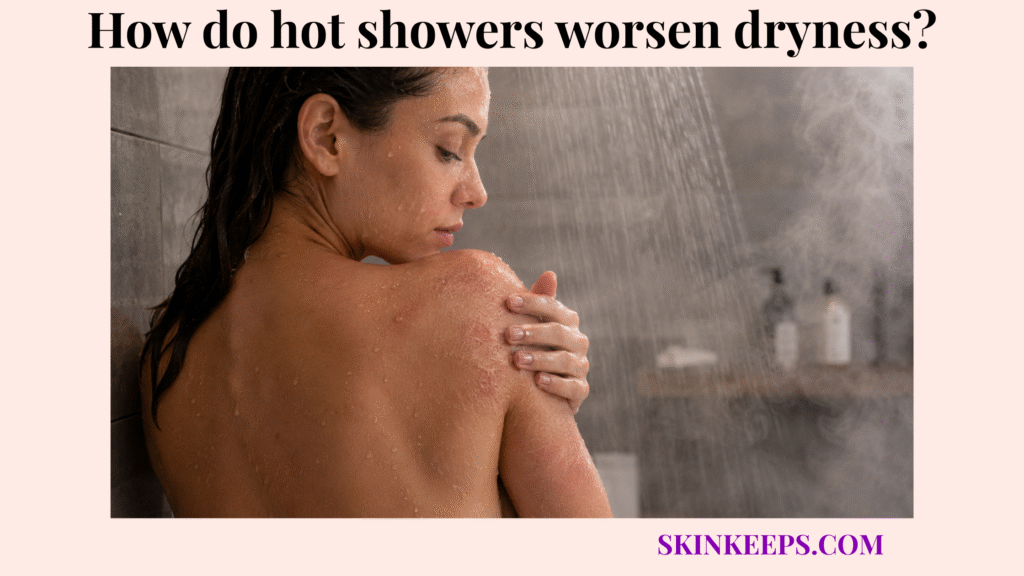
Hot showers worsen dryness by stripping protective surface oils, increasing post-shower moisture loss, and leaving the outer skin layer tighter, rougher, itchier, or more irritated after bathing. This happens because hot water removes comfort from the skin surface, then the skin dries down with less support than it had before the shower.
This guideline explains how hot water worsens dry skin, why surface oil removal creates tightness, how post-shower moisture evaporation increases discomfort, why shower length matters, which shower products make dryness worse, and how to bathe without pushing dry skin into flaking, stinging, or cracking.
Why does hot water make dry skin worse?
Hot water makes dry skin worse by removing protective surface oils that help the outer skin layer stay comfortable, smooth, and flexible. These surface oils are not decoration; they help dry skin feel less tight after washing. When hot water reduces them, the skin can dry down rougher and less comfortable.
Hot showers are one specific water-exposure trigger within the wider group of environmental factors that worsen dry skin, but this page focuses only on heat and bathing behavior. That narrow focus matters because a shower can feel soothing during bathing and still leave the skin worse afterward. Mayo Clinic also advises avoiding long, hot showers and baths when managing dry skin. [Mayo Clinic]
How hot water removes protective surface oils
Hot water removes protective surface oils by loosening and washing away part of the lipid film that helps dry skin feel softer after bathing. This surface oil removal can reduce the glide and comfort of the stratum corneum. Once that protective film is reduced, the same skin may feel tight, rough, or more reactive as it dries.
Why dry skin becomes tighter when surface oils are stripped
Dry skin becomes tighter when surface oils are stripped because the outer layer loses some of the lubrication that helps it remain flexible after washing. This stripped feeling is not the same as a healthy clean feeling. It often means the skin surface has less comfort and more friction as it dries.
| Hot-Shower Effect | What Happens | Dry-Skin Result |
|---|---|---|
| Heat removes surface oils | Protective lipids are reduced. | Tightness and roughness. |
| Water exposure continues too long | Barrier comfort drops. | More dryness after bathing. |
| Skin dries after shower | Moisture evaporates from surface. | Itching or flaking. |
| Hot water plus cleanser | Stronger stripping effect. | More irritation. |
| Rough towel drying follows | Friction is added to dry skin. | More redness or roughness. |
How do hot showers increase moisture loss after bathing?
Hot showers increase moisture loss after bathing by leaving damp skin exposed with fewer protective surface oils, allowing water to evaporate more easily as the skin dries. This is why the skin may feel fine under the water but tight a few minutes later. The problem often becomes obvious after toweling off.
Moisturizer timing matters because damp skin loses comfort quickly after bathing. The American Academy of Dermatology recommends applying moisturizer while the skin is still damp after washing to help relieve dry skin. [American Academy of Dermatology]
Why damp skin loses water quickly after a hot shower
Damp skin loses water quickly after a hot shower because the surface is wet but less protected, so evaporation can leave the outer layer tight and uncomfortable. The skin may feel temporarily relieved while water is on the surface. As that water evaporates, the dry outer layer can feel more strained than before.
Why delaying moisturizer can make post-shower tightness worse
Delaying moisturizer can make post-shower tightness worse because the skin has more time to dry down before moisture is sealed into the outer layer. This delay matters most when the shower was hot, long, or paired with a strong cleanser. Applying moisturizer while the skin is still slightly damp gives the surface earlier support.
| Step | What Happens | What the Skin May Feel |
|---|---|---|
| Hot water exposure | Surface oils are reduced. | Comfortable during shower. |
| Shower ends | Damp skin begins drying. | Temporary relief fades. |
| Moisturizer is delayed | Water evaporates faster. | Tightness or itching. |
| Towel rubbing follows | Friction adds stress. | Roughness or irritation. |
| Moisturizer is applied early | Dampness is supported. | Better comfort. |
Why does shower length matter for dry skin?
Shower length matters for dry skin because longer bathing keeps the skin exposed to water, heat, and cleanser for more time, which increases the chance of post-shower dryness. Heat intensity and duration work together. A short warm shower is usually less drying than a long hot shower.
The American Academy of Dermatology recommends limiting baths and showers to 5–10 minutes to avoid drying out the skin, and Mayo Clinic Health System also recommends five to 10 minutes with warm, not hot, water. This number belongs in duration guidance, not as a universal medical rule for every person. [American Academy of Dermatology] [Mayo Clinic Health System]
Why long showers increase dryness risk
Long showers increase dryness risk because the outer skin layer remains exposed to water, heat, and cleansing products for longer than necessary. Longer exposure gives hot water more time to reduce surface comfort. When a strong cleanser is added, the same long shower can leave dry skin feeling stripped and itchy.
Why short warm showers are safer for dry skin
Short warm showers are safer for dry skin because they cleanse the skin while reducing the time that heat and water can remove surface comfort. Warm water still cleanses, but it is less likely to leave the outer layer stripped. Shorter exposure also makes damp-skin moisturizing easier to time.
| Shower Habit | Dry-Skin Impact |
|---|---|
| Short warm shower | Lower stripping risk. |
| Long warm shower | More moisture-loss risk. |
| Short hot shower | Still can strip surface oils. |
| Long hot shower | Highest dryness risk. |
| Hot shower plus harsh soap | Strongest irritation risk. |
What does hot-shower dryness feel or look like?
Hot-shower dryness can feel or look like tightness, itching, rough texture, flaking, stinging, burning, redness, darker irritation, or cracking after bathing. These signs appear because the outer skin layer has less surface comfort after hot-water exposure. Mild dryness may only feel tight, while stronger dryness may sting, peel, or crack.
The timing of the symptom matters. If the main symptom is a pulled feeling after cleansing, the guide on dry skin feels tight after washing can explain the post-wash tightness pattern. If post-shower dryness becomes sharp or uncomfortable, the reaction should be interpreted as stronger irritation rather than simple clean skin.
Why tightness and itching often appear after hot showers
Tightness and itching often appear after hot showers because heat and water exposure leave the dry outer layer less comfortable as it dries. Tightness usually reflects reduced flexibility after surface comfort drops. Itching can appear when the dry barrier becomes more reactive to friction, towels, clothing, or leftover cleanser.
Why flaking, stinging, or cracks can appear when dryness becomes stronger
Flaking, stinging, or cracks can appear when dryness becomes stronger because the outer layer becomes less flexible and more irritated after repeated hot-water exposure. Flakes suggest dry cells are loosening visibly. If the post-shower sensation becomes sharp, the page on dry skin stinging or burning can help separate simple dryness from stronger irritation.
| Sign | What It May Suggest |
|---|---|
| Tightness | Surface comfort has dropped after washing. |
| Itching | Dry skin is becoming irritated. |
| Rough texture | Outer layer feels less smooth. |
| Flaking | Dry cells are shedding visibly. |
| Stinging | Barrier may be more reactive. |
| Burning | Irritation may be stronger. |
| Redness or darker irritation | Skin may be inflamed. |
| Cracks | Dryness may be more advanced. |
Which shower products make hot-water dryness worse?
Shower products that make hot-water dryness worse include harsh bar soaps, strong foaming body washes, fragrance-heavy cleansers, alcohol-heavy products, scrubs, rough washcloths, and stiff cleansing brushes. These products add chemical or physical stress to skin that is already being exposed to heat. The combination can make post-shower dryness more intense.
Product strength matters as much as water temperature. A gentle cleanser may reduce dryness risk, while a harsh cleanser can make even a warm shower feel stripping. Mayo Clinic lists harsh soaps and overbathing among dry-skin causes, so cleanser choice should be treated as part of the shower-exposure pattern. [Mayo Clinic]
Why harsh soaps intensify hot-water dryness
Harsh soaps intensify hot-water dryness because they remove surface comfort at the same time that heat is already reducing protective oils. This combined exposure can make the dry barrier feel stripped rather than clean. A cleanser that repeatedly leaves the skin tight, stingy, or itchy is a poor match for a dry skin state.
Why scrubs and rough washcloths can irritate dry skin after hot water
Scrubs and rough washcloths can irritate dry skin after hot water because friction adds mechanical stress to an outer layer that is already less comfortable. Scrubbing does not restore smoothness when the issue is dryness. It can make rough patches more reactive and more visible.
| Product or Habit | Why It Can Worsen Dryness |
|---|---|
| Harsh bar soap | Removes too much surface comfort. |
| Strong foaming body wash | Can feel stripping after hot water. |
| Fragrance-heavy cleanser | Adds irritation risk. |
| Alcohol-heavy product | Can increase dryness or stinging. |
| Scrub | Adds friction to dry patches. |
| Rough washcloth | Irritates dry surface texture. |
| Stiff cleansing brush | Can worsen roughness or redness. |
How should dry skin shower without worsening dryness?
Dry skin should shower without worsening dryness by using warm water, keeping bathing short, choosing a gentle fragrance-free cleanser, patting dry, and applying moisturizer while the skin is still damp. This method reduces heat, cleanser, and friction stress at the same time. It also supports the skin immediately after bathing, when dryness often appears.
For dry skin relief, the American Academy of Dermatology recommends limiting bath or shower time to 5–10 minutes, using warm water, patting the skin dry, and moisturizing immediately while the skin is still damp. Mayo Clinic Health System also recommends limiting bathing to five to 10 minutes and using warm, not hot, water. [American Academy of Dermatology] [Mayo Clinic Health System]
Why warm water is safer than hot water for dry skin
Warm water is safer than hot water for dry skin because it cleanses with less surface oil removal and less post-shower tightness. This does not mean the skin needs cold water. It means the goal is cleansing without leaving the outer layer stripped.
Why moisturizer should be applied while skin is still damp
Moisturizer should be applied while skin is still damp because it helps support the water left on the outer layer before that moisture evaporates. This step is especially useful after bathing because the surface has just been exposed to water and cleanser. Waiting until the skin feels tight makes the barrier harder to calm.
Why patting dry is better than rubbing dry skin
Patting dry is better than rubbing dry skin because gentle towel pressure reduces friction on an outer layer that may already feel rough or tight. Rubbing adds mechanical stress after heat and cleanser exposure. Patting leaves the surface calmer before moisturizer is applied.
Safer Shower Checklist
When is hot-shower dryness more than ordinary dryness?
Hot-shower dryness is more than ordinary dryness when it causes cracks, bleeding, severe itching, pain, burning, persistent stinging, swelling, oozing, crusting, or symptoms that do not improve after changing shower habits. These signs suggest the skin may need more than a water-temperature adjustment. The safest message is evaluation without self-diagnosis.
Persistent symptoms can overlap with dermatitis, eczema, psoriasis, infection, allergy, or other skin conditions. A clinician can check whether the issue is simple dry skin or a more specific concern. When dryness persists despite changing shower habits, the article on persistent dry skin needs a dermatologist can guide escalation.
Why cracking, bleeding, or oozing should be evaluated
Cracking, bleeding, or oozing should be evaluated because those signs suggest stronger barrier disruption than ordinary post-shower tightness. Simple dryness can feel uncomfortable, but broken, bleeding, or fluid-producing skin needs closer review. This distinction protects the reader from treating advanced symptoms as a normal shower reaction.
Why persistent post-shower irritation should not be ignored
Persistent post-shower irritation should not be ignored because ongoing burning, stinging, itching, or inflammation may reflect a condition beyond simple hot-water dryness. The same symptom pattern matters more when it keeps returning after warm, shorter showers. If a safer shower method does not improve the skin, professional evaluation is the stronger next step.
Warning-Sign Checklist
What should you remember about hot showers and dryness?
The main point to remember is that hot showers worsen dryness by removing surface oils, increasing post-shower moisture loss, and making the outer skin layer less comfortable after bathing. This means the skin may feel soothed during the shower but tighter, rougher, or itchier afterward. The practical fix is to reduce heat, shorten exposure, use gentler cleansing, and moisturize while the skin is still damp.
Final Takeaways
- Hot showers can worsen dry skin by removing protective surface oils.
- Dry skin often feels tighter, rougher, or itchier after hot-water exposure.
- Long hot showers are more drying than short warm showers.
- Harsh soaps, strong body washes, fragrance-heavy cleansers, and scrubbing can intensify hot-shower dryness.
- Moisturizer works best after bathing when the skin is still slightly damp.
- A safer shower method uses warm water, short bathing time, gentle cleanser, pat drying, and immediate moisturizer.
- Cracking, bleeding, severe itching, pain, burning, oozing, crusting, or persistent irritation should be evaluated professionally.
FAQs
How do hot showers worsen dryness?
Hot showers worsen dryness by removing protective surface oils and leaving the outer skin layer tighter, rougher, itchier, or more irritated after bathing.
Why does dry skin feel tight after a hot shower?
Dry skin feels tight after a hot shower because hot water reduces surface comfort, and the skin dries down with less protective oil support.
Are long hot showers worse than short warm showers?
Yes, long hot showers are usually worse for dry skin because they extend heat, water, and cleanser exposure.
Can hot showers make dry skin itchy?
Yes, hot showers can make dry skin itchy because heat and surface oil removal can leave the barrier more irritated after bathing.
Should dry skin use hot or warm water?
Dry skin should use warm water rather than hot water because warm water cleanses with less surface oil removal.
When should moisturizer be applied after a shower?
Moisturizer should be applied while the skin is still slightly damp after showering so the outer layer receives support before it fully dries.
When does hot-shower dryness need professional care?
Hot-shower dryness needs professional care when it cracks, bleeds, becomes painful, burns, stings persistently, oozes, crusts, or does not improve after changing shower habits.
Conclusion
Hot showers worsen dryness by removing protective surface oils and increasing post-shower moisture loss from the outer skin layer. This is why dry skin can feel tight, rough, itchy, flaky, or irritated after bathing. The safer routine is simple: use warm water, keep showers short, choose gentle fragrance-free cleanser, pat dry, and apply moisturizer while the skin is still damp.