
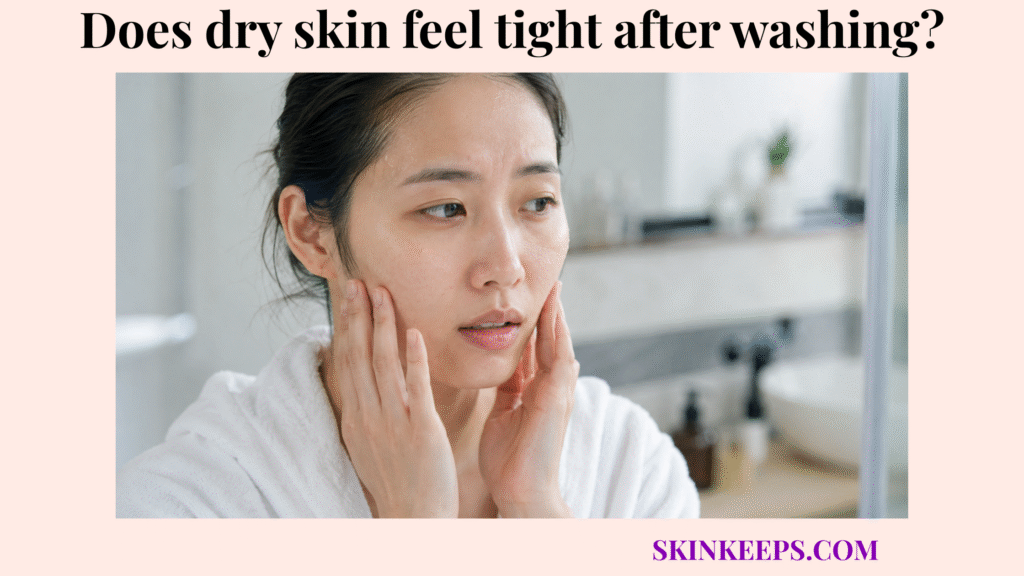
Yes, dry skin often feels tight after washing because water, cleanser, and friction can reduce surface comfort and increase moisture loss from the outer skin barrier. This tightness usually appears when the skin surface becomes less flexible after cleansing, bathing, showering, or swimming.
This guideline explains why dry skin feels tight after washing, which washing habits make tightness worse, how to separate a clean feeling from a stripped feeling, how quickly moisturizer should be applied, which cleanser choices reduce tightness, and when post-wash tightness needs professional evaluation.
Why does dry skin feel tight after washing?
Dry skin feels tight after washing because cleansing can temporarily remove surface comfort from a barrier that already has low moisture support and reduced flexibility. This post-wash tightness means the outer layer is not holding comfort well after contact with water, cleanser, or friction. The skin may feel stretched even when it looks clean.
Tightness should be treated as a barrier signal, not proof that the skin is properly cleansed. A comfortable cleanse should remove buildup without leaving the surface strained, stingy, or squeaky. If tightness appears with itching or soreness, the broader page on dry skin barrier discomfort can help interpret the full sensation pattern.
How washing removes surface comfort from dry skin
Washing removes surface comfort from dry skin by lifting away some natural oils and exposing the already dry outer layer to faster moisture loss. Cleansing is necessary, but it can feel drying when the cleanser is strong, the water is hot, or the skin is rubbed too aggressively. The result is a post-wash surface that feels clean but less comfortable.
Why tightness signals moisture loss or barrier stress
Tightness signals moisture loss or barrier stress because the skin surface becomes less flexible when its water support and protective surface film are reduced. This makes the surface feel pulled during normal movement or after towel drying. Tightness alone does not diagnose a condition, but it is a useful clue that the washing routine may need gentler support.
| Sensation After Washing | What It May Suggest |
|---|---|
| Mild tightness | Temporary moisture loss. |
| Tightness plus roughness | Dry surface texture. |
| Tightness plus flaking | Dry outer layer shedding. |
| Tightness plus stinging | Barrier irritation. |
| Tightness plus cracking | More severe dryness. |
| Tightness plus burning | Stronger cleanser or product irritation. |
| Tightness lasting for hours | The barrier may need stronger support or professional evaluation. |
Which washing habits make dry skin feel tighter?
Washing habits that make dry skin feel tighter include using hot water, harsh soaps, strong cleansers, frequent washing, rough scrubbing, and delaying moisturizer after cleansing. These habits increase the chance that the surface will feel stripped instead of comfortable. The tighter the skin feels after washing, the more the routine should be softened.
The trigger is often hidden in the washing method, not only the cleanser. Hot water can make tightness feel stronger, frequent washing can keep the surface unsettled, and rough towel friction can make the skin feel sore. If tightness appears with visible roughness, the guide on dry skin rough texture can help separate texture from sensation.
Why hot water increases post-wash tightness
Hot water increases post-wash tightness because heat can remove surface comfort more aggressively and leave dry skin feeling more stretched after cleansing. The skin may feel warm and clean at first, but the outer layer can feel less flexible as the surface dries. Lukewarm water is usually a safer target for dry skin that tightens after washing.
Why harsh soaps and strong cleansers worsen dry skin
Harsh soaps and strong cleansers worsen dry skin by stripping the surface too aggressively, which makes the barrier feel tight, strained, or irritated after washing. A strong foaming or soap-based product may remove buildup, but it can also leave the surface uncomfortable. Repeated tightness after the same cleanser is a practical sign that the cleanser may be poorly matched to the current barrier state.
Why frequent washing can keep the skin barrier unsettled
Frequent washing can keep the skin barrier unsettled because the surface has less time to recover comfort between repeated water and cleanser exposure. This repeated cycle can make the same area feel tight again soon after each wash. When frequent washing is unavoidable, gentler technique and faster moisturizing become more important.
| Washing Habit | How It Can Affect Dry Skin | Common Feeling |
|---|---|---|
| Hot water | Removes comfort more aggressively. | Tightness or stinging. |
| Long showers | Extends water exposure. | More dryness after washing. |
| Harsh soap | Strips surface lipids. | Squeaky tightness. |
| Strong cleanser | Cleans too aggressively. | Tight, strained surface. |
| Frequent washing | Repeats drying exposure. | Persistent tightness. |
| Rough scrubbing | Adds friction. | Soreness or irritation. |
| Delayed moisturizer | Lets skin dry fully before support. | Tightness returns quickly. |
Is tight skin after washing the same as clean skin?
Tight skin after washing is not the same as clean skin because a healthy clean feeling should leave dry skin comfortable, not squeaky, strained, or irritated. “Squeaky clean” often means the surface has been stripped too aggressively. Dry skin usually needs cleansing that respects comfort, not a routine that chases tightness.
This distinction matters because people often repeat the same cleanser when tightness feels like freshness. That habit can keep dry skin feeling stretched after every wash. If the tightness becomes stinging or burning, the page on dry skin stinging or burning can help interpret the stronger sensation.
| Post-Wash Feeling | What It Usually Means |
|---|---|
| Comfortable and soft | Clean without obvious stripping. |
| Slightly fresh | Normal cleansing response. |
| Squeaky tight | Possible over-cleansing or dryness. |
| Stinging tight | Barrier irritation. |
| Tight and flaky | Dryness is being worsened by washing. |
| Burning tightness | The cleanser may be too harsh or the skin may be inflamed. |
| Tight for hours | The skin may need stronger barrier support. |
How fast should dry skin be moisturized after washing?
Dry skin should be moisturized quickly after washing because the barrier needs support before the surface becomes fully dry, tight, and less flexible. Applying moisturizer while the skin is slightly damp helps reduce the pulled feeling that often appears after cleansing. Waiting until the skin is fully dry can make tightness harder to calm.
The moisturizer choice should match the dryness level. A light lotion may not be enough when the skin is visibly dry, while a cream or ointment may give more surface comfort. For a deeper timing-focused explanation, use the guide on dry skin moisturizer timing.
Why moisturizer should be applied while the skin is still slightly damp
Moisturizer should be applied while the skin is still slightly damp because dry skin benefits from support before water fully evaporates from the surface. The goal is not to leave the skin wet, but to support the barrier while it still has some surface moisture. This timing helps reduce the strained feeling that can appear after washing.
Why waiting too long can make tightness return faster
Waiting too long can make tightness return faster because the washed surface may dry completely before moisturizer has a chance to support barrier comfort. Once the surface feels fully dry and pulled, the same moisturizer may feel slower to calm the sensation. A faster routine is often easier than trying to correct tightness after it has already intensified.
Post-Wash Care Checklist
Which cleanser choices reduce tightness after washing?
Cleanser choices that reduce tightness after washing are gentle, fragrance-free, non-abrasive formulas that clean without leaving dry skin squeaky, stingy, or stripped. The cleanser should remove surface buildup while preserving comfort. A cleanser that repeatedly causes tightness is usually too harsh for the current barrier state.
Water temperature and technique matter as much as product type. Lukewarm water, fingertips, and gentle patting reduce friction-related tightness. If tightness is paired with redness, the article on dry skin redness and irritation can help explain when cleansing discomfort is becoming inflammatory.
Cleanser Direction Checklist
When is post-wash tightness more than ordinary dryness?
Post-wash tightness may be more than ordinary dryness when it lasts for hours, stings, burns, hurts, cracks, bleeds, swells, oozes, crusts, or appears with a persistent rash. These signs suggest the issue is not just a normal clean feeling. The safest next step is professional evaluation rather than guessing at the cause.
The concern is persistence and severity. Simple tightness may improve with gentler washing and faster moisturizing, but tightness that becomes painful, inflamed, or resistant to care needs a clinician’s review. If symptoms keep returning, the guide on persistent dry skin needs a dermatologist can help clarify when to seek care.
Dermatologist Warning Checklist
What should you remember about dry skin feeling tight after washing?
The main point to remember is that dry skin often feels tight after washing when cleansing reduces surface comfort and the barrier needs moisture support. This tightness should not be treated as proof that the skin is cleaner. It is usually a signal to soften the washing method, moisturize sooner, and watch for warning signs.
Final Takeaways
- Dry skin commonly feels tight after washing.
- Post-wash tightness usually suggests moisture loss, surface lipid reduction, or barrier stress.
- Hot water, harsh soaps, strong cleansers, frequent washing, and scrubbing can make tightness worse.
- A squeaky-clean feeling is not a healthy goal for dry skin.
- Moisturizer should be applied while the skin is still slightly damp.
- Gentle, fragrance-free cleansers are usually better for dry skin that feels tight after washing.
- Persistent stinging, cracking, bleeding, rash, swelling, oozing, or inflammation needs professional evaluation.
FAQs
Does dry skin feel tight after washing?
Yes, dry skin often feels tight after washing because water, cleanser, and friction can reduce surface comfort and make the barrier feel less flexible.
Why does dry skin feel tight after a shower?
Dry skin can feel tight after a shower because hot water, long water exposure, and cleanser use can increase dryness and reduce surface comfort.
Is tight skin after washing a good clean feeling?
No, tight skin after washing is usually not the goal because a healthy clean feeling should leave dry skin comfortable, not squeaky or strained.
Should dry skin be washed more if it feels tight?
No, dry skin that feels tight usually needs gentler washing and moisturizer, not more cleansing.
How quickly should dry skin be moisturized after washing?
Dry skin should be moisturized quickly after washing, while the surface is still slightly damp, before tightness becomes stronger.
Which cleanser helps dry skin feel less tight?
A gentle, fragrance-free, non-abrasive cleanser can help dry skin feel less tight after washing.
When is tightness after washing concerning?
Tightness after washing is concerning when it lasts for hours, burns, stings, hurts, cracks, bleeds, swells, oozes, crusts, or appears with a persistent rash.
Conclusion
Dry skin often feels tight after washing because cleansing can reduce surface comfort and leave the outer barrier needing moisture support. This tightness is not a sign that the skin is perfectly clean; it is usually a signal to use gentler washing habits and moisturize quickly after cleansing. If tightness becomes painful, burning, cracked, bleeding, swollen, oozing, crusted, or persistent, the skin should be evaluated professionally.