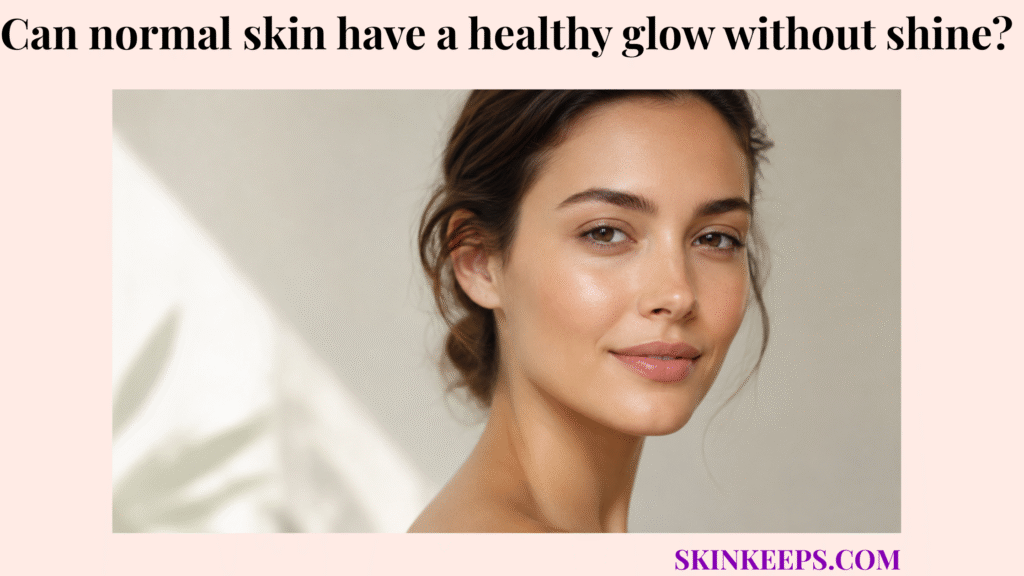
Yes, normal skin can have a healthy glow without looking shiny. That healthy glow usually looks soft, fresh, and balanced, so the face reflects light gently without looking slick. In normal skin, this kind of radiance often comes from a surface that feels comfortable, hydrated, and calm.
Shine is different because it often looks greasy, slippery, or concentrated on oily areas such as the forehead, nose, or chin. Normal skin does not need to look flat or matte to be balanced, but excess oil, heavy product residue, sweat, or strong midday greasiness can turn a soft glow into visible shine.
Why can normal skin glow without looking oily?
Normal skin can glow without looking oily because balanced skin can reflect light softly without having a slick, greasy, or coated surface.
That soft reflection is usually easier to see when the skin looks comfortable rather than tight. It also fits the broader pattern of visible traits that make normal skin easy to recognize, where no single issue such as oil, dryness, redness, or congestion dominates the face.
Oily shine has a different signal because it usually appears thicker, slicker, or more reflective. It is also more likely to gather on the T-zone, especially the forehead, nose, and chin, rather than appearing as a quiet radiance across calm skin.
| Feature | Healthy glow in normal skin | Oily shine |
|---|---|---|
| Appearance | Soft, fresh, balanced | Slick, greasy, reflective |
| Location | Usually even or subtle | Often strongest on T-zone |
| Feel | Comfortable | Heavy, oily, or coated |
| Timing | Can stay steady | Often increases during the day |
| Makeup effect | Skin looks fresh | Makeup may slide or separate |
| Skin signal | Balance and comfort | Oil, sweat, or product heaviness |
Glow looks comfortable. Shine looks like oil is sitting on the surface.
What does a healthy glow look like on normal skin?
A healthy glow on normal skin looks soft, fresh, and balanced rather than wet-looking, slippery, greasy, or overly reflective.
The easiest clue is comfort, not brightness alone. Normal skin can look softly radiant on the cheeks while the T-zone stays calm, and that balance often aligns with normal skin even tone and texture rather than with an oily surface.
Visible pores can still exist within that glow. Real skin has texture, so a healthy glow should not be confused with filtered smoothness or the idea that pores must disappear.
- The skin looks fresh, not greasy.
- The cheeks look softly radiant.
- The T-zone is not slick or oily.
- The face feels comfortable.
- Pores are visible but not dominant.
- Makeup or sunscreen sits evenly.
- Skin does not feel tight, hot, or coated.
- The glow looks similar in normal lighting, not only under harsh light.
A healthy glow on normal skin is subtle and steady, not wet-looking or slippery.
When does glow become shine on normal skin?
Glow becomes shine on normal skin when the surface starts to look greasy, coated, slick, wet, or strongly reflective.
That shift can come from surface oil, sweat, humidity, sunscreen, makeup, or heavy moisturizer. It may also appear after over-cleansing, because the skin can look shiny while feeling tight when its comfort barrier is stressed.
Location helps the reader separate the two ideas. If the forehead, nose, and chin become slick while the cheeks stay calmer, the pattern may look closer to oily skin or a mixed-zone pattern than to an even normal-skin glow.
| Trigger | How normal skin may look | What it means |
|---|---|---|
| Humidity | More shine than usual | Weather effect |
| Sweat | Wet-looking surface | Activity-related shine |
| Heavy moisturizer | Greasy glow | Product too rich |
| Rich sunscreen | Slick T-zone | Formula mismatch |
| Too much facial oil | Coated surface | Product overload |
| Midday oil buildup | Shiny forehead or nose | Mild oil increase |
| Over-cleansing | Shiny but tight | Barrier stress |
| Harsh lighting | Pores and shine look stronger | Lighting distortion |
If the skin feels greasy, coated, or slick, it is probably shine rather than healthy glow.
Can normal skin look dewy without being oily?
Normal skin can look dewy without being oily when the finish stays soft, comfortable, and balanced instead of sticky, heavy, or slick.
Dewy does not automatically mean oily. The difference is usually how the surface feels, because normal skin comfort and balance should still be present when the skin looks softly radiant.
Dewy normal skin can still feel comfortable
Dewy normal skin can still feel comfortable when the skin does not feel greasy, sticky, coated, or heavy.
Soft dewiness can fit normal skin when the surface stays calm and does not demand immediate blotting or correction. That comfort is what separates natural radiance from surface oil.
Dewy normal skin becomes a problem when products sit on top
Dewy normal skin becomes a problem when moisturizer, sunscreen, makeup, or facial oil sits on top and makes the skin feel coated.
Product residue can mimic glow at first, but daily wear often reveals the difference. Sliding makeup, slick sunscreen, or a heavy T-zone points more toward product overload than healthy radiance.
Dewy is fine when the skin feels comfortable. Greasy is different.
What mistakes should normal skin avoid when trying to keep a glow?
Normal skin should avoid glow-related mistakes that strip the skin, overload the surface, or chase unrealistic glass-skin shine.
Normal skin usually looks freshest when it is not overcorrected. Stripping mistakes can remove comfort and make the skin look shiny but tight, while overloading mistakes can turn soft radiance into greasy shine.
The same balance applies to pores. Pores on normal skin can be visible without needing harsh correction, so glow should not become an excuse for scrubbing, over-exfoliating, or chasing unrealistic texture.
| Mistake | Why it hurts normal skin | Better move |
|---|---|---|
| Over-cleansing to remove shine | Can create tightness or irritation | Use gentle cleansing |
| Skipping moisturizer | Can make skin look dull or rough | Use light support when needed |
| Using heavy oils for glow | Can make skin greasy | Use less product |
| Over-exfoliating for radiance | Can cause redness and tightness | Exfoliate only when needed |
| Chasing glass-skin shine | Creates unrealistic expectations | Aim for balanced glow |
| Using matte products everywhere | Can make skin look flat or dry | Control shine only if needed |
| Ignoring sunscreen | Long-term tone and texture may suffer | Use daily protection |
Normal skin keeps its best glow when it is not stripped, overloaded, or over-treated.
What should you remember about healthy glow and normal skin?
The key point is that normal skin can look healthy and softly radiant without looking greasy, slick, or overly shiny.
That means glow should look soft, fresh, and balanced. Shine should be read differently when it looks greasy, slick, oily, or product-heavy.
Normal skin also does not need to look matte. It only needs to stay comfortable enough that natural radiance does not turn into coating, heaviness, or strong T-zone shine.
- Normal skin can have a healthy glow without shine.
- Healthy glow looks soft, fresh, and balanced.
- Shine looks greasy, slick, or oily.
- Normal skin does not need to look matte.
- Mild radiance is compatible with normal skin.
- Heavy product residue can mimic glow.
- Humidity, sweat, sunscreen, and moisturizer can increase shine.
- Over-cleansing can make skin look shiny but feel tight.
- Do not strip normal skin to remove natural radiance.
- Do not overload normal skin to force glow.
- The goal is balanced comfort, not poreless glass skin.
Frequently Asked Questions About Healthy Glow and Normal Skin
Is glowing normal skin the same as oily skin?
No. Glowing normal skin usually looks soft and balanced, while oily skin often looks greasy, slick, or shiny, especially in the T-zone.
Can normal skin look dewy?
Yes. Normal skin can look slightly dewy if it still feels comfortable and does not look oily, sticky, or coated.
Why does normal skin look shiny sometimes?
Normal skin can look shiny from sweat, humidity, heavy moisturizer, sunscreen, makeup, harsh lighting, or temporary oil buildup.
Should normal skin be matte?
No. Normal skin does not need to be matte. A soft natural glow can be a healthy normal-skin trait.
Conclusion: How should normal skin glow be understood?
Normal skin glow should be understood as soft radiance that stays comfortable. It can appear on the cheeks, forehead, or broader face without turning into greasy shine, especially when the surface feels calm rather than coated.
The useful distinction is simple: glow supports balance, while shine often points to oil, sweat, residue, or product heaviness. If the skin looks fresh and feels comfortable, normal skin does not need to be made matte just to look balanced.
Sources & Evidence for normal skin healthy glow
Cleveland Clinic skin-type guidance was used for normal, oily, dry, combination, and sensitive skin recognition boundaries.
American Academy of Dermatology face-washing guidance supported the cautions against harsh cleansing and scrubbing.
American Academy of Dermatology oily-skin guidance supported the distinction between shine, oiliness, product heaviness, and noncomedogenic texture choices.
American Academy of Dermatology sunscreen guidance supported the daily protection and reapplication boundaries.
American Academy of Dermatology exfoliation guidance supported the over-exfoliation and irritation cautions.
American Academy of Dermatology ABCDE guidance supported the referral boundary for changing moles or lesions.
Educational Disclaimer for normal skin
Educational Disclaimer: This article is for general skin education only and does not diagnose, treat, or replace professional medical advice. If skin changes include persistent burning, swelling, painful acne, cracked or bleeding patches, rash-like irritation, persistent product reactions, or changing moles or lesions, consult a qualified dermatologist.