
Which Care Tips Balance Oily and Dry Zones in Combination Skin?
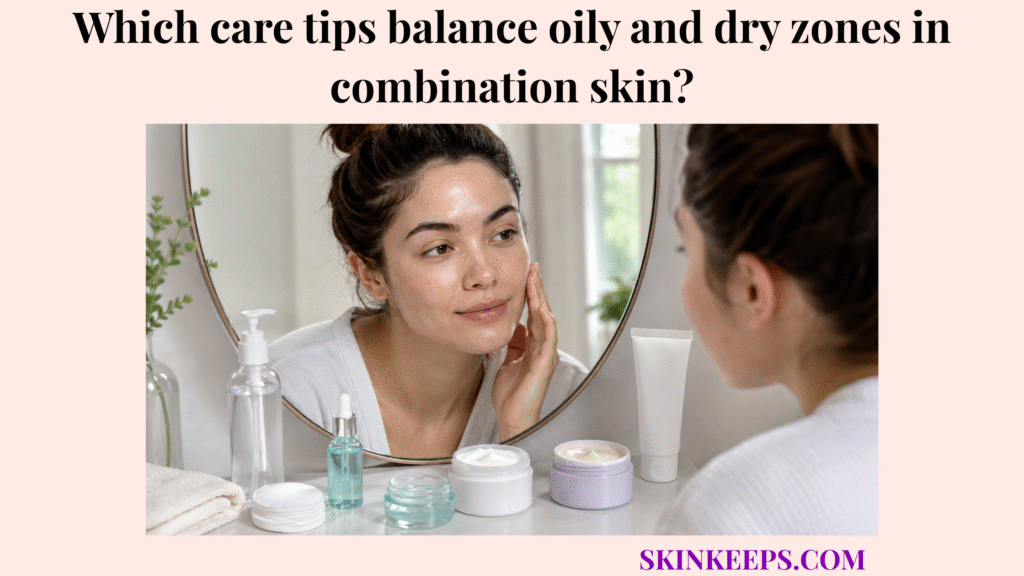
Which Care Tips Balance Oily and Dry Zones in Combination Skin? The best care tips for balancing oily and dry zones in combination skin are to cleanse gently, moisturize by zone, choose noncomedogenic products, use strong actives only where needed, and adjust product amount by facial area. The goal is not to force combination skin […]
Can combination skin look more balanced than very oily skin?
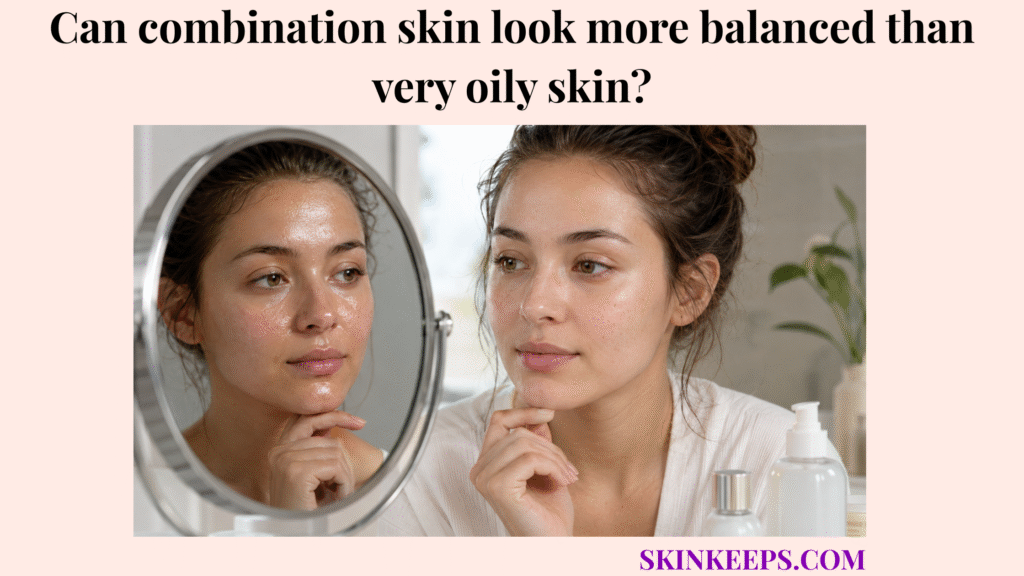
Can Combination Skin Look More Balanced Than Very Oily Skin? Yes, combination skin can look more balanced than very oily skin when oiliness is mostly limited to the T-zone and the cheeks stay normal, comfortable, or only mildly dry. Combination skin may show visible shine mainly on the forehead, nose, and chin instead of across […]
Are Breakouts Often Limited to Specific Facial Areas in Combination Skin?

Are Breakouts Often Limited to Specific Facial Areas in Combination Skin? Yes, breakouts in combination skin are often limited to specific facial areas because oiliness, pore congestion, dryness, product buildup, and friction do not affect every zone equally. In combination skin, breakouts may cluster on the forehead, nose, chin, jawline, hairline, or mask-contact areas while […]
Can Combination Skin Be Less Dehydrated Than Consistently Dry Skin?
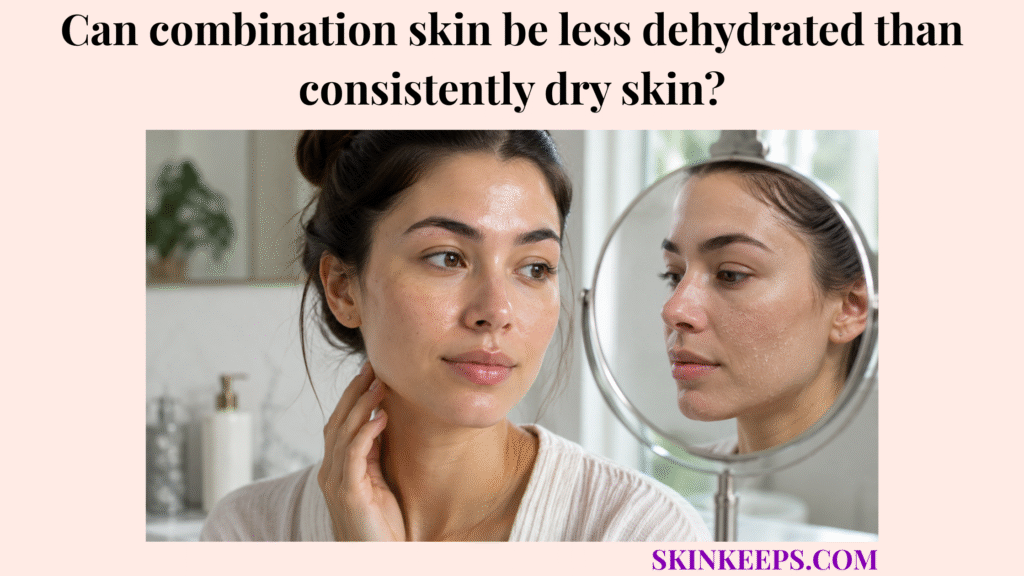
Can Combination Skin Be Less Dehydrated Than Consistently Dry Skin? Yes, combination skin can be less uniformly dehydrated than consistently dry skin because combination skin usually has some oilier or more balanced areas, often around the T-zone. Consistently dry skin may be more likely to feel tight, rough, flaky, or uncomfortable across more of the […]
Does combination skin usually have fewer severe issues?
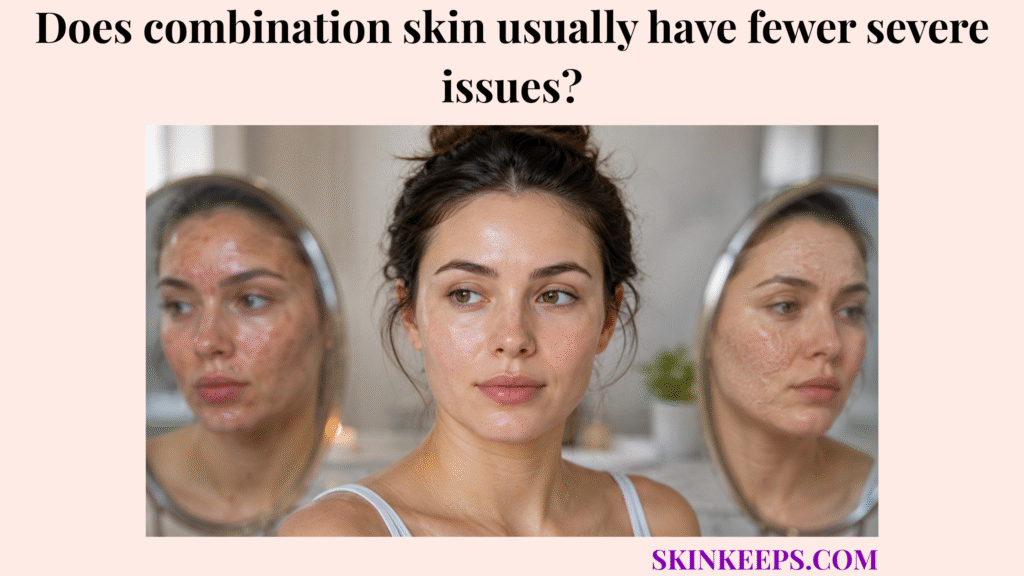
Does Combination Skin Usually Have Fewer Severe Issues? Combination skin can sometimes have fewer severe full-face issues because oiliness and dryness are often limited to specific facial zones instead of affecting the entire face. In combination skin, the T-zone may be oily while the cheeks may be normal, slightly dry, or easier to support with […]
Is combination skin easier to manage than very oily or very dry skin?
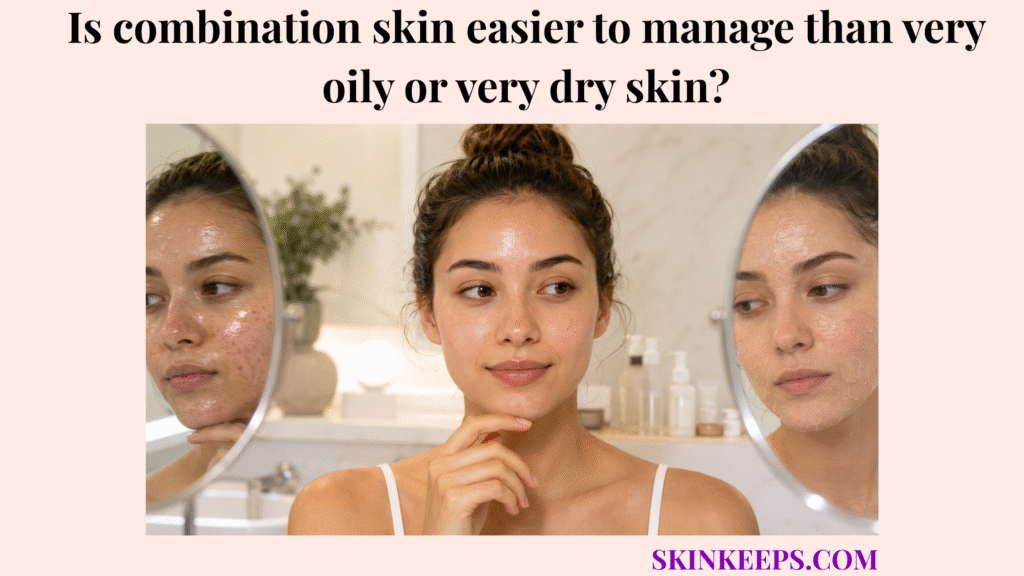
Is Combination Skin Easier to Manage Than Very Oily or Very Dry Skin? Combination skin can be easier to manage than very oily or very dry skin when the oily and dry areas are mild, predictable, and limited to clear facial zones. An oily T-zone with normal or slightly dry cheeks may be easier to […]
What advantages can combination skin have compared with extreme skin types?

What Advantages Can Combination Skin Have Compared With Extreme Skin Types? | SkinKeeps Combination skin can have some advantages compared with extreme skin types because its oiliness and dryness are usually concentrated in different facial zones rather than spread evenly across the whole face. The T-zone may need oil control while the cheeks or outer […]
Can Diet Affect Oily and Dry Facial Zones Differently in Combination Skin?
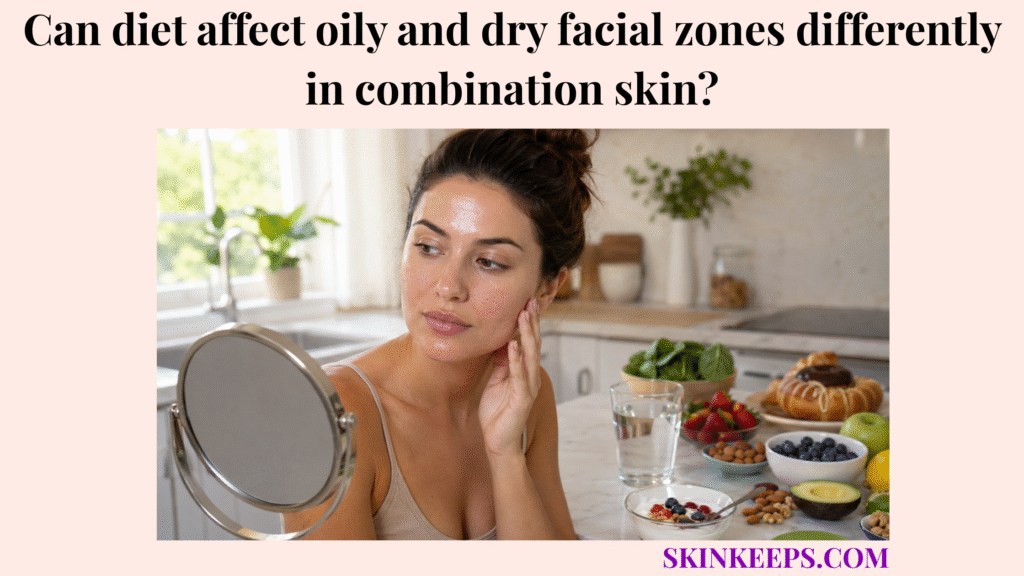
Can Diet Affect Oily and Dry Facial Zones Differently in Combination Skin? | SkinKeeps Yes, diet can sometimes affect oily and dry facial zones differently in combination skin, but not in a perfectly direct or predictable way. A dietary pattern that influences acne tendency, inflammation, or oil-prone behavior may show more clearly in the T-zone, […]
Can Over-Cleansing Increase Both Oiliness and Dryness?
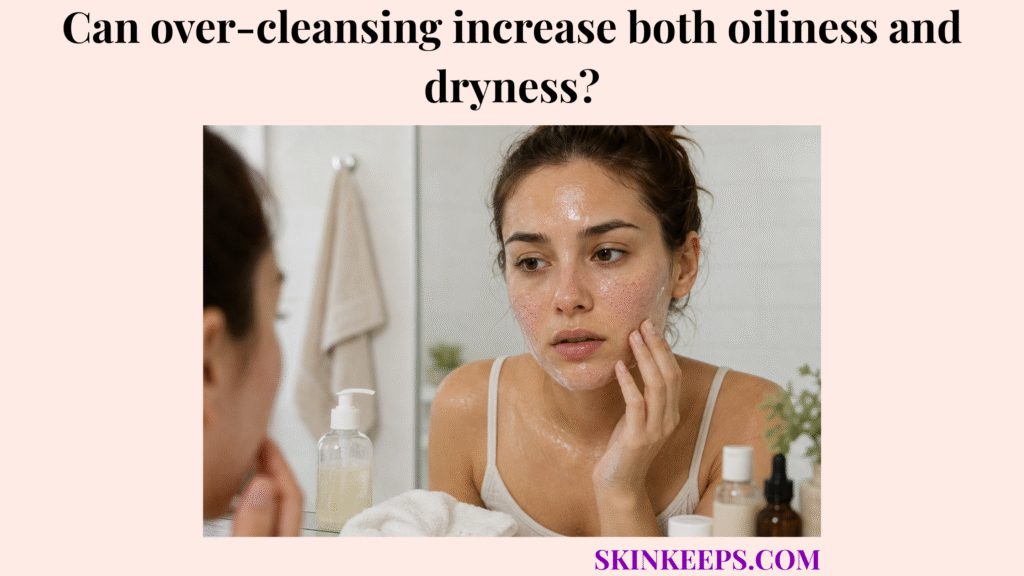
Can Over-Cleansing Increase Both Oiliness and Dryness? | SkinKeeps Yes, over-cleansing can increase both oiliness and dryness, especially in combination skin. The T-zone may look shinier, feel tight, or become more reactive after repeated washing, while the cheeks, mouth area, or outer face may become dry, flaky, rough, or irritated. Combination skin does not respond […]
Can Harsh Skincare Products Worsen Combination Skin?
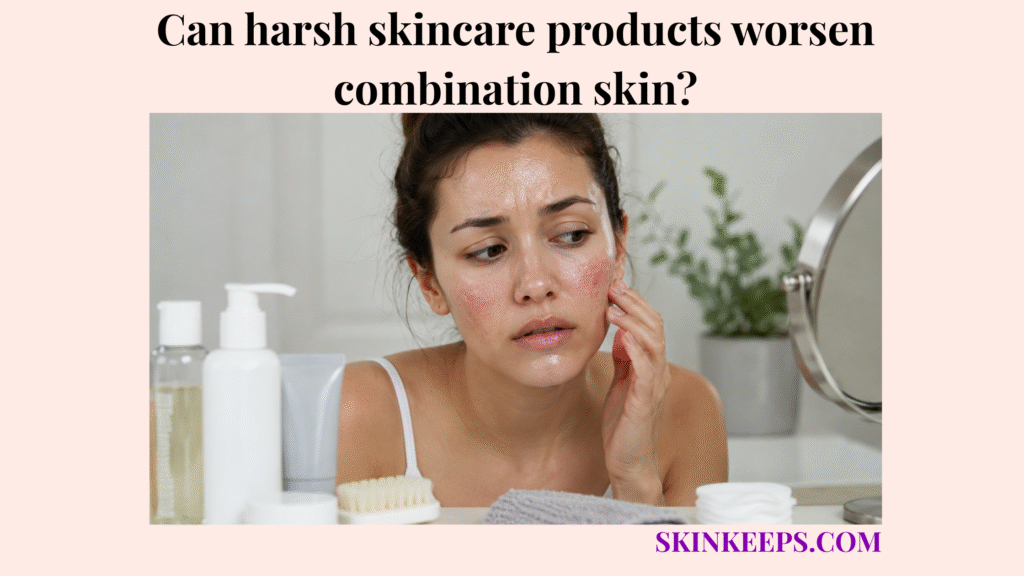
Can Harsh Skincare Products Worsen Combination Skin? | SkinKeeps Yes, harsh skincare products can worsen combination skin by stripping oily zones, drying normal or dry zones, irritating the skin barrier, triggering peeling, and making breakouts harder to manage. A strong cleanser, aggressive exfoliant, drying acne treatment, alcohol-heavy toner, harsh mask, or fragranced product may seem […]