
Which climates challenge combination skin most?
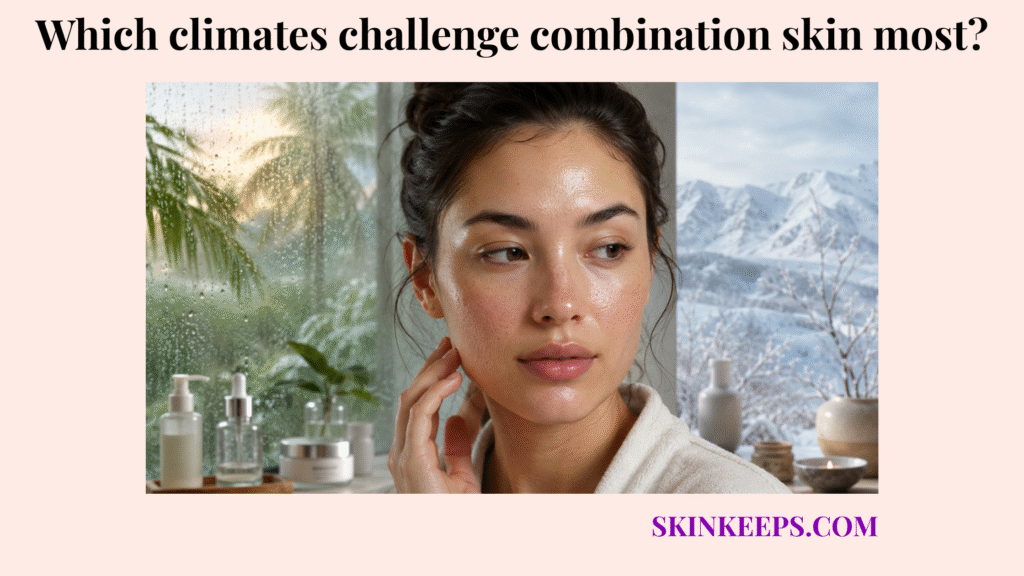
Which Climates Challenge Combination Skin Most? | SkinKeeps The climates that challenge combination skin most are hot-humid climates, hot-dry climates, cold-dry climates, windy climates, high-UV climates, polluted urban climates, and indoor climates shaped by air conditioning or heating. Each climate can affect the face unevenly, so the T-zone may become oilier, shinier, or more congested […]
How Does Humidity Affect Combination Skin?

How Does Humidity Affect Combination Skin? | SkinKeeps Humidity affects combination skin by changing how oily, dry, sticky, tight, or reactive different facial zones feel. In combination skin, high humidity can make the T-zone look shinier, sweatier, heavier, and more congested, while low humidity can make the cheeks, around the mouth, or outer face feel […]
Which External Factors Make Combination Skin Harder to Manage?

Which External Factors Make Combination Skin Harder to Manage? | SkinKeeps External factors that make combination skin harder to manage include hot or humid weather, cold or dry air, harsh cleansing, over-exfoliation, heavy moisturizers, drying acne products, greasy sunscreen, makeup buildup, pollution, sweat, masks, fabric friction, and sun exposure. These triggers can make the T-zone […]
Can Internal Health Issues Affect Combination Skin?
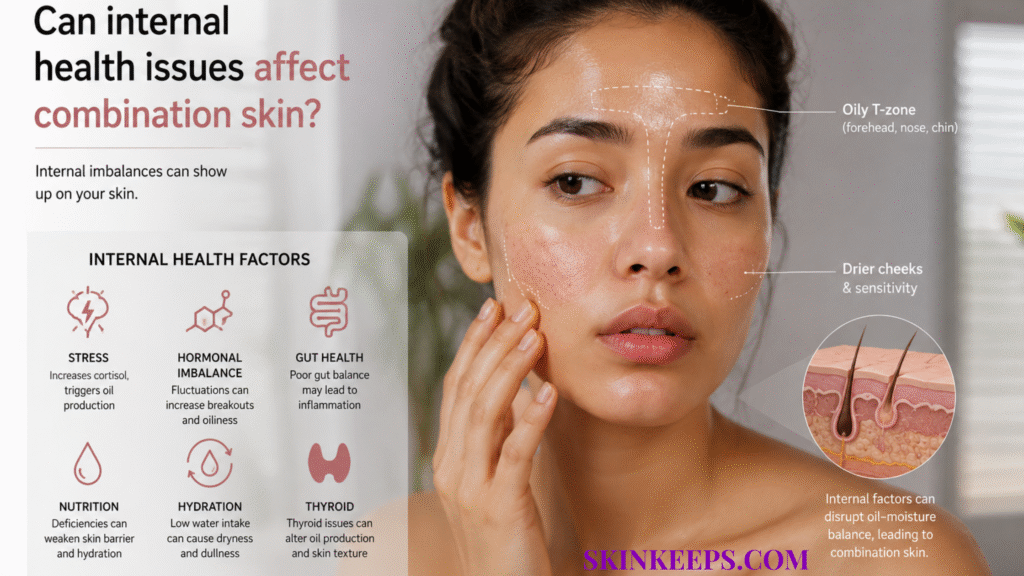
Can Internal Health Issues Affect Combination Skin? Yes, internal health issues can sometimes affect combination skin by changing oil production, dryness, acne tendency, sensitivity, healing, or barrier comfort. A person with combination skin may notice the T-zone becoming oilier, cheeks becoming drier, breakouts becoming more persistent, or product tolerance changing. Combination skin by itself is […]
Can Stress Worsen Combination Skin Imbalance?
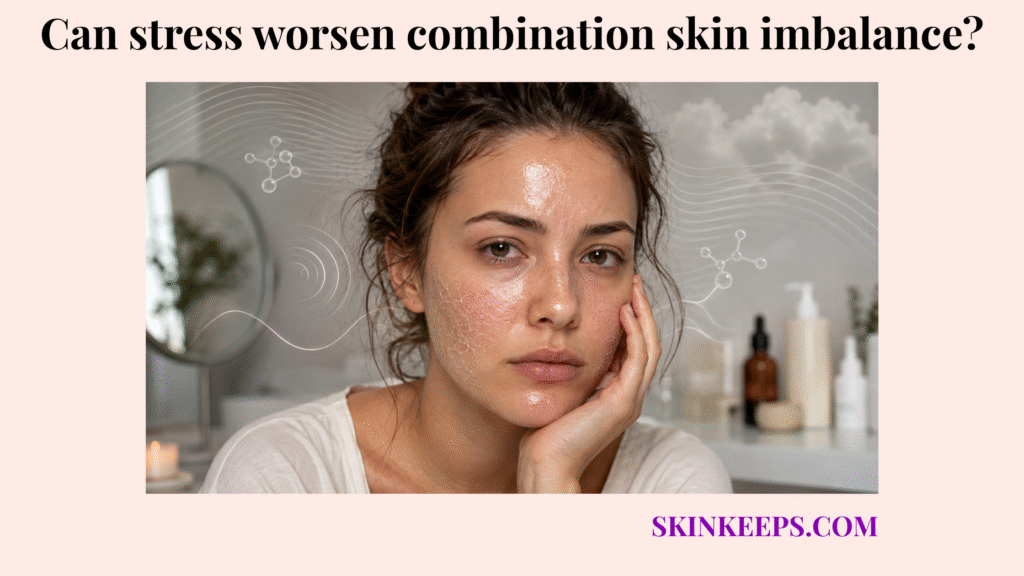
Can Stress Worsen Combination Skin Imbalance? | SkinKeeps Yes, stress can worsen combination skin imbalance by making oily zones feel greasier, increasing breakout risk, slowing skin recovery, and making dry or sensitive zones feel tighter, rougher, or more reactive. Because combination skin already behaves differently across the face, stress may make the T-zone oilier while […]
How Do Hormonal Fluctuations Affect Combination Skin?

How Do Hormonal Fluctuations Affect Combination Skin? | SkinKeeps Hormonal fluctuations can affect combination skin by increasing oiliness in the T-zone, triggering clogged pores or breakouts, changing cheek comfort, increasing sensitivity, or making dry areas feel tighter than usual. Combination skin already behaves differently by facial area, so hormonal shifts can amplify the existing zone […]
Do genetics influence combination skin?

Do Genetics Influence Combination Skin? | SkinKeeps Yes, genetics can influence combination skin by shaping how much oil different facial areas tend to produce, how visible pores may be, how easily some zones feel dry, and how stable the skin barrier feels. A person may inherit a pattern where the T-zone becomes oily while the […]
Which internal factors create oil-and-dryness imbalance in combination skin?
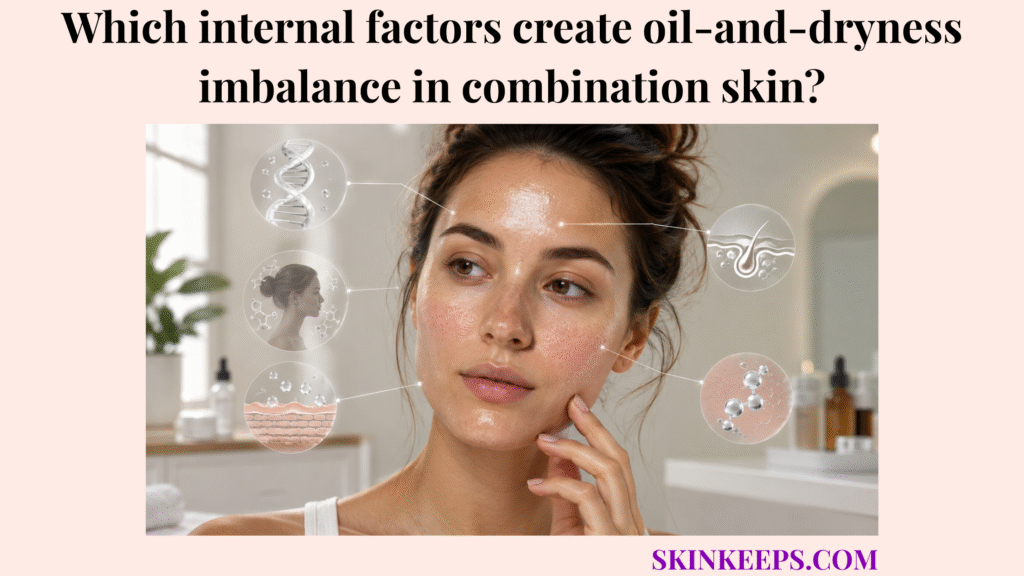
Which Internal Factors Create Oil-and-Dryness Imbalance in Combination Skin? | SkinKeeps Internal factors that create oil-and-dryness imbalance in combination skin include genetics, uneven sebaceous gland activity, hormone changes, age, stress-related biological shifts, barrier strength, and natural differences in facial-zone hydration. These internal factors can make the T-zone produce more oil while the cheeks, mouth area, […]
Which Oil-and-Dryness Patterns Define Combination Skin?
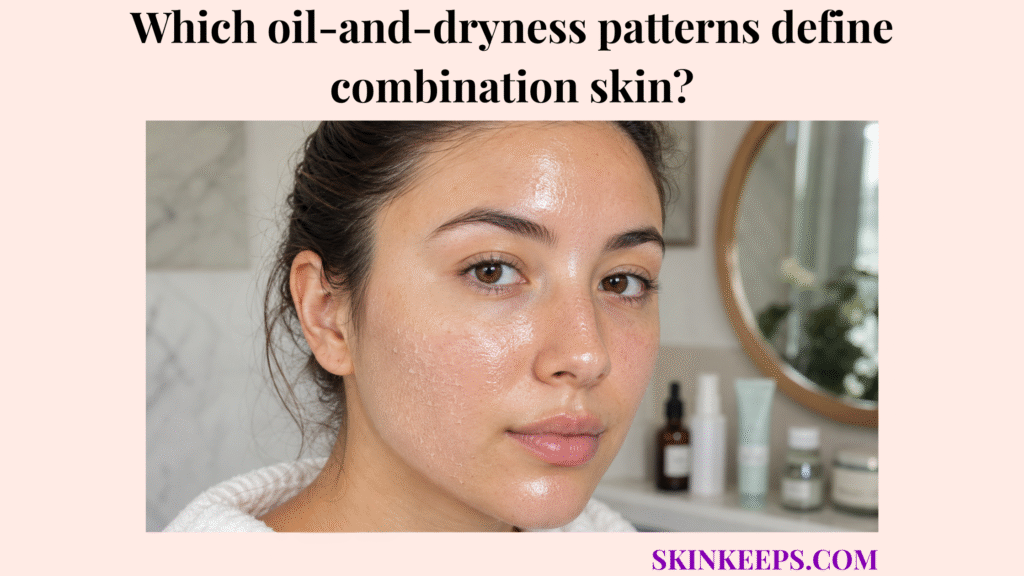
Combination skin is usually defined by uneven oil and dryness patterns across the face. The most common combination skin pattern is an oily T-zone with drier cheeks, but the same skin type can also appear as an oily T-zone with normal cheeks, an oily nose with a balanced outer face, or shifting zones that become […]
What if the T-zone is oily but the cheeks are normal?
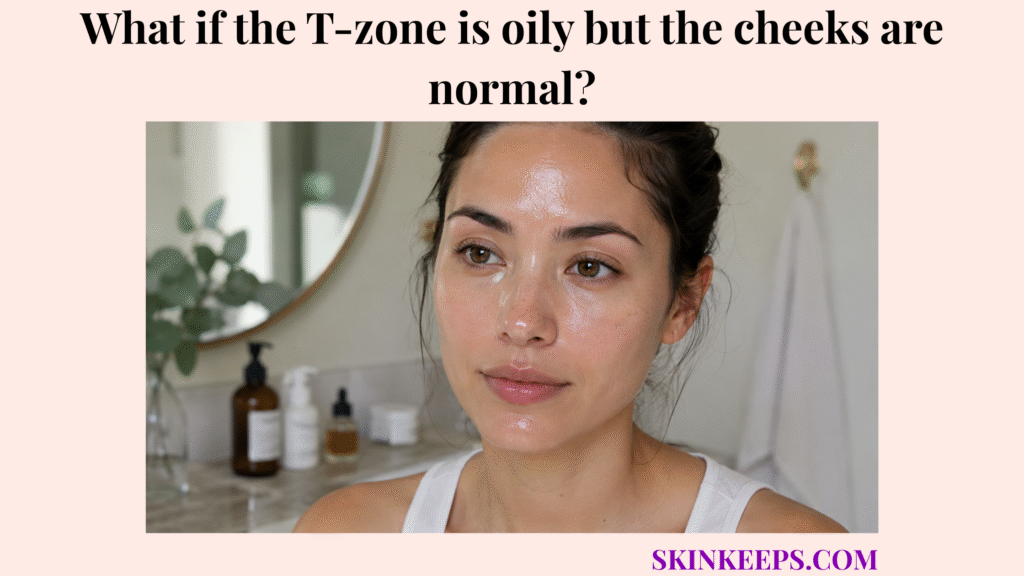
What if the T-zone is oily but the cheeks are normal? | SkinKeeps If the T-zone is oily but the cheeks are normal, this can still fit a mild or T-zone-dominant form of combination skin. In this pattern, the forehead, nose, and chin may produce more oil, show more shine, or develop visible pores or […]