Yes, combination skin can be less uniformly dehydrated than consistently dry skin because combination skin usually has some oilier or more balanced areas, often around the T-zone.
Consistently dry skin may be more likely to feel tight, rough, flaky, or uncomfortable across more of the face. Combination skin can still become dehydrated, though. The T-zone may feel oily but tight, while the cheeks, around the mouth, or outer face may feel dry, dull, rough, or less comfortable. The real question is not whether combination skin has oil; it is whether each zone has enough water comfort and barrier support.
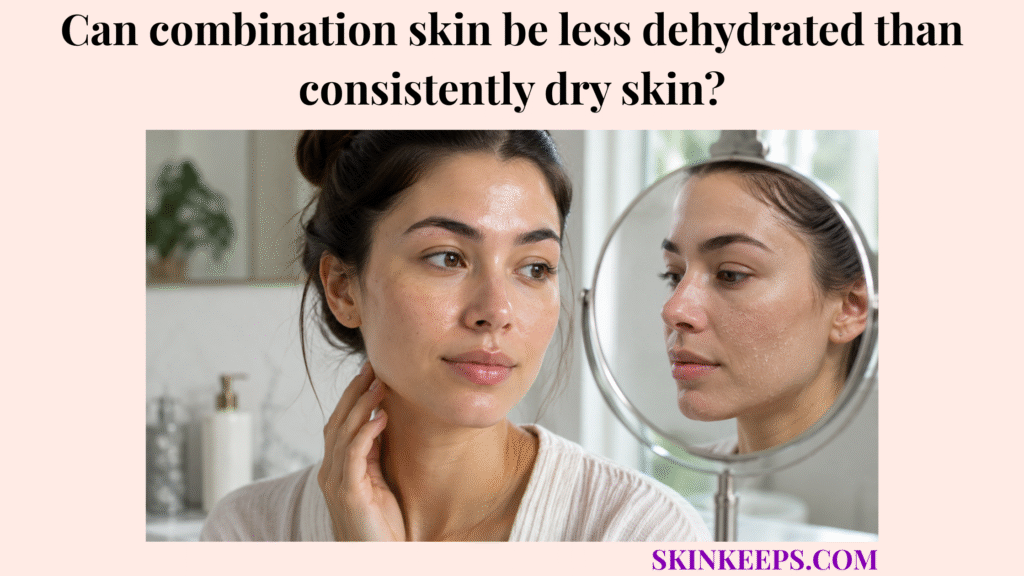
Figure 1. Combination skin can look shiny in one zone while another zone feels tight, dull, rough, or flaky.
Can combination skin be less dehydrated than consistently dry skin?
Yes, combination skin can be less dehydrated than consistently dry skin when its dry-feeling areas are mild, localized, or balanced by more comfortable zones.
Combination skin can be less uniformly dehydrated because some zones may stay oily, normal, or comfortable while other zones need extra support. This often makes dehydration feel less full-face than it may feel in consistently dry skin.
That does not mean combination skin is protected from dehydration. A stripping cleanser, low humidity, over-exfoliation, acne-treatment overuse, hot water, or skipped moisturizer can make several zones tight, dull, flaky, or uncomfortable at once. For readers comparing broader categories, the different skin types guide explains why skin type labels should be interpreted by symptoms, not by one feature alone.
| Comparison point | Combination skin | Consistently dry skin |
|---|---|---|
| Dehydration pattern | May be zone-specific | May feel more widespread |
| Oil presence | T-zone may still be oily | Oil may feel low across most areas |
| Tightness | May affect cheeks, mouth area, or oily-but-tight T-zone | May affect most of the face |
| Flaking | Often localized | May be broader |
| Product feel | Some zones may dislike heavy products | Richer support may be needed more broadly |
| Main risk | Assuming oily zones cannot be dehydrated | Under-supporting the whole barrier |
| Best care logic | Hydrate and moisturize by zone | More consistent barrier support |
Combination skin may be less dehydrated overall, but it is not immune to dehydration.
How is dehydration different from dryness in combination skin?
Dehydration is different from dryness in combination skin because dehydration describes low water comfort, while dryness usually describes low oil or lipid comfort.
Dryness and dehydration can overlap, but they are not the same skin signal. Dryness often feels like roughness, flaking, or under-moisturized comfort in low-oil zones. Dehydration often feels like tightness, dullness, or low water comfort even when oil is still visible.
How dryness relates to oil levels in combination skin
Dryness relates to oil levels in combination skin when cheeks, around-mouth skin, or outer-face zones lack enough lipid comfort and feel rough, flaky, or under-moisturized.
Dryness in combination skin often shows more clearly on the cheeks, around the mouth, or outer face because those areas may not have the same oil support as the forehead, nose, and chin.
How dehydration relates to water comfort in combination skin
Dehydration relates to water comfort in combination skin when the skin feels tight, dull, rough, or less elastic even if oil is still present.
This is why an oily zone can still feel uncomfortable after cleansing or product use. Oil on the surface does not prove that the skin has enough water comfort or barrier support.
How combination skin can be oily and dehydrated at the same time
Combination skin can be oily and dehydrated at the same time when the T-zone looks shiny but still feels tight, stripped, or uncomfortable.
The oil-and-dryness patterns in combination skin page helps explain why an oily center face can coexist with dryness, tightness, or roughness elsewhere.
| Skin issue | What is lacking | How it may show in combination skin | Common mistake |
|---|---|---|---|
| Dryness | Oil/lipid comfort | Cheeks feel rough, flaky, or under-moisturized | Treating all zones with oil-control products |
| Dehydration | Water comfort | Skin feels tight, dull, or oily-but-tight | Assuming shine means enough hydration |
| Barrier stress | Comfort and tolerance | Products sting, flakes appear, texture worsens | Adding more actives |
| Oily zone imbalance | Oil remains high | T-zone shines but feels uncomfortable | Washing more often |
| Consistently dry pattern | Low comfort across most areas | Whole face may feel tight or flaky | Using too-light products |
Figure 2. Dryness usually points to oil or lipid comfort, while dehydration points to water comfort and tight-feeling skin.
Why might combination skin be less dehydrated than consistently dry skin?
Combination skin might be less dehydrated than consistently dry skin because some zones may stay oily, normal, or comfortable while dry skin often feels tight more broadly.
Combination skin may feel less uniformly tight because the entire face is not always dry at the same time. Some people have an oilier T-zone, normal cheeks, or only mild dry-zone discomfort, so the dehydration feeling may be local rather than full-face.
How oilier zones may make combination skin feel less uniformly tight
Oilier zones may make combination skin feel less uniformly tight because the forehead, nose, and chin may not feel as dry as the cheeks or outer face.
That comfort difference can be real, but it should not be overread. Oilier zones may feel less dry, yet they can still become tight after harsh cleansing, low humidity, or overuse of strong products.
How normal zones can reduce full-face dehydration feeling in combination skin
Normal zones can reduce full-face dehydration feeling in combination skin when some facial areas stay comfortable instead of tight, dull, or flaky.
A mild pattern such as an oily T-zone with normal cheeks may feel less uniformly dehydrated because the cheeks are not always dry or irritated.
How localized dryness makes combination skin different from consistently dry skin
Localized dryness makes combination skin different from consistently dry skin because combination skin often needs targeted support while consistently dry skin may need broader support.
This is a care difference, not a ranking. Combination skin may need lighter support in the T-zone and stronger support on cheeks or mouth-area patches, while consistently dry skin may need more even barrier support.
When can combination skin be just as dehydrated as consistently dry skin?
Combination skin can be just as dehydrated as consistently dry skin when harsh cleansing, low humidity, actives, heat, or barrier stress makes several zones tight, dull, flaky, or uncomfortable.
Combination skin may become widely dehydrated when multiple triggers stack together. A foaming cleanser, hot water, strong exfoliant, acne treatment, air conditioning, heating, or low-humidity environment can make oily and dry zones feel uncomfortable at the same time.
| Combination skin situation | Why dehydration can still happen |
|---|---|
| Over-cleansing | Strips comfort and creates oily-but-tight skin |
| Harsh foaming cleanser | T-zone may shine later while cheeks dry out |
| Low humidity | Cheeks and mouth area lose comfort quickly |
| Air conditioning or heating | Dry zones tighten while T-zone still produces oil |
| Over-exfoliation | Barrier stress creates tightness and stinging |
| Acne treatment overuse | Breakout zones peel or feel tight |
| Skipping moisturizer | Water comfort and tolerance decline |
| Hot water washing | Skin feels stripped and rough |
| Frequent product changes | Barrier becomes harder to read |
| Sensitive overlap | Dehydration signs may appear with stinging or redness |
Combination skin becomes more dehydrated when the routine or environment removes comfort faster than the skin can recover.
What does dehydration look like in different areas of combination skin?
Dehydration looks different across combination skin because one facial zone can look shiny while another feels tight, dull, flaky, or irritated.
Dehydration should be judged by zone, timing, and comfort. The forehead may look shiny but tight, while the cheeks may feel dull or rough. The chin may peel after acne treatment, and the around-mouth area may sting after a routine that is too strong.
| Facial zone in combination skin | Dehydration clue | What it may mean |
|---|---|---|
| Forehead | Shiny but tight | Oil is present, water comfort may be low |
| Nose | Greasy but rough | Oil and surface dehydration may overlap |
| Chin | Breakouts plus peeling | Acne treatment or barrier stress may be involved |
| Cheeks | Tight, dull, rough, flaky | Dry-zone hydration and barrier support may be needed |
| Around mouth | Peeling, stinging, cracking | Irritation or low barrier comfort may be present |
| Jawline | Bumps plus dryness | Friction, actives, or dehydration may overlap |
| Whole face | Tight after cleansing | Cleanser or routine may be too stripping |
Dehydration in combination skin is often uneven. One zone can shine while another zone flakes.
How can combination skin tell dehydration apart from normal T-zone oiliness?
Combination skin can tell dehydration apart from normal T-zone oiliness by checking whether shine comes with tightness, stinging, roughness, peeling, or discomfort.
Normal T-zone oiliness usually means the forehead, nose, or chin becomes shiny without major tightness or stinging. Dehydrated-feeling combination skin often feels uncomfortable, stripped, dull, rough, or irritated after cleansing or active product use.
Combination skin may be oily but dehydrated if:
- The T-zone looks shiny but feels tight.
- Skin feels uncomfortable soon after cleansing.
- Moisturizer absorbs quickly but skin still feels tight.
- Makeup separates on the nose but clings to cheeks.
- Fine dehydration lines look more visible when skin is tight.
- Oiliness returns quickly after a stripping cleanser.
- Products sting more than usual.
- Breakouts and peeling appear together.
- Skin feels better with gentle hydration, not stronger cleansing.
If these signs began after washing more often, the over-cleansing and combination skin page can help separate oily-but-tight skin from simple shine.
Oiliness is not proof that the skin has enough water comfort.
How should combination skin support hydration without clogging oily zones?
Combination skin should support hydration without clogging oily zones by using lightweight hydration on oily areas and stronger barrier support only where dry zones need it.
The goal is not to make the whole face richer. The goal is to give each area enough comfort without forcing the T-zone to carry the same texture as the cheeks or mouth-area skin.
Hydrate combination skin with lightweight water-supporting ingredients
Combination skin can be hydrated with lightweight water-supporting ingredients when tight or dull zones need comfort without heavy full-face creams.
Humectant-style hydration can help oily or normal zones feel more comfortable when the texture is light and non-heavy. It may not be enough by itself for flakes, cracks, or persistent dry patches.
Moisturize combination skin by zone to reduce water loss
Combination skin should be moisturized by zone because oily areas may need lighter support while dry areas may need stronger barrier help.
The T-zone may need a lightweight lotion, while cheeks, around the mouth, or the outer face may need a more supportive texture. Skipping moisturizer because the nose is shiny can leave dry or normal zones unsupported.
Seal dry areas of combination skin without overloading the T-zone
Combination skin can seal dry areas without overloading the T-zone by placing richer creams or occlusive layers only where dryness is strongest.
This selective placement is especially useful when dry patches are localized. For broader product-related tightness, the harsh skincare products and combination skin guide explains how strong products can make mixed-zone dehydration harder to read.
| Combination skin dehydration pattern | Better routine move | Avoid |
|---|---|---|
| Oily but tight T-zone | Gentle cleanse + lightweight hydration | Stronger cleansing |
| Dry cheeks | Moisturizer with barrier support | Treating cheeks like oily zones |
| Flaky around mouth | Reduce actives nearby + protect barrier | Exfoliating flakes aggressively |
| Whole face tight after washing | Switch to gentler cleansing | Squeaky-clean cleanser |
| Breakouts plus peeling | Target acne care and lower frequency | Full-face drying treatment |
| Low-humidity tightness | Add hydration and moisturizer by zone | Skipping moisturizer |
| Heavy cream clogs T-zone | Use richer layer only on dry zones | Applying thick cream everywhere |
Figure 3. Dehydrated-feeling combination skin often improves with lighter hydration in oily zones and stronger barrier support only where dry zones need it.
Which ingredients can help dehydrated combination skin?
Ingredients that can help dehydrated combination skin include humectants for water comfort, barrier-support ingredients for dry zones, and selective occlusives for very dry patches.
Ingredient choice should match the zone and the formula texture. A helpful ingredient can still feel too heavy in the T-zone if the full formula is rich, and a light hydrating product may still be too weak for cracking or persistent flakes.
| Ingredient type | Why it may help combination skin | Zone caution |
|---|---|---|
| Humectants | Help attract water to the skin surface | Need moisturizer to reduce water loss |
| Glycerin | Supports hydration and comfort | Usually works across zones if formula is light |
| Hyaluronic acid | Can support a plump, hydrated feel | Works best in a well-formulated routine |
| Ceramides | Support barrier comfort | Useful for dry or tight zones |
| Niacinamide | May support barrier and oil balance | Introduce carefully if sensitive |
| Lightweight lotions | Hydrate without heavy feel | May not be enough for flakes |
| Rich creams | Help dry patches | May clog oily T-zone if overused |
| Petrolatum-style occlusives | Seal very dry spots | Use only where needed, not full-face if clog-prone |
Dehydrated combination skin usually needs both hydration and moisture sealing, but not the same amount in every zone.
What mistakes make combination skin more dehydrated than it needs to be?
Combination skin becomes more dehydrated than it needs to be when shine is over-cleansed, moisturizer is skipped, actives are overused, or heavy products are applied everywhere.
Most dehydration mistakes come from treating one skin signal as the whole story. Shine leads to more washing, tightness leads to heavier cream everywhere, or flakes lead to more exfoliation. Combination skin usually needs the opposite: calmer cleansing, targeted moisturizer, and slower changes.
Avoid assuming oily combination skin zones cannot be dehydrated
Oily combination skin zones can still be dehydrated when shiny areas feel tight, stripped, rough, or uncomfortable.
The T-zone may still produce oil while the surface feels tight. Treating that pattern with stronger cleansing can make the skin feel less comfortable.
Avoid treating dehydrated combination skin with cleansing alone
Dehydrated combination skin should not be treated with cleansing alone because more washing usually increases tightness instead of rebuilding comfort.
Gentle cleansing matters, especially after sweat, sunscreen, or makeup. Repeated full-face washing is different because it can strip dry zones and leave oily zones feeling tight.
Avoid using heavy creams everywhere on dehydrated combination skin
Heavy creams everywhere can worsen dehydrated combination skin if rich layers clog or overload the T-zone while only dry patches need that level of support.
Richer textures can be useful, but placement matters. Cheeks or mouth-area flakes may need more support than the forehead, nose, and chin.
Avoid confusing dehydrated combination skin with consistently dry skin
Dehydrated combination skin should not automatically copy a consistently dry-skin routine because oily zones may need lighter support than dry zones.
Low humidity can push this confusion further. The humidity and combination skin guide explains why dry air can make cheeks tighter while the T-zone still shines.
| Mistake | Why it worsens combination skin | Better move |
|---|---|---|
| Washing more because skin shines | Increases tightness and barrier stress | Use gentle cleansing |
| Skipping moisturizer | Dehydration signs worsen | Use lightweight moisturizer |
| Heavy cream over T-zone | Can clog or feel greasy | Apply rich layers selectively |
| Exfoliating tight texture | Can worsen irritation | Hydrate and repair first |
| Treating dry cheeks with acne products | Increases peeling | Use zone-specific care |
| Drinking water as the only fix | Does not replace topical support | Combine hydration and moisturizer |
| Changing many products | Makes dehydration triggers unreadable | Change one step at a time |
When should dehydrated combination skin need a dermatologist?
Dehydrated combination skin needs a dermatologist when tightness, cracking, bleeding, burning, rash-like irritation, product stinging, or painful acne persists despite gentle care.
Dehydrated-feeling skin can often improve with gentler cleansing and better moisture support, but persistent or painful symptoms should not be treated as a normal skin-type issue. Severe dryness, repeated product stinging, spreading irritation, or painful acne may need professional evaluation.
See a dermatologist if:
- Dry patches crack, bleed, burn, or spread.
- Skin feels persistently tight despite gentle care.
- Moisturizer or basic products sting repeatedly.
- Breakouts become painful, deep, cystic, or scarring.
- Peeling continues after reducing strong actives.
- Redness, swelling, or rash-like patches appear.
- Skin becomes suddenly dry or dehydrated-feeling without a clear trigger.
- A simple hydration and barrier-support routine does not improve comfort.
- The reader suspects acne, eczema, dermatitis, rosacea, allergy, or infection.
What should you remember about dehydration in combination skin?
The key point is that combination skin can be less uniformly dehydrated than consistently dry skin, but oily and dry zones can still become dehydrated in different ways.
- Combination skin can be less uniformly dehydrated than consistently dry skin.
- Combination skin can still be dehydrated in specific zones.
- Oily zones can feel shiny and tight at the same time.
- Dry zones may need stronger hydration and barrier support.
- Consistently dry skin may need more full-face support.
- Dehydration is not the same as oil dryness.
- Do not over-cleanse oily-but-tight skin.
- Do not apply heavy creams everywhere by default.
- Use lightweight hydration where oily and richer support where dry.
- Low humidity, harsh cleansing, hot water, actives, and over-exfoliation can worsen dehydration.
- Seek help for cracking, bleeding, burning, spreading, persistent tightness, or painful acne.
Frequently Asked Questions About Dehydration and Combination Skin
Can combination skin be dehydrated even if the T-zone is oily?
Yes. Combination skin can be dehydrated even if the T-zone is oily because the forehead, nose, or chin can look shiny while still feeling tight, dull, or uncomfortable.
Is combination skin usually less dehydrated than dry skin?
Combination skin can be less uniformly dehydrated than consistently dry skin because some areas may stay oily or normal, but it can still have dehydrated zones.
How do I know if combination skin is dehydrated or just oily?
Combination skin may be dehydrated rather than just oily if shine comes with tightness, stinging, roughness, breakouts plus peeling, or discomfort after cleansing.
Should dehydrated combination skin use heavy moisturizer?
Dehydrated combination skin should not use heavy moisturizer everywhere by default. Oily zones may need lightweight hydration, while dry or flaky zones may need richer barrier support.
Can drinking more water fix dehydrated combination skin?
Drinking enough water supports general health, but dehydrated-feeling combination skin usually also needs gentle cleansing, moisturizer, barrier support, and fewer stripping habits.
Conclusion: Can combination skin be less dehydrated than consistently dry skin?
Combination skin can be less uniformly dehydrated than consistently dry skin because some areas may stay oily, normal, or more comfortable while dry-feeling areas remain localized. That does not mean oily zones are protected from dehydration, because shine can exist with tightness, roughness, or low water comfort.
The safest approach is to judge each zone by comfort, not by shine alone. Use lightweight hydration where oily areas feel tight, stronger barrier support where dry patches appear, and professional help when cracking, bleeding, burning, spreading irritation, persistent tightness, or painful acne appears.
Sources & Evidence for Dehydration and Combination Skin
Cleveland Clinic — Understanding skin types. Used for combination-skin facial-zone differences, T-zone oiliness, cheek dryness, and why combination skin may need different care by area.
American Academy of Dermatology — Face washing 101. Used for gentle cleansing, lukewarm water, fingertips, avoiding scrubbing, and moisturizing when skin is dry or itchy.
American Academy of Dermatology — Dermatologists’ tips for relieving dry skin. Used for dry-skin comfort, fragrance-free products, moisturizer categories, and dermatologist escalation when dry skin persists or burns.
American Academy of Dermatology — How to pick the right moisturizer for your skin. Used for moisturizer texture differences, gels, lotions, creams, ointments, and selecting support based on dryness severity.
DermNet — Dry skin. Used for dry-skin roughness, flaking, cracking, water loss, emollient support, and avoiding hot water and aggravating factors.
DermNet — Emollients and moisturisers. Used for humectant, emollient, occlusive, lotion, cream, gel, ointment, and barrier-support boundaries.
DermNet — Irritant contact dermatitis. Used for irritant, water, soap, friction, humidity, heat, retinoid, and benzoyl-peroxide irritation boundaries.
Educational Disclaimer: This article is for general skin education only and does not diagnose, treat, or replace professional medical advice. If combination skin feels persistently dehydrated, painful, cracked, bleeding, burning, spreading, rash-like, or paired with severe acne or product reactions, consult a qualified dermatologist.