
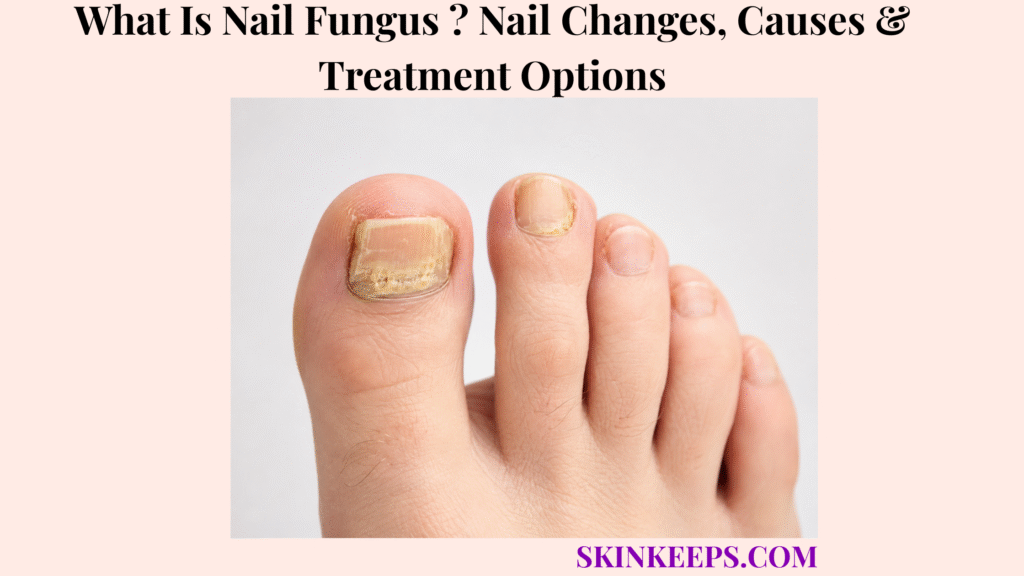
Nail fungus, medically called onychomycosis, is a fungal infection of the nail unit that can cause discoloration, thickening, crumbling, debris beneath the nail and separation from the nail bed. Toenails are affected more often than fingernails, and infection may involve dermatophytes, yeasts or non-dermatophyte moulds.
Nail fungus can persist, spread to additional nails, recur and become painful when thickening creates pressure inside footwear. An abnormal-looking nail is not automatically fungal, so confirmation becomes especially important before prolonged systemic antifungal treatment.
This article is for educational purposes only and does not constitute medical advice, diagnosis, or treatment. Rapidly changing nail abnormalities, a new or widening dark or irregular pigment band, pigment spreading onto surrounding skin, unexplained bleeding or growth beneath a nail, severe redness or swelling, significant pain, or suspected nail fungus in someone with diabetes, poor circulation, or a weakened immune system should be evaluated by a licensed dermatologist or qualified healthcare professional.
How Can You Recognize Nail Fungus?
Nail fungus commonly causes progressive discoloration, thickening, subungual debris, crumbling and separation of the affected nail from its bed.
What Does Nail Fungus Usually Look Like?
Onychomycosis commonly makes a nail yellow, white or brown and progressively thicker, brittle, crumbly or distorted.
The free edge can split or crumble, keratinous debris can accumulate beneath the plate and the nail may lift from its bed, a change called onycholysis. Advanced disease can cause extensive nail-plate damage or partial nail loss.
Typical appearance raises suspicion but does not prove fungal infection.
Where Does Nail Fungus Usually Begin?
The most common distal-lateral form of nail fungus usually begins near the tip or side of the nail and gradually advances toward the cuticle.
Distal-lateral subungual onychomycosis often starts with yellow-white or brown change near the free or lateral edge, followed by lifting and subungual debris as infection extends proximally.
Can Nail Fungus Cause White Spots Instead of a Thick Yellow Nail?
Yes; superficial white onychomycosis can produce powdery or flaky white patches on the upper nail plate before major thickening develops.
The nail can remain comparatively thin early in this subtype. Not every small white nail mark is fungal, so isolated white spots should not be self-diagnosed as onychomycosis.
What Is Proximal Subungual Onychomycosis?
Proximal subungual onychomycosis begins near the cuticle rather than the free nail edge and is less common than distal-lateral disease.
It can occur in immunocompetent people, although unusual or extensive proximal disease can justify review of the broader clinical context. Proximal disease alone does not prove immune deficiency.
Can Nail Fungus Hurt?
Early nail fungus is often painless, but advanced thickening or distortion can cause pressure pain, especially inside footwear.
Markedly thick toenails can become uncomfortable during walking or standing. Lack of pain therefore does not exclude fungal infection.
Can Athlete’s Foot Occur With Toenail Fungus?
Yes; toenail fungus commonly coexists with athlete’s foot or tinea pedis, and infected skin between the toes can act as a reservoir that repeatedly reinfects the nails.
Toe-web scaling or fungal infection of the sole should therefore be looked for when managing toenail onychomycosis.
Figure 1. Distal-lateral onychomycosis often begins near the nail edge and progresses toward debris, thickening, lifting and crumbling, but morphology alone does not confirm fungus.
What Causes Nail Fungus, and Who Is More Likely to Develop It?
Nail fungus develops when dermatophytes, yeasts or moulds enter and persist within the nail unit, particularly when moisture, trauma or surrounding fungal skin disease weakens normal barriers.
Which Fungi Cause Onychomycosis?
Dermatophytes cause many cases of onychomycosis, especially Trichophyton rubrum, but yeasts and non-dermatophyte moulds can also infect nails.
The term tinea unguium specifically refers to dermatophyte nail infection, whereas onychomycosis includes dermatophyte, yeast and mould disease. Organism identification becomes more useful when ordinary treatment fails or an unusual pathogen is suspected.
How Do Fungi Enter the Nail?
Fungi can enter through small disruptions in the nail or surrounding skin created by trauma, pressure, cracking or existing fungal skin infection.
Repeated shoe pressure, microtrauma and fissured skin weaken the barrier. The practical sequence is barrier disruption → fungal access → nail colonization and invasion.
Can Nail Fungus Spread From People or Shared Surfaces?
Yes; fungi associated with nail infection can be acquired from contaminated communal surfaces or shared personal and nail-care items.
Communal showers, locker-room floors, towels, shoes and inadequately disinfected nail tools can carry fungi, although exposure does not guarantee infection.
Why Are Toenails More Commonly Infected Than Fingernails?
Toenails are infected more often because they grow slowly, experience repeated footwear trauma and remain in warm, occlusive environments that favour fungal persistence.
Slow growth gives infected keratin more time to remain in place, while moisture and pressure inside footwear can reinforce the infection environment.
Who Has a Higher Risk of Nail Fungus?
Nail-fungus risk rises with older age, previous infection, repeated nail injury, sweaty feet, tight footwear, athlete’s foot, diabetes, poor circulation and immune suppression.
These factors increase susceptibility but do not diagnose fungus. A thick nail in a person with diabetes still requires clinical assessment rather than automatic antifungal treatment.
Why Does Untreated Athlete’s Foot Increase Recurrence?
Untreated athlete’s foot can maintain dermatophytes on nearby skin and repeatedly re-seed an otherwise treated toenail.
This reservoir creates a recurrence pathway: tinea pedis → persistent fungal source → nail re-entry → recurrent onychomycosis.
Figure 2. Nail infection requires fungal access to susceptible nail or surrounding skin, while persistent athlete’s foot can remain a reservoir that repeatedly reinfects toenails.
How Is Nail Fungus Distinguished and Diagnosed?
Nail fungus should be distinguished from other nail disorders and confirmed with fungal testing when the diagnosis will determine prolonged or systemic antifungal treatment.
Why Can Nail Fungus Be Misdiagnosed?
Nail fungus is commonly misidentified because trauma, psoriasis, lichen planus, bacterial disease and nail tumours can also cause thickening, discoloration, lifting or crumbling.
Nail dystrophy is a descriptive finding rather than a fungal diagnosis. The more treatment risk increases, the more important diagnostic confirmation becomes.
How Is Nail Psoriasis Different From Onychomycosis?
Nail psoriasis can cause pitting, lifting, discoloration and subungual thickening that closely resembles fungal nail disease, so appearance alone may not separate the two.
Psoriatic pitting and oil-drop changes can provide clues, but psoriasis and onychomycosis can also coexist. Fungal testing remains valuable when the diagnosis changes management.
Why Does Nail Trauma Often Mimic Fungus?
Repeated mechanical trauma can make a nail thick, distorted, discoloured or detached without any fungal infection.
Tight shoes, sports and repetitive impact can cause chronic nail dystrophy. Dermoscopy may provide clues, but laboratory confirmation becomes more important when antifungal treatment is being considered.
Which Nail Changes Need Evaluation for Melanoma Instead?
A new or changing longitudinal dark band, increasing pigment irregularity or pigment extending onto surrounding skin should not be assumed to represent ordinary nail fungus.
A widening irregular band, rapid pigment change, bleeding, a nail-bed growth or pigment spreading beyond the nail can require evaluation for melanoma or another nail-unit tumour.
How Is a Nail Sample Tested for Fungus?
A clinician can test abnormal nail material using microscopy, fungal culture, histopathology of nail clippings or molecular testing such as PCR.
Samples may include relevant nail clippings, surface scrapings or subungual material. Microscopy can demonstrate fungal elements, histopathology can show organisms in nail keratin and PCR can identify fungal DNA in selected settings.
Why Is Fungal Culture Sometimes Useful?
Fungal culture can help identify the organism, especially when yeast or non-dermatophyte mould infection is suspected or treatment repeatedly fails.
Culture can take weeks and environmental mould contamination can complicate interpretation, so results must be matched with clinical findings and other testing.
Should Oral Antifungal Treatment Start Before Testing?
No; suspected onychomycosis should generally be confirmed before oral antifungal treatment because many abnormal nails are not fungal.
Confirmation reduces unnecessary systemic exposure, adverse-effect risk and treatment of the wrong diagnosis. It is one of the strongest safety principles in fungal nail management.
Figure 3. A nail that looks fungal still passes through clinical differential diagnosis and mycologic testing before systemic treatment decisions are made.
How Is Nail Fungus Treated?
Nail fungus treatment depends on confirmed infection severity, number of nails affected, nail depth or matrix involvement and the patient’s medical safety factors.
When Are Topical Antifungal Treatments Appropriate?
Topical antifungal treatment is most appropriate for mild or limited confirmed onychomycosis affecting a relatively small portion of one or a few nails without extensive matrix involvement.
Prescription options include efinaconazole, tavaborole and ciclopirox lacquer. Approved ages, availability and treatment schedules vary, and prolonged adherence is usually necessary.
Why Does Topical Nail Treatment Take So Long?
Topical therapy takes months because medication must penetrate the nail while healthy nail grows outward slowly.
Efinaconazole and tavaborole are commonly used for around 48 weeks in toenail disease, but that duration should not be applied automatically to every product. Slow growth plus the dense nail plate creates a prolonged treatment course.
When Is Oral Antifungal Treatment Preferred?
Oral antifungal therapy becomes more useful when confirmed disease affects multiple nails, involves a large nail area, causes marked thickening or extends into deeper nail structures.
Terbinafine is a major first-line systemic option for dermatophyte onychomycosis, while itraconazole is an established alternative. Choice depends on organism, medical history, interactions and contraindications.
What Should Be Checked Before Oral Terbinafine or Itraconazole?
Before systemic antifungal treatment, fungal confirmation, medical history, current medicines, relevant contraindications and liver-function considerations should be reviewed.
Drug interactions matter, and itraconazole has important cardiac considerations in selected patients. Monitoring should follow the product, patient and clinician context rather than one universal schedule.
Why Can Nail-Fungus Treatment Fail?
Treatment can fail because the diagnosis was wrong, therapy was incomplete, athlete’s foot remained untreated, the organism differed from expectation, nail damage was severe or antifungal resistance was present.
A practical troubleshooting order is: was fungus confirmed → was treatment completed → is tinea pedis still present → is the organism unusual → is resistance plausible?
CDC now reports increasing recognition of terbinafine-resistant Trichophyton rubrum, but resistance should remain a reassessment issue rather than an assumption that most routine onychomycosis is resistant.
Can Thick Nails Be Debrided During Treatment?
Yes; professional trimming or debridement can reduce nail bulk, relieve footwear pressure and support topical treatment in selected thick nails.
Reducing nail mass can improve comfort and topical access. Nail avulsion is reserved for selected severe or resistant cases rather than routine uncomplicated treatment.
Do Lasers or Home Remedies Reliably Cure Nail Fungus?
No; current evidence does not support lasers or common home remedies as reliable replacements for established antifungal treatment.
Laser devices may have clearance for temporary cosmetic improvement rather than proven fungal eradication, and evidence for tea tree oil or mentholated products remains limited. Home-remedy recipes should not replace confirmed diagnosis and evidence-based therapy.
| Confirmed Disease Context | Main Treatment Direction | Recovery Signal |
|---|---|---|
| Mild / limited | Topical antifungal | Clear nail begins growing from base |
| Multiple nails / extensive / deeper disease | Consider oral antifungal | Infected plate gradually grows outward |
| Thick or painful nail | Add selected professional debridement | Less pressure + improved access |
| Persistent failure | Recheck diagnosis, adherence, tinea pedis, organism and resistance | Do not judge by old damaged nail alone |
| Cosmetic-only laser interest | Explain evidence limitations | No guaranteed eradication |
How Long Does Nail Fungus Take to Clear, and How Can Recurrence Be Reduced?
Nail fungus can be microbiologically controlled before the nail looks normal because the damaged plate must slowly grow out and be replaced by healthy nail.
Why Can the Nail Still Look Abnormal After Successful Treatment?
Previously infected nail remains discoloured or thick until healthy nail growing from the base gradually replaces the damaged plate.
Old damage has to move outward with nail growth, so clear proximal nail growth is an important recovery signal. A toenail may take a year or longer to fully replace.
Do Fingernails Recover Faster Than Toenails?
Yes; fingernails generally recover visibly faster because they grow more quickly than toenails.
After full nail removal, fingernail regrowth can take six months or longer while toenail replacement may take about 12–18 months. These are contextual estimates rather than guaranteed timelines.
Can Nail Fungus Come Back After Successful Treatment?
Yes; onychomycosis can recur after successful treatment, especially when fungal exposure or nearby athlete’s foot persists.
Recurrence can represent a new exposure, incomplete clearance or reinfection from nearby skin. Prevention therefore begins during treatment rather than after the nail looks normal.
How Can Athlete’s Foot Be Prevented From Reinfecting the Nails?
Active athlete’s foot should be treated because persistent dermatophytes on the feet can repeatedly spread back into susceptible toenails.
Reducing toe-web moisture and controlling tinea pedis lowers the nearby fungal reservoir without turning nail treatment into a full athlete’s-foot treatment program.
Which Habits Can Reduce Nail-Fungus Recurrence?
Keeping feet dry, changing sweaty socks, drying footwear, avoiding shared nail tools and protecting feet in communal wet areas can reduce repeated fungal exposure.
Allow shoes to dry, avoid sharing clippers or footwear, disinfect nail tools and use protective footwear in communal showers or locker rooms. These measures reduce risk but cannot guarantee prevention.
When Should Nail Fungus Be Reassessed?
Nail fungus should be reassessed when the diagnosis was never confirmed, the nail worsens despite adequate therapy, pigmentation or bleeding develops, disease repeatedly recurs or the patient has important medical risk factors.
A nail that behaves differently from the others, new dark pigment, major pain, surrounding inflammation, diabetes, circulation problems or significant immune suppression all strengthen the case for review.
Persistent confirmed dermatophyte disease after appropriate terbinafine treatment should prompt organism and resistance reassessment rather than automatic repetition of the same therapy.
What Should You Remember About Nail Fungus?
Nail fungus is a fungal nail-unit infection that should be confirmed when diagnosis affects prolonged or systemic treatment, then managed according to severity while healthy nail slowly grows back.
- Nail fungus is onychomycosis.
- Tinea unguium specifically means dermatophyte nail infection.
- Toenails are affected more often than fingernails.
- Typical changes include discoloration, thickening, debris, crumbling and lifting.
- Appearance alone does not prove fungus.
- Dermatophytes are common causes.
- Yeasts and moulds can also cause disease.
- Athlete’s foot can reinfect toenails.
- Nail psoriasis and trauma can mimic fungus.
- Suspicious dark pigment must not be assumed fungal.
- Fungal confirmation matters before oral treatment.
- Mild disease may use topical therapy.
- More extensive confirmed disease may need oral therapy.
- Terbinafine is important for dermatophyte disease.
- Treatment failure requires diagnostic troubleshooting.
- Laser and home-remedy evidence remains limited.
- Healthy regrowth is slow.
- Recurrence prevention includes treating tinea pedis and reducing exposure.
Recognize → confirm fungus → match treatment to severity → track healthy proximal regrowth → treat skin reservoir → prevent reinfection → reassess failure.
Frequently Asked Questions About Nail Fungus
The most important nail-fungus questions concern early appearance, diagnostic confirmation, non-fungal mimics, effective treatment and recurrence.
What Are the First Signs of Nail Fungus?
Early nail fungus often begins with discoloration or changes near the tip or side of the nail before progressive thickening, debris and lifting develop. Superficial white onychomycosis can instead begin with powdery white surface patches.
How Can You Tell Nail Fungus From Nail Psoriasis or Trauma?
Appearance alone may not reliably distinguish nail fungus from psoriasis or trauma, so fungal testing becomes important when the diagnosis will change treatment. Psoriasis may cause pitting, while trauma history can provide another clue.
Does Nail Fungus Need a Laboratory Test Before Treatment?
Fungal confirmation is especially important before oral antifungal treatment because many abnormal nails are not caused by fungus. Microscopy, culture, histopathology or PCR can be used according to the clinical question.
Which Treatments Work for Toenail Fungus?
Treatment depends on severity, with topical antifungals used mainly for limited disease and oral therapy such as terbinafine considered for more extensive confirmed infection. Professional debridement can support selected thick or painful nails.
Why Can Nail Fungus Return After Successful Treatment?
Nail fungus can return when new fungal exposure occurs or untreated athlete’s foot remains as a nearby reservoir. Dry feet, footwear hygiene, treatment of tinea pedis and avoiding shared nail tools can reduce reinfection risk.
Which Sources Support This Nail Fungus Guidance?
American Academy of Dermatology — Nail Fungus: Signs and Symptoms — Used for discoloration, thickening, crumbling, subungual buildup, lifting, pain and advanced nail damage.
CDC — Clinical Overview of Ringworm — Used for dermatophyte causes, tinea unguium context, toenail predominance, tinea-pedis coexistence, transmission and diagnostic-testing principles.
American Academy of Dermatology — Nail Fungus: Causes — Used for fungal entry through microscopic openings, shared surfaces/items, trauma and practical risk factors.
DermNet — Fungal Nail Infections — Used for onychomycosis terminology, dermatophyte/yeast/mould diversity, clinical subtypes, differentials, dermoscopy, sampling and laboratory tests.
American Academy of Dermatology — Choosing Wisely — Used specifically for the recommendation to confirm fungal infection before prescribing oral antifungal therapy for suspected nail fungus.
American Academy of Dermatology — Nail Fungus: Diagnosis and Treatment — Used for topical and oral therapy, efinaconazole, tavaborole, terbinafine, liver-function considerations, debridement, slow regrowth and recurrence.
CDC — Clinician Brief: Emerging Ringworm — Used specifically for increasing identification of terbinafine-resistant Trichophyton rubrum and resistance reassessment after treatment failure.
American Academy of Dermatology — Tips to Prevent Another Nail-Fungus Infection — Used for footwear hygiene, dry feet, sock changes, shared-item precautions and recurrence prevention.