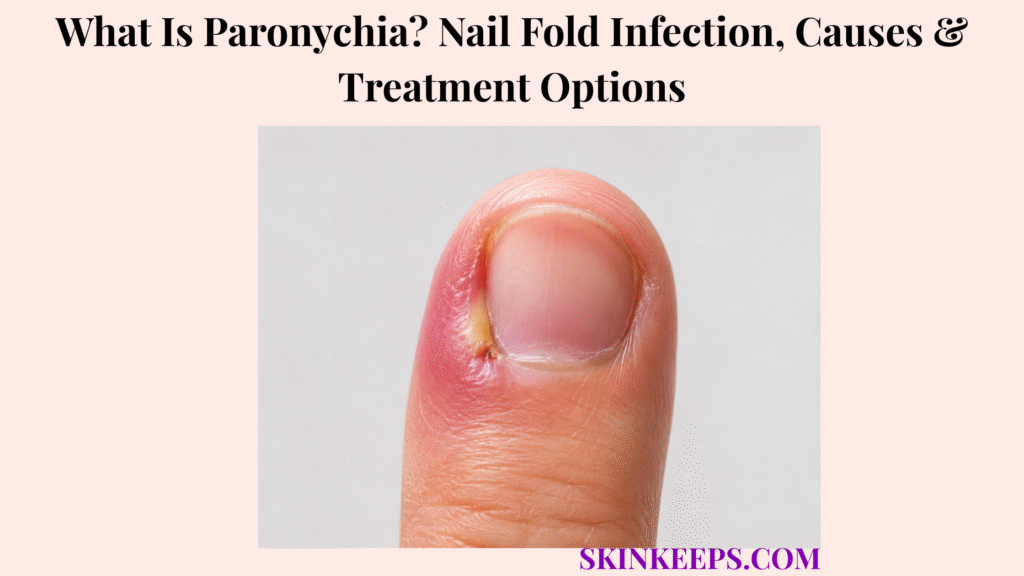
Paronychia is inflammation of the tissue around a fingernail or toenail, occurring either as a rapidly developing infection after the nail-fold barrier breaks or as chronic inflammation from repeated moisture and irritation. Acute paronychia can follow a hangnail, nail biting or picking, manicure trauma, another cut around the cuticle, or an ingrown toenail and typically produces rapid pain, redness and swelling.
Chronic paronychia develops more gradually when repeated water, detergent or chemical exposure damages the cuticle and keeps the nail fold inflamed, often without obvious pus. A true acute abscess can require drainage, whereas chronic disease is managed primarily by restoring the nail-fold barrier and suppressing inflammation, so treatment differs by mechanism.
This article is for educational purposes only and does not constitute medical advice, diagnosis, or treatment. Rapidly worsening pain or swelling, obvious or recurrent pus, fever, spreading redness, red streaks, marked fingertip-pulp swelling, difficulty moving the finger, or worsening paronychia in someone with diabetes, immune suppression or impaired circulation should be evaluated promptly by a licensed healthcare professional because infection can extend beyond the nail fold.
How Can You Recognize Paronychia?
Paronychia causes redness, swelling and tenderness around a nail fold, with acute disease developing rapidly and sometimes forming pus while chronic disease causes persistent inflammation and cuticle loss.
What Does Acute Paronychia Look Like?
Acute paronychia usually develops over hours to days as a painful, warm, red and swollen lateral or proximal nail fold.
One nail fold is commonly affected first, and tenderness can increase quickly after cuticle or periungual injury. Early inflammation can be prominent before pus appears, so redness and swelling alone do not prove that an abscess has formed.
How Can You Tell Whether an Abscess Has Formed?
An abscess is likely when pus forms a localized yellow-white or fluctuant collection beside or beneath the nail.
The collection may feel soft or boggy relative to the surrounding swollen tissue and can extend under the plate. Once a clinically meaningful pus collection is present, drainage becomes the central treatment decision rather than relying on medication alone.
What Does Chronic Paronychia Look Like?
Chronic paronychia develops gradually with persistent or recurrent swelling, redness and tenderness of one or several nail folds together with loss or disruption of the cuticle.
The pattern generally persists or repeatedly recurs for about six weeks or longer. Several fingers can be involved, the fold may separate from the plate, and chronic tenderness or fibrosis can occur, while obvious pus is uncommon.
Can Paronychia Change or Lift the Nail?
Yes; prolonged nail-fold inflammation can disturb matrix growth and cause ridges, discoloration or dystrophy, while substantial inflammation can sometimes produce onycholysis.
Transverse grooves, thickening and irregular growth can remain visible after the surrounding fold improves because damaged nail must still grow outward.
Figure 1. Acute paronychia follows rapid barrier injury and can form an abscess, while chronic paronychia follows repeated barrier disruption and cuticle loss.
What Causes Paronychia, and Who Is More Likely to Develop It?
Acute paronychia usually follows bacterial entry through damaged nail-fold skin, while chronic paronychia develops mainly from repeated moisture, chemicals and irritants that repeatedly damage the protective cuticle barrier.
What Causes Acute Paronychia?
Acute paronychia usually begins when bacteria enter through a cut, hangnail, damaged cuticle, manicure injury, nail-biting wound or another break in the nail fold.
Staphylococcus aureus and streptococci are major causes. The core sequence is barrier break → microbial entry → rapid inflammation rather than spontaneous infection of completely intact nail-fold skin.
Which Nail Habits and Toe Problems Increase Acute Risk?
Nail biting, nail-fold picking, pulling hangnails, aggressive manicuring, finger sucking and ingrown toenails can all damage the protective nail-fold seal and create an entry point for infection.
Nail biting and finger sucking can introduce oral flora, including additional aerobic and anaerobic organisms, into broken skin. On toes, an ingrown nail edge can repeatedly traumatize the lateral fold and create recurrent infection opportunity.
What Causes Chronic Paronychia, and Is Candida the Main Cause?
Chronic paronychia is usually driven by repeated water, detergent, chemical or irritant exposure rather than persistent Candida infection.
Repeated exposure damages the cuticle and weakens the barrier, allowing more irritants and microorganisms to enter and perpetuate inflammation. Candida is often found in damaged folds and may sometimes contribute, but its presence does not make chronic paronychia primarily fungal in every patient.
Which Medical Factors Can Complicate Paronychia?
Diabetes, peripheral vascular disease and immune suppression can increase the risk of more serious infection, while selected medicines can produce inflammatory paronychia without primary bacterial infection.
Selected EGFR, mTOR and BRAF pathway therapies can cause medication-associated paronychia. A suspected drug relationship should be reviewed with the prescribing clinician rather than prompting independent discontinuation.
Figure 2. Acute disease is mainly a microbial-entry problem; chronic disease is mainly a repeated barrier-damage dermatitis problem.
How Is Paronychia Distinguished and Diagnosed?
Paronychia is usually diagnosed clinically, but the pattern must be distinguished from herpetic whitlow, felon, fungal nail disease and persistent alternative nail-fold disorders before treatment is chosen.
How Is Paronychia Different From Herpetic Whitlow and Felon?
Herpetic whitlow usually produces painful grouped vesicles, while a felon causes tense painful swelling of the fingertip pulp rather than inflammation centered on the nail fold.
Bacterial paronychia is centered at the proximal or lateral fold and can produce frank pus. Herpetic whitlow is caused by HSV and should not be routinely incised and drained because the vesicles are not an ordinary bacterial abscess.
A felon instead affects the fingertip pad or pulp and often causes severe throbbing pain and tense swelling.
How Is Chronic Paronychia Different From Nail Fungus?
Chronic paronychia primarily inflames the nail-fold skin and damages the cuticle, while nail fungus / onychomycosis primarily infects and distorts the nail plate or nail bed.
Cuticle loss, swollen folds and a repeated wet-work history support chronic paronychia. A thickened crumbly discoloured nail with subungual debris raises the probability of fungal nail disease, and the two disorders can coexist.
When Are Bacterial or Fungal Tests Needed?
Bacterial culture or fungal testing is reserved for selected severe, recurrent, drained or diagnostically uncertain cases rather than performed routinely for every paronychia.
Culture can be useful after drainage, in recurrent or severe infection, when unusual organisms are suspected or when resistance could change treatment. Fungal testing becomes more relevant when the nail plate is substantially abnormal or yeast or dermatophyte disease remains plausible.
When Should Persistent Single-Nail Paronychia Be Investigated Further?
Persistent inflammation around one nail that fails appropriate barrier and anti-inflammatory treatment should trigger reconsideration of psoriasis, lichen planus, infection or nail-unit malignancy.
Nail psoriasis should be reconsidered when the nail has compatible inflammatory changes. Persistent atypical single-digit disease can require specialist review and selective biopsy rather than indefinite antibiotics or antifungals.
Figure 3. Pus suggests an abscess, grouped vesicles raise herpetic-whitlow concern, tense fingertip-pulp swelling suggests a felon, and persistent disease requires diagnostic reconsideration.
How Is Paronychia Treated?
Paronychia treatment depends on whether the problem is early acute inflammation, a drainable abscess or chronic nail-fold dermatitis rather than using antibiotics or antifungals for every case.
How Is Early Acute Paronychia Treated Before an Abscess Forms?
Early uncomplicated acute paronychia can often begin with local care such as warm compresses or soaks, with clinician-directed antimicrobial therapy added according to severity, likely organisms and patient risk.
Progressive redness, surrounding cellulitis, oral-flora exposure, diabetes, impaired circulation or immune suppression can change treatment and follow-up needs.
What Happens When Pus or an Abscess Is Present?
A true paronychial abscess generally requires drainage because medication alone may not adequately clear an enclosed collection of pus.
Clinical drainage can involve opening the affected fold and, when pus extends beneath the plate, occasionally addressing the involved nail edge or plate. This is not a home procedure.
Antibiotics after drainage are individualized according to cellulitis, systemic symptoms, immune or vascular risk, adequacy of drainage and suspected organisms rather than automatically required in the same way for every patient.
How Is Chronic Paronychia Treated?
Chronic paronychia is treated primarily by reducing water and irritant exposure, restoring the nail-fold barrier and suppressing inflammation with appropriate topical therapy.
The core strategy is reduce wet work + protect hands + let the cuticle reform + use clinician-directed anti-inflammatory therapy. Topical corticosteroids and topical calcineurin inhibitors are established anti-inflammatory options.
Antifungal therapy is added only when fungal or yeast involvement is clinically relevant; it is not the default treatment for every chronic case.
What Should Be Rechecked When Paronychia Does Not Improve?
Persistent paronychia should trigger reassessment for ongoing moisture or trauma, medication-induced inflammation, fungal disease, psoriasis, herpes or another nail-fold disorder before treatment is repeatedly escalated.
A useful troubleshooting sequence is: wet work continuing? → cuticle trauma continuing? → missed abscess? → herpetic whitlow? → fungus or psoriasis? → medication contributing? → atypical persistent single digit?
| Clinical Pattern | Main Treatment Direction | Key Boundary |
|---|---|---|
| Early acute, no abscess | Local care ± clinician-directed antimicrobial therapy | Redness alone is not an abscess |
| Clear abscess | Clinician drainage | Medication alone may not clear enclosed pus |
| Herpetic-whitlow pattern | Viral assessment / appropriate care | No routine incision and drainage |
| Cellulitis or high-risk disease | Escalated medical assessment | Spread beyond nail fold changes urgency |
| Chronic irritant paronychia | Barrier repair + moisture/irritant reduction + anti-inflammatory therapy | Not automatically Candida infection |
| Clinically relevant fungal involvement | Add targeted antifungal treatment | Fungal treatment is selective |
| Persistent atypical single digit | Reassess diagnosis ± biopsy | Avoid endless empiric therapy |
What Complications Can Paronychia Cause, and How Can Recurrence Be Reduced?
Paronychia can spread beyond the nail fold or damage normal nail growth when inflammation is severe or prolonged, while protecting the cuticle and reducing repeated moisture or trauma lowers recurrence risk.
Can Acute Paronychia Spread Beyond the Nail Fold?
Yes; acute infection can spread into surrounding skin as cellulitis, into the fingertip pulp as a felon or, rarely, into deeper tissues.
Spreading redness, fever, red streaks, severe fingertip swelling, increasing pain or movement limitation should prompt reassessment because the process is no longer confined to a small nail fold.
Can Chronic Paronychia Permanently Change the Nail?
Prolonged nail-fold inflammation can repeatedly disturb the nail matrix and produce ridged, brittle, thickened, discoloured or otherwise dystrophic nail growth.
Once inflammation improves, the matrix can begin producing healthier nail, but old damaged plate must grow outward, so cosmetic normalization takes months rather than days.
Why Are Cuticle Protection and Wet-Work Control So Important?
The cuticle forms part of the protective nail-fold seal, so preserving it and reducing prolonged water, detergent and chemical exposure helps prevent both acute microbial entry and chronic irritant inflammation.
Avoid aggressive cuticle cutting or pushing, nail biting, hangnail pulling and repeated digging around the nail. Protective gloves help when wet work is necessary.
How Can Recurrent Toenail Paronychia and High-Risk Disease Be Reduced?
Recurrent toenail paronychia is less likely when persistent nail-edge pressure and tight footwear are addressed, while diabetes or impaired circulation warrants earlier professional assessment when infection worsens.
An ingrown nail edge can repeatedly injure the fold, so reducing pressure and ensuring adequate footwear room can help. Diabetes, vascular disease and immune suppression increase the importance of early review when pain, swelling, pus or redness worsens.
What Should You Remember About Paronychia?
Paronychia is nail-fold inflammation with two major patterns: acute disease is usually an infection after barrier damage, while chronic disease is mainly persistent irritant or inflammatory dermatitis caused by repeated disruption of the nail-fold seal.
- Paronychia affects tissue around fingernails or toenails.
- Acute and chronic forms follow different mechanisms.
- Acute disease develops rapidly and commonly follows barrier injury.
- Nail biting, picking, hangnails and manicures can create entry points.
- Ingrown toenails can trigger toenail paronychia.
- Abscess formation is a major acute treatment decision.
- A true pus collection generally requires drainage.
- Herpetic whitlow can mimic acute bacterial paronychia and should not be routinely incised.
- A felon affects the fingertip pulp rather than the nail fold.
- Chronic disease is driven mainly by repeated moisture and irritants.
- Candida may colonize damaged folds but is not automatically the primary cause.
- Chronic inflammation can distort nail growth.
- Diagnosis is usually clinical and testing is selective.
- Persistent single-digit disease requires diagnostic reconsideration.
- Chronic treatment emphasizes barrier repair and anti-inflammatory therapy.
- Antifungals are selective rather than automatic.
- Acute infection can spread beyond the nail fold.
- Cuticle preservation and wet-work protection reduce recurrence.
Recognize pattern → Determine acute vs chronic → Check for abscess or mimic → Treat mechanism → Restore barrier → Prevent recurrent trauma → Reassess spread or persistent disease.
Frequently Asked Questions About Paronychia
The most important paronychia questions concern what damages the nail fold, how abscess formation is recognized, how acute and chronic disease differ, when antibiotics or drainage are needed and why inflammation can keep returning.
What Causes Paronychia Around a Fingernail or Toenail?
Acute paronychia usually follows a break in the nail-fold barrier that allows bacteria to enter, while chronic paronychia usually develops from repeated moisture and irritant exposure. Biting, picking, manicure injury, hangnails and ingrown toenails are common acute triggers.
How Can You Tell Whether Paronychia Has Formed an Abscess?
An abscess is suggested by a localized yellow-white or fluctuant collection of pus beside or beneath the nail. Simple redness or swelling is not automatically an abscess, but a true collection commonly requires clinician drainage.
What Is the Difference Between Acute and Chronic Paronychia?
Acute paronychia develops rapidly and is usually infectious, while chronic paronychia persists or repeatedly recurs and is mainly an irritant or inflammatory nail-fold disorder. Acute disease evolves over hours to days; chronic disease is generally present for about six weeks or longer.
Does Every Case of Paronychia Need Antibiotics or Drainage?
No; treatment depends on the pattern—an abscess generally requires drainage, some acute infections need antimicrobial therapy, and chronic paronychia is managed mainly with barrier protection and anti-inflammatory treatment.
Why Does Paronychia Keep Coming Back?
Paronychia often recurs when the cuticle remains damaged by biting, picking, manicures, wet work, irritants or repeated ingrown-nail pressure. Restoring the barrier and removing the repeated trigger are central to prevention.
Which Sources Support This Paronychia Guidance?
Merck Manual Professional — Acute Paronychia — Used for acute bacterial entry, S. aureus/streptococci, hangnail and biting triggers, ingrown toenail context, rapid inflammation, pus, drainage and high-risk spread.
Merck Manual Professional — Chronic Paronychia — Used for moisture/irritant-driven disease, cuticle loss, Candida-colonization boundary, medication-associated paronychia, barrier restoration, anti-inflammatory treatment and persistent single-digit reassessment.
NCBI Bookshelf — Paronychia Drainage — Used for acute-versus-chronic timing, abscess drainage logic and the herpetic-whitlow drainage contraindication.
DermNet — Paronychia — Used for acute and chronic morphology, nail dystrophy, onycholysis, wet-work prevention and cuticle disruption.
Narrative Review — Acute and Chronic Paronychia Revisited — Supporting source for oral-flora context, herpetic-whitlow differentiation and mechanism-specific management.