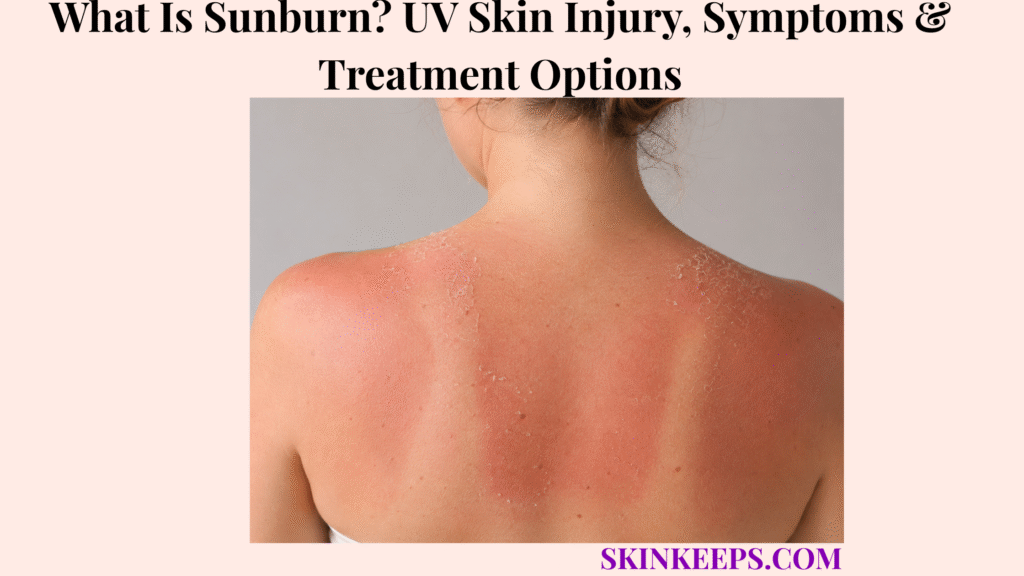
Sunburn is an acute inflammatory skin injury caused by excessive ultraviolet radiation from sunlight or artificial UV sources rather than by heat alone. The ultraviolet dose injures skin cells and DNA, which triggers inflammatory signals that produce warmth, tenderness, pain, swelling and visible color change.
More intense injury can cause blisters followed by peeling as damaged epidermal cells are shed. Redness may be subtle on darker skin, so severity should be judged by symptoms and extent rather than color alone; treatment is supportive, while extensive blistering, dehydration or systemic illness changes the need for medical care.
This article is for educational purposes only. Extensive blistering, severe swelling, dehydration, marked systemic illness or concerning symptoms in a baby or young child should be medically evaluated.
What Is Sunburn and How Does UV Injury Affect the Skin?
Sunburn is an acute inflammatory response caused when excessive ultraviolet radiation injures skin cells and triggers pain, heat, swelling and visible skin changes.
What Happens to Skin Cells During Sunburn?
Excess UV exposure damages skin cells and DNA, triggering inflammatory signaling, increased blood flow and tissue inflammation.
The sequence is ultraviolet exposure → cellular and DNA injury → inflammatory signaling → warmth, tenderness, swelling and pain. The skin can look better days later, but symptom resolution does not erase the fact that cellular UV injury occurred.
Do Both UVA and UVB Damage the Skin?
Yes; UVA and UVB both contribute to skin damage, and harmful ultraviolet exposure can come from sunlight as well as artificial sources such as tanning beds and sunlamps.
UVB is strongly associated with sunburn, while UVA also penetrates skin and contributes to cumulative photodamage. For practical prevention, both matter, which is why broad UV protection is more useful than focusing on one wavelength in isolation.
Is Sunburn Just Temporary Redness?
No; redness or discoloration is only one visible sign of UV injury, and skin cells have still been damaged even after the symptoms resolve.
Sunburn is therefore not simply a short-lived color change. Pain, heat, swelling, blistering and later peeling are all consequences of injured tissue, and repeated episodes add to a person’s lifetime burden of ultraviolet damage.
What Does Sunburn Look and Feel Like, and How Can Severity Be Recognized?
Sunburn usually causes hot, tender or painful skin and may progress to swelling, blistering and peeling, with severe injury judged by extent and symptoms rather than redness alone.
What Are the Early Symptoms of Sunburn?
Early sunburn commonly causes skin heat, soreness, tenderness, pain and swelling, with visible pink or red change often easier to recognize in lighter skin.
Symptoms may develop after the UV exposure has already ended, so a person can continue accumulating injury before the burn looks obvious. Not every burn produces every symptom, and visible color alone is a poor measure of how much skin is involved.
How Can Sunburn Look on Black or Brown Skin?
Sunburn may show little obvious redness on darker skin, so heat, tenderness, pain, swelling, blistering and peeling are important recognition clues.
Melanin provides some natural UV protection but does not make skin immune to sunburn or other ultraviolet injury. Looking only for bright redness can therefore delay recognition of a significant burn in brown or black skin.
Why Does Sunburn Peel After a Few Days?
Sunburn peels because UV-damaged epidermal cells are shed as the injured skin repairs itself.
Dryness, flaking and peeling can occur during this repair phase. The process differs from ordinary dry skin because the peeling follows an acute ultraviolet injury rather than simple loss of moisture alone.
What Does Blistering Mean in Sunburn?
Blistering indicates more severe sunburn, and intact blister roofs should generally be protected while the damaged skin heals.
Blisters form over deeper epidermal injury and help protect the raw surface below. Deliberately popping an intact blister, removing its roof or repeatedly rubbing the area can increase trauma and infection risk.
Can Severe Sunburn Occur Without Bright Red Skin?
Yes; severe injury can occur without dramatic redness, so blistering, swelling, pain, involved surface area and systemic symptoms matter more than color alone.
A large area of painful hot skin, substantial swelling, multiple blisters, reduced oral intake or systemic illness should be taken more seriously than a small localized patch, even when the visible color change is modest.
What Causes Sunburn, Who Is More Vulnerable, and How Is It Distinguished From Similar Reactions?
Sunburn results from excessive UV dose, while exposure intensity, duration, skin pigmentation and photosensitizing medicines can influence how easily it occurs.
Can Sunburn Come From Sources Other Than Sunlight?
Yes; tanning beds, sunlamps and other artificial UV-emitting devices can cause the same type of harmful ultraviolet skin exposure.
A tan from an indoor tanning device is not protective preparation for later sun exposure. A tan itself reflects a skin response to ultraviolet injury, and artificial UV adds to total exposure rather than creating a safe shield.
Why Can Sunburn Happen on Cool or Cloudy Days?
Sunburn risk depends on ultraviolet exposure rather than how hot the air feels, so cool weather does not guarantee protection.
UV rays can still reach the skin on cloudy or cool days, and reflected radiation from surfaces such as water, sand and snow can add exposure. Air temperature and UV dose are therefore different hazards.
Who Is More Likely to Sunburn?
Sunburn likelihood depends on UV intensity and duration, skin pigmentation, protective behavior and individual susceptibility, including medication-related photosensitivity.
Lighter skin often burns more readily or displays redness more visibly, but all skin tones can sustain ultraviolet damage. Exposure near reflective surfaces, long unprotected outdoor periods and high UV conditions can increase the dose received by any skin type.
Can Medicines Make Skin More Sensitive to Sunburn?
Yes; some medications and skin treatments can increase photosensitivity and make a person burn more readily during UV exposure.
Medication-related photosensitivity is a reason to review recent medicines or topical products when a reaction seems much stronger than expected. The article does not use an exhaustive drug list because risk varies by medicine, dose, exposure and individual susceptibility.
How Can Photosensitivity Differ From Ordinary Sunburn?
A photosensitivity reaction becomes more likely when the response is unexpectedly severe for the exposure, recurrent after little sunlight, linked to a medication or product, unusually patterned or more itchy than painful.
An itchy inflammatory eruption can overlap visually with a burn but may have a different mechanism; the skin allergy guide provides broader context for inflammatory reactions. Not every photosensitive reaction is allergic, so medication and exposure history remain important.
How Is Sunburn Different From a Thermal Burn?
Sunburn is caused by ultraviolet radiation damaging skin cells, while a thermal burn results from direct heat, flame, steam or hot-liquid injury.
The skin can feel hot during sunburn because inflammation increases blood flow, but that does not mean the injury was produced by hot air. Mechanism matters because UV exposure can cause injury even when the weather feels cool.
How Is Sunburn Different From Heat Exhaustion or Heatstroke?
Sunburn is local UV skin injury, whereas heat exhaustion and heatstroke involve systemic failure of normal temperature regulation and can occur alongside sunburn.
Marked dizziness, confusion, severe weakness, collapse, major overheating or significant systemic deterioration should not be explained away as “just sunburn.” Those features require evaluation for heat illness and can represent a more urgent medical problem.
How Is Sunburn Treated and How Does the Skin Heal?
Sunburn treatment is supportive: stop further UV exposure, cool the skin gently, moisturize, maintain hydration, manage pain appropriately and protect blisters and peeling skin while healing occurs.
What Should Be Done First After Sunburn?
The first step is to stop additional UV exposure and protect the injured skin from further sunlight while it heals.
Move indoors or into effective shade and cover the affected area when further outdoor exposure cannot be avoided. Treatment cannot reverse UV injury already sustained, so preventing an additional dose is the immediate priority.
How Do Cool Baths or Compresses Help?
Cool baths, showers or damp cloths can reduce discomfort without adding more injury to already inflamed skin.
Gentle cooling is intended to soothe pain and heat. Extremely cold or aggressive ice exposure is unnecessary and can create additional skin injury, especially over large sensitive areas.
Can Moisturizer Help Sunburned Skin?
Moisturizer applied to slightly damp skin can help reduce dryness and discomfort while the sunburn heals.
A bland moisturizer can support comfort as water evaporates from the injured surface; aloe- or soy-containing moisturizers are among options cited by dermatology guidance. Moisturizer is supportive care, not a way to reverse the UV cellular damage.
How Is Sunburn Pain Managed?
Pain and inflammation can sometimes be managed with appropriate over-the-counter pain relief when it is safe for the individual.
Suitability depends on age, pregnancy, kidney function, gastrointestinal risk, other medicines and individual contraindications. A fixed dose is not appropriate for every reader, so label directions and clinician or pharmacist advice should guide use when there is uncertainty.
Why Is Hydration Important After Extensive Sunburn?
Hydration becomes especially important when a large area is burned because fluid shifts toward injured skin and prolonged outdoor exposure can also contribute to dehydration.
Normal oral fluid intake may be enough for a mild local burn, but extensive injury combined with poor intake, vomiting, dizziness or reduced urination changes the concern. Severe dehydration requires medical assessment rather than simply drinking more at home.
Should Sunburn Blisters or Peeling Skin Be Removed?
No; intact blisters should generally be allowed to heal, and peeling skin should not be deliberately pulled away.
Avoid popping, picking and scratching. If a blister opens on its own, gentle protection from friction is sensible; increasing pain, pus, spreading swelling or other infection signs warrant professional assessment.
How Can Sunburn Be Prevented, and When Does It Need Medical Care?
Future sunburn risk is reduced best through layered UV protection, while extensive blistering, severe swelling, dehydration or systemic illness warrants medical assessment.
How Can Future Sunburn Be Prevented?
Sunburn prevention works best by combining shade, protective clothing, hats, UV-blocking eyewear and broad-spectrum sunscreen rather than relying on one measure alone.
Plan for protection before exposure, cover as much skin as practical, use a wide-brimmed hat and UV-blocking sunglasses, and use broad-spectrum sunscreen on exposed skin. Reapply sunscreen according to the product directions, especially after swimming, sweating or toweling.
Why Is Sunscreen Not the Only Prevention Strategy?
Sunscreen reduces UV exposure when used correctly, but it should complement shade, clothing and exposure management rather than serve as permission for unlimited intense sun exposure.
Protection is strongest when layers work together. Shade and clothing reduce how much UV reaches the skin in the first place, while sunscreen helps protect areas that remain exposed.
Why Does Repeated Sunburn Matter Long Term?
Sunburn is evidence of substantial UV damage, and repeated or intense UV injury contributes to long-term skin-cancer risk.
The broader skin cancer guide covers warning signs and major cancer types. Sunburn is a risk marker and preventable exposure outcome, not proof that cancer is already present.
Severe blistering sunburn and cumulative ultraviolet exposure are associated with higher melanoma risk; the melanoma guide owns melanoma-specific recognition and treatment. One sunburn does not mean melanoma will inevitably occur.
Repeated cumulative UV injury can also contribute to sun-damaged keratinocyte changes such as actinic keratosis. That downstream risk is another reason prevention should continue after the immediate burn heals.
When Should Severe Sunburn Be Medically Evaluated?
Medical advice is appropriate when sunburn causes extensive blistering, substantial swelling, severe or worsening pain, dehydration or significant systemic symptoms.
Fever or chills, dizziness, nausea, severe headache, muscle cramps, feeling very unwell, poor fluid intake or signs of dehydration increase concern. Babies and young children deserve a lower threshold for assessment when the burn is extensive or blistering.
When Is Emergency Care More Appropriate?
Emergency assessment is more appropriate when altered consciousness, severe dehydration, major systemic illness or symptoms suggesting heatstroke occur after sun exposure.
Confusion, collapse, severe overheating or major neurologic deterioration should not be managed as a routine skin burn. Mild local UV injury generally fits supportive care; extensive blistering or significant illness warrants medical assessment; heatstroke-type symptoms require emergency care.
What Should You Remember About Sunburn?
Sunburn is acute UV-induced skin injury, so management should focus on recognizing severity, supporting healing, avoiding additional UV exposure and preventing repeated damage.
- Sunburn is caused by excessive ultraviolet radiation rather than hot air alone.
- UV exposure can injure skin cells and DNA before visible symptoms become obvious.
- Both natural sunlight and artificial UV sources can cause damaging exposure.
- Redness is not required, and darker skin can burn even when color change is subtle.
- Heat, tenderness, pain and swelling are useful recognition clues.
- Peeling reflects shedding of damaged epidermal cells during repair.
- Blistering represents more severe injury and intact blisters should not be intentionally popped.
- Severity depends on extent, pain, swelling, blistering, hydration and systemic symptoms—not color alone.
- Cool or cloudy weather does not eliminate ultraviolet exposure.
- A base tan reflects prior UV injury and does not provide safe protection.
- Some medicines and topical treatments can increase photosensitivity.
- Thermal burns have a different mechanism from sunburn.
- Heat exhaustion and heatstroke are systemic illnesses that can coexist with sunburn.
- The first treatment step is to stop additional UV exposure.
- Cool bathing or compresses and moisturizer can reduce discomfort.
- Pain-relief choices should be individualized rather than dosed universally.
- Hydration matters more when a large area is involved or outdoor exposure has been prolonged.
- Peeling skin should not be deliberately pulled away.
- Prevention works best through shade, clothing, hats, sunglasses and sunscreen together.
- Repeated or intense ultraviolet injury contributes to future skin-cancer risk.
- Extensive blistering, severe swelling, dehydration or significant illness warrants medical assessment.
- Confusion, severe overheating or major systemic deterioration after sun exposure requires emergency evaluation.
Frequently Asked Questions About Sunburn
The main sunburn questions concern healing, peeling, darker skin, blisters and long-term skin-cancer risk.
How Long Does Sunburn Usually Take to Heal?
Healing time varies with severity. Mild symptoms often improve over several days, while blistering or extensive sunburn can take longer; peeling may appear after the initial injury as damaged epidermal cells are shed.
Why Does Skin Peel After Sunburn?
Peeling occurs because UV-damaged epidermal cells are shed while the skin repairs itself.
Can People With Dark Skin Get Sunburned?
Yes; people with darker skin can sustain sunburn and UV damage even when visible redness is subtle or absent.
Should Sunburn Blisters Be Popped?
No; intact sunburn blisters help protect injured skin and should generally be allowed to heal naturally.
Does Getting Sunburned Increase Skin Cancer Risk?
Sunburn reflects substantial UV injury, and repeated or intense UV exposure contributes to future skin-cancer risk, but one sunburn does not mean cancer will inevitably develop.
American Academy of Dermatology — How to treat sunburn. Supports immediate UV avoidance, cool bathing, moisturizer, hydration, pain-relief principles, blister protection and layered sun protection.
NHS — Sunscreen and sun safety. Supports sunburn symptom care, the need for medical help with significant swelling or blisters, and practical sun-safety measures.
CDC — Sun Safety Facts. Supports UV exposure on cloudy or cool days, artificial UV sources and prevention using shade, clothing, hats, sunglasses and sunscreen together.
CDC — Reducing Risk for Skin Cancer. Supports avoiding indoor tanning, the fact that a base tan is skin injury rather than protection, and long-term UV-risk reduction.
National Cancer Institute — Sunlight. Supports UV radiation as a source of cellular damage linked to skin-cancer risk across skin tones and from both sunlight and artificial UV sources.
National Cancer Institute — Moles and Melanoma Risk. Supports the association between severe blistering sunburn, cumulative ultraviolet exposure and melanoma risk without implying that one burn inevitably causes melanoma.
MedlinePlus — Sunburn. Supports warmth, tenderness, delayed blistering and peeling, medication photosensitivity and escalation for dehydration or serious systemic reactions.