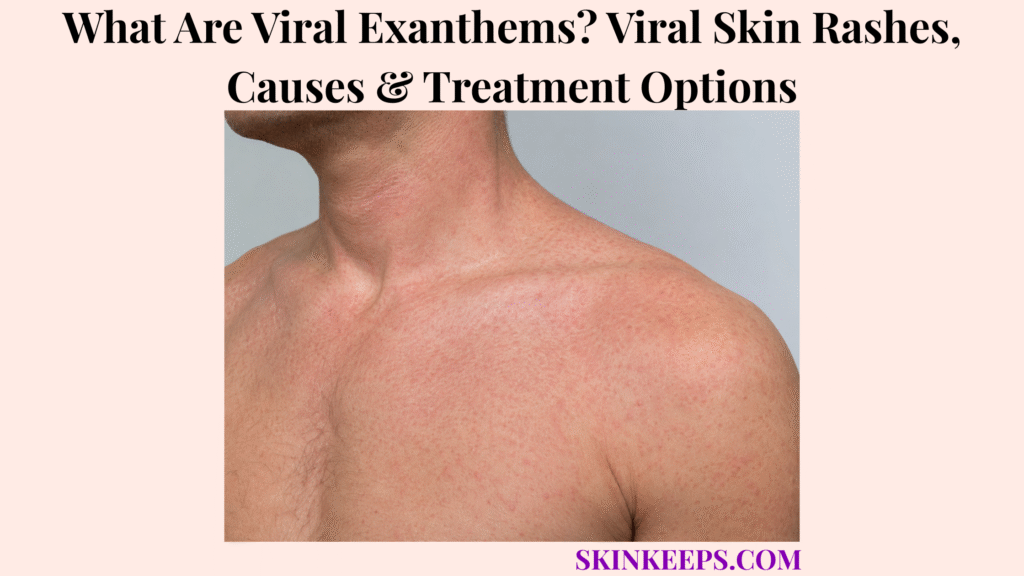
Viral exanthems are widespread skin rashes that occur during systemic viral infections and are often accompanied by symptoms such as fever, fatigue, headache, respiratory symptoms or general malaise. The term describes a clinical category rather than one single viral disease.
The most useful clues are the rash morphology, where it starts and spreads, how it relates to fever, mucosal findings, vaccination and exposure history, and the patient’s overall condition. Many cases need supportive care, but treatment, contagiousness and isolation rules depend on the underlying virus, and dangerous non-viral mimics must remain in the differential.
Medical note: This article is for educational purposes only. A rash with severe illness, breathing difficulty, confusion, seizures, non-blanching purple spots, extensive blistering, painful mucosal erosions, pregnancy or significant immune suppression requires prompt medical assessment.
What Are Viral Exanthems and What Do These Viral Rashes Look Like?
Viral exanthems are generalized skin eruptions that accompany systemic viral infections and can appear as macular, papular, maculopapular, vesicular or reticular rash patterns.
What Does the Term “Exanthem” Mean?
An exanthem is a widespread skin eruption occurring as part of a systemic illness, often together with fever, malaise, headache or other constitutional symptoms. It is a descriptive syndrome term rather than the name of one virus.
How Can a Viral Infection Cause a Skin Rash?
Viruses can produce exanthems through direct effects on skin cells, immune responses to infection or circulating infection-related inflammatory products. These mechanisms can overlap, but the practical diagnosis still depends on the recognizable clinical pattern rather than speculative immunology.
What Does a Typical Viral Exanthem Look Like?
There is no single typical appearance; viral exanthems can be flat, raised, mixed maculopapular, blistering or lace-like depending on the responsible virus. Selected infections may also produce petechiae, but non-blanching spots in an unwell patient require a different level of caution.
Why Does Rash Distribution Matter?
Where a rash begins and how it spreads can strongly narrow the likely viral cause because different exanthems have characteristic distributions. A face-first eruption, trunk-predominant rash, acral pattern or generalized mixed-stage vesicular eruption points toward different diagnostic pathways.
Why Does Fever Timing Matter?
The timing of fever relative to the rash is diagnostically useful because some exanthems appear during fever while others emerge as fever resolves. Roseola is a high-value example: the rash often appears as the high fever subsides, whereas measles typically has a febrile respiratory prodrome before the rash develops.
Why Should Rash Color Alone Not Identify a Viral Exanthem?
Color alone is unreliable because many viral and non-viral rashes can look red, pink or purple, and erythema may be less conspicuous on darker skin tones. Texture, lesion shape, distribution, progression, fever timing and systemic symptoms are therefore more reliable than requiring bright redness.
What Causes Viral Exanthems and How Do the Underlying Viruses Spread?
Viral exanthems are caused by several different systemic viruses, and their transmission routes vary from respiratory and close-contact spread to fecal-oral or lesion-contact transmission.
Which Viruses Commonly Cause Recognizable Exanthems?
Classic viral exanthems include illnesses caused by measles virus, rubella virus, parvovirus B19, HHV-6B, enteroviruses and varicella-zoster virus. Measles, rubella, fifth disease, roseola, hand-foot-and-mouth disease and chickenpox are useful pattern examples, not interchangeable diagnoses.
How Do Viral Exanthem Infections Spread?
Transmission depends on the specific virus and can involve respiratory or airborne spread, close contact, contaminated secretions, fecal-oral transmission or contact with infectious skin lesions. A visible viral rash therefore does not imply one universal route of spread.
Are Viral Exanthems Always Contagious While the Rash Is Visible?
No; infectiousness depends on the virus, and the visible rash does not necessarily coincide with the period of greatest transmission. Parvovirus B19 is a useful example because transmission often occurs earlier in the illness, while the characteristic “slapped-cheek” or lacy rash can appear after contagiousness has fallen.
Why Are Vaccination and Exposure History Important?
Vaccination status and exposure history can substantially change the likelihood of specific exanthems, especially vaccine-preventable infections such as measles and rubella. Household, school or daycare exposure, outbreak information and recent travel can all change the diagnostic probability.
Why Do Pregnancy and Immune Status Matter?
Pregnancy and immune suppression can change the consequences of a viral exanthem because some infections can affect a developing fetus or become unusually severe in high-risk hosts. Rubella, parvovirus B19 and varicella exposures are especially important reasons not to treat every rash as routine.
How Are Viral Exanthems Diagnosed and Distinguished From Other Rashes?
Diagnosis combines age, systemic symptoms, rash morphology, distribution, timing, mucosal findings, vaccination status, exposure history and medication history rather than relying on appearance alone.
Which Clinical Clues Help Identify the Cause?
The strongest diagnostic clues come from combining rash pattern with the timing and type of systemic illness and the patient’s exposure context. Age, starting site, direction of spread, mucosal lesions, vaccination history, travel, medication timing and the severity of illness all matter.
How Does Chickenpox Fit the Viral-Exanthem Pattern?
Chickenpox / Varicella is distinguished by successive crops of lesions at different developmental stages, so macules, papules, vesicles and crusts can coexist. That mixed-stage pattern is more specific than simply calling the eruption “red” or “blistering.”
Do All Viral Exanthems Need Laboratory Testing?
No; some classic uncomplicated exanthems can be diagnosed clinically, while laboratory confirmation becomes more important when the diagnosis affects treatment, isolation, pregnancy management, outbreak control or public-health action. Atypical disease, immune suppression and consequential uncertainty also lower the threshold for testing.
How Are Viral Exanthems Different From Drug or Allergic Rashes?
Drug and allergic eruptions can also become widespread, so medication timing, mucosal involvement, systemic symptoms and viral exposure must be reviewed before labeling a generalized rash viral. Broader allergic-rash mechanisms are covered separately under Skin Allergy.
How Is Erythema Multiforme Different From a Typical Viral Exanthem?
Erythema Multiforme is a distinct immune-mediated eruption characterized by target-like lesions and should not be grouped automatically with ordinary generalized viral rashes.
Which Serious Conditions Can Mimic a Viral Exanthem?
Invasive bacterial infection, severe drug reactions, Kawasaki disease, vasculitis and other inflammatory conditions can present with fever and widespread rash. A very unwell patient, rapidly progressive disease, severe skin pain or major mucosal injury should shift attention from pattern recognition to urgent safety assessment.
Why Are Non-Blanching Purple Spots a Different Safety Problem?
Petechiae or purpura accompanied by fever or significant illness can indicate serious systemic disease and should not simply be assumed to be a routine viral exanthem. Rapidly spreading non-blanching spots, collapse or marked systemic deterioration warrant emergency assessment.
How Are Viral Exanthems Treated?
Many viral exanthems require supportive care only, while virus-specific treatment is reserved for infections or patients in whom the responsible virus, severity or risk profile changes management.
Why Is Supportive Care Enough for Many Viral Exanthems?
Many viral exanthems are self-limited, so care focuses on maintaining hydration, rest, reducing discomfort and using gentle skin care while the infection resolves. Itch relief may be useful when needed, but a single generic medication regimen does not fit every viral cause.
Do Antibiotics Treat Viral Exanthems?
No; antibiotics do not treat the viral infection itself and are only relevant when a separate bacterial infection or bacterial diagnosis is present. Fever plus rash alone is not an indication for antibacterial treatment.
Do All Viral Exanthems Need Antiviral Medicines?
No; antiviral treatment depends on the specific virus, disease severity and patient risk rather than the presence of a rash alone. Many classic exanthems resolve without antiviral therapy, whereas selected high-risk viral infections follow virus-specific treatment pathways.
Why Must Specific Exanthems Follow Disease-Specific Treatment Pathways?
Once the responsible viral disease is identified, management may change because different infections require different supportive care, antivirals, isolation, post-exposure measures or complication monitoring. The umbrella diagnosis should therefore hand off to disease-specific guidance when the cause is known.
Why Should Aspirin Be Avoided in Children With Viral Illnesses?
Aspirin is generally avoided in children and teenagers with certain viral illnesses because of its association with Reye syndrome, particularly in the context of influenza or chickenpox. Fever treatment should therefore remain age-appropriate and condition-specific rather than being generalized across all exanthems.
How Can Viral Exanthems Be Prevented From Spreading, and When Do They Need Urgent Care?
Transmission prevention must follow the specific viral diagnosis, while pregnancy, immune suppression, severe systemic illness, mucosal injury or non-blanching rash substantially lower the threshold for prompt medical assessment.
How Can Viral Exanthem Transmission Be Reduced?
Transmission control depends on the responsible virus but may include vaccination, hand hygiene, respiratory precautions, avoiding close contact during infectious periods and disease-specific exclusion or isolation guidance. There is no single school-return or isolation rule for all viral exanthems.
Why Is Vaccination Important for Some Viral Exanthems?
Vaccination prevents important exanthem illnesses such as measles and rubella and reduces the risk of their complications. Vaccine recommendations should follow the relevant national immunization program rather than being generalized from one country to every setting.
When Should Pregnancy Exposure Be Reported Promptly?
Pregnant people should seek clinician advice promptly after relevant exposure to infections such as rubella, parvovirus B19 or varicella rather than waiting to see whether a rash develops. Exposure alone can matter because management may be time-sensitive even before symptoms appear.
Which Viral-Exanthem Symptoms Need Prompt Medical Assessment?
High or persistent fever, dehydration, rapidly worsening illness, repeated vomiting, severe headache, extensive blistering, unusual lethargy or painful mucosal lesions warrant prompt assessment. Pregnancy with a new febrile rash and significant immune suppression also justify a lower threshold for medical review.
When Does Mucosal Involvement Need More Urgent Evaluation?
Painful mouth, eye or genital erosions—especially with widespread skin pain, blistering or systemic illness—can indicate a more serious condition than an uncomplicated viral exanthem. Mucosal sloughing or widespread epidermal detachment should never be normalized as an ordinary viral rash.
When Is a Non-Blanching Rash an Emergency Warning?
Rapidly spreading petechiae or purpura with fever, collapse or significant illness should be treated as an emergency rather than assumed to be a routine viral rash. The same applies when the rash is accompanied by rapid clinical deterioration.
Which Other Findings Can Signal an Emergency?
Difficulty breathing, confusion, reduced consciousness, seizure, neck stiffness, shock or widespread skin detachment can indicate serious systemic disease requiring emergency care. These findings take priority over trying to name the rash at home.
What Should You Remember About Viral Exanthems?
Viral exanthems are a group of systemic viral illnesses that produce generalized rashes, so diagnosis and management depend on the specific pattern, timing, viral cause, exposure history and severity rather than on the rash alone.
- Viral exanthem is an umbrella clinical category, not one disease.
- Exanthems accompany systemic illness and may occur with fever, malaise, headache, respiratory or gastrointestinal symptoms.
- Rashes may result from direct viral skin effects, immune responses or circulating infection-related inflammatory products.
- Macular, papular, maculopapular, vesicular and reticular patterns can all occur.
- Selected infections can produce petechiae, but non-blanching purpura in an unwell patient is a safety warning.
- Rash distribution, progression and fever timing often narrow the likely cause.
- Color alone is insufficient, especially when erythema is less conspicuous on darker skin.
- Measles, rubella, fifth disease, roseola, HFMD and chickenpox are pattern examples, not interchangeable diagnoses.
- Transmission and contagious periods differ by virus and do not simply track how long the rash remains visible.
- Adults can develop viral exanthems, and pregnancy or immune suppression can substantially change risk.
- Vaccination, exposure, travel and medication history are important diagnostic clues.
- Not every exanthem needs laboratory testing, but confirmation matters more when treatment, isolation, pregnancy care or public-health action may change.
- Drug eruptions, invasive bacterial illness, severe drug reactions, erythema multiforme and inflammatory disease can mimic viral exanthems.
- Many uncomplicated viral exanthems need supportive care only.
- Antibiotics do not treat the viral cause, and antivirals are not universal.
- Children and teenagers should not be given aspirin for viral illness unless specifically directed by a clinician.
- Isolation and prevention measures are disease-specific rather than universal.
- Pregnancy exposure to rubella, parvovirus B19 or varicella can justify prompt clinician contact even before a rash appears.
- Severe mucosal injury, neurologic symptoms, shock, widespread skin detachment or rapidly spreading non-blanching spots require urgent or emergency care.
Frequently Asked Questions About Viral Exanthems
The main viral-exanthem questions concern contagiousness, differentiation from allergic or drug rashes, common viral causes, antiviral treatment and emergency warning signs.
Are All Viral Exanthems Contagious?
No; contagiousness depends on the specific virus, and the visible rash does not always correspond to the most infectious stage.
How Can You Tell a Viral Exanthem From an Allergic or Drug Rash?
Diagnosis depends on rash morphology and timing together with fever, exposure history, vaccination status, medication timing, mucosal findings and the patient’s overall condition.
Which Viral Infections Commonly Cause Skin Rashes in Children?
Recognizable childhood exanthems include measles, rubella, fifth disease, roseola, hand-foot-and-mouth disease and chickenpox.
Do Viral Exanthems Need Antiviral Treatment?
Not usually; many are self-limited, while antiviral treatment is reserved for specific viral infections or higher-risk clinical situations.
When Is a Fever With a Skin Rash an Emergency?
Emergency assessment is needed when fever and rash occur with severe illness, breathing difficulty, confusion, seizure, shock, rapidly spreading non-blanching spots, severe mucosal injury or widespread skin detachment.
DermNet — Exanthems: exanthem definition, systemic symptoms, mechanisms, broad diagnosis and cause-dependent treatment.
DermNet — Specific viral exanthems: pattern-based examples including measles, rubella, roseola, fifth disease, HFMD and chickenpox.
CDC — Clinical Overview of Measles: febrile respiratory prodrome, maculopapular rash, laboratory confirmation and public-health importance.
CDC — Rubella Symptoms and Complications: face-first rash, adult manifestations and pregnancy risk.
CDC — Parvovirus B19 / Fifth Disease: slapped-cheek rash, systemic symptoms and higher-risk pregnancy or immune-status contexts.
CDC — Hand, Foot, and Mouth Disease: oral lesions and palm/sole rash pattern.
CDC — Clinical Features of Chickenpox: macule-to-papule-to-vesicle progression and simultaneous mixed lesion stages.
MedlinePlus — Reye Syndrome: aspirin association after viral illness in children and teenagers.