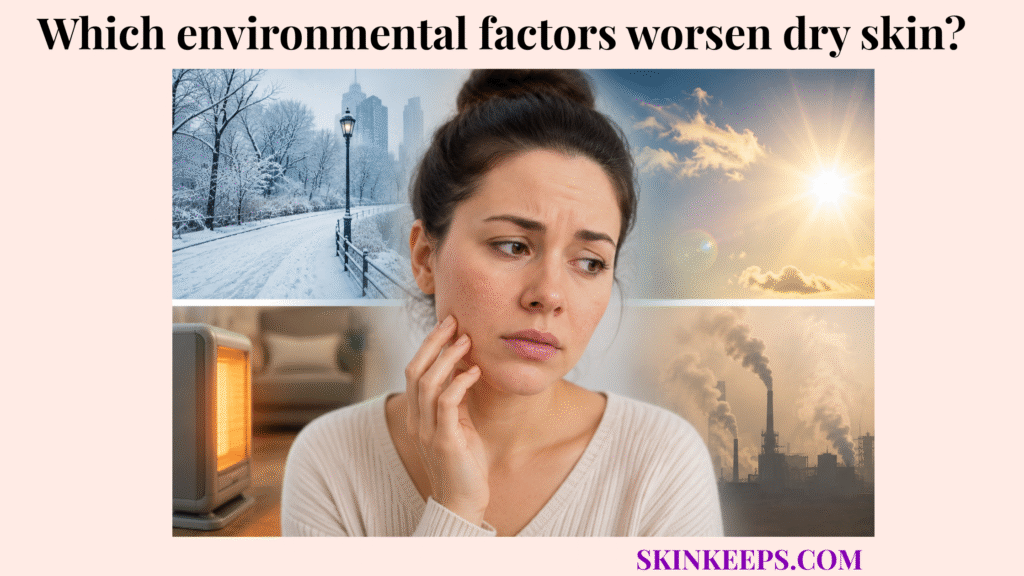
Environmental factors that worsen dry skin include cold air, low humidity, indoor heating, hot water, long showers, harsh soaps, wind, sun exposure, chlorine, frequent washing, and friction. These outside exposures can make the skin lose comfort, feel tighter, become rougher, or develop more visible dryness.
This guideline explains how outdoor weather, indoor air, bathing habits, cleansing exposure, sun, wind, chlorine, and friction worsen dry skin, then shows how to reduce those triggers before dryness becomes cracked, inflamed, or persistent.
How does cold or dry weather worsen dry skin?
Cold or dry weather worsens dry skin by lowering the moisture available around the skin surface and making the outer layer feel tighter, rougher, and less flexible. This weather-related dryness often appears when the air has less moisture to support surface comfort. The result can be rough patches, itching, dullness, or early flaking.
Weather exposure can create visible and tactile changes at the same time. Cold air may first make the skin feel coarse, then later contribute to flakes or cracks if protection is not improved. When cold air creates texture before flakes are visible, the guide on dry skin can feel rough before visible flaking can explain that early stage.
How low humidity pulls moisture from the skin surface
Low humidity pulls moisture from the skin surface by creating a dry surrounding environment that makes the outer layer lose comfort more easily. This dry environment gives the skin less external moisture support. As the surface becomes less flexible, roughness and tightness can become more noticeable.
Why cold weather often makes dry skin feel tighter or itchier
Cold weather often makes dry skin feel tighter or itchier because the outer layer becomes less flexible when exposed to dry, low-moisture air. This reduced flexibility can make normal movement, washing, or clothing contact feel more uncomfortable. Itch may appear when the dry surface becomes reactive to friction or weather stress.
| Environmental Factor | How It Worsens Dryness |
|---|---|
| Cold air | Reduces skin comfort and increases dryness tendency. |
| Low humidity | Makes moisture leave the outer skin more easily. |
| Wind | Adds friction and exposure stress. |
| Sudden temperature shifts | Makes skin feel less stable and more reactive. |
| Dry climate | Can worsen symptoms year-round. |
Why does indoor heating make dry skin worse?
Indoor heating makes dry skin worse by drying the air around the skin, which can keep moisture loss active even when the person is no longer outside in cold weather. This indoor dryness often explains why winter skin can stay tight, rough, or itchy overnight. The environment changes, but the low-moisture exposure continues.
Indoor dryness matters because people spend many hours inside heated rooms. Bedrooms, offices, cars, and closed indoor spaces can all contribute to dry-skin discomfort during cold seasons. If environmental exposure changes how the skin looks, the broader guide on visible characteristics of dry skin can help connect texture, flakes, dullness, and cracks.
How heated indoor air lowers moisture around the skin
Heated indoor air lowers moisture around the skin by creating a drier room environment that gives the outer layer less humidity support. This dry indoor setting can keep the surface feeling tight after outdoor exposure has ended. The effect is most noticeable when heated rooms are used for many hours.
Why winter dryness can continue even indoors
Winter dryness can continue even indoors because heated rooms may remain dry enough to keep the skin feeling tight, itchy, or rough. This means moving inside does not always remove the environmental trigger. Indoor prevention can matter as much as outdoor protection during dry seasons.
| Environment | Main Dry-Skin Stress |
|---|---|
| Cold outdoor air | Low surrounding moisture and exposure stress. |
| Windy outdoor air | Friction and surface irritation. |
| Heated indoor rooms | Low indoor humidity. |
| Air-conditioned spaces | Dry, circulating air. |
| Dry climates | Ongoing moisture-loss tendency. |
| Bedroom air | Overnight tightness or morning roughness. |
How do hot water and long showers worsen dry skin?
Hot water and long showers worsen dry skin by removing surface oils and leaving the outer layer less comfortable after washing. This water exposure can make dry skin feel temporarily clean but then tighter, rougher, or itchier. The discomfort often appears after drying off.
Bathing habits matter because they happen repeatedly. A single hot shower may be tolerated, but repeated hot-water exposure can keep dry skin unstable. If hot water mainly causes a pulled or uncomfortable feeling, the article on dry skin feels tight after washing gives a more precise post-cleansing explanation.
Why hot water removes protective surface oils
Hot water removes protective surface oils by washing away part of the lipid film that helps dry skin feel softer and more comfortable. This surface film does not make skin dirty by itself; it helps reduce dryness and friction. When it is reduced too aggressively, the skin can feel stripped after bathing.
Why long bathing increases tightness and roughness
Long bathing increases tightness and roughness because extended water exposure can leave the dry outer layer less protected after the skin dries. This repeated exposure can make the surface feel clean at first but uncomfortable later. The longer the pattern continues, the more likely tightness and roughness are to return after each wash.
| Water Exposure Pattern | Why It Can Worsen Dry Skin |
|---|---|
| Hot showers | Remove surface comfort and oils. |
| Long baths | Prolong water and cleanser exposure. |
| Frequent washing | Repeatedly reduces skin comfort. |
| Harsh soap during bathing | Adds chemical irritation. |
| Rough towel drying | Adds friction after washing. |
| Delayed moisturizing | Allows tightness to return faster. |
Which cleansing or hygiene habits worsen dry skin?
Cleansing and hygiene habits that worsen dry skin include harsh soaps, fragrance-heavy products, alcohol-containing products, frequent handwashing, overbathing, rough towels, and scrubbing. These habits worsen dryness by combining surface oil removal with chemical or mechanical irritation. The skin may feel cleaner at first but become rougher, tighter, or itchier later.
Hygiene-related dryness is common because washing is repeated daily. Hands, face, and body areas exposed to soap or friction often show symptoms first. If environmental dryness creates a sharp or burning sensation, the page on dry skin stinging or burning can help separate dryness from stronger irritation.
Why harsh soaps and fragrance-heavy products can worsen dry skin
Harsh soaps and fragrance-heavy products can worsen dry skin because they strip comfort and add avoidable irritation to an already dry surface. This added irritation may make the skin feel tight, stingy, itchy, or rough after washing. A cleanser that repeatedly leaves the skin uncomfortable is usually not matching the current barrier state.
Why frequent washing and scrubbing can make dry patches more noticeable
Frequent washing and scrubbing can make dry patches more noticeable because repeated cleansing and friction remove comfort faster than the skin can recover. Scrubbing rough areas also adds mechanical stress to a surface that already lacks flexibility. This can make dry patches look more obvious instead of smoother.
| Hygiene Trigger | How It Worsens Dryness |
|---|---|
| Harsh soap | Removes too much surface comfort. |
| Fragrance-heavy cleanser | Adds irritation risk. |
| Alcohol-containing product | Can sting or dry the surface. |
| Frequent handwashing | Repeatedly removes surface oils. |
| Overbathing | Extends washing-related dryness. |
| Rough towel drying | Adds friction. |
| Scrubbing | Irritates rough or dry patches. |
How do sun, wind, chlorine, and friction worsen dry skin?
Sun, wind, chlorine, and friction worsen dry skin by adding external stress that can dry, irritate, roughen, or inflame the outer barrier. These exposures may not feel as obvious as hot water or harsh soap, but they can still increase dryness over time. The result may be roughness, tightness, redness, or stinging.
Each exposure affects the skin differently. Wind adds friction, chlorine can leave skin tight after swimming, and repeated rubbing can make already dry patches more reactive. When dry skin becomes visibly inflamed after weather or product exposure, the guide on dry skin redness and irritation can support that interpretation.
Why wind and friction can make dry patches rougher
Wind and friction can make dry patches rougher because repeated exposure and rubbing stress the surface and make texture more noticeable. Wind can dry and irritate exposed skin, while clothing, towels, or scratching can create mechanical stress. Together, these triggers can make rough areas feel more raised or uncomfortable.
Why sun exposure and chlorine can leave dry skin more uncomfortable
Sun exposure and chlorine can leave dry skin more uncomfortable because both can add drying or irritating stress to a barrier that already lacks comfort. Pool water may leave the skin tight after swimming, and sun exposure can make the surface feel more fragile. Rinsing and moisturizing after these exposures can reduce the dry feeling.
| Exposure | Dry-Skin Effect |
|---|---|
| Sun exposure | Can damage and dry the surface. |
| Wind | Increases irritation and roughness. |
| Chlorinated pools | Can leave skin feeling dry or tight. |
| Friction from clothing | Worsens rough patches. |
| Repeated rubbing | Irritates already dry areas. |
| Rough towel drying | Adds mechanical stress after washing. |
Which seasons are hardest on dry skin?
The hardest seasons for dry skin are usually the seasons that combine low humidity, temperature extremes, indoor air changes, sun exposure, swimming, or frequent washing. Winter often worsens dryness through cold air, low humidity, and indoor heating. Summer can still worsen dryness through sun, swimming, air conditioning, and repeated cleansing.
Seasonal dryness is not only a cold-weather problem. Dry climates, occupational washing, or indoor air systems can create year-round symptoms. The prevention strategy should follow the exposure pattern rather than using one fixed routine in every season.
Why winter often worsens dry skin
Winter often worsens dry skin because cold air, low humidity, and indoor heating can combine into a repeated moisture-loss environment. This combination keeps the outer layer exposed both outside and inside. That is why winter dryness may feel persistent even when the person is not spending much time outdoors.
Why summer can still worsen dry skin
Summer can still worsen dry skin because sun exposure, swimming, air conditioning, sweat removal, and frequent washing can stress the outer barrier. These triggers are different from winter cold, but they still reduce comfort. Dry skin can therefore need environmental prevention in warm seasons as well as cold ones.
| Season or Climate | Dry-Skin Risk Pattern |
|---|---|
| Winter | Cold air, low humidity, indoor heating. |
| Summer | Sun, swimming, air conditioning, frequent washing. |
| Dry climates | Ongoing low-humidity exposure. |
| Windy climates | Friction and exposure stress. |
| Indoor workspaces | Heating or air-conditioning dryness. |
| Frequent-washing jobs | Repeated surface oil removal. |
How can environmental dry-skin triggers be reduced?
Environmental dry-skin triggers can be reduced by using warm water, shortening bathing exposure, moisturizing after washing, choosing gentle fragrance-free cleansers, protecting skin from wind, and supporting indoor humidity. These steps reduce the main external stresses that make dry skin rough, tight, itchy, or flaky. Prevention works best when it responds to the trigger pattern.
The strategy should stay simple and consistent. If dry skin worsens after washing, focus on water temperature, cleanser type, and moisturizer timing. If dryness worsens outdoors, focus on protective clothing, wind exposure, and richer moisturizer before exposure.
Why moisturizer after washing helps environmental dryness
Moisturizer after washing helps environmental dryness because it supports the outer layer when water exposure has temporarily reduced surface comfort. This timing matters most when hot water, frequent washing, or dry indoor air keeps tightness returning. Moisturizer works as part of exposure management, not as a substitute for gentler habits.
Why wind protection and indoor humidity support dry skin
Wind protection and indoor humidity support dry skin because they reduce the amount of external exposure pulling comfort away from the surface. Protective clothing can reduce friction and wind contact outdoors. Indoor humidity support can make heated or air-conditioned spaces less drying for sensitive skin.
Prevention Checklist
When do environmental dry-skin flare-ups need professional care?
Environmental dry-skin flare-ups need professional care when dryness cracks, bleeds, becomes painful, burns, stings, swells, oozes, crusts, persists, or disrupts sleep and daily life. These signs suggest the issue may be more than a simple reaction to cold air or washing. Evaluation is safer than treating severe or persistent symptoms as routine dryness.
Professional care is also appropriate when dry patches keep returning in the same area or look inflamed after consistent prevention changes. A clinician can assess whether the problem is severe dryness, dermatitis, eczema, psoriasis, infection, allergy, or another condition. If dryness persists despite prevention changes, the article on persistent dry skin needs a dermatologist can guide escalation.
Why cracking, bleeding, or oozing should not be treated as ordinary dryness
Cracking, bleeding, or oozing should not be treated as ordinary dryness because those signs suggest stronger barrier damage or inflammation. Simple environmental dryness usually improves when exposure is reduced and moisture support is consistent. Open, painful, bleeding, or fluid-like changes need more careful evaluation.
Why persistent environmental flare-ups need evaluation
Persistent environmental flare-ups need evaluation because repeated dryness may reflect an ongoing trigger, skin condition, or barrier problem that basic prevention is not correcting. This is especially important when the same patches return despite gentler washing, moisturizer, and exposure control. A clinician can help identify whether the pattern is dryness alone or another concern.
Warning-Sign Checklist
What should you remember about environmental factors and dry skin?
The main point to remember is that environmental factors worsen dry skin by removing surface comfort, increasing moisture loss, irritating the barrier, or adding friction. These factors often stack together, so one person may be affected by weather, indoor air, washing, and rubbing at the same time. Prevention should target the strongest repeated exposures first.
Final Takeaways
- Environmental factors can worsen dry skin by increasing moisture loss or irritating the outer barrier.
- Cold air, low humidity, indoor heating, hot water, harsh soaps, wind, sun, chlorine, frequent washing, and friction are common triggers.
- Winter is a common dry-skin season, but summer exposures can also worsen dryness.
- Hot water, long bathing, harsh cleansing, and rough towel drying can make dry skin tighter and rougher.
- The best prevention is warm water, short bathing, gentle cleansing, immediate moisturizing, wind protection, and indoor humidity support.
- Dryness that cracks, bleeds, burns, stings, oozes, crusts, persists, or disrupts sleep should be evaluated professionally.
FAQs
Which environmental factors worsen dry skin most often?
Cold air, low humidity, indoor heating, hot water, harsh soaps, wind, sun exposure, chlorine, frequent washing, and friction commonly worsen dry skin.
Why does cold weather make dry skin worse?
Cold weather makes dry skin worse because low-moisture air reduces surface comfort and makes the outer layer feel tighter, rougher, and itchier.
Can indoor heating worsen dry skin?
Yes, indoor heating can worsen dry skin because heated air often lowers surrounding humidity and keeps the skin exposed to dry indoor conditions.
Why do hot showers worsen dry skin?
Hot showers worsen dry skin because hot water can remove surface oils and leave the outer layer less comfortable after washing.
Can summer make dry skin worse?
Yes, summer can worsen dry skin through sun exposure, swimming, air conditioning, sweat removal, and frequent washing.
How can environmental dry-skin triggers be reduced?
Environmental dry-skin triggers can be reduced with warm water, shorter bathing, gentle fragrance-free cleansing, moisturizer after washing, wind protection, and indoor humidity support.
When should environmental dry-skin flare-ups need professional care?
Environmental dry-skin flare-ups need professional care when dryness cracks, bleeds, becomes painful, burns, stings, swells, oozes, crusts, persists, or disrupts sleep.
Conclusion
Environmental factors worsen dry skin by removing surface comfort, increasing moisture loss, irritating the barrier, or adding repeated friction. Cold air, low humidity, indoor heating, hot water, harsh soaps, wind, sun, chlorine, frequent washing, and rubbing can all make dryness more noticeable. The best response is prevention-focused: reduce harsh exposure, moisturize after washing, protect skin from dry air and wind, and seek care when dryness becomes painful, cracked, bleeding, oozing, or persistent.