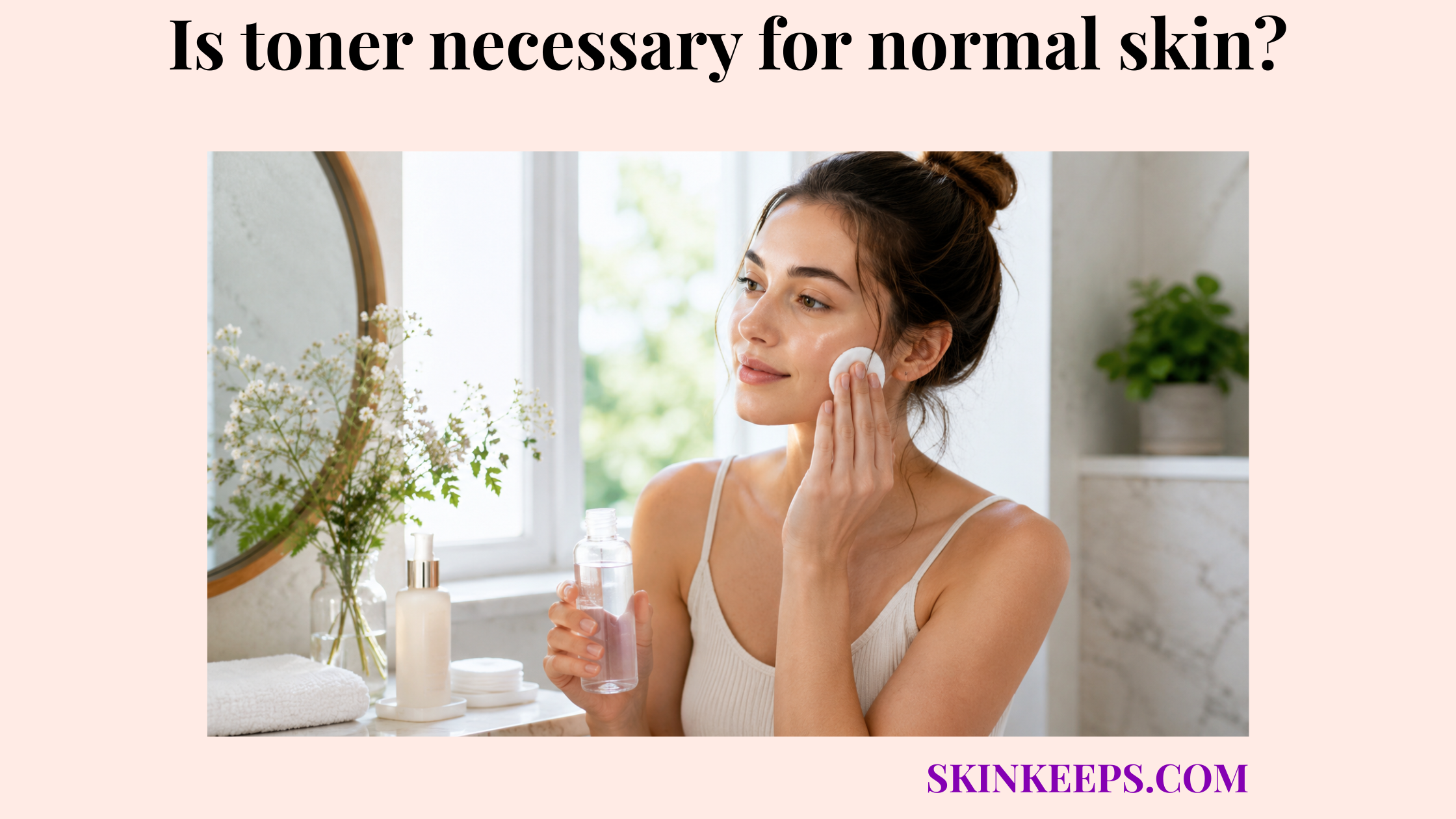
Normal skin can include exfoliation, but it does not always need it.Gentle exfoliation may help when normal skin looks dull, feels rough, has mild buildup, or makeup and sunscreen do not sit smoothly. If the skin already feels smooth, comfortable, and balanced, frequent exfoliation may create dryness, stinging, redness, peeling, or sensitivity.
When is exfoliation for normal skin useful?
Exfoliation for normal skin is useful when dullness, roughness, mild buildup, makeup cling, sunscreen pilling, or repeated mild clogged pores create a real texture concern.
Exfoliation should solve a visible or felt need. It should not be used only because it is popular.
This optional approach fits broader care tips that preserve normal skin balance, where simple care comes before extra correction.
| Normal skin sign | Exfoliation meaning |
|---|---|
| Dull appearance | Mild buildup may be present |
| Rough texture | Gentle exfoliation may help smoothness |
| Makeup clings | Dry surface buildup may contribute |
| Sunscreen pills | Texture or layering may matter |
| Mild clogged pores | Exfoliation may help if repeated |
| Skin already smooth | Exfoliation may be unnecessary |
| Skin stings or peels | Exfoliation should pause |
Exfoliation for normal skin should solve a visible or felt need.
Which type of exfoliation for normal skin fits best?
The exfoliation type that fits normal skin best is usually gentle, low-frequency exfoliation that does not leave the skin stinging, red, tight, or peeling.
Mild chemical exfoliation or very gentle physical exfoliation may work. Harsh scrubs and aggressive peeling are more likely to disrupt balance.
Gentle cleansing still matters because gentle cleansers are usually enough for normal skin when the goal is daily buildup removal rather than exfoliation.
| Exfoliation type | Fit for normal skin |
|---|---|
| Mild chemical exfoliant | Often more controlled if used carefully |
| Gentle washcloth method | Can be mild if not scrubbed |
| Harsh scrub | Higher irritation risk |
| Strong peel | Usually unnecessary for routine normal skin |
| Daily exfoliating cleanser | May be too much |
| Multiple exfoliants together | Higher over-exfoliation risk |
Exfoliation for normal skin should be gentle enough that skin still feels calm afterward.
How often should exfoliation for normal skin happen?
Exfoliation for normal skin should happen occasionally or about once weekly when dullness, roughness, or buildup appears, rather than on a strict daily schedule.
Some normal skin may tolerate more. Daily exfoliation is usually unnecessary and can cause irritation.
| Normal skin response | Exfoliation frequency clue |
|---|---|
| Smooth and comfortable | Skip or use rarely |
| Mild dullness | Occasional exfoliation |
| Roughness appears weekly | Once weekly may help |
| Skin feels tight after exfoliating | Use less often |
| Redness appears | Pause exfoliation |
| Peeling appears | Stop and recover |
| Products start stinging | Barrier may be stressed |
Exfoliation for normal skin should be based on skin response, not a fixed trend schedule.
When should exfoliation for normal skin be paused?
Exfoliation for normal skin should be paused when the skin stings, burns, peels, turns red, feels shiny-tight, develops dry patches, or becomes more sensitive.
If exfoliation makes normal skin feel less normal, stop and simplify. More exfoliation is not the right response to irritation.
Pausing during irritation connects with how normal skin may recover from mild irritation after the trigger is removed.
- Stinging.
- Burning.
- Redness.
- Peeling.
- Shiny-tight texture.
- Rough irritation.
- Dry patches.
- Increased sensitivity.
- Makeup suddenly clinging more.
- Sunscreen suddenly burning.
- Breakouts that look irritated.
- Rash-like patches.
If exfoliation makes normal skin feel less normal, stop and simplify.
What mistakes disrupt exfoliation for normal skin?
Mistakes disrupt exfoliation for normal skin when exfoliation becomes too frequent, too harsh, layered with strong actives, used on irritated skin, or used as a fix for every skin change.
Exfoliation works best when it is minimal and purposeful. It should not be stacked with too many strong products.
| Mistake | Why it disrupts normal skin |
|---|---|
| Exfoliating daily without need | Can weaken comfort and increase irritation |
| Scrubbing hard | Friction can cause redness |
| Mixing exfoliants with strong actives | Irritation risk increases |
| Exfoliating peeling skin | Barrier stress worsens |
| Exfoliating after sunburn | Skin may become more irritated |
| Using exfoliation for every breakout | Acne may need different care |
| Chasing glow aggressively | Can create shiny-tight irritation |
| Skipping sunscreen after exfoliation | UV sensitivity risk may increase |
Exfoliation for normal skin works best when it is minimal, purposeful, and not layered with too many strong products.
When should exfoliation for normal skin problems need attention?
Exfoliation problems in normal skin need attention when burning, stinging, rash-like redness, swelling, severe peeling, cracked patches, painful acne, intense itching, or changing lesions appear or persist.
Exfoliation irritation should improve after stopping. Persistent or worsening symptoms need professional review.
- Exfoliation repeatedly burns, stings, or causes rash-like redness.
- Skin reacts to many gentle products after exfoliating.
- Dry patches crack, bleed, burn, or spread.
- Redness becomes warm, swollen, spreading, or persistent.
- Breakouts become painful, deep, frequent, or scarring.
- Peeling continues after stopping exfoliation.
- Itching becomes intense or persistent.
- A mole, spot, or lesion changes color, shape, size, or behavior.
Exfoliation irritation should improve after stopping; persistent or worsening symptoms need review.
What should you remember about exfoliation for normal skin?
The key point is that exfoliation for normal skin can be included when needed, but it should stay gentle, occasional, and response-based.
Normal skin does not always need exfoliation. It helps most when dullness, roughness, or buildup appears.
Sunscreen also matters after exfoliation because sunscreen is still essential for normal skin during daylight exposure.
Frequently Asked Questions About Exfoliation for Normal Skin
Does normal skin need exfoliation every week?
Not always. Normal skin may only need exfoliation when dullness, roughness, or buildup appears.
Is daily exfoliation good for normal skin?
Usually no. Daily exfoliation can make normal skin dry, red, tight, peeling, or sensitive.
Is chemical or physical exfoliation better for normal skin?
A mild chemical exfoliant or very gentle physical method may work, but harsh scrubs should be avoided.
Can exfoliation make normal skin glow?
It may make normal skin look smoother or fresher when buildup is present, but it should not be used aggressively for glow.
Can exfoliation damage normal skin?
Yes. Over-exfoliation can cause stinging, burning, peeling, redness, sensitivity, and barrier stress.
Sources & Evidence About Exfoliation for Normal Skin
Cleveland Clinic skin-type guidance was used to ground normal, dry, oily, combination, and sensitive skin distinctions.
American Academy of Dermatology exfoliation guidance was used for dead-skin-cell removal, chemical versus mechanical exfoliation, irritation risk, and safe-exfoliation boundaries.
American Academy of Dermatology skin-care routine guidance was used for exfoliation as an optional step and safe-use framing.
American Academy of Dermatology face-washing guidance was used for gentle cleansing, avoiding harsh scrubbing, and reducing friction stress.
American Academy of Dermatology sunscreen guidance was used for broad-spectrum sunscreen, SPF 30 or higher, and daylight protection after exfoliation.
American Academy of Dermatology sunscreen label guidance was used for SPF 30 or higher and sunscreen-protection boundaries.
American Academy of Dermatology sunburn guidance was used for sunburn irritation and avoiding extra irritation on burned skin.
American Academy of Dermatology dry-skin relief guidance was used for cracked, bleeding, burning, and itching boundaries.
Peer-reviewed sensitive-skin review from NIH/PMC was used for burning, stinging, itching, and reactive-skin symptom context.
American Academy of Dermatology acne treatment guidance was used for painful, frequent, cystic, or scarring acne referral boundaries.
American Academy of Dermatology melanoma signs guidance was used for changing moles, changing spots, lesion behavior, and referral boundaries.
Educational Disclaimer: This article is for general skin education only and does not diagnose, treat, or replace professional medical advice. If exfoliation causes repeated burning, swelling, rash-like redness, cracked or bleeding patches, severe peeling, painful acne, severe itching, spreading irritation, sudden unexplained changes, broader health symptoms, or changing moles or lesions, consult a qualified dermatologist or healthcare professional.