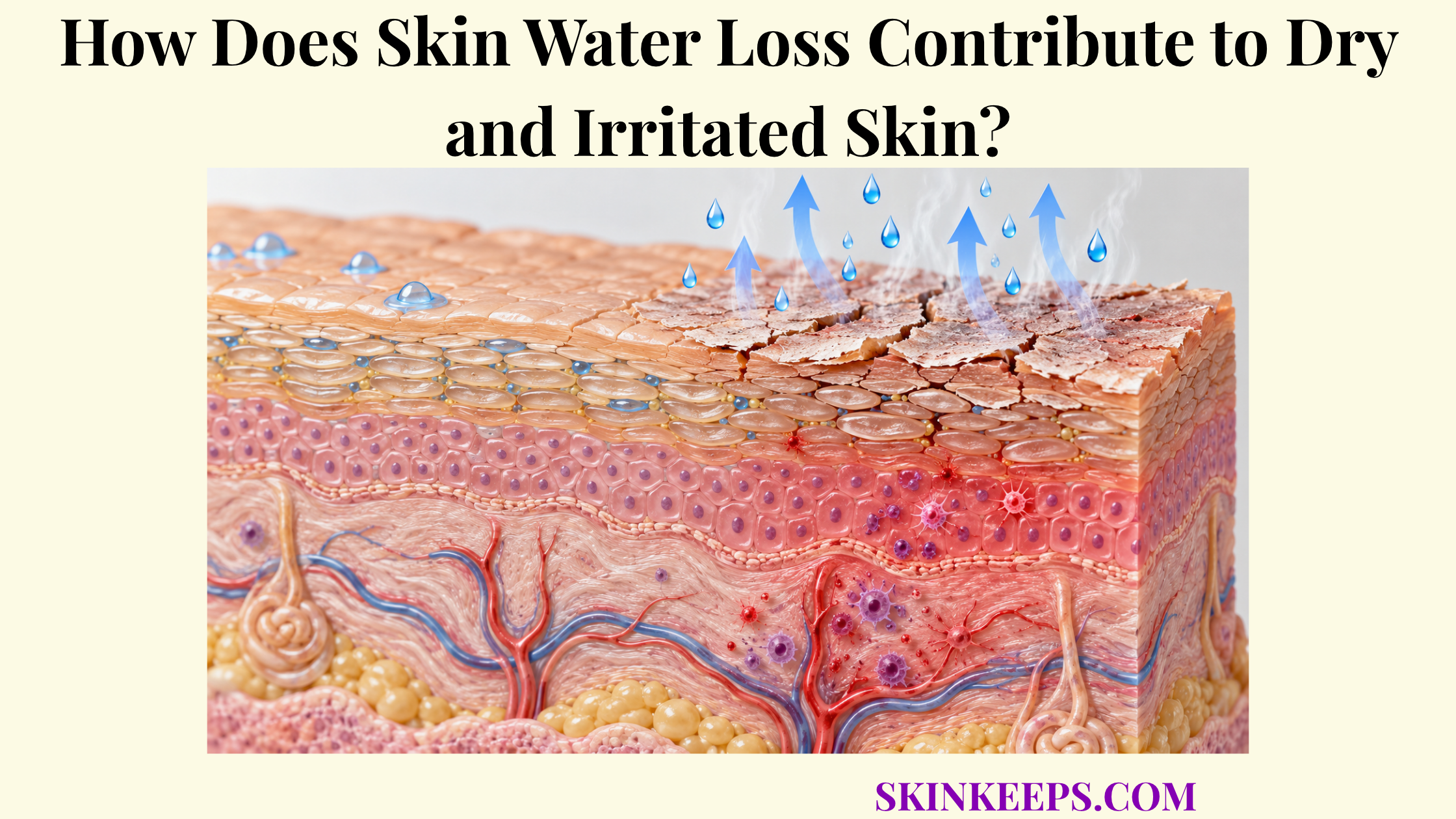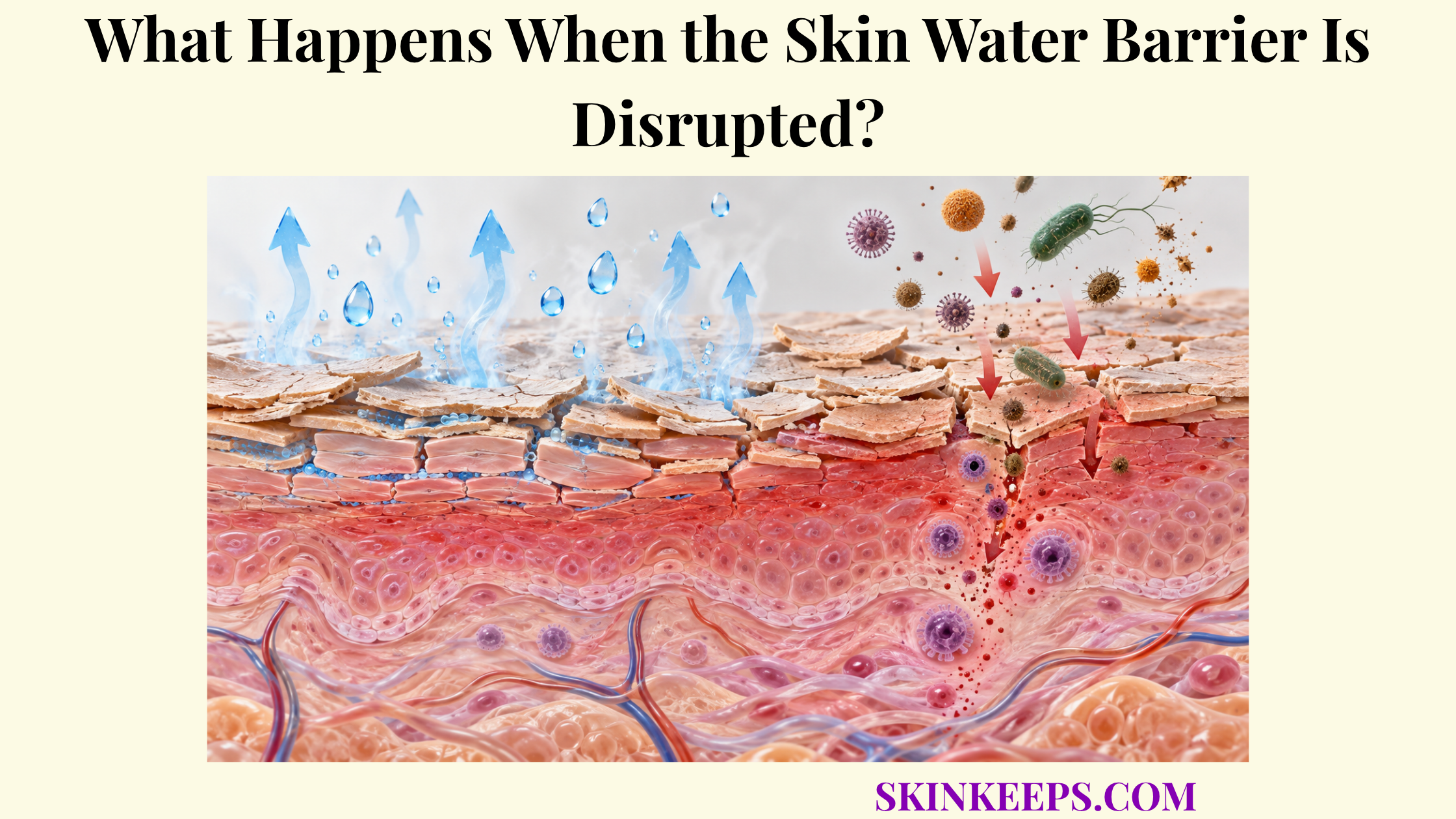
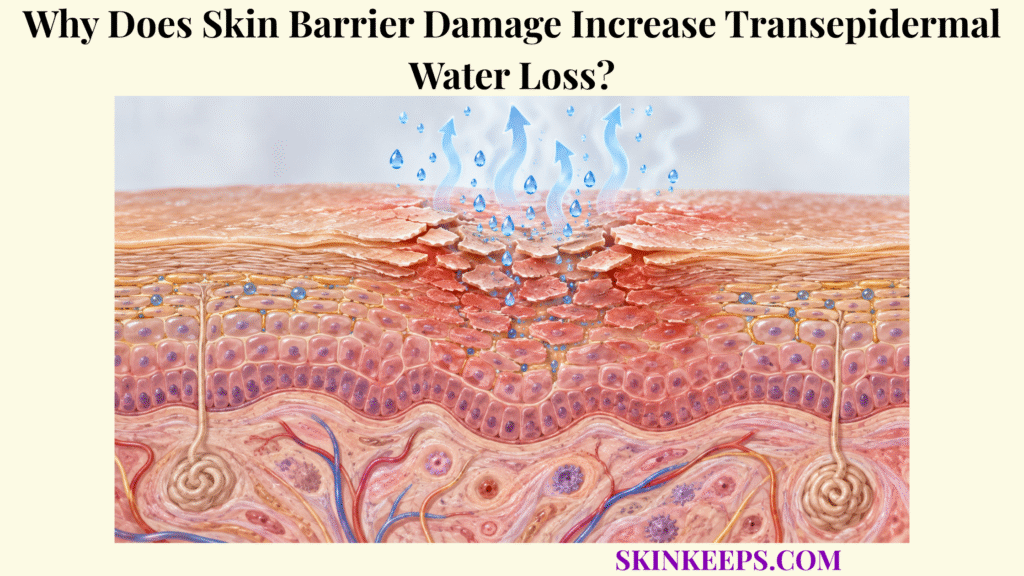
Skin Barrier Damage increases transepidermal water loss because disruption of the stratum corneum reduces its normal resistance to outward water diffusion. Extracellular lipid lamellae are especially important because their organization forms the principal continuous permeability pathway controlling water movement through the outer skin.
When lipid architecture or other barrier structures become impaired, more water can move toward the surface per unit time. Reduced corneocyte hydration, repeated environmental stress, or inflammation may compound this loss, while physiological repair mechanisms work to restore lipid organization and reduce TEWL.
What Changes When Skin Barrier Damage Occurs?
Skin Barrier Damage reduces the stratum corneum’s normal resistance to molecular diffusion by disrupting the organization or integrity of structures that form the epidermal permeability barrier.
The stratum corneum contains corneocytes, cornified envelopes, corneocyte lipid envelopes, extracellular lipid lamellae, and corneodesmosomal adhesion structures. Their combined organization underlies the broader stratum corneum barrier, while the skin water barrier describes the part of this system that restricts excessive water movement.
Different insults disturb different compartments. Surfactants can interact with proteins and lipids, solvents can extract or reorganize lipids, mechanical stress can disturb superficial structure, and inflammation can alter differentiation and lipid metabolism. These changes do not require literal holes or missing corneocytes; barrier organization can simply become less effective, producing lower-resistance pathways for water diffusion.
How Does Skin Barrier Damage Disrupt Intercellular Lipids?
Skin Barrier Damage can raise TEWL when it reduces the amount, processing, packing, or lamellar organization of extracellular stratum corneum lipids.
Ceramides, cholesterol, and free fatty acids form specialized, ordered extracellular structures rather than a simple greasy coating. Their stacked lamellar phases occupy the continuous extracellular pathway through the stratum corneum and create strong resistance to water diffusion. This is the same physiological principle through which intercellular lipids limit evaporation.
Damage may involve lipid extraction, altered synthesis, changed ceramide species or chain lengths, impaired precursor processing, disturbed molecular packing, or disorganized lamellar architecture. Any of these can lower resistance to water movement even when the corneocyte framework remains largely present.
How Does Skin Barrier Damage Affect Corneocyte Water Retention?
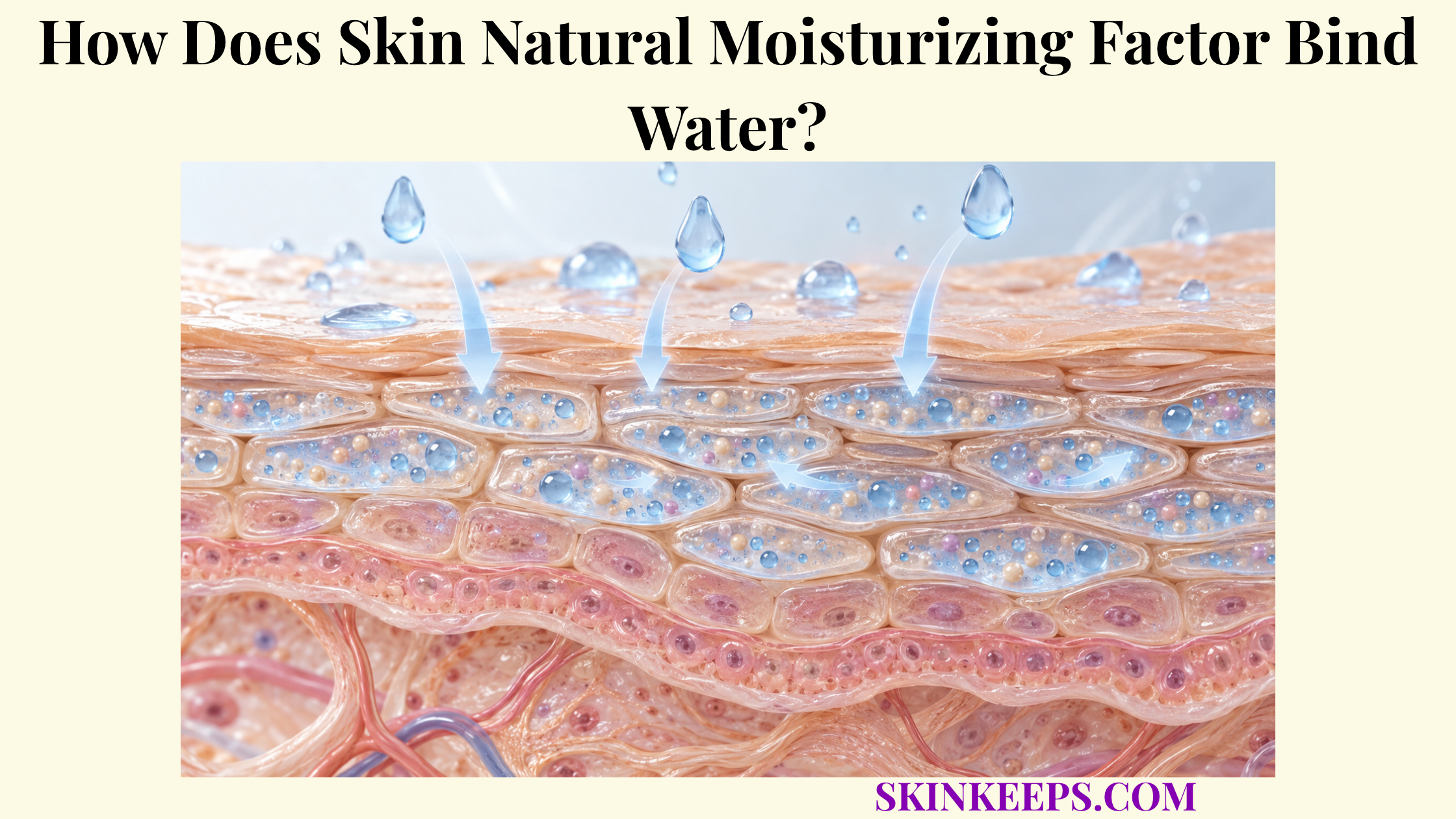
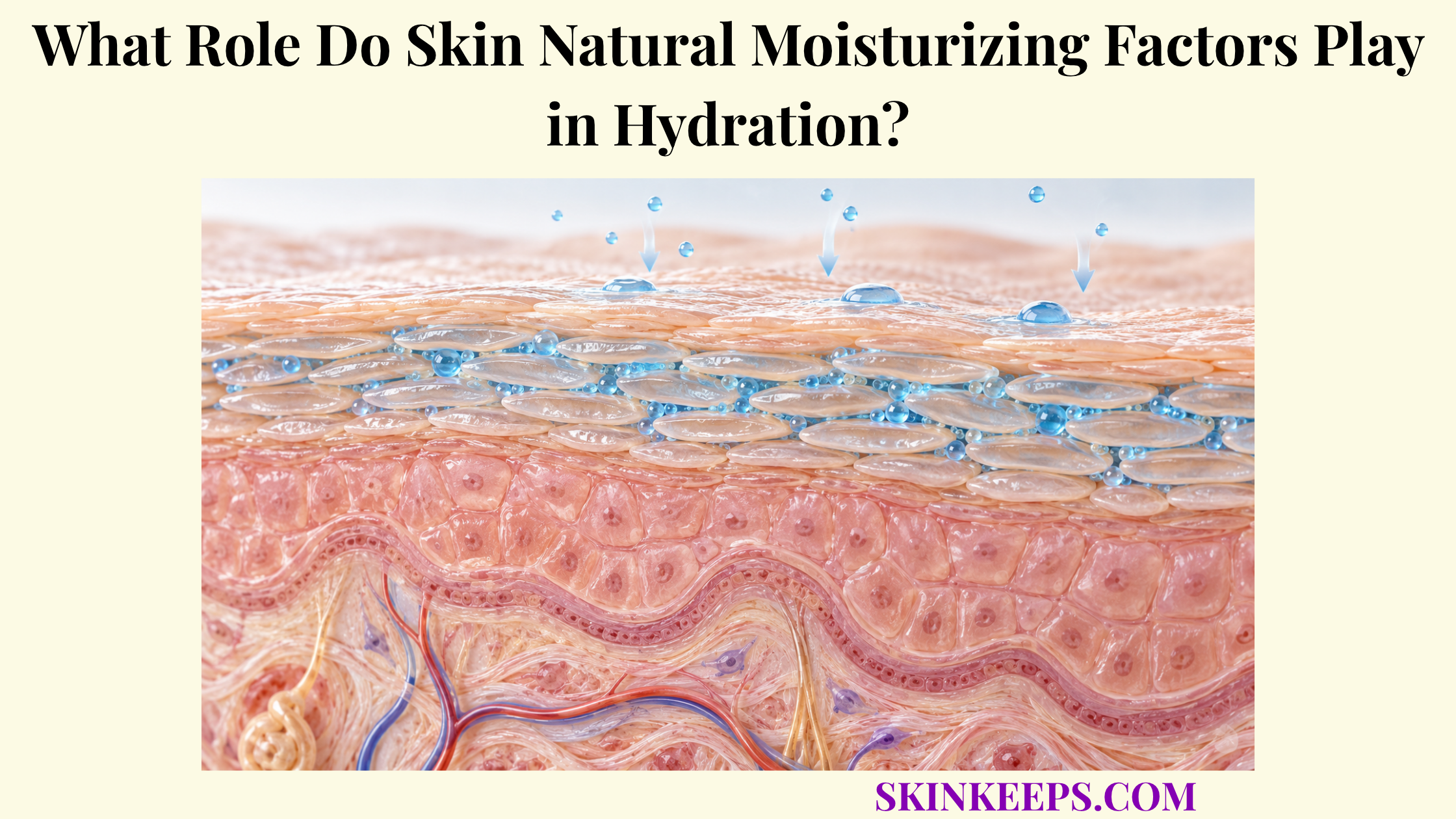
Skin Barrier Damage can reduce corneocyte hydration when increased water loss, reduced NMF availability, or alterations in corneocyte structure interfere with the mechanisms that normally retain water within the stratum corneum.
This effect is not mandatory in every injury. Lipid-selective disruption can raise TEWL before major corneocyte structural damage occurs, while repeated washing may also extract soluble Natural Moisturizing Factor and mechanical injury may affect cellular structure or cohesion. The broader physiology of how corneocytes retain water therefore needs to remain separate from extracellular permeability control.
Natural Moisturizing Factor resides mainly inside corneocytes and contains hygroscopic compounds that associate with water. The mechanism by which Natural Moisturizing Factor binds water complements rather than replaces the lipid barrier: extracellular lipids restrict water escape, while NMF supports intracellular water retention.
When stratum corneum hydration falls sufficiently, the tissue can become less flexible and mechanically stiffer. Roughness and scaling may increase, and fissuring can occur when dehydration becomes severe enough to combine with mechanical or structural stress.
Why Does Skin Barrier Damage Speed Water Diffusion?
Skin Barrier Damage speeds net outward water movement because the damaged stratum corneum presents less resistance to diffusion along the water gradient between hydrated internal tissue and the comparatively dry external environment.
Water originates in more hydrated living tissue and moves toward regions of lower water activity. The intact stratum corneum is the dominant resistance along this route. With a similar driving gradient, lower barrier resistance permits greater water flux; this is why normal skin water-loss prevention depends on maintaining organized stratum corneum architecture.
TEWL is not simply “surface evaporation.” Water first diffuses through epidermal tissue, reaches the skin surface, and then enters the surrounding air as vapor. TEWL instruments estimate the resulting water-vapor flux, which is why humidity, airflow, skin temperature, sweating, and measurement conditions can influence the recorded value.
| Barrier defect | Permeability change | TEWL effect |
|---|---|---|
| Disorganized extracellular lipid lamellae | Resistance along the continuous extracellular pathway decreases. | TEWL can rise. |
| Lipid extraction or abnormal lipid processing | Water permeability increases as the lipid pathway becomes less effectively organized. | TEWL can rise. |
| Corneocyte or NMF water-handling impairment | Stratum corneum water-retention capacity can decline even though this is not the primary diffusion barrier. | Dehydration can be compounded. |
| Mechanical disruption or fissuring | Transport pathways can become shorter or lower-resistance. | TEWL may rise substantially when disruption is sufficient. |
| Inflammatory disturbance of differentiation or lipid metabolism | Permeability organization can remain impaired. | TEWL may remain elevated in persistent inflammatory contexts. |
Different structural defects can increase TEWL through related but non-identical effects on permeability and hydration; measured TEWL does not identify the exact defect by itself.
How Does Skin Barrier Damage Create a Water-Loss Cycle?
Skin Barrier Damage can create a self-reinforcing water-loss cycle when increased TEWL reduces stratum corneum hydration enough to alter its mechanical and physiological performance.
The possible sequence is barrier impairment, higher TEWL, reduced hydration, increased stiffness or reduced flexibility, greater susceptibility to mechanical stress or abnormal scaling, and then additional barrier disturbance. Excessive dryness can also make hydration-dependent corneodesmosome processing less orderly, contributing to retained scale and a rougher surface.
This cycle is not inevitable. Healthy epidermis simultaneously activates homeostatic repair, so mild transient disturbance can recover rather than progressively worsen. The broader consequences of skin water barrier disruption therefore depend on severity and persistence rather than on TEWL alone.
Persistent permeability impairment can also increase exposure to external irritants and contribute to stinging or irritation in susceptible skin, but TEWL does not diagnose sensitivity. The relationship between skin water loss and irritation involves hydration, permeability, environmental exposure, neural sensation, and inflammatory signaling together.
What Factors Worsen TEWL After Skin Barrier Damage?
TEWL after Skin Barrier Damage can be influenced by the severity of the original injury, repeated exposure, environmental conditions, inflammation, and continued mechanical or chemical stress.
How Can a Dry Environment Modify the Water-Loss Challenge?
Lower external humidity can increase the vapor gradient that favors water movement into the surrounding air, particularly when the barrier is already impaired. Humidity also affects TEWL measurement, and climate studies do not support a universal rule that low humidity always produces the same TEWL response. Longer exposure can trigger compensatory epidermal responses that vary with context.
How Can Repeated Washing or Surfactants Modify TEWL?
Repeated washing can alter stratum corneum proteins, lipids, hydration, and TEWL, while the magnitude depends on surfactant chemistry, formulation, concentration, water temperature, contact time, frequency, and individual susceptibility. Normal hygiene should therefore not be treated as inherently barrier-damaging.
How Can Irritants or Solvents Increase Barrier Stress?
Selected organic solvents can extract or reorganize barrier lipids and are used experimentally to perturb permeability. Other irritants may alter proteins, cellular signaling, or lipid processing. Their effects are substance-, concentration-, vehicle-, and exposure-dependent rather than uniform across all chemicals.
How Can Friction Modify Barrier Function?
Repeated mechanical stress can disturb superficial structure and alter TEWL, hydration, and local erythema. Force, duration, repetition, anatomical site, surface moisture, and baseline barrier condition all influence the response.
How Can Inflammation Maintain Higher Permeability?
Persistent cytokine signaling can alter keratinocyte differentiation, barrier-protein expression, fatty-acid processing, ceramide metabolism, and lipid organization. This can maintain permeability dysfunction in inflammatory contexts, but a temporary increase in TEWL should not be interpreted as evidence of inflammatory disease.
How Does Skin Barrier Damage Recover and Lower TEWL?
Skin Barrier Damage begins to recover through rapid homeostatic responses that restore extracellular lipids, followed by continued keratinocyte differentiation and structural renewal that progressively rebuild permeability resistance.
What Happens During the Earliest Repair Response?
Pre-existing lamellar bodies in upper differentiating keratinocytes are rapidly secreted after acute permeability-barrier disruption. Lipids and processing enzymes enter extracellular spaces, making lipid delivery one of the earliest homeostatic responses rather than waiting for complete epidermal turnover.
How Does Epidermal Lipid Synthesis Increase?
Barrier requirements stimulate synthesis of cholesterol, fatty acids, and sphingolipid or ceramide precursors. These materials support production of new lamellar bodies and reconstruction of the organized extracellular lipid membranes that provide diffusion resistance.
How Does Longer-Term Structural Recovery Continue?
Keratinocyte proliferation where needed, differentiation, cornification, mature corneocyte formation, and restoration of normal extracellular organization continue after the early lipid-secretory response. These slower structural processes reinforce the permeability barrier.
How Does Functional Recovery Affect TEWL?
As stratum corneum resistance improves, net outward water flux declines and TEWL moves toward the individual’s baseline. Hydration control also improves. Recovery speed varies with injury type, severity, repeated exposure, body site, age, environment, inflammation, and underlying skin physiology, so no universal repair interval applies.
What Are the Key Takeaways About Skin Barrier Damage and TEWL?
Skin Barrier Damage raises TEWL primarily because disruption of stratum corneum architecture reduces the resistance that normally limits outward water diffusion.
- Skin Barrier Damage weakens the stratum corneum’s resistance to outward water movement.
- Disruption of extracellular ceramide-, cholesterol-, and free-fatty-acid-rich lipid lamellae can substantially increase permeability.
- Corneocyte hydration may also decline, especially when increased water loss is accompanied by reduced NMF or other water-retention defects.
- Lower barrier resistance allows a greater net outward water flux, which is measured experimentally as increased TEWL.
- Persistent water loss can contribute to dryness, stiffness, scaling, and additional mechanical barrier stress.
- Repeated washing, harsh surfactant exposure, solvents, friction, environmental conditions, and inflammation can modify the degree of barrier dysfunction.
- Barrier repair lowers TEWL by restoring extracellular lipids and normal epidermal organization, beginning with rapid lamellar-body and lipid-synthesis responses.
Frequently Asked Questions
Does Skin Barrier Damage always increase transepidermal water loss?
Meaningful impairment of the epidermal permeability barrier generally raises TEWL, but measured values vary with damage severity, anatomical site, skin temperature, humidity, airflow, sweating, and measurement method.
Is high TEWL the same as dry skin?
No. TEWL measures outward water-vapor flux, whereas dryness reflects broader changes in stratum corneum hydration, lipids, Natural Moisturizing Factor, desquamation, mechanics, and environmental exposure.
Does Skin Barrier Damage always mean ceramide levels are low?
No. Barrier impairment can reflect changes in lipid amount, ceramide species, fatty-acid chain length, lipid processing, packing, or lamellar organization. Ceramide quantity alone does not define barrier quality.
Can Skin Barrier Damage raise TEWL even if the surface looks normal?
Yes. Functional permeability changes can occur without obvious cracking, redness, or scaling, particularly after mild or early barrier disruption.
Does TEWL return to normal when Skin Barrier Damage repairs?
TEWL generally falls as permeability resistance recovers, but the rate and completeness of recovery depend on the cause, severity, repeated exposure, body site, inflammation, environment, and individual skin physiology.
Sources & Evidence
Research grounding
The skin barrier: An extraordinary interface with an exceptional lipid organization — Progress in Lipid Research. 2023;92:101252. Use: Stratum corneum barrier localization, continuous extracellular lipid pathway, ceramides, cholesterol, free fatty acids, lipid organization, and permeability.
Skin hydration: a review on its molecular mechanisms — Journal of Cosmetic Dermatology. 2007;6(2):75–82. Use: NMF versus lipid-barrier function, corneocyte hydration, water balance, and TEWL control.
Research Techniques Made Simple: Transepidermal Water Loss Measurement as a Research Tool — Journal of Investigative Dermatology. 2018;138(11):2295–2300.e1. Use: TEWL definition, use as a barrier-function marker, and effects of humidity, temperature, airflow, sweating, body site, and microclimate.
Devices measuring transepidermal water loss: A systematic review of measurement properties — Skin Research and Technology. 2022;28(4):497–539. Use: TEWL measurement reliability, device variability, measurement error, and interpretation boundaries.
Damage to the skin by repetitive washing — Contact Dermatitis. 1995. Use: Repeated washing, changes in TEWL and hydration, cumulative barrier stress, and formulation-dependent effects.
Surfactant-containing detergents: Impacts on dermal health — Colloids and Surfaces B: Biointerfaces. 2025;256(Pt 1):115026. Use: Surfactant chemistry, lipid disruption, protein effects, irritation mechanisms, inflammatory signaling, and formulation-dependent barrier effects.
The regulation and role of epidermal lipid synthesis — Advances in Lipid Research. 1991;24:57–82. Use: Early barrier repair, preformed lamellar-body secretion, increased epidermal lipid synthesis, and new lamellar-body generation.
The cytokine-skin barrier axis in health and disease — Cytokine & Growth Factor Reviews. 2026;87:113–123. Use: Keratinocyte inflammatory signaling, cytokine effects on differentiation and barrier proteins, and bidirectional inflammation–barrier feedback.
Medical/Educational Disclaimer: This article explains skin-barrier physiology and transepidermal water loss for educational purposes. It is not intended to diagnose or treat a skin condition. Persistent, painful, bleeding, oozing, severely inflamed, infected-looking, or otherwise concerning skin changes should be evaluated by a qualified healthcare professional.