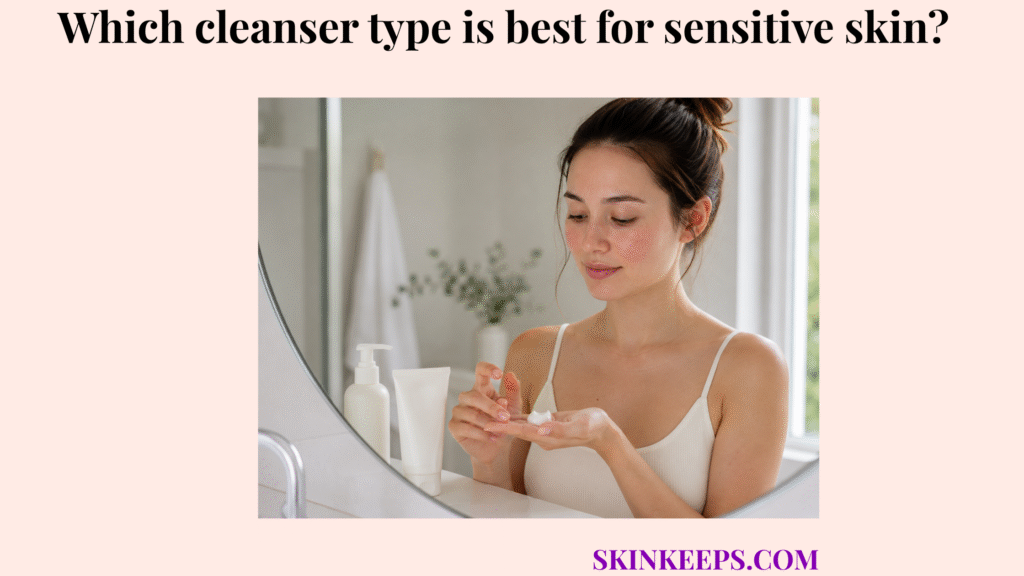
The best cleanser type for sensitive skin is usually a gentle, fragrance-free, non-stripping cleanser that leaves the skin comfortable instead of tight, squeaky, stingy, burning, itchy, or dry. Cream, lotion, milk, gel-cream, and mild low-foam cleansers are often better starting points than harsh soaps, strong foaming cleansers, scrub cleansers, or active-heavy cleansers. Cleanser texture alone does not guarantee tolerance.
This article explains why cleanser type matters, how a cleanser should feel after use, how cream, lotion, milk, gel, micellar, balm, oil, foam, and active cleansers compare, how cleanser choice changes for dry-sensitive, oily-sensitive, acne-prone sensitive, or makeup/sunscreen-wearing skin, how to test and track cleanser tolerance, and when professional evaluation is needed.
Why Does Cleanser Type Matter for Sensitive Skin?
Cleanser type matters for sensitive skin because the wrong cleanser can remove too much surface oil, increase dryness, add friction, or leave the skin tight and reactive. Cleanser choice is one of the care tips that help calm and protect sensitive skin because cleansing happens often and can either support comfort or add irritation.
How Can the Wrong Cleanser Weaken Barrier Comfort?
The wrong cleanser can weaken barrier comfort when it strips surface oils, uses harsh surfactants, adds fragrance, contains scrub particles, or leaves the skin repeatedly tight after washing.
Why Should the Best Cleanser Clean Without Leaving Tightness?
The best cleanser should clean without leaving tightness because tight, squeaky, or stingy skin after washing is a warning sign that the cleanser may not suit sensitive skin.
| Cleanser type | Sensitive-skin suitability |
|---|---|
| Cream cleanser | Often useful for dry or tight sensitive skin. |
| Lotion cleanser | A gentle option for low-irritation cleansing. |
| Milk cleanser | A soft, low-foam option for delicate skin. |
| Gel-cream cleanser | A balanced option for combination-sensitive skin. |
| Low-foam gel cleanser | May suit oily-sensitive skin if it is not stripping. |
| Strong foaming cleanser | Higher risk if skin feels tight afterward. |
| Scrub cleanser | Often too abrasive for reactive skin. |
| Traditional high-pH soap | Often drying or stripping for sensitive facial skin. |
Cleanser Type and After-Feel Decision Map
This visual shows how cleanser texture, foam level, fragrance status, and after-feel work together.
Figure 1. Cleanser type matters only when it is judged together with foam, fragrance, technique, and after-feel.
What Should a Sensitive-Skin Cleanser Feel Like After Use?
A sensitive-skin cleanser should leave the skin clean, calm, and comfortable after rinsing, not tight, squeaky, raw, burning, or stingy. If moisturizer stings after cleansing, readers may need to reassess both cleanser tolerance and moisturizer ingredients that support sensitive skin.
After-Feel Checklist
- Skin feels calm after rinsing.
- There is no squeaky-clean tightness.
- There is no burning during washing.
- Moisturizer does not sting after cleansing.
- Skin does not look shiny and raw.
- Skin does not feel rougher after cleansing.
- Itching or flushing does not appear after washing.
- Skin feels comfortable within minutes after cleansing.
Are Cream, Lotion, or Milk Cleansers Best for Sensitive Skin?
Cream, lotion, and milk cleansers are often good starting points for sensitive skin because they usually cleanse with less foam and less stripping sensation. Actual after-feel and skin response matter more than texture name.
| Skin pattern | Why cream, lotion, or milk cleanser may suit it |
|---|---|
| Dry-sensitive skin | Helps avoid post-wash tightness. |
| Flaky sensitive skin | Reduces the urge to scrub. |
| Burning-prone skin | Lower-foam textures may feel less harsh. |
| Mature sensitive skin | May support comfort better than strong foaming cleansers. |
| Winter-reactive skin | Can feel gentler during dry seasons. |
Are Gel Cleansers Okay for Sensitive Skin?
Yes, gel cleansers can be okay for sensitive skin if they are gentle, fragrance-free, low-irritation, and do not leave the skin tight or squeaky. A mild gel may suit oily-sensitive or combination-sensitive skin.
Gel Cleanser Tolerance Clues
- Skin feels clean but not stripped.
- Oil is reduced without tightness.
- There is no burning during washing.
- Moisturizer does not sting afterward.
- Skin does not become shiny, raw, or flaky.
- Breakout-prone areas feel clean without irritation.
Should Sensitive Skin Avoid Foaming Cleansers?
Sensitive skin does not always need to avoid every foaming cleanser, but strong, high-foam, squeaky-clean cleansers can be poor choices when skin is reactive. Foam level alone does not prove whether a cleanser is gentle.
| Foam pattern | Sensitive-skin concern |
|---|---|
| No-foam cream cleanser | Often gentle for dry or irritated skin. |
| Low-foam gel cleanser | May suit oily-sensitive skin if comfortable. |
| Dense strong foam | May increase tightness in some sensitive skin. |
| Squeaky-clean finish | Often suggests stripping. |
| Foam plus fragrance | Adds another irritation variable. |
| Foam plus exfoliating actives | May create cumulative irritation. |
Is Micellar Water a Good Cleanser for Sensitive Skin?
Micellar water can be useful for some sensitive skin, especially for light makeup or sunscreen removal, but it is not automatically irritation-free. Residue and cotton-pad friction can become problems for some people.
| Situation | Better direction |
|---|---|
| Light sunscreen or makeup | Micellar water may help if tolerated. |
| Eye-area sensitivity | Choose carefully and stop if stinging occurs. |
| Residue feels sticky or irritating | Rinse gently after use. |
| Heavy makeup | It may require too much rubbing. |
| Skin stings afterward | The formula or residue may not suit the skin. |
| Repeated cotton-pad rubbing | Friction may become the real trigger. |
Are Cleansing Balms or Oils Suitable for Sensitive Skin?
Cleansing balms or oils may suit some sensitive skin when they remove sunscreen or makeup with less rubbing, but they are not ideal for everyone. Tolerance depends on residue, fragrance, removal method, and skin pattern.
Balm and Oil Cleanser Considerations
- They can be useful when sunscreen or makeup is difficult to remove.
- They should not require aggressive rubbing.
- They should rinse or wipe away without irritating residue.
- Fragrance-free options are usually safer starting points.
- Heavy residue may bother oily-sensitive or acne-prone sensitive skin.
- A second cleanse should be gentle if needed.
Which Cleanser Type Fits Different Sensitive-Skin Patterns?
The best cleanser type depends on whether sensitive skin is dry, oily, combination, acne-prone, redness-prone, flaky, or regularly exposed to makeup and sunscreen. This is a cleanser-type matching guide, not a full routine plan.
| Sensitive-skin pattern | Cleanser type to consider |
|---|---|
| Dry-sensitive skin | Cream, lotion, milk, or very gentle low-foam cleanser. |
| Oily-sensitive skin | Gentle low-foam gel or gel-cream cleanser. |
| Combination-sensitive skin | Gel-cream or mild low-foam cleanser. |
| Acne-prone sensitive skin | Gentle cleanser that does not strip or scrub. |
| Redness-prone sensitive skin | Fragrance-free, non-scrub, low-irritation cleanser. |
| Flaky sensitive skin | Non-abrasive cleanser; avoid scrubbing flakes. |
| Makeup-wearing sensitive skin | Gentle first cleanse with minimal rubbing. |
| Sunscreen-wearing sensitive skin | Effective removal without harsh cleansing. |
Which Cleanser Types Are Usually Risky for Sensitive Skin?
Cleanser types that scrub, strip, add fragrance, use strong actives, or leave tightness are usually riskier for sensitive skin. They deserve caution rather than automatic fear.
| Cleanser type | Why it may be risky |
|---|---|
| Scrub cleanser | Adds mechanical friction. |
| Strong foaming cleanser | May leave tightness or dryness. |
| Traditional soap bar for face | May feel stripping for many sensitive users. |
| Fragranced cleanser | Adds optional scent exposure. |
| Exfoliating cleanser used daily | Can increase cumulative irritation. |
| Acne cleanser with strong actives | May dry or irritate sensitive skin. |
| Cleansing brush system | Adds repeated mechanical stimulation. |
| Harsh makeup remover | May sting eyes or irritate delicate areas. |
Should Sensitive Skin Use Active Cleansers?
Sensitive skin should be cautious with active cleansers that contain exfoliating acids, benzoyl peroxide, strong acne ingredients, or resurfacing claims. Active cleansers can matter because some irritating skincare ingredients may become harder to tolerate when they are used too often or combined with other actives.
Active Cleanser Warning Clues
- Skin feels tight after every wash.
- Burning occurs during cleansing.
- Moisturizer stings afterward.
- Peeling increases.
- Skin becomes shiny and raw.
- Other products become harder to tolerate.
- The cleanser is used alongside several treatment products.
How Is Cleanser Type Different From Cleansing Habit?
Cleanser type is the product chosen, while cleansing habit is how often and how aggressively the cleanser is used. Cleanser type explains what product is chosen, while harsh cleansing habits explain how frequency, water temperature, and scrubbing can make even a mild cleanser irritating.
| Topic | Main focus | Example |
|---|---|---|
| Cleanser type | What kind of cleanser is chosen. | Cream cleanser, gel cleanser, micellar water. |
| Cleansing habit | How the cleanser is used. | Washing too often, hot water, scrubbing. |
| Formula comfort | Whether the cleanser leaves skin calm. | Non-stripping after-feel. |
| Technique comfort | Whether the method adds irritation. | Gentle fingertips, lukewarm water. |
| Main question | Is this cleanser suitable? | Does it clean without tightness? |
| Main behavior | Is it being used gently? | Is frequency and friction controlled? |
Simple Rule
A gentle cleanser can still irritate if used harshly, and a cleanser that looks mild may still be wrong if the skin feels tight or stingy afterward.
How Should Sensitive Skin Test a New Cleanser?
Sensitive skin should test a new cleanser when the skin is relatively calm, while keeping the rest of the routine stable. Readers may patch test new products where appropriate before using a cleanser more broadly, especially if past formulas caused strong reactions.
Cleanser Testing Guide
- Test when the skin is relatively calm.
- Use the cleanser once daily or as needed at first.
- Use lukewarm water.
- Avoid brushes, scrubs, or rough cloths during testing.
- Keep the rest of the routine unchanged.
- Watch how the skin feels immediately after rinsing.
- Watch whether moisturizer or sunscreen stings afterward.
- Stop if burning, swelling, rash, or persistent itching appears.
Cleanser Testing Safety Loop
This visual shows how to test one cleanser while keeping water temperature, technique, and the rest of the routine stable.
Figure 2. Cleanser testing is clearer when only the cleanser changes and the technique stays gentle.
What Signs Show a Cleanser Is Not Right for Sensitive Skin?
A cleanser is not right for sensitive skin when it repeatedly causes tightness, burning, stinging, itching, rawness, flaking, or moisturizer discomfort after use.
Cleanser Mismatch Signs
- Skin feels tight after every use.
- Burning appears during cleansing.
- Skin stings after rinsing.
- Moisturizer suddenly burns afterward.
- Skin looks shiny, raw, or over-cleansed.
- Flaking increases after washing.
- Itching appears after cleansing.
- Redness or darker irritation appears.
- Eye-area discomfort occurs.
- Symptoms improve after switching to a gentler cleanser.
What Cleanser Mistakes Make Sensitive Skin Worse?
Cleanser mistakes that make sensitive skin worse include choosing harsh deep-clean formulas, judging by foam, using scrub cleansers, and keeping a cleanser that repeatedly causes tightness.
| Mistake | Why it backfires |
|---|---|
| Choosing the strongest cleanser for a deep clean | May strip barrier comfort. |
| Judging cleanser quality by foam level | Foam does not guarantee gentle cleansing. |
| Using scrub cleansers on flaking skin | Adds friction to an irritated barrier. |
| Using active cleansers with several actives | Raises cumulative irritation. |
| Keeping a cleanser that causes tightness | Normalizes barrier discomfort. |
| Using hot water with any cleanser | Adds thermal irritation. |
| Rubbing too long with balm or micellar cleanser | Turns cleansing into friction. |
| Assuming sensitive-skin marketing guarantees tolerance | Actual skin response matters more. |
How Can Someone Choose a Cleanser Without Overcomplicating the Routine?
Someone can choose a cleanser without overcomplicating the routine by choosing the gentlest cleanser that removes what needs removing and leaves the skin comfortable.
Cleanser Selection Checklist
- Choose the gentlest cleanser that removes what needs removing.
- Prefer fragrance-free if fragrance triggers symptoms.
- Avoid scrub particles when skin is reactive.
- Avoid squeaky-clean tightness.
- Match texture to skin pattern.
- Consider a richer cleanser for dry-sensitive skin.
- Consider a mild gel for oily-sensitive skin.
- Avoid active cleansers during flares unless advised.
- Judge by after-feel, not marketing claims.
- Keep the cleanser stable while testing other products.
How Should Cleanser Tolerance Be Tracked?
Cleanser tolerance should be tracked by recording cleanser type, water temperature, frequency, after-feel, and symptoms after cleansing.
Cleanser Tolerance Tracking Worksheet
- Cleanser name and type.
- Texture: cream, lotion, milk, gel, balm, oil, micellar, foam, or bar.
- Fragrance-free, scented, active, or scrub status.
- Water temperature used.
- Cleansing frequency.
- Contact time.
- Whether makeup or sunscreen was removed.
- Immediate after-feel.
- Whether moisturizer or sunscreen stung afterward.
- Symptoms: tightness, stinging, burning, itching, redness, darker irritation, flaking, or bumps.
- Whether symptoms improved after changing cleanser type.
- Photos of visible changes if needed.
When Should Cleanser-Related Sensitivity Be Professionally Evaluated?
Cleanser-related sensitivity should be professionally evaluated when reactions are severe, persistent, spreading, swollen, blistering, painful, recurring, or happen with several gentle cleansers. Severe, spreading, swollen, blistering, painful, or recurring cleanser reactions are reasons to see a dermatologist.
Professional Evaluation Warning Signs
- Water or very gentle cleansers sting or burn.
- Burning, pain, or itching is severe or persistent.
- Rash spreads or repeatedly returns.
- Skin swells, blisters, oozes, crusts, or bleeds.
- Eye or eyelid reactions occur.
- Skin becomes cracked, raw, or infected-looking.
- Several gentle cleansers cause similar reactions.
- Symptoms continue after switching to a non-stripping cleanser.
- Cleansing discomfort disrupts daily care.
- Eczema, dermatitis, allergy, rosacea, infection, or another condition may be involved.
Urgent Safety Note
Breathing difficulty, throat tightness, faintness, or rapid facial, lip, or tongue swelling requires emergency medical care.
What Should You Remember About Cleanser Types for Sensitive Skin?
The best cleanser type for sensitive skin is gentle, non-stripping, and comfortable after rinsing.
What Should You Remember?
- Sensitive skin usually does best with a gentle, non-stripping cleanser.
- Cream, lotion, milk, gel-cream, or low-foam cleansers are often better starting points than harsh soaps, scrubs, or strong foaming cleansers.
- Foam level alone does not prove whether a cleanser is gentle.
- Gel cleansers can work if they are mild and do not leave tightness.
- Micellar water, cleansing balms, and oils may help some people but can irritate others.
- Dry-sensitive skin may prefer richer low-foam textures.
- Oily-sensitive skin may tolerate a mild gel or gel-cream cleanser.
- Scrub cleansers and active-heavy cleansers deserve caution.
- A cleanser should not make moisturizer sting afterward.
- Severe or recurring cleanser reactions need professional evaluation.
Frequently Asked Questions
What Cleanser Type Is Usually Best for Sensitive Skin?
A gentle, fragrance-free, non-stripping cleanser is usually the best starting point. Cream, lotion, milk, gel-cream, or mild low-foam cleansers may be easier to tolerate than harsh soaps, scrubs, or strong foaming cleansers.
Are Foaming Cleansers Bad for Sensitive Skin?
Not always. Some low-foam cleansers may be tolerated. The concern is strong foam with a squeaky-clean, tight, dry, or stingy after-feel.
Are Gel Cleansers Too Harsh for Sensitive Skin?
Not necessarily. A gentle gel cleanser may suit oily-sensitive or combination-sensitive skin if it cleans without burning, tightness, flaking, or moisturizer stinging afterward.
Is Micellar Water Enough for Sensitive Skin?
Micellar water may be enough for light makeup or sunscreen if tolerated. Some people need to rinse it off because residue or cotton-pad rubbing can cause stinging or irritation.
Should Sensitive Skin Use Active Cleansers?
Sensitive skin should be cautious with active cleansers. Exfoliating acids, benzoyl peroxide, and strong acne cleansers may irritate if used too often or combined with other actives.
How Can Someone Know a Cleanser Is Too Harsh?
A cleanser may be too harsh if it repeatedly causes tightness, burning, stinging, itching, rawness, flaking, eye discomfort, or moisturizer burning after cleansing.
Conclusion
The best cleanser type for sensitive skin is the one that removes needed residue while leaving the skin calm, comfortable, and not stripped. Cream, lotion, milk, gel-cream, and low-foam cleansers are often good starting points, but foam level alone does not decide cleanser gentleness.
Sensitive skin should avoid repeated tightness, burning, and moisturizer stinging after cleansing. New cleansers should be tested carefully, and severe or recurring reactions need professional evaluation. A cleanser is right for sensitive skin when it cleans effectively without turning cleansing into another source of irritation.
Sources & Evidence
DermNet — Soaps and Cleansers
Supports cleanser pH, soap-related barrier effects, fragrance considerations, and cleanser-related contact dermatitis risk.
[DermNet]DermNet — Irritant Contact Dermatitis
Supports irritation from water, soaps, cosmetics, friction, and repeated exposure.
[DermNet]DermNet — Allergic Contact Dermatitis
Supports professional evaluation for delayed, recurrent, swollen, blistering, or unclear contact reactions.
[DermNet]American Academy of Dermatology — Face Washing Guidance
Supports gentle, non-abrasive cleanser use, lukewarm water, fingertips, and avoiding scrubbing.
[AAD]American Academy of Dermatology — Sensitive Skin Guidance
Supports gentle care, fragrance-aware product selection, and care escalation for persistent reactions.
[AAD]American Academy of Dermatology — How to Test Skin-Care Products
Supports cautious testing and stopping products that cause significant reactions.
[AAD]Draelos, 2018 — The Science Behind Skin Care: Cleansers
Supports cleanser formulation differences and why cleanser choice should be judged by performance and tolerance.
[PubMed]FDA — Alpha Hydroxy Acids
Supports caution around AHA-containing products and irritation symptoms such as burning, rash, swelling, peeling, and itching.
[FDA]Disclaimer: This article provides general educational information and does not diagnose or treat irritant contact dermatitis, allergic contact dermatitis, eczema, rosacea, acne, infection, or another skin condition. Stop using clearly irritating cleansers and seek professional advice for severe, persistent, recurrent, spreading, blistering, swollen, oozing, bleeding, painful, or eye-area reactions. Breathing difficulty, throat tightness, faintness, or rapid facial, lip, or tongue swelling requires urgent medical care.