
How does the epidermis prevent transepidermal water loss (TEWL)?
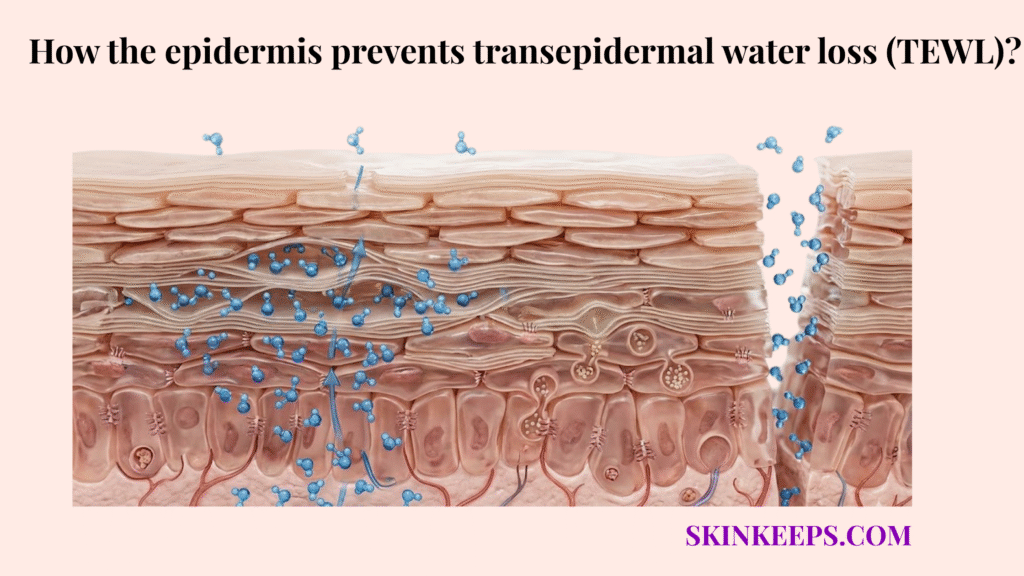
The epidermis limits excessive transepidermal water loss (TEWL) primarily through the organized corneocyte and extracellular-lipid barrier of the stratum corneum. Natural moisturizing factors help corneocytes hold water and maintain flexibility. Some water movement through the skin is natural, but visible dehydration becomes more likely when the epidermis cannot regulate that movement well. Elevated TEWL can […]
Why does the hypodermis function as adipose storage, thermal insulation, and structural anchoring?
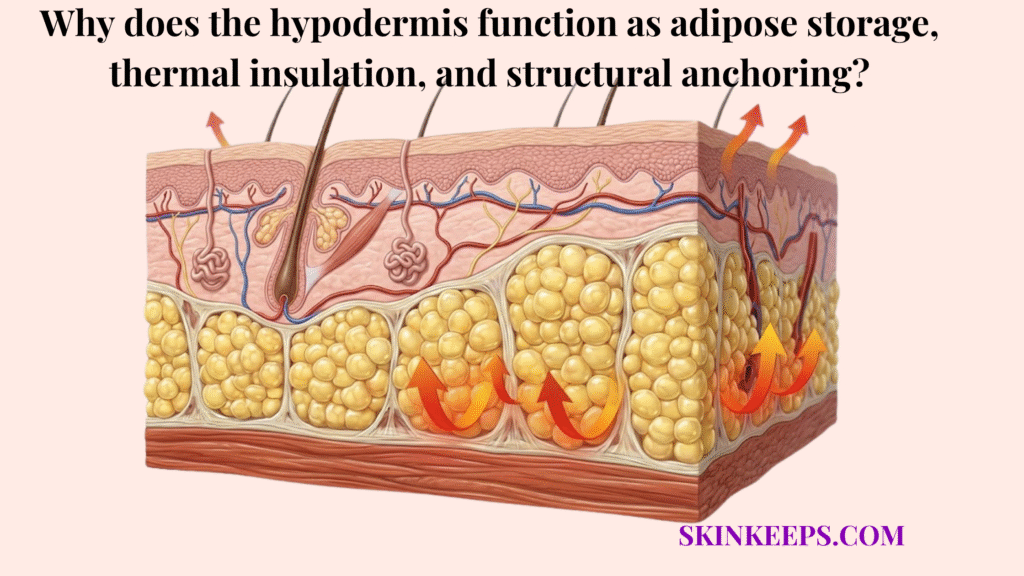
The hypodermis functions as adipose storage, thermal insulation, and structural anchoring because it is a supportive subcutaneous layer beneath the dermis. It stores energy in adipocytes, helps preserve body heat through subcutaneous fat, and anchors the skin to deeper fascia and muscle through fibrous connective structures. The hypodermis strongly affects visible volume, deep tissue cushioning, […]
How does the dermis provide connective support, sensory signaling, and tissue repair?
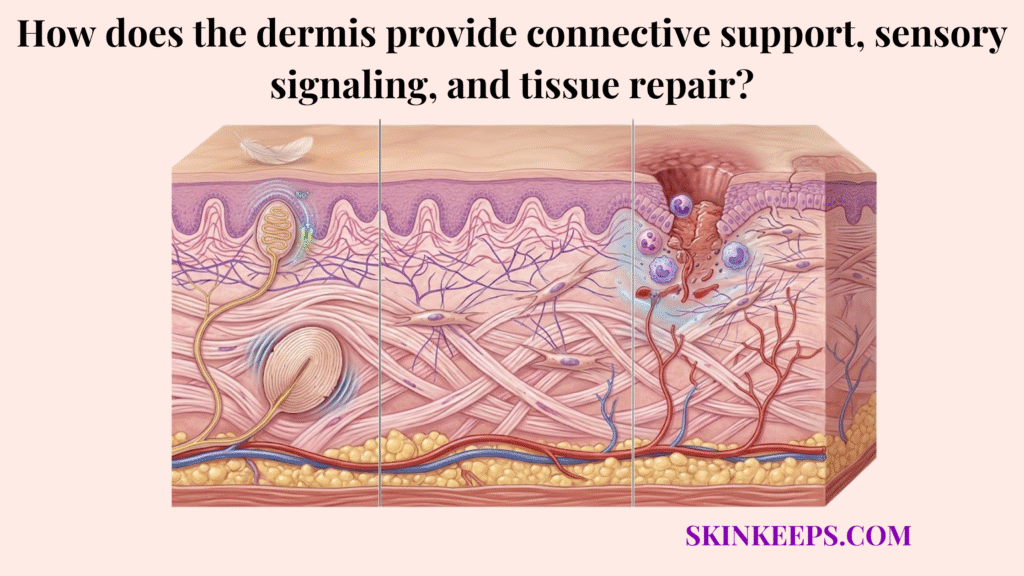
The dermis is the connective-tissue layer beneath the epidermis. Its collagen-rich matrix provides strength and elasticity, its nerves and receptors support sensation, and its blood vessels and fibroblasts participate in tissue repair. Changes in these systems can contribute to laxity, altered sensation, or slower healing, although such signs cannot identify a dermal problem by appearance […]
What defines the epidermis in terms of barrier integrity, cellular turnover, and pigmentation control?
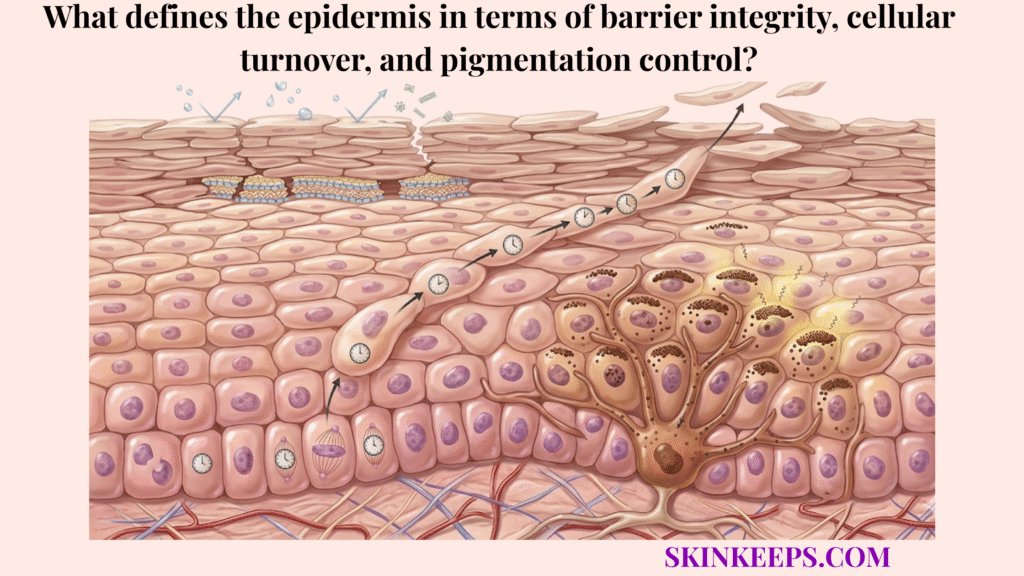
The epidermis is defined by three essential functions: barrier integrity, which protects the body and reduces water loss; cellular turnover, which renews the surface; and pigmentation control, which shapes visible skin tone through melanocyte activity and melanin distribution. It is not just a passive outer covering, but a living functional system that determines how the […]
3 Main Layers of the Skin: Structure, Functions, and Changes Explained
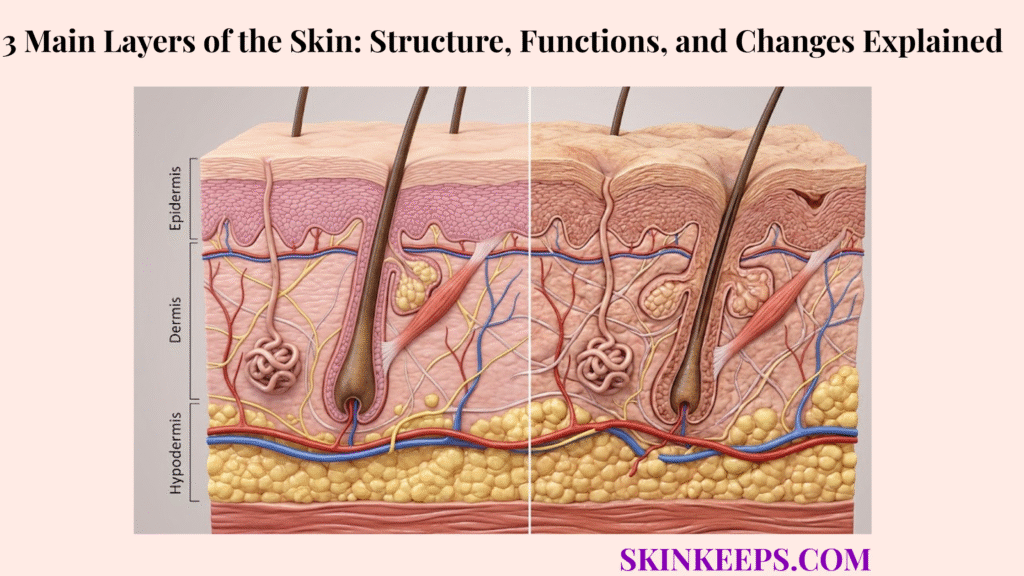
The essential distinction: Skin proper means epidermis + dermis. The hypodermis lies below it but is often shown as the third layer in illustrations because these tissues work closely together. This distinction matters when discussing protection, aging and visible skin changes. This guide compares the three anatomical levels, shows how their functions interact, and explains […]