
How are keratin filaments organized in upper epidermal layers?
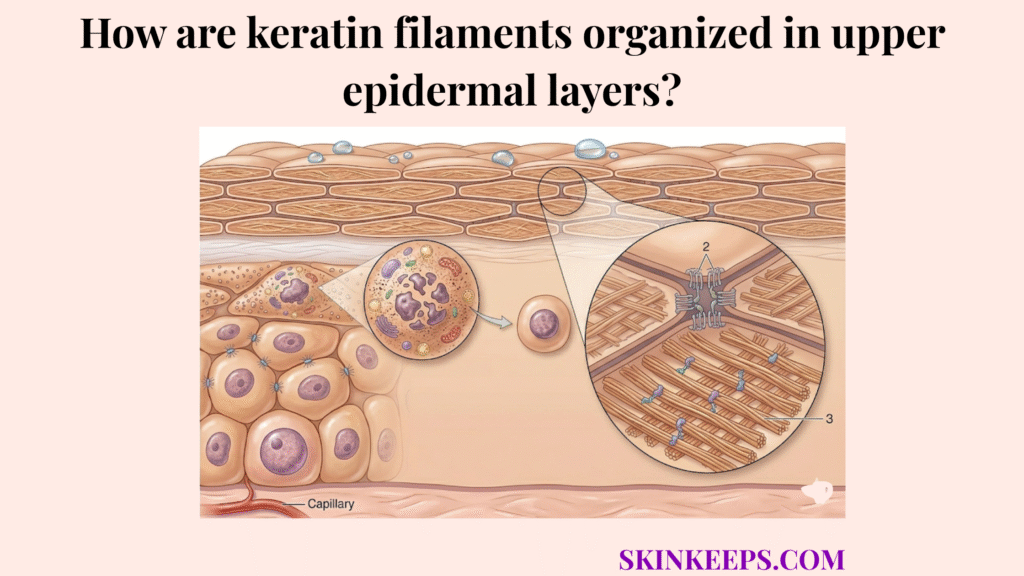
How Are Keratin Filaments Organized in Upper Epidermal Layers? Keratin filaments are organized in upper epidermal layers through a progressive structural transition in which suprabasal keratinocytes, the cells positioned above the basal layer, develop denser bundled filament networks that become more peripherally anchored and finally compact into the corneocyte matrix. This organization changes step by […]
Why do keratinocytes lose their nuclei during epidermal maturation?
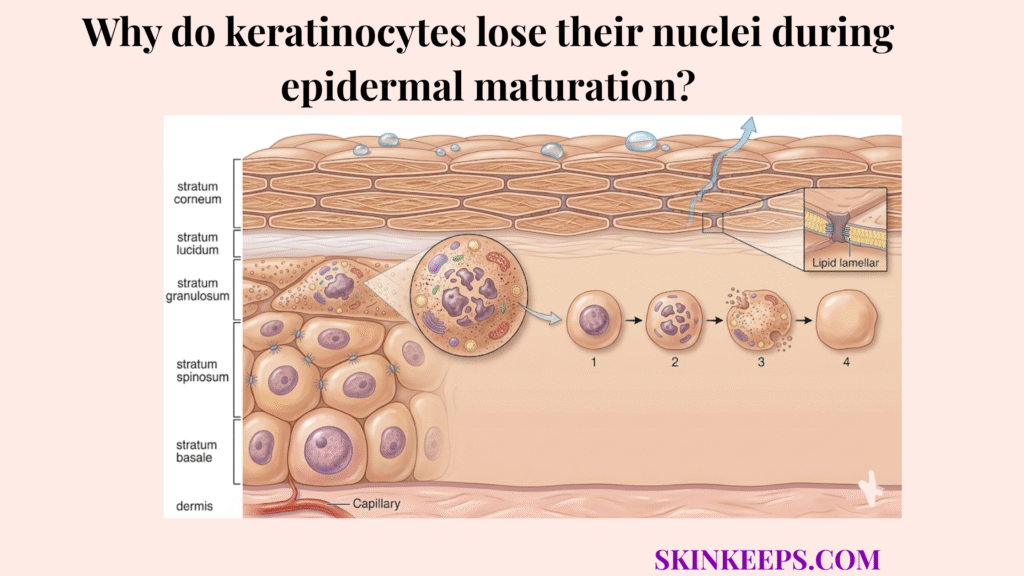
Why Do Keratinocytes Lose Their Nuclei During Epidermal Maturation? Biological Purpose Explained Keratinocytes lose their nuclei during maturation so they can transform from living epidermal cells into flattened, densely packed corneocytes that form the skin’s tough outer protective barrier. Removing the nucleus helps the cell make room for structural proteins, flatten more efficiently, and contribute […]
What process converts keratinocytes into protective surface cells?
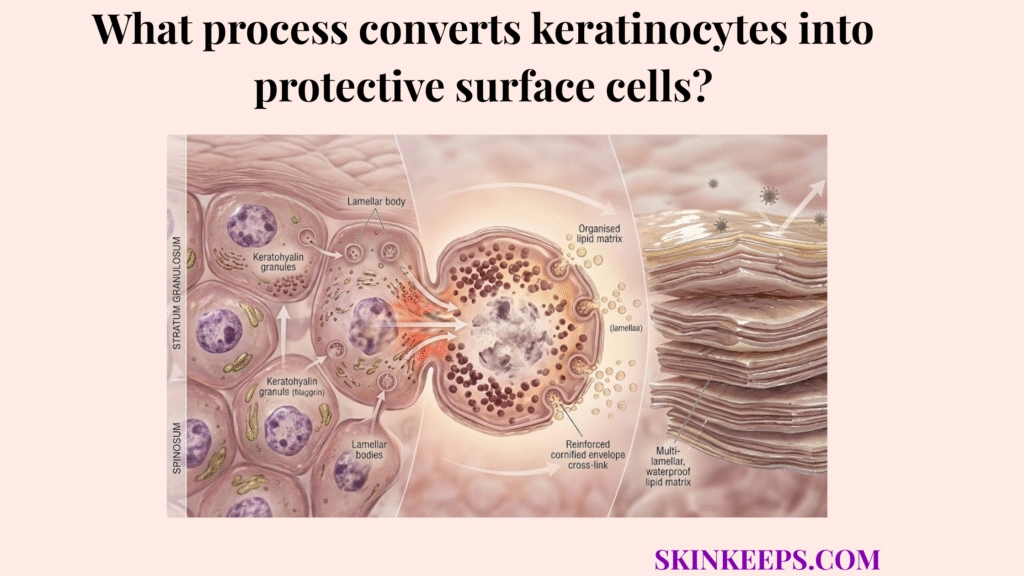
Keratinization is the process in which living epidermal keratinocytes mature into flattened, nucleus-free corneocytes that help form the skin’s protective outer layer. As these cells move upward, they assemble keratin-rich structures and a cornified envelope; nearby extracellular lipids complete the water-resistant barrier. This guide explains the cell-by-cell transition, the roles of keratin and filaggrin, the […]
When does epidermal cell turnover slow with age?
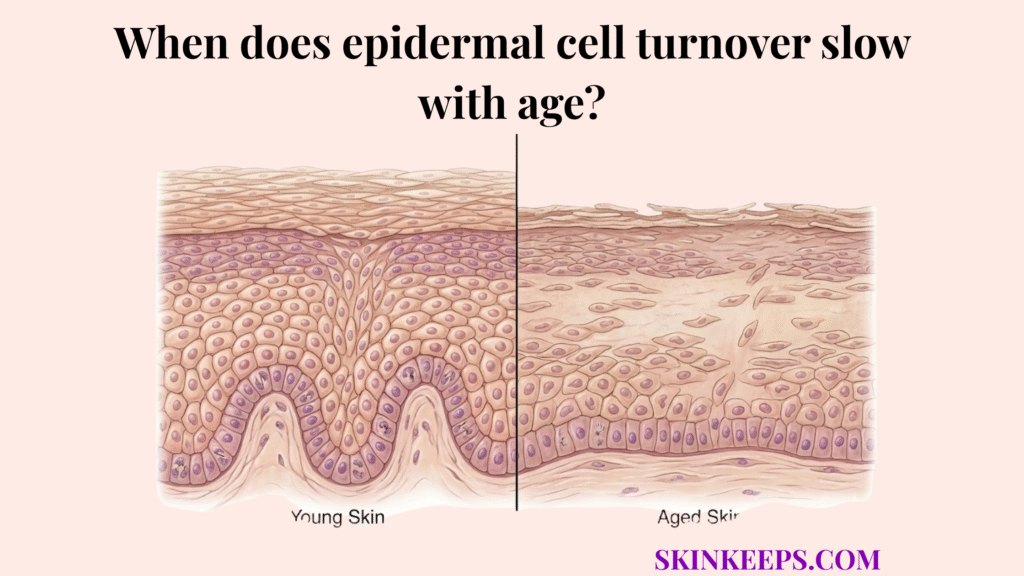
When Does Epidermal Cell Turnover Slow With Age? Timeline and Solutions Epidermal cell turnover slows with age as the skin’s renewal machinery becomes less efficient over time, with the earliest meaningful deceleration becoming more noticeable from early adulthood onward. As new cells are produced more slowly and older cells are shed less efficiently, the skin […]
How are new epidermal cells pushed toward the surface?
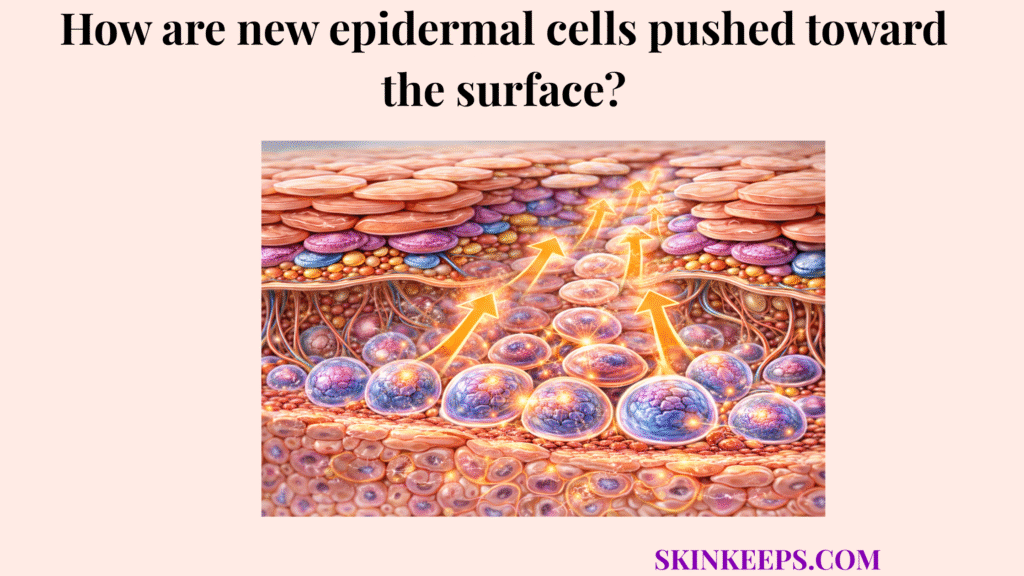
New epidermal cells reach the skin surface through a coordinated process of basal-cell division, upward movement, and differentiation. Keratinocytes are produced in the stratum basale, enter the layers above, gradually mature into corneocytes, and are eventually shed. Cell production contributes to tissue renewal, but movement is not simply a mechanical shove from each new division. […]
What role do basal keratinocytes play in epidermal cell division?
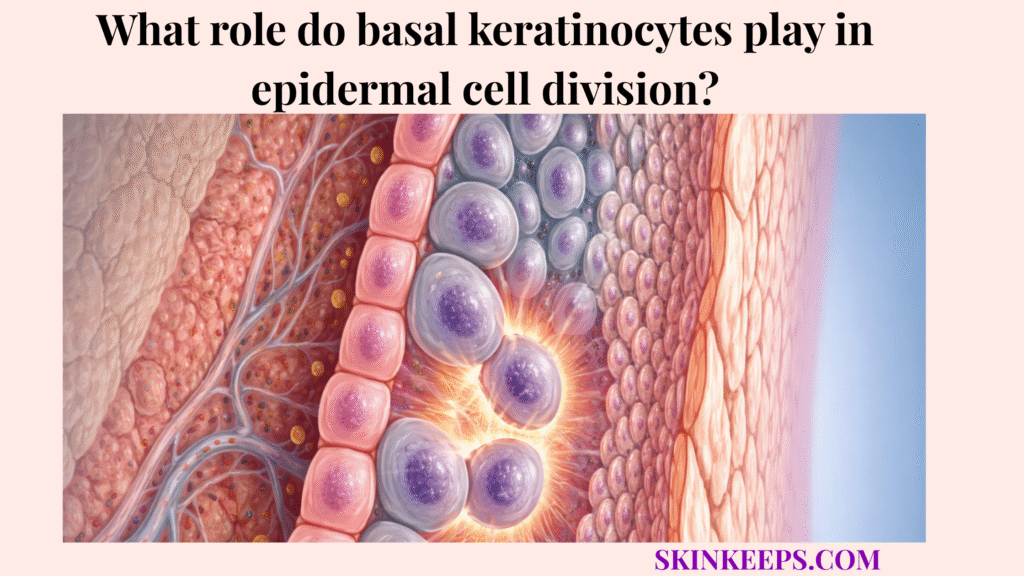
Basal keratinocytes are the principal dividing cells of the interfollicular epidermis. Located in the stratum basale, they help generate new keratinocytes that replace cells lost from the skin surface. Basal stem and progenitor cells balance self-renewal with the production of cells that move into the upper epidermal layers and mature into protective corneocytes. This renewal […]
Which layer of the epidermis drives continuous cell renewal?
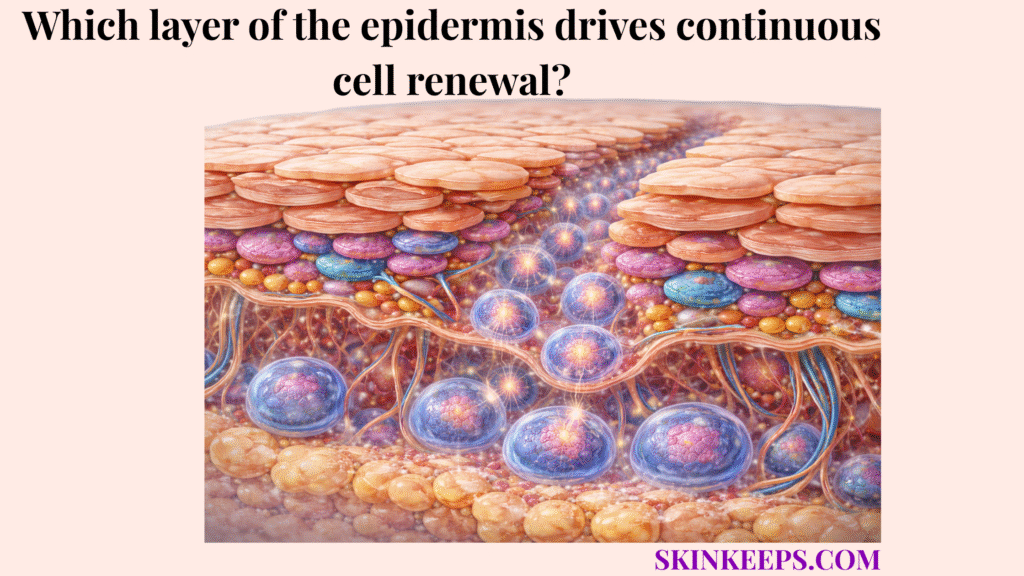
The stratum basale is the deepest layer of the epidermis and its main source of newly produced keratinocytes. Basal stem and progenitor cells divide to maintain the epidermis, while their descendants move upward, differentiate, and eventually form the protective stratum corneum. This process continually replaces cells shed from the skin surface. Its pace and appearance […]
Why does barrier disruption increases TEWL in the epidermis?
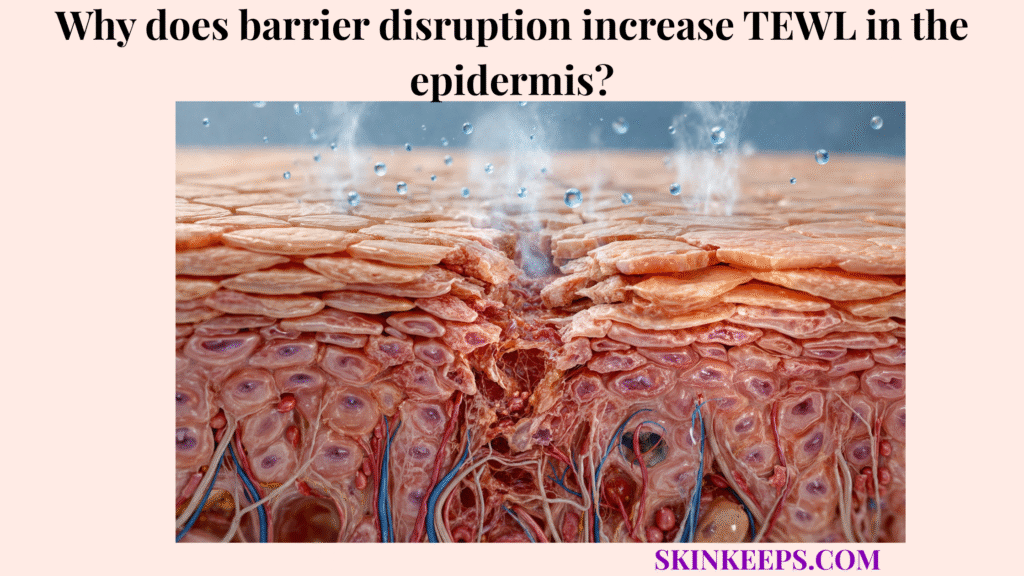
Barrier disruption increases transepidermal water loss (TEWL) because damage to the stratum corneum reduces the resistance that normally slows water movement from the skin into the surrounding environment. Changes in extracellular lipids, corneocyte organization, surface pH, and water-binding factors can contribute to impaired barrier performance and dry or irritated skin. This guide explains the underlying […]
How do corneocytes limit water evaporation in the epidermis?
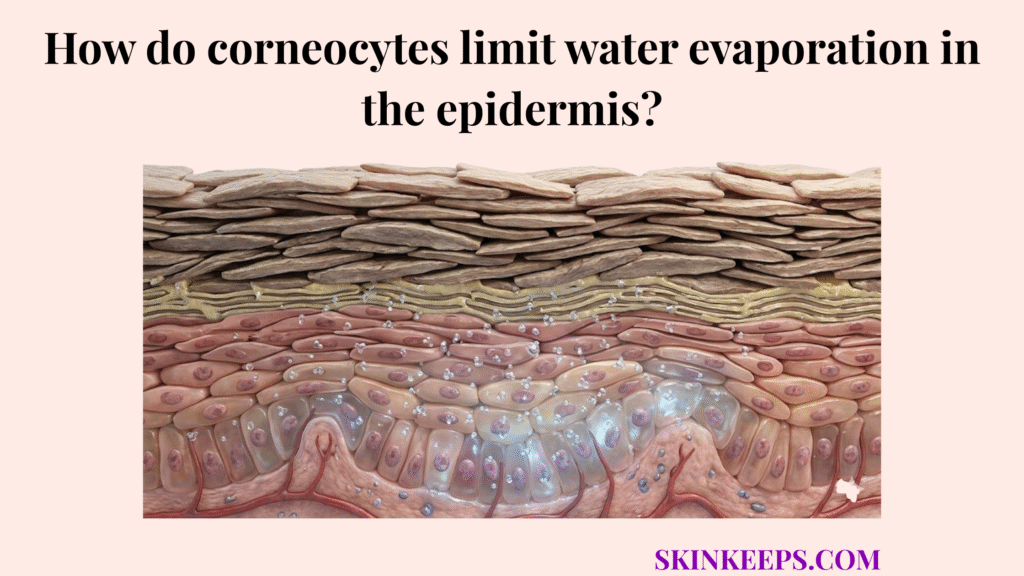
Corneocytes help the epidermis regulate water loss by forming the flattened outer cells of the stratum corneum. Their keratin-rich structure and water-binding compounds support hydration, while surrounding intercellular lipids provide much of the barrier that slows evaporation. Their cornified envelopes provide mechanical durability, and internal natural moisturizing factors (NMFs) help them hold water. Corneocytes and […]
What lipids form the epidermal barrier matrix?
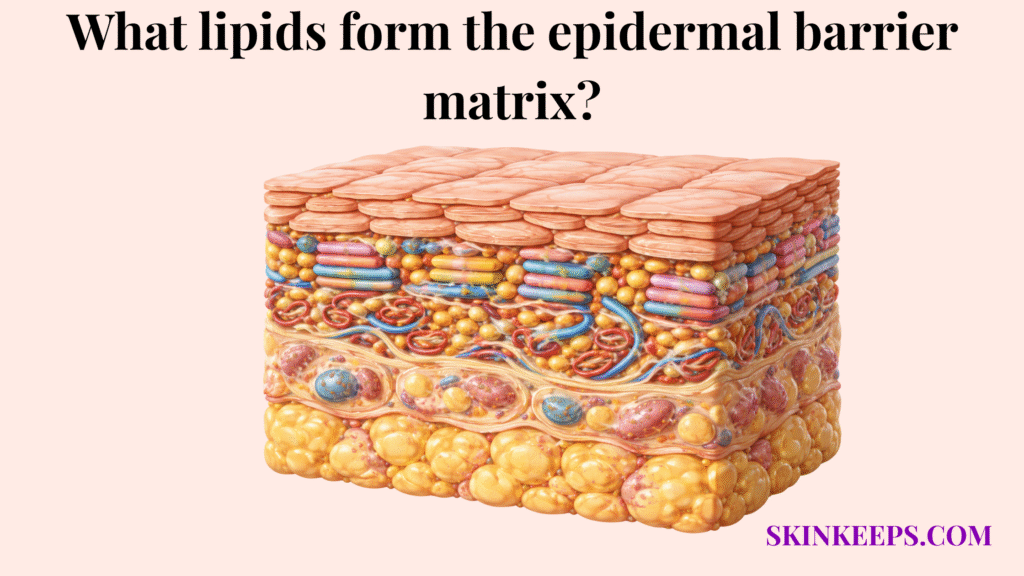
The epidermal barrier matrix is formed primarily by ceramides, cholesterol, and free fatty acids arranged between the outer skin cells of the stratum corneum. Together, these lipids create a water-resistant barrier that helps limit transepidermal water loss (TEWL) and reduces the penetration of certain irritants. The role of these three main lipid classes and their […]