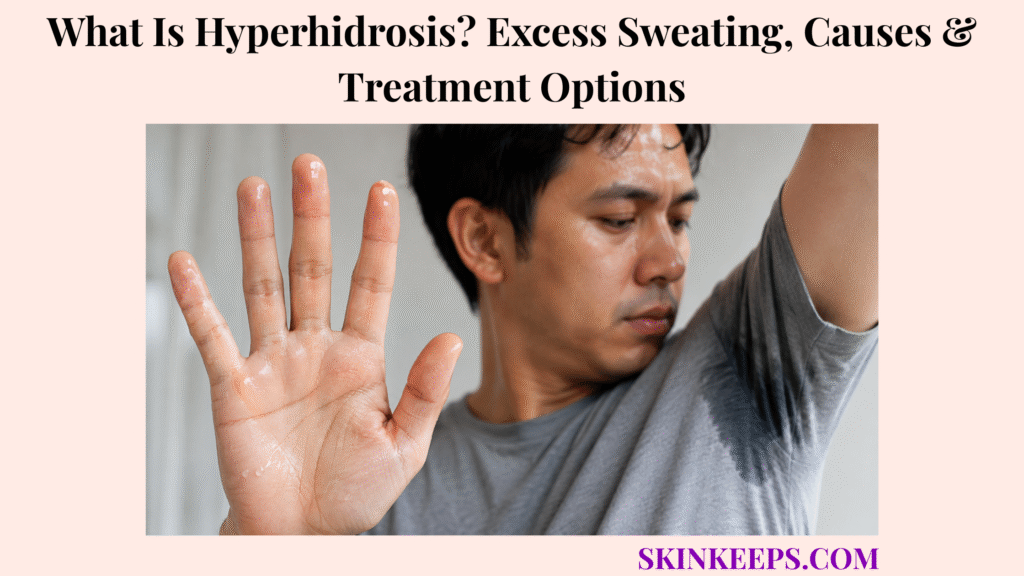
Hyperhidrosis is a condition in which sweat production exceeds what the body needs for temperature regulation or interferes with daily life. It can soak clothing, make objects difficult to hold, damage footwear and disrupt school, work, exercise or social contact.
Primary focal hyperhidrosis usually affects symmetrical areas without another identified disease, while secondary hyperhidrosis results from a medicine, hormonal state or medical condition and may affect the whole body. Treatment is site-specific and can include self-care, antiperspirants, topical medicines, iontophoresis, injections, oral therapy, devices or carefully selected surgery.
How Can You Tell When Sweating May Be Hyperhidrosis?
Sweating may be hyperhidrosis when it is excessive for the situation, repeats often, is difficult to control and interferes with daily function.
- Visible beads or dripping sweat at rest.
- Clothes repeatedly becoming soaked or sweat passing through layers.
- Hands too wet for writing, grip, tools, phones or keyboards.
- Feet soaking socks and footwear.
- Sweating in cool environments without a major cooling need.
- Changing clothing several times during the day.
- Avoiding handshakes, coloured clothing or social situations.
- Weekly or more frequent practical or emotional disruption.
Normal sweating rises with heat, exercise, fever or acute emotion. Hyperhidrosis is not defined by one fixed volume.
Figure 1. Hyperhidrosis is defined by disproportionate sweating and functional burden; site, onset, symmetry and sleep pattern help separate primary focal from secondary sweating.
Which Areas of the Body Can Hyperhidrosis Affect?
Hyperhidrosis can affect one focal site, several focal sites or the whole body depending on its type and cause.
| Pattern | Common Sites | Typical Impact |
|---|---|---|
| Axillary | Underarms | Clothing marks, chafing and social burden |
| Palmar | Palms | Writing, grip, devices and hand contact |
| Plantar | Soles | Soaked socks, footwear and friction |
| Craniofacial | Face, forehead and scalp | Dripping, eye irritation and visibility |
| Other focal | Groin, chest, back, breast folds or buttocks | Moisture and skin irritation |
| Generalized | Most of the body | Secondary-cause review |
How Are Primary and Secondary Hyperhidrosis Different?
What Pattern Suggests Primary Focal Hyperhidrosis?
Primary focal hyperhidrosis usually begins early, affects localized symmetrical areas and occurs without an identified underlying illness.
- Palms, soles, underarms or face are typical sites.
- Both sides are affected relatively symmetrically.
- Onset is in childhood, adolescence or early adulthood.
- Episodes occur at least weekly.
- Daily activity is impaired.
- A family history may be present.
- Excessive sweating usually stops or markedly decreases during sleep.
What Pattern Suggests Secondary Hyperhidrosis?
Secondary hyperhidrosis is caused by another condition, medicine or hormonal state.
- New onset during adulthood.
- Generalized sweating.
- Drenching night sweats.
- Asymmetrical or unusual focal sweating.
- Systemic symptoms.
- A relationship to a new medicine or dose change.
| Feature | Primary Focal | Secondary |
|---|---|---|
| Onset | Usually early | Often new or adult-onset |
| Distribution | Focal | Often generalized |
| Symmetry | Usually bilateral | May be asymmetric or diffuse |
| Sleep | Usually stops | May occur at night |
| Main task | Control sweat | Find and treat cause |
How Is Primary Focal Hyperhidrosis Diagnosed Clinically?
Primary focal hyperhidrosis is diagnosed from a typical long-standing focal pattern after secondary causes are excluded.
- Excessive focal sweating for at least six months.
- No apparent secondary cause.
- Bilateral and symmetrical sweating.
- At least one episode each week.
- Interference with daily activities.
- Onset before age 25.
- Positive family history.
- Absence of excessive sweating during sleep.
These features support diagnosis but do not replace clinical judgment; night sweating or systemic symptoms redirect the evaluation.
How Does the Nervous System Produce Excess Sweating?
Hyperhidrosis involves overactive or poorly regulated nerve signalling to eccrine sweat glands.
Sympathetic postganglionic nerves release acetylcholine, which activates muscarinic receptors on eccrine glands and produces watery sweat.
This pathway explains why topical and oral anticholinergics, botulinum toxin and nerve-directed surgery can reduce sweating.
Figure 2. Sympathetic nerves use acetylcholine to activate eccrine glands; history and pattern determine whether treatment should target primary focal disease or an underlying secondary cause.
What Causes Primary Hyperhidrosis?
The exact initiating cause is not fully understood, but autonomic overactivity and genetic susceptibility appear central.
- Excessive autonomic signalling.
- Genetic susceptibility and family clustering.
- Emotional stress acting as an aggravator.
- Heat or exercise increasing symptoms without being the root cause.
- Anxiety arising from sweating and feeding back into more sweating.
Primary hyperhidrosis is not caused by inadequate hygiene, is not contagious and is not simply low physical conditioning.
Which Medical Conditions Can Cause Secondary Hyperhidrosis?
Which Hormonal and Metabolic Conditions Can Increase Sweating?
Hyperthyroidism, diabetes, low blood glucose, menopause, pregnancy and uncommon hormone-producing disorders can increase sweating.
Which Infections Can Cause Generalized or Night Sweating?
Acute fever, tuberculosis, endocarditis, HIV and other chronic infections can produce generalized or night sweating when supported by symptoms and exposure history.
Which Neurologic Conditions Can Alter Sweating?
Parkinson disease, spinal-cord injury, stroke, autonomic neuropathy and Frey syndrome can change sweat distribution or produce one-sided patterns.
Which Other Illnesses Can Produce Excessive Sweating?
Cardiac or respiratory distress, selected malignancies, withdrawal states, panic episodes and sleep-related disorders can contribute.
| Cause Category | Clues | First Direction |
|---|---|---|
| Endocrine/metabolic | Tremor, palpitations or glucose symptoms | Thyroid, glucose or hormone testing |
| Infection | Fever, cough, exposure or weight loss | Targeted infection testing |
| Neurologic | One-sided sweating or nerve injury | Neurologic assessment |
| Cardiorespiratory | Breathlessness, chest or circulation signs | Urgent or specialist assessment |
| Medication/substance | New drug, dose change or withdrawal | Prescriber/pharmacist review |
Which Medicines Can Cause or Worsen Excess Sweating?
Medicine-related sweating should be reviewed before labelling a pattern as primary hyperhidrosis.
- Antidepressants.
- Opioids.
- Hormonal medicines.
- Diabetes medicines that can cause low blood glucose.
- Thyroid-hormone replacement.
- Stimulants or cholinergic medicines.
- Corticosteroids and selected cancer treatments.
- Alcohol, recreational drugs or withdrawal from alcohol, opioids or sedatives.
The timeline should compare medicine start or dose change with symptom onset. Essential medicines should not be stopped abruptly.
Why Are New Night Sweats Different From Primary Focal Hyperhidrosis?
New drenching night sweats are different because primary focal hyperhidrosis usually stops or greatly decreases during sleep.
Repeated soaking of sleepwear or bedding in a cool room can reflect menopause, infection, medicine effects, low blood glucose, sleep disorders or systemic illness.
Fever, unexplained weight loss, swollen lymph nodes, cough or fatigue strengthens the need for medical assessment.
| Pattern | Likely Direction |
|---|---|
| Room or bedding too warm | Adjust environment |
| Hormonal or medicine timeline | Clinical review |
| Drenching recurrent night sweats | Secondary-cause evaluation |
| Night sweats plus systemic signs | Prompt targeted investigation |
How Is Hyperhidrosis Different From Hot Flashes?
Hyperhidrosis usually causes repeated sweating at fixed sites, while hot flashes begin as sudden waves of internal warmth.
| Feature | Hyperhidrosis | Hot Flash |
|---|---|---|
| Starting sensation | Sweating may begin directly | Internal heat wave |
| Common sites | Hands, feet, underarms or face | Face, neck and chest flushing |
| Timing | Repeated throughout day | Brief episodes |
| Sleep | Primary focal usually stops | May occur at night |
| Context | Often early-onset focal pattern | Perimenopause/menopause common |
How Is Hyperhidrosis Different From Anxiety-Related Sweating?
Primary hyperhidrosis can occur without conscious anxiety, although anxiety can worsen sweating and sweating can create anxiety.
| Pattern | Primary Hyperhidrosis | Situational Emotional Sweating |
|---|---|---|
| Timing | Across ordinary situations | During fear, embarrassment or performance stress |
| Onset | Often early in life | Linked to an event |
| Distribution | Consistent focal pattern | Variable |
| After event | May continue | Usually settles |
| Care | Direct sweat control | Anxiety care may help trigger |
How Is Hyperhidrosis Different From Body Odour?
Hyperhidrosis is excess sweat production, while body odour develops when skin microorganisms break down sweat and secretions.
Fresh eccrine sweat is mainly watery and has little odour. Moisture can promote microbial growth, but a person can have hyperhidrosis without strong odour.
| Product | Main Function |
|---|---|
| Antiperspirant | Reduces sweat production |
| Deodorant | Reduces or masks odour |
| Antimicrobial care | Treats selected microbial problems |
What Problems Can Palmar Hyperhidrosis Cause?
Palmar hyperhidrosis can be severe because wet hands interfere with grip, writing, work safety and social contact.
- Pens, tools or sports equipment slipping.
- Wet paper and damaged documents.
- Difficulty with keyboards, phones, instruments or touchscreens.
- Electrical or occupational safety concerns.
- Avoidance of handshakes.
- Skin whitening, maceration or irritant dermatitis.
- Exam, interview and social distress.
Itchy small hand or foot blisters should not automatically be blamed on sweat, because dyshidrotic eczema follows a different inflammatory pathway.
What Problems Can Plantar Hyperhidrosis Cause?
Plantar hyperhidrosis keeps feet damp, which can damage footwear and increase friction, skin breakdown and microbial problems.
Constant dampness can increase friction and make blisters more likely during walking, sport or long work shifts.
Sweaty feet can coexist with athlete’s foot, but antifungal treatment does not correct the underlying sweat production.
- Soaked socks and damaged shoes.
- Slipping inside footwear.
- Maceration and painful cracks.
- Fungal or bacterial overgrowth.
- Pitted keratolysis and odour.
- Difficulty with work or sports footwear.
What Problems Can Axillary Hyperhidrosis Cause?
Axillary hyperhidrosis can cause visible sweat marks, clothing damage, skin irritation and major social or work limitation.
Repeated moisture and clothing friction can lead to chafing, especially when tight fabric and movement occur together.
- Large visible sweat marks.
- Frequent clothing changes.
- Fabric staining or uniform problems.
- Irritant or contact dermatitis.
- Odour and reduced confidence.
- Occupational and social limitations.
What Problems Can Craniofacial Hyperhidrosis Cause?
Craniofacial hyperhidrosis can be highly visible and is often mistaken for anxiety, fever or low physical conditioning.
- Sweat dripping from the forehead.
- Wet scalp or hair.
- Makeup or sunscreen running.
- Fogging glasses.
- Sweat entering the eyes.
- Public-speaking and social burden.
New one-sided facial sweating, particularly after surgery or nerve injury, needs secondary focal evaluation.
What Is Gustatory Sweating?
Gustatory sweating is sweating triggered by eating, especially on the face, temples, cheeks or upper lip.
Mild sweating with spicy or hot food can be physiologic. Recurrent one-sided facial sweating during meals can suggest Frey syndrome after parotid surgery, injury or infection.
Diabetic autonomic neuropathy is another possible cause.
How Do Clinicians Evaluate Excessive Sweating?
Clinicians evaluate excessive sweating by reviewing timing, location, symmetry, sleep pattern, triggers, medicines and daily-life impact.
- Age at onset and duration.
- Body areas and symmetry.
- Frequency and sleep-time sweating.
- Heat, exercise, food or emotional triggers.
- Medicine and substance exposure.
- Family history.
- Menstrual or menopausal symptoms.
- Infection, endocrine or neurologic symptoms.
- Weight change and functional impact.
- Previous treatment response.
The history remains valid even if the skin is dry during the appointment.
How Is Hyperhidrosis Severity Measured?
How Does the Hyperhidrosis Disease Severity Scale Work?
The Hyperhidrosis Disease Severity Scale measures how much sweating interferes with activities rather than a precise sweat volume.
| HDSS Score | Description | Burden |
|---|---|---|
| 1 | Never noticeable and never interferes | Mild |
| 2 | Tolerable but sometimes interferes | Moderate |
| 3 | Barely tolerable and frequently interferes | Severe |
| 4 | Intolerable and always interferes | Severe |
Scores of 3 or 4 indicate severe functional burden, and repeated scoring can track response.
Which Objective Sweat Tests Can Be Used?
Objective tests can map or measure sweating when procedure planning, research or diagnostic uncertainty makes them useful.
- Minor starch–iodine mapping.
- Gravimetric sweat measurement.
- Evaporimetry.
- Pattern-specific provocation testing.
Which Tests Are Needed When Secondary Hyperhidrosis Is Suspected?
Testing for secondary hyperhidrosis should be targeted to symptoms, onset, distribution, medicines and examination findings.
| Clinical Clue | Possible Investigation |
|---|---|
| Generalized adult-onset or night sweating | CBC, glucose/HbA1c, thyroid, kidney/liver or inflammation tests |
| Fever, cough, weight loss or exposure | Targeted infection testing and possible imaging |
| Tremor, palpitations or heat intolerance | Thyroid or hormonal evaluation |
| Low-glucose symptoms | Immediate glucose assessment and diabetes review |
| Pregnancy possibility | Pregnancy testing |
| One-sided or neurologic pattern | Neurologic assessment |
Routine extensive testing is usually unnecessary for a classic early-onset bilateral focal pattern without systemic clues.
Does Hyperhidrosis Require Treatment?
Treatment is appropriate when sweating disrupts practical, occupational, social or emotional life.
Primary disease usually needs sweat-directed treatment, while secondary disease requires cause treatment where possible.
The goal is not zero sweat everywhere; it is enough reduction that life is no longer meaningfully disrupted.
Which Daily Changes Can Make Excess Sweating Easier to Manage?
Daily changes can reduce irritation, clothing damage and social burden, but they do not switch off primary autonomic sweating.
- Loose breathable clothing and moisture-wicking undershirts.
- Underarm shields and spare clothing.
- Moisture-wicking socks changed during the day.
- Shoe rotation and complete drying.
- Absorbent shoe inserts.
- Alcohol, spicy-food and overheating trigger review.
- Portable towels or absorbent paper.
- Gentle hygiene without harsh over-washing.
How Do Antiperspirants Reduce Hyperhidrosis?
Antiperspirants reduce sweat by forming temporary plugs inside sweat ducts.
- Apply aluminium-salt product to completely dry skin at night.
- Allow it to dry fully.
- Wash it off in the morning when directed.
- Use regularly until controlled.
- Reduce to maintenance frequency.
- Avoid applying immediately after shaving.
- Reduce frequency when irritation occurs.
How Can Antiperspirant Irritation Be Reduced?
Antiperspirant irritation can often be reduced by applying less often, using dry intact skin and avoiding overuse.
Persistent itching, swelling or rash in the product area may require evaluation for allergic contact dermatitis.
| Problem | Safer Adjustment |
|---|---|
| Wet skin | Dry completely before use |
| Fresh shaving | Wait until skin recovers |
| Too frequent use | Reduce frequency |
| Excess product | Use smallest effective amount |
| Persistent dermatitis | Change vehicle/concentration and seek review |
Which Topical Anticholinergic Treatments Can Reduce Underarm Sweating?
How Does Glycopyrronium Cloth Treat Axillary Hyperhidrosis?
Glycopyrronium cloth blocks muscarinic acetylcholine signalling to underarm sweat glands.
Current U.S. labelling covers adults and children aged nine years and older. One cloth is used for both underarms once daily, hands are washed immediately and eye transfer must be avoided.
How Does Sofpironium Gel Treat Axillary Hyperhidrosis?
Sofpironium gel is a topical anticholinergic approved in 2024 for primary axillary hyperhidrosis from age nine.
Current U.S. labelling directs one pump per underarm at bedtime. The product is underarm-only, should not be applied soon after shaving and has flammability and anticholinergic precautions.
| Product | Approved Site | Age | Form | Key Safety Issue |
|---|---|---|---|---|
| Glycopyrronium / Qbrexza | Underarms | 9+ | Single-use cloth | Eye transfer, dry mouth and urinary symptoms |
| Sofpironium / Sofdra | Underarms | 9+ | Gel | Irritation, anticholinergic effects and flammability |
Neither product should be casually transferred to the face, hands or groin.
How Does Iontophoresis Treat Hand and Foot Hyperhidrosis?
Iontophoresis passes a mild electrical current through water to temporarily reduce sweat-gland activity in the hands or feet.
- Initial sessions are repeated several times weekly.
- Maintenance may be needed every one to four weeks.
- Home devices can be used after instruction.
- Tingling, dryness, cracking or discomfort can occur.
- Cuts should be protected according to device guidance.
- Pregnancy, implanted electrical devices and some metal implants require device-specific review.
How Does Botulinum Toxin Reduce Hyperhidrosis?
Botulinum toxin reduces sweating by blocking acetylcholine release from nerves that stimulate sweat glands.
Multiple small injections cover a mapped treatment area, and effects gradually wear off.
The U.S. Botox label covers severe primary axillary hyperhidrosis in adults when topical agents are inadequate. Palmar, plantar, scalp or facial use is specialist off-label care and may cause pain, hand weakness or eyelid drooping.
When Are Oral Anticholinergic Medicines Used for Hyperhidrosis?
Oral anticholinergics may be used when sweating affects multiple areas or local treatments are not enough.
| Medicine | Possible Role | Important Risks |
|---|---|---|
| Glycopyrrolate/glycopyrronium | Multiple sites or generalized symptoms | Dry mouth, constipation and urinary retention |
| Oxybutynin | Multi-site or craniofacial sweating | Blurred vision, cognitive effects and heat risk |
| Other specialist agents | Selected cases | Drug-specific monitoring |
Dose selection balances greater body coverage against greater systemic adverse effects.
Why Can Anticholinergic Treatment Increase Overheating Risk?
Anticholinergic treatment can increase overheating risk because sweating is essential for evaporative cooling.
- Hot climate or high humidity.
- Vigorous exercise.
- Fever.
- Protective clothing or heavy equipment.
- Children, older adults and outdoor work.
Headache, dizziness, nausea, weakness, cramps, confusion, hot skin with inadequate sweating or fainting require stopping heat exposure and urgent assessment.
Can Medicines for Situational Anxiety Reduce Sweating?
Medicines for situational anxiety may help predictable performance-trigger sweating in selected people, but they do not treat continuous primary hyperhidrosis directly.
A beta-blocker may reduce racing heart and tremor before a specific event, but asthma, low blood pressure or slow heart rate can make it unsuitable.
Sedating medicine can impair driving, work or exam performance. Psychological therapy can support people whose fear of sweating causes avoidance.
How Can Microwave Treatment Reduce Axillary Hyperhidrosis?
Microwave treatment reduces underarm sweating by heating and damaging axillary sweat glands.
- The treatment is limited to the underarms.
- Local anaesthesia is used.
- One or more sessions may be required.
- Destroyed glands usually do not regenerate.
- Swelling, tenderness, bruising, altered sensation, lumps or hair reduction can occur.
- It does not treat palms, soles or generalized sweating.
Which Local Procedures Can Remove Underarm Sweat Glands?
Local gland procedures target underarm sweat glands through small incisions, suction-assisted approaches, excision or laser-assisted destruction.
| Procedure | Method | Main Limits/Risks |
|---|---|---|
| Curettage | Scrapes gland-bearing tissue | Bruising, incomplete control or contour change |
| Suction curettage | Suction-assisted removal | Bleeding, infection or unevenness |
| Limited excision | Direct tissue removal | Scar and movement restriction |
| Laser-assisted destruction | Energy-based gland injury | Burn, nerve or contour risk |
These procedures are axillary only and are generally considered after less invasive treatments.
When Is Endoscopic Thoracic Sympathectomy Considered?
Endoscopic thoracic sympathectomy is usually reserved for carefully selected severe palmar hyperhidrosis after less invasive treatments fail.
- Severe hand sweating with major functional impairment.
- Failure or intolerance of safer therapies.
- Detailed counselling about irreversibility.
- Acceptance of compensatory sweating risk.
The surgeon interrupts sympathetic pathways inside the chest. Risks include compensatory trunk or leg sweating, gustatory sweating, pneumothorax, bleeding, chest pain, Horner syndrome, very dry hands and regret.
Why Is ETS Usually Avoided for Plantar Hyperhidrosis Alone?
ETS is usually avoided for plantar hyperhidrosis alone because thoracic sympathectomy mainly affects upper-body pathways and may not reliably improve foot sweating.
Compensatory sweating can still occur, while lumbar sympathectomy carries separate neurologic and sexual-function concerns.
Foot treatment usually prioritizes antiperspirants, iontophoresis, oral treatment or specialist injections.
How Is Hyperhidrosis Treated in Children and Adolescents?
Pediatric treatment should confirm a primary focal pattern and address school, sports, writing, devices and social burden.
- Begin with appropriate antiperspirants and correct dry-skin use.
- Consider iontophoresis for palms or soles.
- Qbrexza and Sofdra have U.S. axillary indications from age nine.
- Use oral medicines only with age-appropriate monitoring.
- Plan heat safety for school and sport.
- Include the child’s own priorities and address bullying.
How Is Hyperhidrosis Managed During Pregnancy?
Hyperhidrosis during pregnancy should be managed with low-systemic-exposure measures first and specialist review before systemic or device treatment.
- Separate pregnancy-related hormonal sweating from pre-existing primary disease.
- Use clothing, absorbent products and appropriate antiperspirants first.
- Review prescription topical anticholinergics individually.
- Avoid starting oral anticholinergics without obstetric and specialist assessment.
- Iontophoresis and elective procedures are commonly postponed because evidence is limited.
- Maintain hydration and heat safety.
Which Skin Problems Can Develop From Persistent Sweating?
Persistent sweating can damage the skin barrier and increase friction, maceration, dermatitis and infection risk.
Blocked sweat ducts can produce heat rash / miliaria, which creates persistent bumps rather than simply excess sweat.
Rapidly spreading warmth, redness, swelling or pain may suggest infection such as cellulitis, not only moisture irritation.
- Irritant dermatitis or intertrigo.
- Maceration and chafing.
- Blisters and painful cracks.
- Fungal or bacterial infection.
- Pitted keratolysis and odour.
- Contact dermatitis from repeated products.
How Does Hyperhidrosis Affect Mental Health and Quality of Life?
Hyperhidrosis can affect confidence, social contact, school, work, relationships and emotional health even when it is not physically dangerous.
- Embarrassment and anticipatory anxiety.
- Avoidance of hand contact.
- Clothing restrictions and fear of visible marks.
- Reduced classroom or workplace participation.
- Dating or intimacy difficulty.
- Occupational limitations.
- Depression or social withdrawal.
- Time and financial treatment burden.
Emotional distress does not prove a psychological cause.
Which Hyperhidrosis Treatment Mistakes Should Be Avoided?
Common mistakes can cause irritation, anticholinergic harm, overheating or unnecessary irreversible surgery.
| Mistake | Possible Harm | Safer Action |
|---|---|---|
| Antiperspirant on wet or shaved skin | Dermatitis | Apply to dry intact skin at night |
| Deodorant used for sweat control | No reduction | Use antiperspirant |
| Underarm anticholinergic on face/groin | Eye or systemic effects | Use only as labelled |
| Touching eyes after application | Dilated pupil or blurred vision | Wash hands immediately |
| Combining anticholinergics | Urinary, cognitive and heat risks | Clinical review |
| Hard exercise in extreme heat | Heat illness | Heat-safety plan |
| Unsafe device modification | Shock or burn | Follow manufacturer guidance |
| Early ETS | Irreversible compensatory sweating | Exhaust safer options |
How Long Do Hyperhidrosis Treatments Keep Working?
Hyperhidrosis treatment often requires maintenance because many options control sweating only while used or until their effect wears off.
| Treatment | Maintenance Pattern |
|---|---|
| Antiperspirant | Repeated applications |
| Topical anticholinergic | Works while used |
| Iontophoresis | Regular maintenance sessions |
| Oral medicine | Control while taken |
| Botulinum toxin | Repeat when effect fades |
| Microwave/local gland procedure | Potentially longer-lasting axillary reduction |
| ETS | Permanent nerve effect with possible persistent compensatory sweating |
Can Hyperhidrosis Be Cured Permanently?
No single treatment permanently cures every form of hyperhidrosis, but symptoms can often be controlled effectively.
Secondary sweating may improve when its medicine or underlying condition is corrected. Local sweat-gland destruction can provide durable underarm reduction.
Sympathectomy permanently changes nerve signalling but carries substantial and sometimes lasting risks.
When Should Excessive Sweating Be Checked by a Clinician?
Excessive sweating should be checked when it persists, disrupts daily life, fails strong antiperspirants, causes skin problems or has an atypical pattern.
- It has lasted at least six months.
- It occurs at least weekly.
- School, work, relationships or activities are affected.
- Strong non-prescription antiperspirants do not help.
- Rashes or infections recur.
- Sweating begins suddenly, becomes generalized or occurs during sleep.
- A new medicine may contribute.
- One side sweats differently.
- A child has substantial functional or emotional burden.
- Prescription or procedural treatment is being considered.
When Can Sudden Sweating Be a Medical Emergency?
Sudden sweating can be a medical emergency when it occurs with chest, breathing, neurologic, heat-illness, allergic or shock symptoms.
- Chest pressure or pain.
- Difficulty breathing.
- Fainting or severe weakness.
- Confusion or one-sided weakness.
- Severe headache.
- Blue or grey lips.
- Rapid or irregular heartbeat.
- Severe low-blood-glucose symptoms.
- High fever and serious illness.
- Hot skin, confusion or collapse during heat exposure.
- Severe allergic symptoms or shock.
Emergency route: sudden sweating with systemic warning signs is not a routine primary hyperhidrosis flare and needs urgent assessment.
Figure 3. Hyperhidrosis treatment is site-specific: topical underarm therapy, iontophoresis for hands and feet, injections or systemic therapy for selected disease, and cautious surgery only after safer options fail.
What Should You Remember About Hyperhidrosis?
Hyperhidrosis is sweating beyond thermoregulatory needs or daily-life tolerance.
- Primary focal disease commonly affects symmetrical underarms, palms, soles or facial areas.
- Primary symptoms often begin early and stop during sleep.
- New generalized or night-time sweating suggests a secondary cause.
- Medicines, hormones, endocrine disease, infection and neurologic conditions can increase sweating.
- Diagnosis depends on timing, site, symmetry, sleep pattern and functional burden.
- HDSS measures activity interference.
- Strong antiperspirants are usually the first topical treatment.
- Qbrexza and Sofdra are U.S.-approved axillary options from age nine.
- Iontophoresis is useful for palms and soles.
- Botulinum toxin is established for severe adult axillary disease after topical failure.
- Oral anticholinergics can treat multiple sites but increase heat risk.
- Local gland procedures may give longer-lasting underarm control.
- ETS is a last-resort option because compensatory sweating can be substantial.
Frequently Asked Questions About Hyperhidrosis?
How much sweating is considered hyperhidrosis?
Hyperhidrosis is not defined by one fixed quantity. It means sweating beyond cooling needs or sweating that meaningfully interferes with daily function.
Can hyperhidrosis occur when the weather is cool?
Yes. Hyperhidrosis can occur in cool environments or at rest when the body does not need much cooling.
What is the difference between primary and secondary hyperhidrosis?
Primary focal hyperhidrosis usually begins early and affects symmetrical focal areas without another identified disease. Secondary hyperhidrosis is caused by a medicine, hormonal state or medical condition and is often generalized, new or night-time.
Why does primary hyperhidrosis usually stop during sleep?
Primary focal hyperhidrosis is linked to autonomic signalling that usually decreases during sleep, so persistent night sweating suggests secondary-cause review.
Can hyperhidrosis affect only the hands or feet?
Yes. Palmar and plantar hyperhidrosis may affect the hands, feet or both and can interfere with writing, grip, phones, footwear and sports.
Is excessive sweating caused by anxiety?
Not always. Anxiety can worsen sweating, but primary hyperhidrosis can occur without anxiety and may itself create anxiety.
Is hyperhidrosis hereditary?
Family history is common in some people with primary hyperhidrosis, but inheritance is not simple or guaranteed.
Can medicines cause excessive sweating?
Yes. Antidepressants, opioids, hormonal medicines, hypoglycaemia-causing diabetes medicines, thyroid hormone, stimulants, corticosteroids, cancer treatments and withdrawal states can contribute.
Why are new night sweats concerning?
Primary focal hyperhidrosis usually decreases during sleep, so drenching night sweats may suggest infection, menopause, medicine effects, low blood glucose, sleep disorders or systemic illness.
How is hyperhidrosis different from hot flashes?
Hot flashes begin with a sudden wave of warmth and flushing, while hyperhidrosis often causes repeated site-specific sweating without an initial heat wave.
Is hyperhidrosis the same as strong body odour?
No. Hyperhidrosis is excess sweat production. Body odour develops when microorganisms break down sweat and secretions.
Which tests diagnose excessive sweating?
Classic primary focal hyperhidrosis is mainly diagnosed by history and examination. Secondary-cause testing may include glucose, thyroid, CBC, infection, pregnancy, hormone or neurologic assessment when clues exist.
How does the Hyperhidrosis Disease Severity Scale work?
HDSS scores sweating from 1 to 4 based on noticeability and interference with activities; scores of 3 or 4 indicate severe functional burden.
Should antiperspirant be applied in the morning or at night?
Strong antiperspirants are often applied to completely dry skin at night, allowed to dry and washed off as directed.
Why does prescription antiperspirant irritate the skin?
Aluminium salts can irritate, particularly on wet, shaved or broken skin or when too much product is used too often.
How do topical anticholinergic wipes and gels reduce sweating?
They block acetylcholine signalling to underarm sweat glands, reducing sweat production in primary axillary hyperhidrosis.
Can glycopyrronium cloth or sofpironium gel be used on the face?
They should not be casually transferred to the face, groin, hands or eyes. Current U.S. approvals are for underarm use, and other-site use needs specialist guidance.
Does iontophoresis permanently stop hand and foot sweating?
No. Iontophoresis can reduce sweating, but maintenance sessions are usually needed.
How long do botulinum-toxin injections reduce sweating?
The effect wears off gradually and repeat treatment is usually needed; duration varies by site and patient.
Which side effects can oral anticholinergics cause?
Possible effects include dry mouth, constipation, blurred vision, urinary retention, rapid heartbeat, dry eyes, cognitive effects and reduced heat tolerance.
Can hyperhidrosis medicine make overheating more likely?
Yes. Anticholinergic treatment can reduce sweating needed for cooling, especially during heat, fever, vigorous exercise or protective-clothing use.
Is microwave treatment permanent for underarm sweating?
It may provide longer-lasting axillary reduction by damaging underarm sweat glands, but it does not treat hands, feet or generalized sweating.
What is compensatory sweating after sympathectomy?
Compensatory sweating is increased sweating in other areas such as the trunk, back, abdomen or legs after sympathetic nerve surgery.
Can children receive treatment for hyperhidrosis?
Yes, after age-appropriate diagnosis. Antiperspirants, iontophoresis and selected underarm topical anticholinergics can be considered, and school or emotional burden should be taken seriously.
Can hyperhidrosis be permanently cured?
No single treatment permanently cures every form. Many people gain good control, secondary sweating may improve when its cause is treated, and local underarm procedures may give durable site-specific reduction.
Which sweating symptoms require urgent medical care?
Urgent care is needed for sudden sweating with chest pain, breathing difficulty, fainting, confusion, one-sided weakness, severe headache, blue or grey lips, irregular heartbeat, severe low-glucose symptoms, high fever, heat illness, severe allergy or shock.
Which Sources Support This Hyperhidrosis Guidance?
NHS — Excessive Sweating / Hyperhidrosis — Definition, normal versus excessive sweating, self-care, six-month and weekly assessment clues, referral and cause-directed treatment.
NHS — Night Sweats — Definition of drenching night sweats and clinical review for recurrent symptoms, fever, cough or weight loss.
American Academy of Dermatology — Diagnosis and Treatment — Clinical evaluation, antiperspirants, iontophoresis, botulinum toxin, oral therapy, gland procedures and surgery.
American Academy of Dermatology — Signs and Symptoms — Primary focal body sites, functional effects and the distinction between primary sleep cessation and secondary night sweating.
International Hyperhidrosis Society — Diagnosis Guidelines — Primary focal diagnostic pattern, HDSS, starch–iodine mapping and targeted clinical assessment.
DailyMed — Qbrexza Label — Underarm-only glycopyrronium cloth indication from age nine, application and anticholinergic safety.
DailyMed — Sofdra Label — Sofpironium gel indication from age nine, bedtime dosing and anticholinergic warnings.
DailyMed — Botox Label — Severe adult primary axillary hyperhidrosis indication after inadequate topical control and Minor test mapping.
This SkinKeeps article is educational and does not diagnose or replace medical care. Seek prompt assessment for sudden generalized or night-time sweating, adult-onset symptoms, fever, weight loss, cough, swollen nodes, palpitations, low-glucose symptoms or neurologic change. Seek emergency care for sweating with chest pain, breathing difficulty, fainting, confusion, one-sided weakness, severe headache, heat illness, severe allergy or shock. Do not stop essential medicines, misuse underarm-only anticholinergics, ignore blurred vision or urinary difficulty, combine anticholinergics without review, modify electrical devices, or choose sympathectomy without understanding irreversible and compensatory-sweating risks.