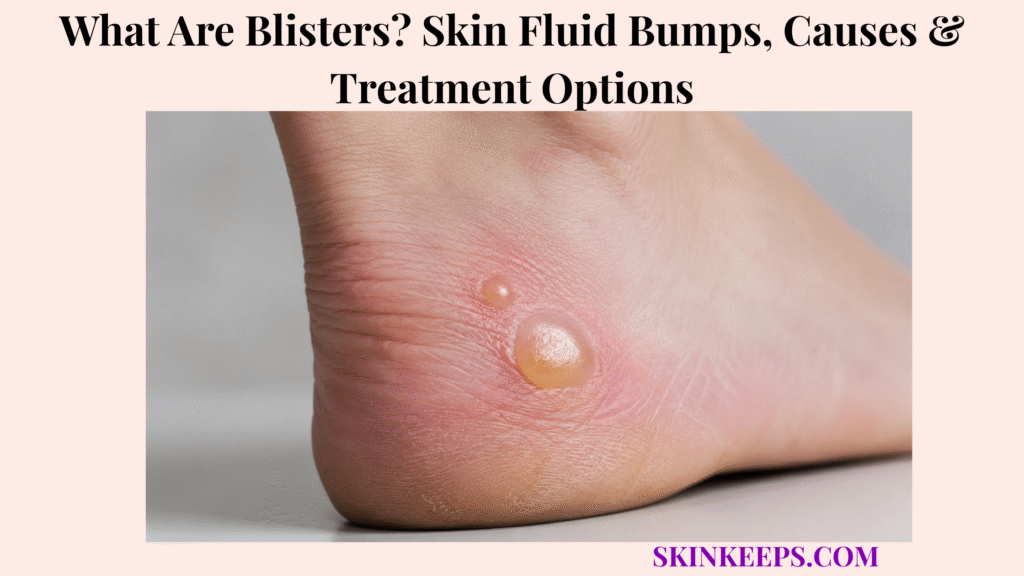
Blisters are fluid-filled skin bumps that form when skin layers separate and fluid collects between them.
Not every blister is a simple friction blister. Safe care depends on the cause, location, infection signs, medical risk, and whether the blister is intact or broken.
What Are Blisters and Why Do Fluid Bumps Form on Skin?
Blisters are fluid-filled bumps that form when skin layers separate and fluid collects between them, often after friction, burns, irritation, infection, or inflammation.
The raised skin over a blister is often called the blister roof. When that roof stays intact, it can help protect the tender skin underneath from bacteria and rubbing.
Blisters are a lesion pattern, not one disease. A shoe blister, burn blister, herpes-type blister, allergic blister, autoimmune blister, and medicine-related blister may all look fluid-filled, but their treatment paths are different.
What Is the Difference Between a Vesicle and a Bulla?
A vesicle is a small blister, while a bulla is a larger blister, but everyday language often calls both blisters.
Dermatology references often define vesicles as small blisters less than 5 mm in diameter. A bulla is larger, and the plural form is bullae.
Size alone does not diagnose the cause. Small vesicles and larger bullae can come from friction, burns, infection, allergy, medicine reactions, autoimmune disease, or inherited skin fragility.
Why Can Blister Fluid Be Clear, Bloody, Yellow, or Cloudy?
Blister fluid can be clear, bloody, yellow, white, green, or cloudy depending on the cause, depth of injury, and whether infection is present.
Clear fluid can occur with friction or mild burns. A blood blister can suggest pinching, crushing, or deeper friction injury. Cloudy, yellow, white, green, or pus-like fluid becomes more concerning when it appears with pain, warmth, swelling, bad smell, fever, or spreading color change.
Fluid color should not be judged alone. The cause, symptoms, location, and medical risk decide whether home protection is reasonable or medical review is safer.
Practical rule: Do not treat every blister the same way. First identify the likely cause, then protect the skin and check for infection or high-risk signs.
What Do Blisters Look and Feel Like?
Blisters may look like clear, cloudy, yellow, red, purple, or blood-filled skin bubbles and may feel painful, tender, itchy, burning, tight, or pressure-filled.
A blister may be small and round, clustered, tense, loose, flat-roofed, raised, fragile, or already broken. It may appear alone, in a group, along a stripe, around a wound, under a callus, or across a wider rash.
What Does a Typical Friction Blister Look Like?
A typical friction blister often looks like a clear fluid-filled bubble on a pressure or rubbing area, such as the foot, toe, palm, or finger.
It may feel tender, tight, stinging, or painful when pressure continues. Shoes, tools, sports equipment, gloves, long walking, running, rowing, or repetitive movement can create friction blisters.
Even when the location fits friction, do not assume every blister is harmless. Diabetes, poor circulation, immune suppression, severe pain, infection signs, or unexplained recurrence should lower the threshold for care.
What Signs Suggest a Blister Is Infected?
A blister may be infected when pain, warmth, swelling, spreading redness or color change, pus, cloudy fluid, bad smell, fever, or red streaking appears.
Increasing pain after the blister first forms is more concerning than mild tenderness from a simple rub. Pus, bad smell, spreading warmth, expanding discoloration, fever, chills, or red streaks should not be treated as normal healing.
Broken blisters can become infected more easily because the protective roof is no longer fully sealed.
| Blister Feature | Likely Meaning | What to Do Next |
|---|---|---|
| Clear fluid | Often friction or mild burn pattern | Protect and reduce cause if simple |
| Blood-filled blister | Pinch, crush, or deeper friction injury | Protect; check if severe or high-risk |
| Cloudy/yellow/green fluid | Possible infection | Seek medical review if with pain, warmth, or swelling |
| Painful pressure area | Friction or burn clue | Stop pressure or rubbing |
| Itchy clusters | Allergy, eczema, infection, or dermatitis clue | Identify trigger; check if widespread or recurrent |
| Spreading warmth/swelling | Infection concern | Medical care |
| Mouth/eye/genital blisters | Mucosal, infectious, or severe cause possible | Medical review |
| Widespread blistering | Medicine, infection, autoimmune, or severe reaction concern | Urgent evaluation |
What Causes Blisters on Skin?
Blisters can be caused by physical rubbing, burns, allergic reactions, infections, medicines, autoimmune blistering diseases, inherited skin fragility, or health problems that make skin more vulnerable.
Cause determines treatment. A simple shoe blister may need protection and offloading, while a medicine-related blistering rash, eye blister, widespread blistering, or infected blister needs a different level of medical attention.
How Do Friction and Pressure Cause Blisters?
Friction and pressure cause blisters when repeated rubbing separates upper skin layers and fluid fills the space.
Heat, sweat, damp socks, tight shoes, new shoes, long walking, running, sports, tools, gloves, and repetitive hand work can increase friction. Moist skin is often easier to injure.
Prevention focuses on fit, padding, moisture control, protective gloves, and stopping activity when a hot spot appears.
How Do Burns and Temperature Injuries Cause Blisters?
Burns and temperature injuries can cause blisters when heat, sunburn, chemicals, electricity, or cold injury damages skin layers.
Burn blisters should not be treated like ordinary shoe blisters. A large, deep, chemical, electrical, face, hand, genital, joint, or circumferential burn needs urgent assessment.
Cold injury and frostbite can also blister. These cases need careful medical judgment rather than casual popping or peeling.
How Do Allergies, Irritation, and Eczema Cause Blisters?
Allergies, irritation, and eczema can cause blisters when inflammation damages the skin barrier and creates fluid-filled bumps.
Allergic contact dermatitis can blister after exposure to plants, adhesives, cosmetics, rubber, metals, chemicals, or topical products. Irritant contact reactions can also blister after harsh chemical exposure.
Small itchy blisters on the hands or feet may fit an eczema-type pattern in some people. Trigger avoidance and anti-inflammatory care may matter more than drainage.
How Do Infections Cause Blisters?
Infections can cause blisters when viruses or bacteria inflame the skin and create vesicles, bullae, crusting, or pus-filled lesions.
Viral causes can include herpes simplex, chickenpox, hand-foot-and-mouth disease, or shingles, especially when blisters form in a painful one-sided stripe. Bacterial causes can include impetigo or bullous impetigo.
Infectious blisters may need antiviral, antibiotic, or other cause-specific treatment. They should not be self-drained.
How Do Autoimmune or Medicine-Related Conditions Cause Blisters?
Autoimmune or medicine-related blistering can occur when the immune system or a severe drug reaction damages skin or mucous membranes.
Examples include bullous pemphigoid, pemphigus vulgaris, dermatitis herpetiformis, epidermolysis bullosa, and severe drug reactions. These are not simple friction blisters.
Widespread blisters, painful skin, fever, skin peeling, mouth sores, eye symptoms, genital involvement, or blisters after a new medicine need urgent medical review.
| Cause Category | Common Clue | Treatment Direction | Urgency |
|---|---|---|---|
| Friction / pressure | Shoe, tool, sports, or glove rubbing | Offload, pad, cover, reduce friction | Higher if infected or severe |
| Burns / temperature injury | Heat, sun, chemical, cold, electrical exposure | Burn-specific care | Urgent if large, deep, or sensitive site |
| Allergy / irritation | Itchy blister after product, plant, or chemical contact | Trigger avoidance, anti-inflammatory care | Faster if face, genitals, or widespread |
| Infection | Clusters, pus, crust, fever, pain, contagious pattern | Medical cause-specific treatment | Urgent if spreading or systemic |
| Autoimmune disease | Recurrent or widespread bullae, mucosa possible | Dermatology diagnosis and medication | Medical evaluation |
| Medicine reaction | Blisters after new drug, painful rash, mucosa | Urgent medication review | Urgent or emergency if severe |
| Diabetes / poor circulation | Foot blister, slow healing, numbness | Clinician foot or wound assessment | Lower threshold for care |
Where Do Blisters Usually Appear?
Blisters can appear anywhere, but the location often gives an important clue about the cause.
Feet, toes, and heels often blister from shoes, walking, running, moisture, and pressure. Palms and fingers can blister from tools, sports, burns, gloves, or repetitive work.
Lip or genital blisters may suggest herpes-type infections or other causes. Mouth, eye, or genital blisters are safer to check. Widespread trunk or limb blisters may suggest infection, medicine reaction, autoimmune disease, or severe dermatitis rather than simple rubbing.
| Body Site | Common Cause Clue | Safety Caution |
|---|---|---|
| Feet / toes / heels | Shoes, walking, running, moisture | Check sooner with diabetes or poor circulation |
| Palms / fingers | Tools, gloves, sports, burns, eczema | Recurrent itchy clusters may need diagnosis |
| Lips | Herpes or irritation pattern | Avoid close contact if infection suspected |
| Genitals | Herpes, friction, allergy, other causes | Medical review is safer |
| One-sided stripe | Shingles-type pattern | Earlier care may matter |
| Mouth / eyes | Mucosal disease, infection, medicine reaction | Urgent review if painful or widespread |
| Trunk / limbs widespread | Infection, drug reaction, autoimmune disease | Do not treat as simple friction |
| Diabetic foot / wound area | Pressure, friction, poor healing | Clinician or wound-care review |
How Are Blisters Different From Other Skin Bumps?
Blisters are fluid-filled lesions, while pimples, pustules, cysts, hives, calluses, warts, and abscesses have different structures and treatment needs.
Mislabeling matters because a blister roof should often be protected, while other lesions may need acne care, allergy care, pressure reduction, drainage, or infection treatment.
How Is a Blister Different From a Pimple or Pustule?
A blister contains fluid between skin layers, while a pustule contains pus and is often linked to acne or infection.
A pimple may be red, tender, swollen, or acne-related. A pustule has pus. Popping a suspected infected pustule or blister can spread bacteria and worsen inflammation.
How Is a Blister Different From a Callus or Corn?
A blister is fluid-filled, while a callus or corn is thickened hard skin caused by repeated pressure or friction.
Friction can cause both. A blister may also form under a callus and become painful. Callus care focuses on reducing pressure and thickened skin safely, while blister care focuses on protecting the roof and identifying the cause.
How Is a Blister Different From Hives?
A blister is a fluid-filled bubble with a roof, while hives are raised itchy wheals that usually move or fade faster.
Hives are not fluid-filled blisters. Hives with face swelling, throat tightness, breathing symptoms, or dizziness need urgent care.
| Lesion | Main Clue | Fluid-Filled? | Treatment Caution |
|---|---|---|---|
| Blister | Clear, bloody, or cloudy fluid bubble | Yes | Protect roof and identify cause |
| Pustule | Pus-filled bump | Pus | Acne or infection pathway |
| Callus / corn | Hard thickened skin | No | Reduce pressure and friction |
| Hive | Raised itchy wheal | No | Allergy or urticaria pathway |
| Skin abscess | Painful deeper pus pocket | Deeper pus | Medical drainage may be needed |
| Wart | Rough growth, often viral | No | Do not cut or pick as blister |
| Skin tear | Torn fragile skin | No true blister roof | Wound-care pathway |
How Are Blisters Diagnosed or Checked?
Many simple friction blisters are recognized by history and appearance, but recurrent, widespread, painful, infected, mucosal, burn-related, or unexplained blisters may need medical evaluation.
Diagnosis starts with what happened before the blister: new shoes, long walking, tools, burn, sunburn, chemical exposure, plant exposure, new medicine, infection exposure, illness, or repeated unexplained blistering.
What Does a Clinician Check With Blisters?
A clinician checks blisters by reviewing location, number, size, fluid color, whether they are intact or open, symptoms, exposure history, infection signs, mucosal involvement, and medical risk.
They may ask about pain, itch, burning, fever, feeling unwell, mouth sores, eye symptoms, genital blisters, diabetes, poor circulation, neuropathy, immune suppression, medicines, wounds, and previous blister episodes.
When Might Tests Be Needed?
Tests may be needed when blisters are infected-looking, recurrent, widespread, mucosal, unexplained, medicine-related, burn-related, or suspected to be autoimmune or viral.
A swab or culture may be used when bacterial infection is suspected. Viral testing may be used for herpes or shingles when needed. Biopsy, immunofluorescence, or blood tests may be used for suspected autoimmune blistering disease.
Burn assessment may be needed for deeper burns. Foot or wound assessment is important in diabetes, poor circulation, neuropathy, or chronic wounds.
How Should You Treat a Simple Blister Safely?
A simple intact blister is usually best protected, covered, and left to heal while the rubbing or pressure that caused it is stopped.
This section applies to simple uncomplicated blisters, especially friction blisters. It does not replace medical care for burns, infection, diabetes-related foot blisters, eye blisters, mouth blisters, genital blisters, medicine reactions, or widespread blistering.
Should You Pop a Blister?
You should not routinely pop a small intact blister because the unbroken blister roof helps protect the skin underneath from bacteria.
If a blister is large, very painful, or likely to burst, careful sterile drainage may sometimes be advised by a clinician or under appropriate first-aid guidance. The overlying skin should not be peeled away unless a clinician directs it.
Do not pop infectious-looking, burn-related, mouth, eye, genital, diabetic-foot, widespread, or unexplained blisters at home.
How Should an Intact Blister Be Covered?
An intact blister should be covered with a clean bandage, blister pad, or protective dressing that reduces rubbing without pressing directly on the blister.
Wash gently, cover with a clean dressing, and use padding or moleskin around friction areas when appropriate. Keep pressure off the blister and change the dressing if it becomes wet or dirty.
Avoid tight shoes, repeated rubbing, or returning too soon to the activity that caused the blister.
How Should a Burst Blister Be Cared For?
A burst blister should be kept clean, covered, and monitored for infection while the clean attached skin flap is usually left in place.
Wash hands first. Clean the area gently with soap and water, cover with a clean nonstick dressing, and change the dressing if it gets wet or dirty.
Do not peel off the blister roof, apply harsh chemicals, scrape the skin, or keep rubbing the exposed area.
- Stop the rubbing, pressure, burn, or exposure.
- Keep small intact blisters intact when possible.
- Wash gently.
- Cover with a clean dressing or blister pad.
- Use padding around friction points.
- Keep pressure off the blister.
- For burst blisters, keep clean attached skin in place.
- Change dressings if wet or dirty.
- Watch for warmth, swelling, pus, odor, fever, or spreading color change.
What Treatment Options Depend on the Cause of Blisters?
Blister treatment depends on the cause: friction blisters need protection and offloading, burn blisters need burn care, infectious blisters may need antiviral or antibiotic treatment, and autoimmune or medicine-related blistering needs clinician-directed care.
A one-size-fits-all blister cream is not a safe plan. Treatment should match the cause, body site, infection signs, and the person’s healing risk.
How Are Friction Blisters Treated?
Friction blisters are treated by stopping the rubbing, protecting the blister, padding the area, and preventing the same pressure from continuing.
Use a clean blister bandage, hydrocolloid dressing, or padding when appropriate. Adjust shoes, socks, grip, tool technique, gloves, straps, or sports gear.
Do not resume the same activity at the same intensity while the blister is still painful or exposed.
How Are Burn Blisters Treated?
Burn blisters need burn-specific care because blistering may signal deeper skin injury than a simple friction blister.
Cool a thermal burn early with cool running water when appropriate, and do not apply ice directly. Do not casually break burn blisters or remove blister skin.
Large, deep, chemical, electrical, face, hand, genital, joint, or circumferential burns need urgent care.
How Are Infected Blisters Treated?
Infected blisters need medical review when pus, spreading color change, warmth, swelling, increasing pain, fever, bad smell, or red streaks appear.
Antibiotics are used only when bacterial infection is suspected or confirmed. Antivirals may be used for specific viral causes such as herpes or shingles when appropriate.
Do not self-drain infected blisters. Spreading warmth, swelling, pain, fever, or expanding color change may suggest cellulitis or another complication.
How Are Recurrent or Unexplained Blisters Treated?
Recurrent or unexplained blisters are treated by identifying the underlying cause before choosing medication, drainage, or procedures.
Patch testing may be used when contact allergy is suspected. Viral testing may be used for suspected herpes or shingles. Biopsy and immune testing may be needed for autoimmune blistering disease.
Medicine-related blistering needs urgent medication review, especially when fever, painful rash, mucosal blisters, or peeling skin appear.
| Blister Type | First Priority | Possible Treatment Direction | When to Escalate |
|---|---|---|---|
| Friction blister | Stop rubbing | Cover, pad, protect, offload | Large, painful, recurrent, or infected |
| Burn blister | Assess burn depth and site | Cool, cover, burn-specific care | Face, hands, genitals, joints, deep, chemical, electrical, large |
| Blood blister | Protect trauma site | Cover and offload | Severe crush injury, nail injury, diabetes, poor circulation |
| Infectious blister | Prevent spread and treat cause | Antiviral or antibiotic only when indicated | Fever, spreading color, pus, eye/genital/mucosal involvement |
| Allergic/irritant blister | Identify trigger | Avoid trigger and treat inflammation | Widespread, face/genital involvement, severe swelling |
| Autoimmune blister | Confirm diagnosis | Specialist medication | Widespread, mucosal, painful, recurrent, unexplained |
| Medicine-related blister | Urgent medication review | Stop or change only under medical direction unless emergency | Painful rash, fever, mucosal blisters, peeling skin |
How Can Blisters Be Prevented?
Blister prevention depends on reducing friction, moisture, heat, irritant exposure, infection spread, and repeated skin trauma.
Wear properly fitting shoes and break in new shoes gradually. Use moisture-wicking socks, keep feet dry, and change wet socks. Use protective gloves for tools and repetitive hand work.
Use padding, moleskin, or blister plasters on friction points before activity. Protect skin from sunburn, heat, cold, and chemicals. Avoid known allergens or irritants, and do not share items when infectious blisters are suspected.
What Blister Mistakes Should You Avoid?
The biggest blister mistake is popping every blister, peeling away the skin roof, and continuing the same friction or exposure that caused it.
Do not use dirty needles, home cutting, harsh chemicals, acids, or strong antiseptics on open skin unless a clinician directs it. Do not keep walking on a painful foot blister without offloading.
Do not assume widespread blisters are friction. Do not ignore mouth, eye, or genital blisters. Do not delay care for diabetes, poor circulation, neuropathy, immune suppression, severe burns, or infection signs.
| Mistake | Why It Is Risky | Better Action |
|---|---|---|
| Popping all blisters | Infection risk and delayed healing | Keep intact when possible |
| Removing blister roof | Loses natural protection | Keep clean attached skin in place |
| Dirty needles/tools | Infection risk | Avoid non-sterile drainage |
| Continuing friction | Delays healing and worsens injury | Offload and pad |
| Harsh chemicals | Irritation, burn, delayed healing | Clean gently and cover |
| Ignoring pus/fever | Infection can spread | Seek medical care |
| Treating widespread blisters as friction | Serious causes possible | Urgent evaluation |
When Should Blisters Be Checked by a Doctor?
Blisters should be checked by a healthcare professional when they are infected-looking, very painful, widespread, recurrent, unexplained, burn-related, near the eyes, inside the mouth or genitals, or occur in someone with diabetes, poor circulation, neuropathy, or immune suppression.
Early care is safer when healing risk is higher. Foot blisters in people with diabetes, neuropathy, poor circulation, immune suppression, chronic wounds, or frailty should not be managed casually.
Which Blister Signs Need Faster Medical Care?
Faster medical care is needed when blisters show spreading redness or color change, warmth, swelling, increasing pain, pus, cloudy fluid, fever, red streaking, bad smell, rapid spread, mucosal involvement, or appear after a new medicine.
Large or rapidly spreading blisters, severe burns, chemical burns, electrical burns, face blisters, eye blisters, mouth blisters, genital blisters, and widespread blistering rashes need more caution than small shoe blisters.
Which People Should Be More Cautious With Blisters?
People with diabetes, poor circulation, neuropathy, immune suppression, frailty, chronic wounds, or healing problems should seek care earlier for blisters.
Infants, older frail adults, and people taking medicines that affect immunity or healing may also need a lower threshold for review. This is especially true for foot blisters, infected-looking blisters, burn blisters, or unexplained recurrent blistering.
Seek medical care if a blister is:
What Should You Remember About Blisters?
The most important thing to remember about blisters is that they are fluid-filled skin bumps, and safe treatment depends on the cause, size, location, infection risk, and whether the blister is intact or broken.
Small friction blisters often need protection and offloading, but burn, infection, medicine-related, autoimmune, widespread, mucosal, diabetic-foot, or unexplained blisters need more caution.
Frequently Asked Questions About Blisters
What is the difference between a vesicle and a blister?
A vesicle is a small blister and a bulla is a larger blister. Everyday language often calls both blisters.
Should you pop a blister?
Usually no. Small intact blisters should not be popped because the unbroken blister roof helps protect the skin underneath from bacteria, and many simple blisters heal when protected.
What causes blisters?
Blisters can be caused by friction, pressure, burns, sunburn, cold injury, chemical injury, allergic or irritant contact reactions, infections, medicines, autoimmune blistering diseases, inherited skin fragility, and medical-risk contexts.
How do you treat a friction blister?
Stop the rubbing, protect the blister, cover it with a clean dressing, use padding, keep it clean, and watch for infection.
How can you tell if a blister is infected?
A blister may be infected when there is spreading redness or color change, warmth, swelling, increasing pain, pus, cloudy fluid, bad smell, fever, or red streaks.
How long do blisters take to heal?
Many simple blisters heal in about one to two weeks when protected and the cause is removed, but healing time depends on cause, size, location, infection risk, and underlying health.
Are blood blisters dangerous?
Many blood blisters come from pinching, crushing, or deeper friction, but severe trauma, nail injuries, diabetic foot blisters, poor circulation, worsening pain, or infection signs should be checked.
When should blisters need medical care?
Medical care is needed for infected-looking blisters, severe pain, widespread blisters, recurrent or unexplained blisters, burns, mucosal blisters, eye involvement, blisters after new medicine, and blisters in people with diabetes, poor circulation, neuropathy, or immune suppression.
Sources & Evidence About Blisters
DermNet — Blistering Skin Conditions was used for vesicle and bulla terminology, fluid-filled lesion framing, acute and chronic blistering-condition categories, swab/biopsy context, and serious generalized blistering warnings.
DermNet — Friction Blisters was used for repeated rubbing, common palm/finger/sole/foot/toe locations, damp-skin risk, clear or blood-filled fluid, infection signs, sterile drainage caution, and friction-prevention logic.
American Academy of Dermatology — How to Prevent and Treat Blisters was used for leaving blisters alone when possible, loose bandage covering, padding/moleskin, roof protection after drainage, infection signs, and one-to-two-week healing expectation for many simple blisters.
Mayo Clinic — Blisters First Aid was used for intact blister roof as a natural bacterial barrier, moleskin coverage, careful drainage only when needed, leaving overlying skin in place, infection signs, and prevention through shoes, socks, taping, gloves, and dry socks.
Cleveland Clinic — Blisters was used for blister overview, common friction, blood, heat, burn, sunburn, and frostbite causes, infected blister clues, pus description, and when to contact a provider.
Merck Manual — Overview of Blistering Disorders was used for serious autoimmune blistering-disorder boundary, including bullous pemphigoid, dermatitis herpetiformis, pemphigus vulgaris, and other blistering disorders.
Educational Disclaimer: This SkinKeeps article is for educational purposes only and does not diagnose or replace medical care. Infected-looking, spreading, very painful, widespread, recurrent, unexplained, burn-related, chemical-burn, electrical-burn, eye, mouth, genital, medicine-related, diabetic, poor-circulation, neuropathy, immune-risk, fever-associated, pus-filled, bad-smelling, or rapidly worsening blisters should be checked by a qualified healthcare professional.