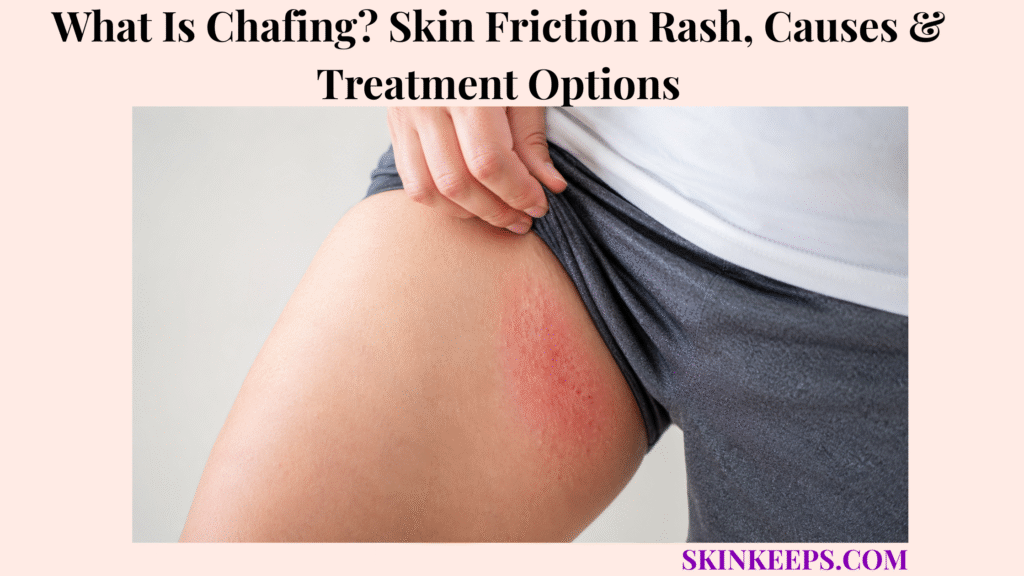
Chafing is skin irritation caused by repeated rubbing, usually from skin touching skin, clothing, shoes, sports gear, or trapped moisture that weakens the skin barrier.
It is usually friction-related, not infection by default. This page covers symptoms, causes, common sites, treatment, prevention, recurrent triggers, mistakes, and medical-review signs when the rash is raw, wet, smelly, oozing, spreading, fever-associated, or not healing.
What Is Chafing and Why Does Skin Become Irritated?
Chafing is skin irritation caused by repeated rubbing, usually from skin touching skin, clothing, shoes, sports gear, or trapped moisture that weakens the skin barrier.
The outer skin layer works like a protective barrier. Repeated movement, sweat, heat, wet fabric, tight clothing, rough seams, or skin-fold moisture can wear down that barrier and create a friction rash.
Chafing may stay mild, but continued rubbing can turn tender skin into raw, shiny, cracked, bleeding, blistered, or crusted skin. Broken skin can also allow secondary infection.
Why Does Friction Damage the Skin Barrier?
Friction damages the skin barrier by repeatedly rubbing the outer skin layer until it becomes irritated, tender, shiny, raw, cracked, or blistered.
Sweat and moisture soften the skin, so rubbing causes damage faster. Heat can increase sweat, discomfort, and movement-related irritation.
Depending on skin tone and severity, chafed skin may look red, pink, purple, brown, darker, shiny, raw, or tender. If rubbing continues, blisters, crusting, bleeding, or infection signs may appear.
Why Is Chafing Common During Heat, Exercise, and Sweating?
Chafing is common during heat, exercise, and sweating because repetitive movement increases rubbing while sweat and trapped moisture soften the skin.
Long walking, running, cycling, sports, travel, and physical work can keep the same areas rubbing for a long time. Tight clothing, wet fabric, rough seams, shoes, straps, or gear can add more friction.
Skin folds trap heat and moisture, so fold-area chafing can overlap with intertrigo, yeast, or bacterial overgrowth when the area stays damp.
Practical rule: Chafing care starts by stopping rubbing, not by applying cream while the same motion keeps reopening the irritated skin.
What Does Chafing Look and Feel Like?
Chafing often feels like burning, stinging, soreness, tenderness, or itching and may look like a red, pink, purple, brown, darker, shiny, raw, or peeling friction rash.
The symptoms often worsen with movement, sweat, water, soap, clothing contact, or pressure from shoes or gear.
What Does Mild Chafing Look Like?
Mild chafing may cause burning, stinging, tenderness, itching, slight swelling, and mild redness or darker discoloration that worsens with movement or sweat.
The skin may feel sensitive when clothing touches it. Early chafing may not be open or bleeding yet.
Stopping the friction early can prevent the area from becoming raw, cracked, or blistered.
What Does Severe Chafing Look Like?
Severe chafing can cause raw shiny skin, peeling, cracks, bleeding, blisters, crusting, and pain while walking or moving.
Open areas may sting with sweat, water, soap, deodorant, fragrance, or other products. Clothing may feel painful against the skin.
Blister roofs should be protected rather than popped because the roof acts as a natural covering.
What Signs Suggest Chafing May Be Infected?
Chafing may be infected or complicated when warmth, swelling, worsening pain, pus, yellow or green drainage, bad smell, fever, red streaking, or spreading color change appears.
Not all raw chafing is infected, but broken moist skin can become infected. Worsening pain, odor, drainage, spreading warmth, or fever should shift the plan from simple friction care to medical review.
A rash that does not improve after friction control may be chafing plus another condition, or it may not be chafing at all.
| Stage | What User May Notice | Meaning |
|---|---|---|
| Mild | Burning, stinging, tenderness, redness/darker color. | Early friction irritation. |
| Moderate | Raw shiny skin, soreness, peeling. | Barrier damage. |
| Severe | Cracks, bleeding, blisters, pain with movement. | Open-skin risk. |
| Complicated | Pus, odor, warmth, swelling, spreading pain or fever. | Possible infection or another condition. |
Where Does Chafing Usually Happen?
Chafing usually appears where skin rubs against skin, clothing, shoes, gear, or moisture-trapped folds.
Common sites include inner thighs, groin, buttocks, under the breasts, belly fold, armpits, neck folds, between toes, feet, heels, nipples, waistbands, bra straps, backpack straps, masks, braces, prosthetics, uniforms, and sports gear areas.
Location helps identify friction triggers, but it does not diagnose the rash by itself. Fold-area rashes can overlap with intertrigo, yeast, bacteria, eczema, allergy, or other conditions.
| Area | Rubbing Trigger | Prevention Note |
|---|---|---|
| Inner thighs | Skin-on-skin rubbing while walking/running. | Barrier balm, fitted shorts, moisture control. |
| Groin | Folds, sweat, underwear seams. | Breathable support and dryness. |
| Buttocks | Walking, cycling, sitting, sweat. | Fit, fabric, barrier, change sweaty clothes. |
| Under breasts | Fold friction, bra band, moisture. | Supportive fit and fold drying. |
| Belly fold | Trapped sweat and skin-on-skin rubbing. | Dry fold and use barrier if needed. |
| Armpits | Arm movement, sweat, seams, deodorant irritation. | Reduce rubbing and check product triggers. |
| Feet / heels / toes | Shoes, socks, toe moisture. | Proper fit, socks, padding. |
| Nipples | Shirt friction during running. | Soft fabric, barrier, protective covering. |
| Straps / gear | Backpack, bra, brace, mask, uniform. | Padding and fit adjustment. |
What Causes Chafing?
Chafing is caused by repeated friction, but sweat, heat, moisture, clothing fit, body folds, long activity, and skin sensitivity often decide how quickly the rash develops.
The trigger can be skin-on-skin rubbing, fabric rubbing, shoes, socks, seams, straps, wet clothing, sports gear, work equipment, masks, braces, prosthetics, or uniforms.
How Does Skin-on-Skin Rubbing Cause Chafing?
Skin-on-skin rubbing causes chafing when repeated movement keeps scraping the same area, especially where sweat or body folds keep the skin damp.
Inner thighs, groin, under-breast folds, belly folds, buttocks, neck folds, and armpits are common friction zones.
Rawness can develop faster in hot weather because sweat increases moisture and damp skin breaks down more easily.
How Do Clothing and Gear Cause Chafing?
Clothing and gear cause chafing when tight fabric, rough seams, wet clothing, shoes, straps, braces, masks, or sports equipment repeatedly rub the same skin area.
Poor-fitting shoes can rub heels or toes. Waistbands, bra bands, backpack straps, helmets, braces, prosthetics, masks, pads, and uniforms can create pressure plus friction.
Repeated rubbing under wet fabric is especially irritating because moisture softens the skin barrier.
How Does Moisture Make Chafing Worse?
Moisture makes chafing worse because wet skin softens and breaks down faster, especially in skin folds where sweat, heat, and poor airflow are trapped.
Moist folds can also support yeast or bacterial overgrowth, so a fold rash that is recurrent, smelly, oozing, scaly, or not improving should be checked.
Urine, stool, drainage, sweat, wet clothing, or poor ventilation can keep skin damp and delay barrier recovery.
| Trigger | Skin Effect | Prevention / Treatment Action |
|---|---|---|
| Skin-on-skin rubbing | Surface irritation and burning. | Reduce friction before activity. |
| Sweat / moisture | Softens skin and increases breakdown. | Dry fully and change sweaty clothes. |
| Heat / humidity | Increases sweating and discomfort. | Cool, dry, breathable clothing. |
| Tight fabric | Repeated rubbing and pressure. | Better fit and smoother seams. |
| Rough seams | Local friction lines. | Seamless or softer fabric. |
| Shoes / socks | Heel, toe, or foot rubbing. | Proper fit, padding, dry socks. |
| Skin folds | Moisture and rubbing together. | Fold drying, barrier, infection watch. |
| Gear / straps | Repetitive pressure and rubbing. | Adjust fit and add padding. |
Who Is More Likely to Get Chafing?
Chafing is more likely when friction, moisture, heat, skin folds, repetitive movement, or tight equipment repeatedly stress the same skin area.
Risk is practical, not personal blame. The goal is to identify where friction starts and reduce it before the skin breaks down.
People with atopic dermatitis may be more vulnerable when dryness, scratching, and barrier weakness make skin easier to irritate.
How Is Chafing Different From Other Skin Rashes?
Chafing is mainly a friction injury, while fungal rash, eczema, allergic contact dermatitis, heat rash, cellulitis, blisters, and hidradenitis suppurativa have different causes and treatment needs.
Correct comparison matters because barrier cream alone may not fix yeast, bacterial infection, allergic reaction, deeper infection, or recurrent painful lumps.
How Is Chafing Different From Intertrigo?
Chafing is friction irritation, while intertrigo is inflammation in skin folds often driven by friction, trapped moisture, heat, and poor airflow.
Fold-area chafing and intertrigo can overlap because skin folds rub and stay damp. Intertrigo can also become secondarily infected by yeast or bacteria.
A fold rash that smells bad, oozes, keeps recurring, has satellite spots, or does not improve with drying and friction control needs clinician review.
How Is Chafing Different From a Fungal Rash?
Chafing should improve when rubbing and moisture are controlled, while a fungal or yeast rash may persist in moist folds and need antifungal treatment.
A fungal or yeast rash may be itchy, scaly, smelly, recurrent, sharply bordered, or surrounded by smaller satellite spots.
Cutaneous candidiasis can affect warm moist folds and needs a different treatment pathway from simple friction irritation.
How Is Chafing Different From Eczema or Allergic Contact Dermatitis?
Chafing follows rubbing and movement, while eczema often recurs with dryness and itch, and allergic contact dermatitis follows exposure to a product, fabric, deodorant, detergent, adhesive, or gear material.
Allergic contact dermatitis may appear after a new deodorant, detergent, pad, adhesive, brace material, shoe material, fabric dye, or gear component touches the skin.
Steroid-only use in folds can worsen some infections if the diagnosis is wrong, so recurrent or unclear fold rash should be checked.
How Is Chafing Different From Heat Rash?
Chafing follows rubbing, while heat rash is more related to sweat blockage and overheating.
Heat rash may feel prickly or itchy and often appears after hot, sweaty, occluded conditions.
Chafing can happen at the same time as heat rash when sweat, fabric, and movement affect the same area.
How Is Chafing Different From Cellulitis?
Chafing is surface-level friction irritation, while cellulitis is a deeper bacterial infection that is usually warm, painful, swollen, spreading, and may cause fever.
Spreading warmth, swelling, worsening pain, pus, fever, red streaking, or feeling unwell can suggest cellulitis or another infection rather than simple chafing.
Broken chafed skin can become an entry point for infection, especially in diabetes, immune suppression, poor circulation, chronic wounds, or poor wound healing.
| Condition | Main Clue | Main Driver | Safer Next Step |
|---|---|---|---|
| Chafing | Burning/stinging after rubbing. | Friction. | Stop rubbing, dry, protect barrier. |
| Intertrigo | Fold rash, moisture, soreness. | Friction + trapped moisture. | Keep dry; check infection. |
| Fungal rash | Itchy/scaly fold rash, odor, recurrence. | Yeast/fungus. | Antifungal evaluation. |
| Eczema | Chronic itchy inflamed skin. | Barrier inflammation. | Diagnose and manage barrier. |
| Contact dermatitis | Product, fabric, adhesive, or detergent trigger. | Irritant/allergen. | Remove trigger; assess if severe. |
| Heat rash | Sweat-blocked prickly rash. | Sweat duct blockage/heat. | Cooling and sweat control. |
| Cellulitis | Warm, swollen, spreading pain, fever possible. | Bacterial infection. | Prompt medical care. |
| Hidradenitis suppurativa | Recurrent painful lumps/boils in folds. | Follicular inflammatory disease. | Dermatology review. |
Repeated rubbing can also lead to blisters, especially on feet, heels, toes, nipples, or under straps and gear.
How Is Chafing Diagnosed or Checked?
Chafing is often recognized from its location, rubbing history, sweat exposure, clothing or gear pattern, and improvement after friction is stopped.
A clinician may broaden the diagnosis when the rash is recurrent, fold-based, oozing, smelly, crusted, infected-looking, blistering, very painful, or not improving after friction control.
What Does a Clinician Check With Chafing?
A clinician checks chafing by reviewing where the rash is, what rubs there, whether moisture is trapped, and whether the skin is broken, blistered, infected-looking, or part of another rash pattern.
The review may include exercise, walking, heat, sweat, travel, new clothing, fabric seams, shoes, straps, braces, masks, prosthetics, uniforms, sports gear, deodorants, detergents, pads, adhesives, and skin-fold moisture.
Diabetes, immune suppression, poor circulation, chronic wounds, frailty, and poor wound healing lower the threshold for careful review when skin is open or infected-looking.
When Might Swabs or Tests Be Needed?
Swabs or tests may be needed when a chafing-like rash oozes, smells bad, crusts, does not improve after friction control, keeps recurring in folds, or looks fungal or bacterial.
Testing may also be considered when there is pus, cloudy drainage, worsening pain, spreading warmth, fever, severe fold recurrence, or unclear diagnosis.
The goal is not to test every mild friction rash; it is to identify infection, yeast, bacteria, eczema, allergy, or another condition when the pattern does not fit simple chafing.
What Treatment Options Help Chafing Heal?
Chafing treatment starts by stopping the rubbing, gently cleaning the area, drying it well, protecting the skin barrier, and avoiding the activity or clothing that caused the irritation until healing begins.
Treatment depends on whether the rash is mild, raw, blistered, fold-based, recurrent, or infected-looking.
How Should Mild Chafing Be Treated?
Mild chafing is usually treated by stopping the rubbing source, gently washing the skin, patting it dry, and applying a plain barrier such as petrolatum or zinc oxide.
Use loose, breathable clothing and avoid the movement, seam, shoe, strap, or gear that caused the irritation until the area improves.
Barrier ointment helps reduce rubbing, but it cannot work well if the same friction continues.
How Should Raw or Broken Chafed Skin Be Treated?
Raw or broken chafed skin should be cleaned gently, dried carefully, protected from more rubbing, and covered with a non-stick dressing if clothing keeps touching it.
Avoid deodorant, fragrance, alcohol, acids, harsh soap, strong exfoliants, or irritating products on open skin.
Watch for pus, bad smell, spreading warmth, swelling, fever, red streaks, worsening pain, or no improvement after friction stops.
When Are Antifungal, Antibacterial, or Steroid Treatments Considered?
Antifungal, antibacterial, or anti-inflammatory treatments are considered only when chafing overlaps with yeast, bacterial infection, eczema, allergic reaction, or another diagnosed condition.
Antifungal treatment may be needed when yeast or fungal infection is suspected or confirmed. Antibiotic treatment may be needed if bacterial infection occurs.
Steroid-only treatment can worsen fungal infection or delay infection care if used incorrectly, especially in folds. Doctor guidance matters for fold rashes that recur, ooze, smell, or fail friction-control measures.
| Chafing Situation | First Treatment Direction | Key Caution |
|---|---|---|
| Mild friction rash | Stop friction + gentle clean/dry + barrier ointment. | Do not keep rubbing. |
| Raw skin | Clean gently + protect + cover if needed. | Watch infection signs. |
| Fold-area rash | Keep dry + reduce skin-on-skin friction. | Check yeast/bacteria if recurrent or smelly. |
| Blistered chafing | Protect blister/skin roof. | Avoid popping. |
| Oozing or smelly rash | Medical review. | Possible infection. |
| Recurrent rash | Identify trigger and mimic. | Could be intertrigo, fungal rash, eczema, allergy, or HS. |
How Can Chafing Be Prevented?
Chafing prevention depends on reducing friction, keeping skin dry, choosing better-fitting clothing, and protecting high-rub areas before activity.
Prevention works best before walking, running, cycling, sports, travel, physical work, sweating, or long gear use begins.
Foot rubbing can worsen when moisture and fungal cracking are present, so athlete’s foot should be treated when toe spaces are cracked, wet, itchy, peeling, or recurrent.
How Should Recurrent Chafing Be Managed?
Recurrent chafing means the same friction, moisture, clothing, body-fold, gear, product, or skin-condition trigger is still active.
Map the exact site, then ask what rubs there: skin, seam, shoe, strap, waistline, bra band, mask, brace, prosthetic, pad, uniform, saddle, or sports gear.
Check whether sweat, humidity, long activity, product exposure, folds, yeast, bacteria, eczema, allergy, or recurrent painful lumps are part of the pattern. Prevention should start before activity, not after irritation begins.
Recurrence map: Same site → same trigger → moisture/fold/product/gear/infection check → prevention plan before activity → clinician review if persistent.
What Chafing Mistakes Should You Avoid?
The biggest chafing mistake is continuing the same rubbing while applying cream and expecting the rash to heal.
Do not keep walking, running, cycling, or working through painful raw chafing if the same motion keeps reopening skin.
Do not scrub hard, apply alcohol, perfume, deodorant, acids, harsh soap, or exfoliants to broken skin. Do not use steroid cream repeatedly without knowing the diagnosis, and do not pop friction blisters.
| Mistake | Why It Fails | Better Action |
|---|---|---|
| Cream while friction continues | Skin keeps reopening. | Stop rubbing first. |
| Harsh scrubbing | More barrier damage. | Gentle cleanse and pat dry. |
| Fragrance/alcohol on raw skin | Burns and irritates. | Plain barrier care. |
| Steroid-only fold treatment | May worsen fungal infection or delay diagnosis. | Confirm cause. |
| Popping blisters | Opens infection risk. | Protect blister roof. |
| Ignoring moisture | Fold rash can persist. | Dry and reduce skin-on-skin rubbing. |
| Wearing sweaty clothes too long | Moisture and friction continue. | Change quickly. |
| Ignoring infection signs | Infection can spread. | Medical review. |
When Should Chafing Be Checked by a Doctor?
Chafing should be checked by a clinician when the rash is severe, recurrent, infected-looking, spreading, very painful, bleeding, not improving after friction is stopped, or occurring in a person with diabetes, immune suppression, poor circulation, or poor wound healing.
Medical review is also important when a fold rash keeps returning despite moisture control and barrier protection.
Which Chafing Signs Need Medical Review?
Medical review is needed when chafing causes pus, cloudy drainage, bad smell, increasing warmth, swelling, worsening pain, spreading discoloration, fever, bleeding cracks, worsening blisters, or no improvement after friction control.
Seek care for red streaking, severe pain out of proportion, genital-area rash with sores or discharge, or rash lasting more than several days despite stopping the trigger.
Spreading warmth, swelling, fever, pus, or worsening pain may mean infection or another condition is present.
Which People Should Be More Cautious With Chafing?
People with diabetes, poor circulation, immune suppression, chronic wounds, frailty, recurrent fold infections, or medicines that affect healing should be more cautious when chafed skin breaks open.
Infants with diaper-area breakdown and people with repeated fold infections should also be checked sooner when skin is raw, wet, bleeding, smelly, or infected-looking.
Seek medical review if chafing involves:
What Should You Remember About Chafing?
The most important thing to remember about chafing is that it is a friction rash, so the main treatment is removing friction, keeping skin dry, protecting the barrier, and checking for infection or another diagnosis when symptoms do not improve.
Recurrent chafing usually means the trigger is still active or a mimic such as intertrigo, fungal rash, eczema, allergy, bacterial infection, or recurrent fold disease is involved.
Frequently Asked Questions About Chafing
What causes chafing?
Chafing is caused by repeated friction from skin, clothing, shoes, or gear rubbing the skin, often worsened by sweat, heat, and moisture.
What does chafing look like?
Chafing may cause burning, stinging, tenderness, redness or darker discoloration, raw shiny skin, peeling, cracking, bleeding, or blisters depending on severity.
Is chafing the same as intertrigo?
Not exactly. Chafing is friction irritation; intertrigo is inflammation in skin folds often driven by friction, moisture, heat, and poor airflow, and it can become infected with yeast or bacteria.
What is the best treatment for chafing?
There is no one best treatment for every case. Mild chafing usually improves by stopping friction, gently cleaning, drying, and using a barrier such as petrolatum or zinc oxide; infected or recurrent fold rashes need clinician-directed treatment.
Can chafing get infected?
Yes, especially when skin is cracked, raw, bleeding, or moist. Warning signs include pus, bad smell, warmth, swelling, spreading discoloration, worsening pain, red streaking, or fever.
How can I prevent thigh chafing?
Moisture-wicking clothing, anti-chafing balm or barrier ointment, proper-fitting underwear or shorts, staying dry, changing sweaty clothes, and reducing skin-on-skin rubbing before long walking or exercise can help.
Should you pop a chafing blister?
No. Popping can remove the protective blister roof and increase irritation or infection risk. Protect the blister from more rubbing and seek care if it becomes painful, infected-looking, or worsening.
When should chafing need medical care?
Medical care is needed for severe pain, bleeding cracks, pus, odor, fever, spreading warmth or color change, recurrent fold rash, no improvement after friction control, or higher-risk conditions such as diabetes, immune suppression, poor circulation, or poor wound healing.
Sources & Evidence About Chafing
Cleveland Clinic — Chafing Causes, Treatment & Prevention was used for friction as the root cause, burning/stinging symptoms, raw or bleeding severe chafing, prevention, barrier support, and medical-care triggers.
DermNet — Intertrigo was used for skin-fold locations, movement-related friction and chafing, moisture/flexure rash, and infection complications.
MedlinePlus — Intertrigo was used for skin-fold inflammation and petroleum or zinc oxide barrier ointments to reduce friction.
Cleveland Clinic — Intertrigo was used for barrier creams or gels, zinc oxide, petrolatum, and friction reduction in fold rashes.
American Academy of Dermatology — How to Prevent and Treat Blisters was used for blister prevention through friction reduction, petroleum jelly, soft bandages, proper socks, and well-fitting clothing or shoes.
StatPearls / NCBI Bookshelf — Intertrigo was used for warmth, friction, moisture, poor ventilation, drying agents, barrier pastes, and antimicrobial therapy when infection is present.
PubMed — Diagnosis, Management and Prevention of Intertrigo in Adults was used for predisposing-factor reduction, structured skin-fold care, secondary-infection treatment, and moisture-wicking textiles to reduce friction and moisture.
Educational Disclaimer: This SkinKeeps article is for educational purposes only and does not diagnose or replace medical care. Severe, recurrent, bleeding, blistering, oozing, pus-filled, bad-smelling, spreading, fever-associated, red-streaked, very painful, genital-area, non-healing, diabetes-related, immune-risk, poor-circulation, chronic-wound, or poor-healing chafing-like rash should be checked by a qualified healthcare professional. Do not scrub, burn, pop blisters, apply harsh products to broken skin, or use steroid creams repeatedly on an undiagnosed fold rash.