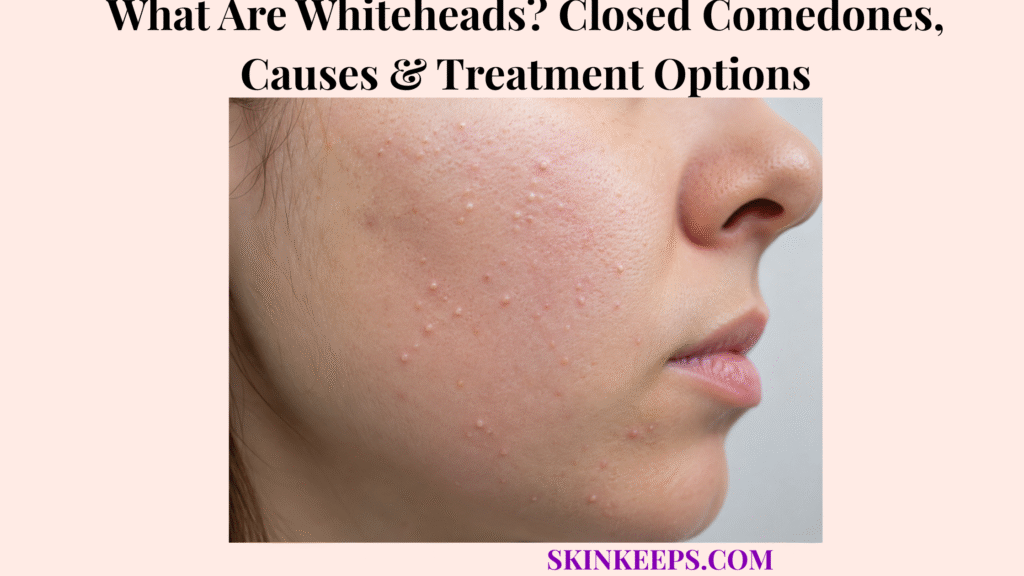
Whiteheads, also called closed comedones, are small usually non-inflammatory acne bumps that form when sebum and retained keratinized skin cells plug a hair follicle while its surface opening remains covered. They may look pale, whitish or simply skin-colored, so visible whiteness is not the defining feature.
Correctly identifying a whitehead means separating it from blackheads, milia, pustules and folliculitis, then treating the tendency toward follicular plugging rather than squeezing individual bumps. Hormonal changes, occlusive products and humidity can aggravate comedonal acne, while topical retinoids and salicylic acid target clogged follicles and prevention depends on consistent, gentle care.
Medical note: This article is for educational purposes only. Persistent, painful, scarring, rapidly worsening or diagnostically uncertain acne-like bumps—and acne treatment during pregnancy—should be discussed with a qualified healthcare professional.
What Are Whiteheads and What Do Closed Comedones Look Like?
Whiteheads are closed comedones—small, usually non-inflammatory follicular bumps formed when sebum and keratin accumulate beneath a covered pore opening.
What Happens Inside a Follicle Before a Whitehead Forms?
A whitehead forms when increased sebum and retained keratinocytes accumulate inside a follicle until its opening becomes obstructed while remaining covered by skin. The essential sequence is sebum plus retained keratin → follicular plug → covered opening → closed comedone.
Why Is a Whitehead Called a Closed Comedone?
It is called closed because the follicular plug remains beneath a covered surface instead of opening directly to the skin. The same basic comedonal process can produce an open comedone when the follicular opening communicates with the surface.
Are Whiteheads Always White?
No; many closed comedones appear skin-colored or pale rather than distinctly white. Their defining feature is a closed follicular obstruction, not a bright white color.
Are Whiteheads an Infection?
Not primarily; the defining process is follicular plugging rather than infection or pus formation. Acne-associated bacteria and inflammation become more important if the lesion progresses into an inflammatory papule or pustule.
Where Do Whiteheads Usually Appear?
Whiteheads commonly occur in sebaceous areas such as the forehead, chin, cheeks and other acne-prone regions of the face, chest, shoulders and upper back. Distribution helps support an acne diagnosis when the lesion morphology also fits.
How Are Whiteheads Different From Blackheads?
Whiteheads have a covered follicular opening, while blackheads are open comedones whose follicular contents communicate with the skin surface. Blackheads are not dark because of dirt; the visible surface darkening reflects changes in the exposed follicular material.
Can Whiteheads Become Inflamed Pimples?
Yes; a closed comedone can remain non-inflammatory or develop surrounding inflammation and progress into papules or pustules. Full treatment of papules, pustules and more inflammatory lesions belongs under Inflammatory Acne.
What Causes Whiteheads and Which Factors Make Closed Comedones More Likely?
Whiteheads form when sebum and retained follicular keratin create a plug, while hormones, comedogenic products, humidity and skin irritation can increase the tendency toward comedonal acne.
Why Do Sebum and Dead Skin Cells Cause Whiteheads?
Excess sebum and abnormal retention of keratinized cells can accumulate inside the follicle until a closed plug develops. The problem is not surface dirt; it is abnormal material building up within the follicular canal.
How Do Hormonal Changes Contribute?
Hormonal changes can increase sebaceous activity and acne susceptibility, making comedones more likely during puberty and in some menstrual, pregnancy or adult-acne patterns. Hormones are one contributor rather than a universal explanation for every adult whitehead.
Can Makeup, Skin-Care or Hair Products Cause Whiteheads?
Some oily or pore-clogging products can aggravate closed comedones in acne-prone skin. Cosmetics, moisturizers, sunscreens, pomades and hair products that repeatedly contact facial skin are common product categories worth reviewing when bumps cluster in contact areas.
Can Humid Weather Make Whiteheads Worse?
Yes; humid conditions can aggravate comedonal acne in susceptible people by increasing skin hydration and occlusion around acne-prone follicles. Humidity is an aggravator, not the fundamental cause of comedogenesis.
Does Dirty Skin Cause Whiteheads?
No; whiteheads are caused by follicular plugging, not poor hygiene, and aggressive scrubbing can irritate acne-prone skin without removing the underlying plug. Gentle cleansing is more useful than trying to scrub pores “clean.”
Does Squeezing Whiteheads Make Them Clear Faster?
Not reliably; squeezing can increase inflammation and trauma while raising the risk of pigment changes or scarring. Dark marks that follow manipulation or inflammation are better understood within the broader topic of Hyperpigmentation, not as part of the whitehead itself.
How Are Whiteheads Diagnosed and Distinguished From Other Small Skin Bumps?
Whiteheads are usually diagnosed clinically as small non-inflammatory follicular papules in a typical acne distribution, while milia, folliculitis and inflammatory acne must be distinguished when the bumps are unusually firm, pustular or treatment-resistant.
How Does a Dermatologist Identify Closed Comedones?
Closed comedones are identified from small non-inflammatory follicular papules occurring in a typical acne distribution, often alongside blackheads or other acne lesions. Routine laboratory testing is not needed for a classic comedonal presentation.
When Is Acne Considered Mainly Comedonal?
Acne is mainly comedonal when whiteheads and blackheads dominate while inflammatory papules and pustules are minimal. The complete spectrum of comedonal, inflammatory and deeper acne is covered separately under Acne.
How Are Whiteheads Different From Milia?
Whiteheads are acne-related follicular plugs, while Milia are small superficial keratin cysts that often feel firmer, can be pearly white and may cluster around the eyelids or upper cheeks without blackheads or other acne lesions.
How Are Whiteheads Different From Folliculitis?
Whiteheads are usually non-inflammatory plugs, while Folliculitis produces inflamed follicular bumps that are often red, tender or pustular. True comedones favor acne, whereas pustular follicle-centered inflammation points toward a different process.
How Are Whiteheads Different From Pustules?
A whitehead is a closed usually non-inflammatory comedone, while a pustule is an inflamed acne lesion containing visible purulent material. A pale or white-tipped bump should therefore not be classified by color alone.
When Should Hormonal or Medication-Related Acne Be Considered?
A hormonal or medication-related contribution becomes more relevant when comedones begin suddenly in adulthood, follow menstrual patterns or appear with other hormonal symptoms or a new medicine or product exposure. Any systemic investigation should be guided by the broader clinical pattern.
How Are Whiteheads / Closed Comedones Treated?
Whitehead treatment focuses on unclogging follicles and preventing new comedones, with topical retinoids playing a central role and salicylic acid, azelaic acid or complementary acne therapies used according to the overall lesion pattern.
Why Are Topical Retinoids Important for Whiteheads?
Topical retinoids normalize follicular cell turnover, help clear existing comedones and reduce formation of new follicular plugs. Common acne retinoids include adapalene, tretinoin, tazarotene and trifarotene, but product choice and use should follow label or clinician guidance rather than a universal dosing schedule.
How Does Salicylic Acid Help Closed Comedones?
Salicylic acid promotes exfoliation within clogged follicles and can help open pores and reduce whitehead formation. It is especially useful for blackheads and whiteheads when used as part of a tolerable acne routine.
When Is Benzoyl Peroxide Useful?
Benzoyl peroxide becomes particularly useful when closed comedones coexist with inflammatory acne rather than functioning as the sole core treatment for purely comedonal disease. The comedonal component still benefits from follicle-directed therapy such as a retinoid or salicylic acid.
Can Azelaic Acid Treat Comedonal Acne?
Yes; azelaic acid can be part of acne treatment because it helps open clogged pores and reduce inflammation, and it can also be useful when acne is accompanied by post-inflammatory dark marks. It should not be presented as universally superior to other comedone-directed therapies.
Should Closed Comedones Be Professionally Extracted?
Professional extraction can remove selected persistent comedones, but extraction alone does not prevent new follicles from becoming plugged. Maintenance treatment addresses future comedogenesis, whereas extraction removes individual lesions.
Do Whiteheads Need Antibiotics?
No; antibiotics are not indicated simply because closed comedones are present and are reserved for appropriate inflammatory-acne situations. Purely comedonal acne should not be treated as a bacterial infection.
Why Does Pregnancy Change Whitehead Treatment?
Pregnancy changes acne treatment because topical retinoid use requires specific safety review and should not simply be continued without clinician guidance. Tazarotene should not be used during pregnancy, and experts generally recommend stopping adapalene and tretinoin during pregnancy; people who are pregnant or trying to conceive should review their regimen with a clinician.
How Can Whiteheads Be Prevented From Returning, and When Should They Be Evaluated?
Preventing whiteheads requires gentle skin care, non-comedogenic products, consistent comedone-directed treatment and avoidance of squeezing, while persistent, inflammatory or diagnostically uncertain bumps should be reassessed.
How Should Acne-Prone Skin Be Cleansed?
Acne-prone skin should be cleansed gently rather than repeatedly scrubbed, because irritation does not clear the underlying follicular blockage. Washing up to twice daily and after sweating is a common practical framework, provided the cleanser and technique are not abrasive.
Which Skin-Care Products Can Reduce New Closed Comedones?
Products labeled non-comedogenic, non-acnegenic, oil-free or “won’t clog pores” can help reduce product-related follicular obstruction in acne-prone skin. Moisturizer, sunscreen, makeup and hair products that contact facial skin are especially worth checking.
Why Should Whiteheads Not Be Scrubbed or Popped?
Scrubbing and popping increase irritation and inflammation without correcting comedogenesis and can increase the risk of pigment changes or scarring. They also encourage people to treat one visible bump while ignoring the follicular tendency that keeps creating new ones.
How Long Should Whitehead Treatment Be Given to Work?
Whitehead treatment usually requires consistent use for several weeks before meaningful improvement becomes apparent, and fuller clearing may take longer. A reasonable acne ingredient should generally be given time to work rather than being replaced every few days because visible comedones have not vanished immediately.
Why Do Whiteheads Keep Returning?
Whiteheads recur when the underlying tendency toward follicular plugging continues even after individual comedones clear. Removing one plug does not stop comedogenesis, which is why maintenance therapy can matter after improvement.
When Should Whiteheads Be Evaluated by a Dermatologist?
Dermatology review is useful when numerous closed comedones persist despite appropriate treatment, acne becomes painful or inflammatory, scarring develops or the diagnosis remains uncertain. Nodules, cysts, prominent dark marks, adult-onset acne with hormonal symptoms, significant irritation or pregnancy-related treatment limitations are other reasons to seek individualized care.
When Should Persistent “Whiteheads” Be Reconsidered as Another Diagnosis?
A different diagnosis should be reconsidered when bumps remain unchanged despite adequate comedonal therapy, are unusually firm, cluster around the eyelids or occur without other acne lesions. Painful, markedly inflamed or atypically distributed bumps also deserve diagnostic reassessment rather than endless acne treatment.
What Should You Remember About Whiteheads / Closed Comedones?
Whiteheads are usually non-inflammatory closed follicular plugs, so successful care depends on reducing comedogenesis and preventing new blockages rather than squeezing or treating them like pus-filled infections.
- Whiteheads are closed comedones and belong to the acne vulgaris spectrum.
- They form when sebum and retained keratinocytes obstruct a hair follicle while the opening remains covered.
- Whiteheads are usually clinically non-inflammatory and should not be described as pus-filled pustules.
- A closed comedone may be skin-colored, pale or subtly whitish; bright white color is not required.
- Whiteheads are not primarily infections and are not caused by dirty skin.
- The forehead, chin, cheeks, chest, shoulders and upper back are common acne-prone sites.
- Whiteheads and blackheads share the same basic comedonal process, but blackheads have an open surface.
- The dark color of a blackhead is not dirt.
- Closed comedones can later become inflamed papules or pustules.
- Hormonal activity, occlusive products and humidity can aggravate comedonal acne in susceptible people.
- Harsh scrubbing and squeezing can worsen irritation, pigment change and scarring risk.
- Diagnosis is usually clinical, and predominantly comedonal acne is whitehead- and blackhead-dominant.
- Milia are keratin cysts, folliculitis is an inflamed follicular disorder and pustules are inflammatory acne lesions.
- Topical retinoids are central because they normalize follicular turnover and help prevent new plugs.
- Salicylic acid can help unclog follicles and is useful for whiteheads and blackheads.
- Benzoyl peroxide becomes more useful when inflammatory acne coexists.
- Azelaic acid is another acne treatment option and may also help post-inflammatory dark marks.
- Professional extraction removes selected lesions but does not prevent new comedones by itself.
- Antibiotics are not needed simply because pure closed comedones are present.
- Pregnancy changes retinoid safety, so acne regimens should be reviewed rather than automatically continued.
- Gentle cleansing and non-comedogenic product selection can support long-term control.
- Whitehead treatment takes time, and recurrence can occur because the underlying plugging tendency persists.
- Persistent, inflammatory, scarring or atypical bumps deserve dermatologist reassessment.
Frequently Asked Questions About Whiteheads
The main whitehead questions concern closed-comedone terminology, blackheads, squeezing, effective acne ingredients and recurrence.
Are Whiteheads the Same as Closed Comedones?
Yes; a whitehead is the common name for a closed comedone, in which sebum and keratin block a follicle while its opening remains covered.
What Is the Difference Between a Whitehead and a Blackhead?
A whitehead has a closed follicular opening, while a blackhead is an open comedone whose contents are exposed at the skin surface.
Should You Squeeze or Pop a Whitehead?
No; squeezing can increase irritation, inflammation, pigment changes and scarring without preventing new comedones from forming.
Which Acne Ingredients Work Best for Closed Comedones?
Topical retinoids are central because they normalize follicular turnover, while salicylic acid and other acne therapies can be added according to the overall lesion pattern and patient context.
Why Do Whiteheads Keep Coming Back After Treatment?
Whiteheads can return because clearing an individual plug does not eliminate the underlying tendency toward excess follicular keratin retention and comedone formation.
NIAMS — Acne: follicular plugging, sebum, keratinocytes, whitehead/blackhead definitions, lesion progression and common acne distribution.
DermNet — Comedonal acne: closed-comedone terminology, skin-colored morphology, comedonal-acne pattern, hormonal/product/humidity aggravators and follicular biology.
American Academy of Dermatology — Acne: Signs and symptoms: whitehead and blackhead recognition, closed versus open comedones, progression and picking warnings.
American Academy of Dermatology — Acne: Diagnosis and treatment: topical retinoids, salicylic acid, benzoyl peroxide, azelaic acid and maintenance-treatment roles.
American Academy of Dermatology — How to treat different types of acne: treatment expectations, stubborn whiteheads/blackheads and dermatologist or professional extraction escalation.
American Academy of Dermatology — Acne treatment during pregnancy: pregnancy-specific safety review for topical retinoids and other acne treatments.
NHS — Acne causes: squeezing/scarring warning and the point that repeated or harsh washing can aggravate acne.