
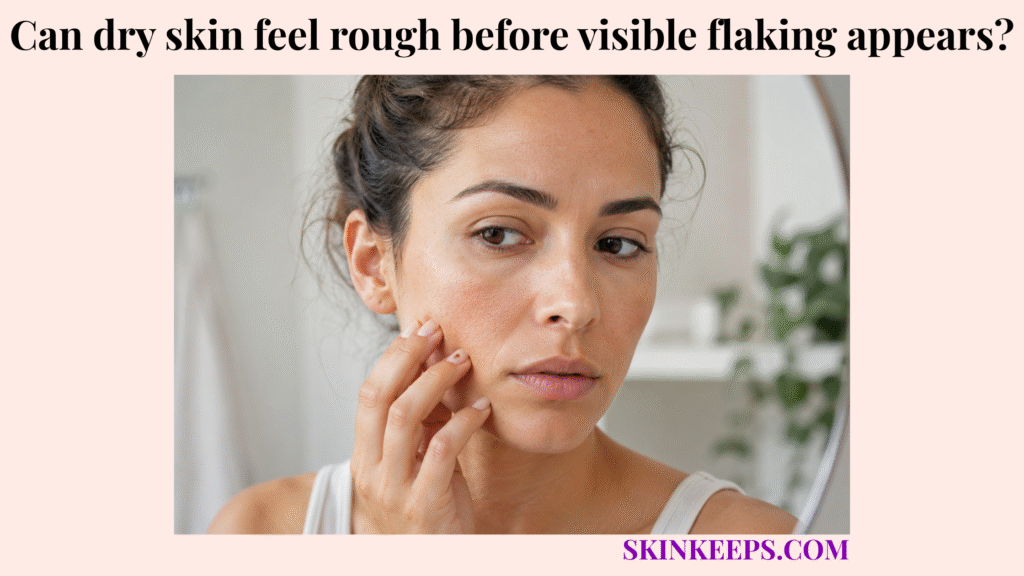
Yes, dry skin can feel rough before visible flaking appears because the outer skin layer may lose smoothness and flexibility before dry cells begin shedding in obvious flakes. This early roughness often feels coarse, uneven, tight, or sandpapery even when the skin does not yet show clear peeling.
This guideline explains why dry skin can feel rough before flakes appear, how roughness progresses into visible flaking, how to distinguish pre-flaking roughness from actual flakes, which areas often feel rough first, what triggers early texture changes, and when roughness needs professional evaluation.
Why can dry skin feel rough before it flakes?
Dry skin can feel rough before it flakes because early moisture loss changes surface texture before the dry outer cells loosen enough to shed visibly. This roughness means the surface is already becoming uneven, even if flakes are not yet obvious. The first clue may be what the skin feels like, not what the mirror shows.
Roughness is an early diagnostic clue because dry cells can sit unevenly before they detach. The skin may feel tight, coarse, or sandpapery while still looking mostly normal. When the rough texture becomes visible rather than only tactile, the broader guide on visible characteristics of dry skin can help place it among other surface signs.
How early moisture loss changes skin texture
Early moisture loss changes skin texture by reducing surface flexibility, which makes the outer layer feel coarse, uneven, or sandpapery before flakes are visible. This tactile change can appear before obvious peeling because the surface is becoming less smooth before it detaches. Roughness at this stage should be treated as early dryness, not ignored because flakes are absent.
Why roughness can appear before visible shedding
Roughness can appear before visible shedding because dry surface cells may become uneven and stiff before they detach as loose flakes. This timing difference explains why dry skin can feel rough but not yet look flaky. The rough stage is a useful moment to support the barrier before visible shedding develops.
| Texture Change | What It May Suggest |
|---|---|
| Slightly coarse feel | Early surface dryness. |
| Sandpapery texture | The dry outer layer is becoming uneven. |
| Tight but not flaky | Moisture loss may be present before visible shedding. |
| Rough patches | Localized dry barrier stress. |
| Roughness with itch | Dryness may be progressing. |
| Roughness after washing | Cleansing may be reducing surface comfort. |
How does roughness turn into flaking on dry skin?
Roughness turns into flaking on dry skin when moisture loss progresses enough for stiff, dry surface cells to loosen and shed visibly. This progression usually begins as a rough feel, then becomes dull or coarse patches, then turns into visible flakes. The earlier the roughness is supported, the less likely the surface is to progress into obvious shedding.
Flaking is a later visual stage, not the only sign of dryness. A person can have meaningful dryness before any loose skin pieces appear. If roughness progresses into loose peeling, the article on dry skin flaking and scaling can explain the later shedding stage.
How dry surface cells lose flexibility
Dry surface cells lose flexibility when moisture support drops, causing the outer layer to feel stiff, uneven, and less smooth. This stiffness makes the texture feel rough even before visible flakes form. The change is mainly tactile at first, which is why early care should not wait for peeling.
Why flakes appear when dry cells start loosening visibly
Flakes appear when dry cells start loosening visibly because the rough outer layer is no longer staying smooth and attached in an even pattern. This visible shedding means the roughness has moved beyond texture change into surface cell detachment. The goal is to support the barrier before this stage becomes obvious.
| Stage | What Happens | What You Notice |
|---|---|---|
| Early dryness | Surface loses smoothness. | Rough or tight feel. |
| Texture buildup | Dry cells sit unevenly. | Dull or coarse patches. |
| Visible shedding | Dry cells loosen. | Fine flakes appear. |
| Advanced dryness | Barrier becomes more stressed. | Scaling, cracks, or irritation. |
How is pre-flaking roughness different from visible flaking?
Pre-flaking roughness is different from visible flaking because roughness is mainly felt as uneven texture, while flaking is seen as loose dry skin pieces on the surface. Roughness may be subtle enough that another person cannot see it. Flaking is easier to identify because dry cells have already started shedding visibly.
This distinction prevents the reader from waiting too long. Roughness without flakes can still be a valid dry-skin warning sign. When roughness is paired with a flat-looking surface, the guide on dry skin dull or rough appearance can help separate texture from tone.
Why roughness is mainly a texture clue
Roughness is mainly a texture clue because the skin may feel uneven, tight, or sandpapery before loose flakes are visible. This means texture can provide earlier feedback than appearance. A person should not wait for obvious peeling before adjusting harsh washing, friction, or low moisturizer support.
Why visible flaking suggests dryness has progressed further
Visible flaking suggests dryness has progressed further because dry surface cells have started lifting, loosening, and appearing as visible shedding. This does not automatically mean the dryness is severe, but it does mean the surface has moved beyond early roughness. At that point, the care goal becomes both comfort support and shedding reduction.
| Feature | Pre-Flaking Roughness | Visible Flaking |
|---|---|---|
| Main clue | Skin feels uneven. | Loose pieces of skin are visible. |
| Visibility | May be hard to see. | Easy to see in dry areas. |
| Severity | Often earlier dryness. | More progressed dryness. |
| Sensation | Coarse, tight, sandpapery. | Dry, peeling, sometimes itchy. |
| Care goal | Restore moisture early. | Support barrier comfort and reduce shedding. |
Where does dry skin often feel rough before flakes show?
Dry skin often feels rough before flakes show on areas exposed to washing, friction, cold air, or naturally lower surface comfort, such as the cheeks, hands, knuckles, elbows, knees, shins, and feet. These areas are more likely to feel coarse because they are frequently exposed, rubbed, washed, or stressed. The roughness may begin as small patches before becoming more visible.
Location can help interpret the cause. Rough hands may reflect frequent washing, while rough cheeks may reflect cold air, harsh cleanser, or low moisturizer support. If roughness is strongest after cleansing, the page on dry skin feels tight after washing can explain the post-wash barrier pattern.
Why cheeks, hands, and knuckles often feel rough early
Cheeks, hands, and knuckles often feel rough early because they are frequently exposed to washing, weather, friction, and surface moisture loss. These areas also move, bend, or face environmental contact often, which can make roughness noticeable before flakes appear. Early roughness in these locations often points to exposure and barrier stress rather than a single cause.
Why elbows, knees, shins, and feet often develop rough patches
Elbows, knees, shins, and feet often develop rough patches because these areas experience more friction, pressure, dryness, or thicker surface buildup. The roughness may feel localized before it becomes visibly flaky. If these areas start splitting rather than only feeling rough, the guide on dry skin cracked appearance can help identify when the dryness is becoming more advanced.
| Area | Why Roughness May Appear There |
|---|---|
| Cheeks | Weather, cleanser, or low moisture support. |
| Around the mouth | Washing, friction, saliva exposure, or dryness. |
| Hands | Frequent washing and exposure. |
| Knuckles | Bending, washing, and friction. |
| Elbows | Pressure and thicker dry patches. |
| Knees | Friction and dryness. |
| Shins | Cold air and low oiliness. |
| Feet | Pressure, dryness, and friction. |
What triggers rough dry skin before visible flaking?
Rough dry skin before visible flaking is commonly triggered by cold or dry weather, hot showers, harsh soaps, over-washing, friction, and not moisturizing early enough. These triggers reduce surface comfort before the skin visibly peels. The result is texture change first and visible shedding later.
Early roughness should be treated as a timing opportunity. Once the skin feels sandpapery, dryness is already affecting the outer layer, even if flakes have not formed. If rough patches begin to split, the guide on dry skin cracked appearance can help identify when the dryness is becoming more advanced.
Why cold or dry weather can create early roughness
Cold or dry weather can create early roughness because low-humidity conditions reduce surface comfort and make the outer layer feel less smooth. This texture change can appear before visible flaking because the surface first becomes stiff and uneven. Protecting exposed areas helps reduce that early rough feel.
Why hot showers and harsh soaps can make roughness appear faster
Hot showers and harsh soaps can make roughness appear faster because they remove surface comfort and leave dry skin feeling uneven after washing. The roughness may become noticeable soon after cleansing, especially when moisturizer is delayed. This pattern connects rough texture with the same post-wash barrier stress seen in dry skin.
Why friction and low moisturizer use can worsen early texture dryness
Friction and low moisturizer use can worsen early texture dryness because rubbing stresses the surface while inadequate moisture support allows roughness to progress. Clothing, towels, and repeated touching can make rough patches more noticeable. Moisturizer support should begin while the texture is only rough, not after flakes become obvious.
| Trigger | How It Creates Roughness |
|---|---|
| Cold or dry weather | Pulls comfort from the outer layer. |
| Hot showers | Removes surface oils and comfort. |
| Harsh soaps | Disrupts barrier smoothness. |
| Over-washing | Repeatedly dries the surface. |
| Friction | Makes rough patches more noticeable. |
| Low moisturizer use | Allows early texture dryness to progress. |
| Delayed moisturizer after washing | Lets tightness and roughness return faster. |
How should rough dry skin be cared for before flaking starts?
Rough dry skin should be cared for before flaking starts by reducing harsh triggers, using gentle cleansing, moisturizing quickly after washing, and protecting rough areas from friction and cold air. This early-care approach helps support the outer layer before rough cells loosen into visible flakes. The goal is to restore comfort before the dryness becomes more obvious.
Care should be gentle, not aggressive. Scrubbing rough patches can make the surface more irritated, while consistent moisture support can improve texture more safely. When roughness persists despite consistent gentle care, the page on persistent dry skin needs a dermatologist can support the escalation decision.
Why gentle cleansing matters before flakes appear
Gentle cleansing matters before flakes appear because harsh washing can turn early roughness into stronger dryness, tightness, or visible shedding. The cleanser should clean without leaving the surface squeaky, tight, or stingy. If roughness gets worse after every wash, the washing method should be softened.
Why moisturizer should be applied early rather than waiting for flakes
Moisturizer should be applied early rather than waiting for flakes because roughness already signals that the outer layer needs moisture support. Waiting for visible flakes can allow the texture change to progress. Applying moisturizer after washing and whenever roughness returns can help support surface comfort.
Why scrubbing rough patches can make dryness worse
Scrubbing rough patches can make dryness worse because friction irritates the outer layer instead of restoring smoothness. A rough surface needs moisture support and gentler handling, not aggressive rubbing. If roughness improves only briefly after scrubbing, the deeper barrier stress is still unresolved.
Early-Care Checklist
When does roughness before flaking need professional evaluation?
Roughness before flaking needs professional evaluation when it becomes painful, burning, severely itchy, cracked, bleeding, swollen, oozing, crusted, inflamed, recurrent, or resistant to consistent moisturizing. These patterns suggest the texture change may involve more than ordinary early dryness. The article should recommend evaluation without diagnosing the reader.
Persistent rough patches can overlap with dermatitis, eczema, psoriasis, infection, or other conditions. A clinician can assess whether the roughness is simple dryness or part of a more specific skin issue. This is especially important when the same rough area keeps returning despite careful routine changes.
Why painful or burning roughness should not be treated as simple dryness
Painful or burning roughness should not be treated as simple dryness because discomfort can signal stronger irritation, cracking, or inflammation. Simple roughness may feel coarse or tight, but pain and burning suggest a more reactive surface. Those stronger sensations deserve closer attention, especially when they persist.
Why recurrent rough patches deserve closer attention
Recurrent rough patches deserve closer attention because repeating texture changes in the same area may reflect an ongoing trigger or skin condition. A patch that returns after every product, detergent, weather change, or washing pattern should not be dismissed as random dryness. The repeated location gives useful information for professional review.
Warning-Sign Checklist
What should you remember about rough dry skin before flaking?
The main point to remember is that dry skin can feel rough before visible flakes appear, so early texture change should be treated as a valid dryness signal. Roughness is not just a cosmetic detail. It can show that the outer layer is already losing smoothness, comfort, and flexibility.
Final Takeaways
- Dry skin can feel rough before visible flakes appear.
- Roughness can be an early sign that the outer barrier is losing moisture and smoothness.
- Flaking usually appears later when dry cells loosen visibly.
- Roughness without flakes still deserves early moisture support.
- Scrubbing rough skin can make dryness and irritation worse.
- Cold weather, hot showers, harsh soaps, over-washing, friction, and low moisturizer use can trigger early roughness.
- Persistent, painful, itchy, cracked, bleeding, swollen, oozing, crusted, or inflamed roughness may need professional care.
FAQs
Can dry skin feel rough before visible flakes appear?
Yes, dry skin can feel rough before visible flakes appear because the outer layer can lose smoothness before dry cells shed visibly.
What does rough dry skin before flaking mean?
Rough dry skin before flaking usually means early surface dryness, reduced flexibility, or localized barrier stress.
Is rough skin the same as flaking?
No, rough skin is mainly a texture clue, while flaking means loose dry skin pieces are visible on the surface.
Where does dry skin often feel rough first?
Dry skin often feels rough first on the cheeks, around the mouth, hands, knuckles, elbows, knees, shins, feet, or areas exposed to washing, friction, or cold air.
Should rough dry skin be scrubbed before it flakes?
No, rough dry skin should not be scrubbed aggressively because friction can worsen irritation and dryness.
What helps rough dry skin before flakes appear?
Gentle cleansing, avoiding hot water, moisturizing immediately after washing, and protecting the skin from cold air and friction can help rough dry skin before flakes appear.
When should rough dry skin need professional care?
Rough dry skin should be evaluated when it becomes painful, burning, severely itchy, cracked, bleeding, swollen, oozing, crusted, inflamed, recurrent, or resistant to moisturizer.
Conclusion
Dry skin can feel rough before visible flaking appears because early moisture loss changes surface smoothness before dry cells shed visibly. This roughness is an early warning sign that the outer layer needs gentle cleansing, quicker moisturizing, and less friction. If roughness becomes painful, itchy, cracked, bleeding, swollen, oozing, crusted, recurrent, or resistant to care, it should be evaluated professionally.