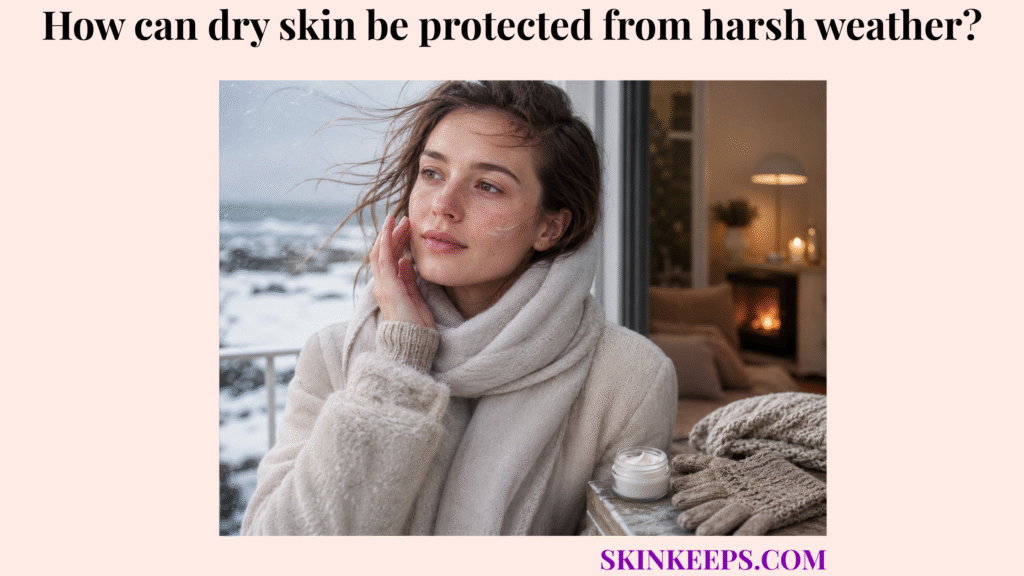
Dry skin can be protected from harsh weather by applying moisturizer before exposure, using thicker creams or ointments on vulnerable areas, covering skin with gloves, scarves, hats, and soft clothing, protecting exposed skin from wind and sun, avoiding long hot showers after exposure, and reapplying moisturizer when skin starts feeling tight, rough, itchy, or irritated.
Protection works best when dry skin is prepared before exposure, shielded during cold, wind, sun, or dry air, and supported gently after exposure. This article explains why harsh weather matters, how to protect vulnerable areas, how to recover indoors, which moisturizer textures help, which mistakes to avoid, and when symptoms need professional evaluation.
Why Does Dry Skin Need Extra Protection in Harsh Weather?
Dry skin needs extra protection in harsh weather because cold air, wind, low humidity, strong sun, and indoor heating can make the barrier lose comfort faster. Harsh-weather protection should match the broader needs of dry skin, where the barrier can lose comfort faster under cold, wind, and dry air. The point is prevention before tightness, stinging, roughness, and irritation become harder to calm.
Exposed dry skin becomes more reactive when the barrier is already low in comfort support. Cheeks, lips, hands, and knuckles often show this quickly because they face weather, washing, rubbing, or movement repeatedly. Weather stress can worsen discomfort, but it should not be used to diagnose a skin disease.
How Harsh Weather Increases Moisture Loss From Dry Skin
Harsh weather increases moisture loss from dry skin by exposing the outer layer to cold, wind, dry air, sun, and heated indoor environments. These exposures can make water leave the surface faster and can make tightness return sooner. The goal is to explain the pressure clearly without turning this into a weather-damage science article.
Why Dry Skin Becomes More Reactive When the Barrier Is Exposed
Dry skin becomes more reactive when the barrier is exposed because weather stress can make tightness, stinging, roughness, flaking, and irritation easier to trigger. Dry skin is not only low in moisture comfort; it can also be less tolerant of friction and irritants. Vulnerable exposed zones need earlier shielding rather than late repair.
| Weather Stress | Dry-Skin Risk | Protection Goal |
|---|---|---|
| Cold air | Tightness and roughness | Reduce exposure |
| Wind | Stinging and irritation | Cover vulnerable areas |
| Low humidity | Faster moisture loss | Seal moisture early |
| Strong sun | Surface stress and dryness | Use daily sun protection |
| Indoor heating | Overnight dryness | Support indoor moisture and reapply moisturizer |
How Should Dry Skin Be Prepared Before Going Into Harsh Weather?
Dry skin should be prepared before harsh weather by moisturizing early, protecting lips and exposed skin, and adding thicker support to areas that crack, sting, or roughen quickly. Before exposure, timing matters because moisturizer should be applied to dry skin before tightness fully returns. Preparing before leaving home is stronger than trying to rescue skin after wind or cold has already irritated it.
Moisturizer should have time to settle before cold or windy exposure, especially on hands, cheeks, and around the mouth. Lip balm helps protect exposed lip skin, while sunscreen belongs on exposed skin during daytime outdoor exposure. Carrying hand cream or balm makes protection easier when hands dry quickly after washing or weather exposure.
Before-Exposure Checklist
- Apply moisturizer before leaving home.
- Use a thicker cream on very dry areas.
- Use ointment on cracked or high-friction spots if needed.
- Protect lips with balm.
- Apply sunscreen on exposed skin during daytime.
- Let moisturizer absorb before going into cold or windy weather.
- Carry hand cream or balm if hands dry quickly.
Which Areas of Dry Skin Need the Most Weather Protection?
The areas of dry skin that need the most weather protection are usually exposed, thin-barrier, high-friction, frequently washed, or crack-prone areas. Lips, hands, knuckles, cheeks, around the mouth, shins, feet, and heels often need extra support because they lose comfort quickly. Area-specific protection prevents the weak advice of using the same light lotion everywhere.
Lips may need balm because their exposed surface can crack easily. Hands and knuckles often need gloves, cream, or ointment because washing and cold exposure stack together. Protection should become more cautious when dry skin starts cracking or bleeding instead of only feeling tight.
| Area | Why It Needs Protection | Useful Protection |
|---|---|---|
| Lips | Thin barrier and high exposure | Lip balm |
| Hands | Frequent washing and weather exposure | Gloves and hand cream |
| Knuckles | Friction and cracking risk | Cream or ointment |
| Cheeks | Wind and cold exposure | Moisturizer and scarf protection |
| Around mouth | Dryness and irritation risk | Gentle moisturizer |
| Shins | Often dry in cold weather | Body cream |
| Feet and heels | Cracking risk | Thick cream or ointment |
How Can Dry Skin Be Protected From Cold and Wind?
Dry skin can be protected from cold and wind by combining moisturizer before exposure with physical coverage from gloves, scarves, hats, and soft non-irritating layers. Physical shielding reduces direct weather stress because cold air and wind have less contact with vulnerable areas. Moisturizer still matters because coverage does not seal the surface by itself.
Soft, dry clothing matters because rough or wet fabric can add friction irritation. Gloves protect hands, scarves protect cheeks and neck, and soft inner layers protect body areas that rub against clothing. Wet clothing should be removed because trapped dampness and friction can keep dry patches reactive.
Why Covering Exposed Skin Reduces Weather Stress
Covering exposed skin reduces weather stress because cold air and wind have less direct contact with vulnerable dry areas. Face, neck, hands, and lips are high-exposure zones, especially during cold or windy days. Coverage should be soft, dry, and not abrasive so it protects without adding friction.
How Gloves, Scarves, and Soft Layers Protect Dry Skin
Gloves, scarves, and soft layers protect dry skin by reducing wind exposure, cold contact, and fabric friction against weak or rough patches. Gloves protect hands, scarves protect cheeks and neck, and soft inner layers protect dry body areas. Wet or rough fabric can backfire because it adds irritation while the barrier is already stressed.
| Protection Step | Why It Helps Dry Skin |
|---|---|
| Wear gloves | Reduces hand dryness and cracking |
| Cover cheeks and neck | Limits wind exposure |
| Use lip balm | Protects against cracking |
| Choose soft inner layers | Reduces friction irritation |
| Moisturize before exposure | Adds barrier support before weather stress |
| Avoid wet clothing against skin | Prevents extra irritation |
How Can Dry Skin Be Protected From Sun Exposure During Harsh Weather?
Dry skin can be protected from sun exposure during harsh weather by using sunscreen on exposed skin and combining it with hats, shade, and clothing whenever outdoor exposure is prolonged. Cold weather does not cancel sun exposure, so the face, ears, neck, and hands still need protection during daytime outdoor activity. This section stays focused on sun protection as part of weather protection, not as a full sunscreen guide.
Sunscreen should be used on exposed areas, and it should be reapplied during long outdoor exposure. Hats, sunglasses, shade, and clothing can reduce direct exposure while also limiting wind or cold contact. If skin feels tight after sun and wind exposure, moisturizer can help restore comfort.
Sun-Protection Steps
- Use sunscreen on exposed skin during the day.
- Protect face, ears, neck, and hands.
- Use hats, sunglasses, or shade when possible.
- Reapply sunscreen during long outdoor exposure.
- Do not skip sunscreen just because the weather is cold.
- Moisturize after sun and wind exposure if skin feels tight.
How Should Dry Skin Recover After Harsh Weather Exposure?
Dry skin should recover after harsh weather exposure with gentle aftercare that removes wet or irritating clothing, avoids hot water, pats skin dry, and restores moisture while the skin is still slightly damp. Aftercare should not add new stripping after the skin has already faced cold, wind, sun, or dry air. Hot aftercare can undo protection because hot showers can worsen dryness after cold or windy exposure.
Lukewarm water, gentle cleansing only if needed, and patting dry are safer recovery steps. Richer cream can help rough, tight, or flaky areas, while ointment may be useful on cracked or painful spots that need stronger sealing. Persistent pain, cracks, bleeding, or infection-looking change should not be treated as ordinary weather dryness.
After-Exposure Recovery Routine
- Remove wet, sweaty, or irritating clothing.
- Cleanse only if needed, using lukewarm water.
- Avoid hot showers after cold exposure.
- Pat skin dry instead of rubbing.
- Apply moisturizer while skin is still slightly damp.
- Use richer cream on rough, tight, or flaky areas.
- Use ointment on cracked or painful spots if needed.
How Can Indoor Habits Protect Dry Skin After Harsh Outdoor Weather?
Indoor habits can protect dry skin after harsh outdoor weather by reducing heater dryness, supporting overnight moisture comfort, and avoiding products or air conditions that keep the barrier reactive. Indoor recovery becomes more important when humidifiers can help dry skin by making dry indoor air less harsh. This is indoor support after exposure, not a humidifier-only plan.
Avoid sitting too close to heaters because direct heat can make tightness return faster. Moisturizer before sleep and hand cream after washing can help maintain comfort overnight and during indoor routines. Fragrance-heavy or irritating products should be avoided when weather-stressed skin already feels reactive.
Indoor Protection Habits
- Avoid sitting too close to heaters.
- Use indoor humidity support when air is dry.
- Moisturize before sleep.
- Reapply hand cream after washing.
- Keep bedroom air from becoming overly dry.
- Avoid heavy fragrance or irritating products when skin is weather-stressed.
Which Moisturizer Textures Protect Dry Skin Best in Harsh Weather?
Moisturizer textures that protect dry skin best in harsh weather depend on dryness severity, body area, cracking risk, and whether the area is exposed to wind, friction, washing, or sun. Weather-stressed areas may need richer support when moisturizer ingredients for very dry skin need to hydrate, smooth, and seal the outer layer. Texture choice should stay practical, not brand-focused.
Creams usually suit tight or rough dry skin, while ointments can help cracked hands, heels, or high-friction spots. Balm works well for lips and small exposed areas. A dry but acne-prone face may need a non-comedogenic cream or lotion rather than heavy ointment everywhere.
| Dry-Skin Condition | Better Texture |
|---|---|
| Mild dryness | Cream or richer lotion |
| Tight or rough dry skin | Cream |
| Cracked hands or heels | Ointment |
| Wind-exposed lips | Balm |
| Dry but acne-prone face | Non-comedogenic cream or lotion |
| Very dry body areas | Thick cream or ointment |
What Harsh-Weather Mistakes Make Dry Skin Worse?
Harsh-weather mistakes make dry skin worse when protection starts too late, moisturizer is too light for the problem, clothing adds friction, or aftercare strips the skin again. These mistakes are common because the skin may feel fine before exposure and then tighten quickly outside or indoors afterward. Correction should focus on earlier protection and gentler recovery.
Going outside with unmoisturized dry skin leaves the barrier facing cold, wind, and dry air without support. Light lotion may not seal enough moisture on severe dryness, while rough fabric and skipped lip or hand protection make cracking more likely. Waiting for flakes before moisturizing usually means protection has started too late.
| Mistake | Why It Backfires |
|---|---|
| Going outside with unmoisturized dry skin | Barrier faces weather stress without support |
| Using only light lotion on severe dryness | May not seal enough moisture |
| Taking hot showers after cold exposure | Strips more surface comfort |
| Wearing rough fabric on dry patches | Adds friction irritation |
| Skipping lip and hand protection | Cracking becomes more likely |
| Forgetting sunscreen in cold weather | Exposed skin still receives UV stress |
| Waiting for flakes before moisturizing | Protection starts too late |
When Is Harsh-Weather Dry Skin No Longer Just Ordinary Dryness?
Harsh-weather dry skin is no longer just ordinary dryness when cracking, bleeding, severe itching, pain, burning, swelling, oozing, crusting, thick scaling, or repeated patches continue despite protection and moisturizing. Weather can worsen dryness, but it should not be used to ignore warning signs. Professional review becomes important when persistent dry skin needs a dermatologist instead of repeated weather-protection changes.
This section should stay calm and non-diagnostic. Cracks, bleeding, oozing, crusting, thick scaling, or infection-looking skin can require evaluation rather than stronger moisturizer alone. Weather protection supports comfort, but it does not replace professional care when symptoms are severe or persistent.
Warning Signs
- Cracks or bleeding.
- Severe itching.
- Pain, burning, or persistent stinging.
- Swelling, oozing, crusting, or infection-looking skin.
- Dryness does not improve after protection and moisturizing.
- Dry patches keep returning in the same areas.
- Thick scaling develops.
- Symptoms disrupt sleep or daily life.
- You suspect eczema, dermatitis, psoriasis, allergy, infection, or another condition.
What Should You Remember About Protecting Dry Skin From Harsh Weather?
Dry skin is best protected from harsh weather when protection starts before exposure and continues through physical shielding, sun protection, gentle aftercare, and indoor recovery. The strongest plan prepares the barrier, shields vulnerable areas, and restores moisture gently afterward. Persistent or severe symptoms still need professional evaluation.
Final Takeaways
- Dry skin needs protection before harsh weather exposure, not only repair afterward.
- Moisturizer should be applied before cold, wind, dry air, or sun exposure.
- Gloves, scarves, soft clothing, lip balm, sunscreen, and richer creams help protect vulnerable areas.
- After exposure, dry skin should be cleaned gently and moisturized while slightly damp.
- Hot showers, rough fabrics, skipped moisturizer, and dry indoor air can undo protection.
- Persistent cracking, bleeding, pain, severe itching, or inflamed patches need professional evaluation.
Frequently Asked Questions
Should Dry Skin Be Moisturized Before Going Outside?
Dry skin should usually be moisturized before going outside in cold, windy, sunny, or dry-air conditions. Moisturizer gives vulnerable areas support before exposure, while hands, lips, cheeks, and cracked-prone areas may need thicker or more protective support.
What Protects Dry Hands in Cold Weather?
Dry hands are best protected in cold weather with moisturizer before exposure, gloves outdoors, hand cream after washing, and thicker cream or ointment on cracked-prone areas. Painful cracks, bleeding, or persistent hand irritation should be evaluated.
Does Dry Skin Need Sunscreen in Cold Weather?
Dry skin still needs sunscreen on exposed areas in cold weather because cold air does not remove UV exposure. Face, ears, neck, and hands should be protected during daytime outdoor exposure, especially when skin is already dry or weather-stressed.
Are Hot Showers Good After Cold Weather Exposure?
Hot showers are not a good recovery step for dry skin after cold exposure because they can strip more surface comfort. Lukewarm water, gentle cleansing only if needed, patting dry, and moisturizer while slightly damp are safer recovery steps.
When Should Weather-Dry Skin Be Checked?
Weather-dry skin should be checked when dryness becomes painful, cracked, bleeding, swollen, oozing, crusted, severely itchy, or persistent despite protection. Weather can worsen dryness, but recurring or severe symptoms may need professional evaluation.
Conclusion
Dry skin can be protected from harsh weather by preparing the barrier before exposure, shielding vulnerable areas during exposure, and restoring moisture gently after exposure. The most useful steps are moisturizer before leaving home, thicker support on rough or cracked-prone areas, gloves, scarves, lip balm, soft clothing, sunscreen on exposed skin, and gentle aftercare.
Protection works best when it starts before the skin becomes tight, flaky, or irritated. Hot showers, rough fabrics, skipped moisturizer, dry indoor heating, and delayed recovery can undo the benefit, while persistent cracking, bleeding, pain, severe itching, swelling, oozing, crusting, or inflamed patches need professional evaluation.