
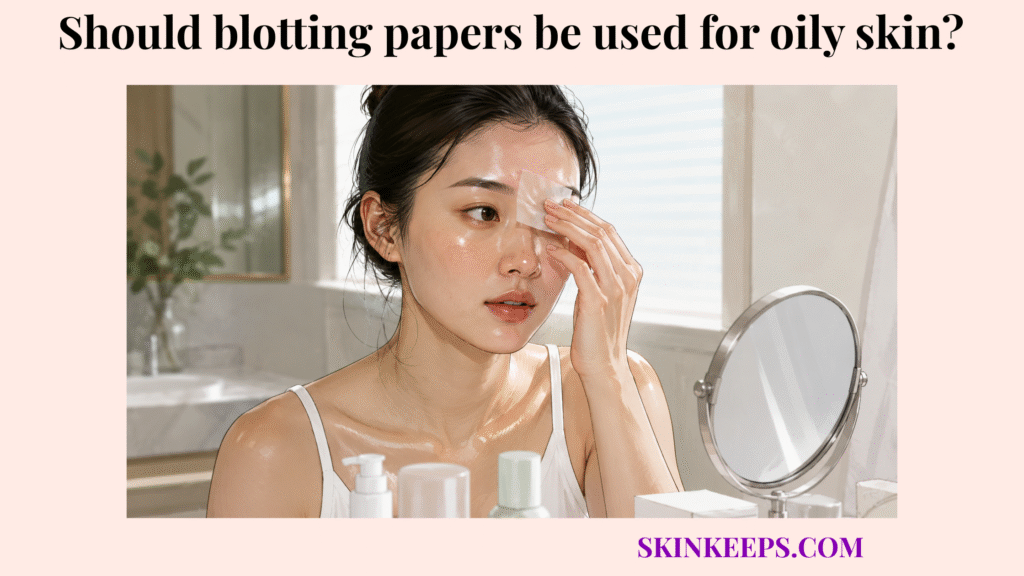
Yes, blotting papers can be used for oily skin because they absorb excess surface oil without requiring extra washing. This makes them useful for midday shine, especially when oily skin looks greasy but does not need another full cleanse.
This guide explains how blotting papers work, how to use them without rubbing, when they are more appropriate than re-washing, what they cannot do, and how they fit into a gentle oily-skin routine.
Why are blotting papers useful for oily skin?
Blotting papers are useful for oily skin because they remove excess surface oil quickly without stripping the whole face. This matters when the skin looks shiny but does not need another cleanser, water rinse, or product reset. By lifting oil from the surface only, blotting papers give short-term shine control without making the entire routine more aggressive.
Blotting papers are especially useful for oily areas such as the forehead, nose, and chin. These areas often show the strongest midday shine because surface sebum becomes more visible there. People who struggle with persistent facial shine can use blotting papers as a small support tool rather than treating every oil breakthrough as a reason to wash again.
How blotting papers remove surface oil without washing
Blotting papers remove surface oil without washing by absorbing the sebum that is already sitting on top of the skin. This is a simple physical effect, not a deep pore-cleaning action. The sheet helps reduce shine on the surface, but it does not fully remove sunscreen, makeup, sweat, or deeper residue.
Why blotting papers help control midday shine
Blotting papers help control midday shine because they reduce the visible oil film that reflects light from oily areas. This is why they can make the forehead, nose, and chin look less greasy during the day. The effect is temporary, so shine can return when more surface oil appears later.
How should blotting papers be used on oily skin?
Blotting papers should be used on oily skin by pressing them gently onto shiny areas and lifting them away without rubbing. This method lets the sheet absorb surface oil instead of dragging oil across the face. Rubbing can also disturb sunscreen, makeup, or the skin surface.
The best technique is targeted rather than aggressive. Press the sheet onto the oiliest area, lift it cleanly, and move to a fresh section if more oil remains. This method keeps blotting papers useful as a gentle tool instead of turning them into friction.
Why blotting papers should be pressed, not rubbed
Blotting papers should be pressed, not rubbed, because rubbing can spread oil and disturb the surface instead of lifting shine cleanly. The goal is to let the sheet contact the oily film long enough to pick up surface sebum. A press-and-lift method is also less likely to disturb sunscreen or makeup than dragging the sheet across the face.
Where blotting papers should be used on oily areas
Blotting papers should be used on oily areas where shine is most visible, especially the forehead, nose, chin, and inner cheek zones. This does not mean every face needs the same blotting pattern. The best approach is to target the shiny areas and leave comfortable, non-oily areas alone.
| Step | What To Do | Why It Matters |
|---|---|---|
| Press | Press the sheet onto shiny areas | Absorbs surface oil |
| Hold briefly | Let the paper contact the oily film | Improves oil pickup |
| Lift | Remove without dragging | Avoids spreading oil |
| Use a clean area | Move to a fresh part of the sheet when needed | Prevents transferring oil back |
| Target oily zones | Focus on forehead, nose, chin, or shiny areas | Avoids unnecessary friction |
When should oily skin use blotting papers?
Oily skin should use blotting papers when visible shine appears but the skin does not need a full cleanse. This timing matters because shine alone is not the same as dirt, sweat, sunscreen buildup, or makeup residue. When the problem is only surface oil, blotting is often more appropriate than washing again.
Blotting papers are useful before makeup touch-ups, during hot or humid weather, or when the T-zone looks shiny in the middle of the day. If the skin has heavy sweat, sunscreen, makeup residue, or environmental buildup, blotting is not enough. Readers who are unsure when washing is actually needed should use the cleansing frequency for oily skin guide for the broader schedule.
Best Times to Use Blotting Papers
How do blotting papers compare with washing the face again?
Blotting papers differ from washing because they remove surface oil only, while cleansing removes a broader mix of oil, sweat, sunscreen, makeup, and debris. This distinction matters because blotting is a shine-control tool, not a full cleaning method. If the skin is coated with sunscreen or makeup at the end of the day, cleansing still has to do the real removal work.
Blotting is most useful when simple shine is the issue. Re-washing is more appropriate when the skin is sweaty, visibly dirty, or carrying heavy residue. People who tend to wash every time shine appears should read the over-washing oily skin guide before turning shine control into another aggressive habit.
| Method | What It Removes | Best Use | Main Limit |
|---|---|---|---|
| Blotting papers | Surface oil only | Midday shine | Does not fully cleanse |
| Cleansing | Oil, sweat, sunscreen, makeup, debris | Morning, evening, or after real buildup | Can strip if repeated too often |
| Powder | Shine appearance | Makeup touch-up | Can build up if layered repeatedly |
| Re-washing | More complete removal | Sweat, dirt, sunscreen, makeup residue | Not needed for simple shine |
What can blotting papers not do for oily skin?
Blotting papers cannot treat the causes of oily skin because they only remove oil that has already reached the surface. Sebaceous glands continue producing sebum after blotting, so shine can return later. This makes blotting papers useful for management, not correction.
Blotting papers also do not treat acne, unclog pores, remove sunscreen fully, or repair dehydration. If oily skin feels tight, flaky, or irritated, the problem may be barrier stress rather than simple shine. In that situation, blotting papers may reduce the look of oil, but they will not fix the underlying discomfort.
Limits of Blotting Papers
What blotting paper mistakes should oily skin avoid?
Oily skin should avoid blotting paper mistakes such as rubbing the sheet, reusing oily sections, replacing cleansing, or layering powder over unblotted oil. These mistakes reduce the benefit of blotting because they can spread residue, disturb makeup, or leave oil and debris behind. Blotting works best when it stays simple and targeted.
The biggest mistake is treating blotting papers as a full skincare solution. They are useful during the day, but they do not replace cleansing, hydration, sunscreen, or acne care when those are needed. Readers who want the complete routine context can use the oily skin care tips guide after understanding how blotting papers fit into shine control.
Why rubbing blotting paper can spread oil
Rubbing blotting paper can spread oil because dragging the sheet moves surface sebum across nearby skin instead of lifting it straight away. This is a practical problem, not a reason to fear normal blotting. Pressing and lifting gives the paper a cleaner job: absorb the oil where it appears and remove it without smearing.
Why over-blotting should not replace a balanced routine
Over-blotting should not replace a balanced routine because oily skin still needs cleansing, hydration, sunscreen, and appropriate residue removal. Blotting is an add-on tool for daytime shine, not the foundation of skin care. If the skin feels tight and oily at the same time, the routine may need better balance rather than more blotting.
| Mistake | Why It Backfires | Better Method |
|---|---|---|
| Rubbing the paper | Spreads oil instead of lifting it | Press and lift |
| Reusing oily sections | Transfers residue back to skin | Use a clean section |
| Blotting instead of cleansing at night | Leaves sunscreen, makeup, and debris | Cleanse properly at night |
| Powdering repeatedly without blotting first | Can create cakey buildup | Blot first, then touch up lightly |
| Expecting long-term oil reduction | Creates false expectations | Use blotting as temporary shine control |
How should blotting papers fit into an oily-skin routine?
Blotting papers should fit into an oily-skin routine as a midday shine-control step, not as a replacement for cleansing, moisturizer, sunscreen, or treatment products. This routine role matters because oily skin still needs barrier support and proper residue removal. Blotting simply manages the oil that becomes visible between routine steps.
A simple routine can include gentle morning cleansing, lightweight hydration, sunscreen, midday blotting when shine appears, and proper evening cleansing. If makeup separates because of oil, blotting before touch-up can reduce surface slip. Readers dealing with foundation breakdown can connect this page to the makeup sliding on oily skin guide.
Daily Shine-Control Checklist
What should oily skin remember about blotting papers?
The main point to remember is that blotting papers are useful for temporary shine control, but they are not a treatment for oily skin itself. They can make the skin look less shiny during the day by removing oil already sitting on the surface. They should be used with a gentle press-and-lift method, not as a substitute for the rest of the routine.
Final Takeaways
- Blotting papers are useful for oily skin when the goal is temporary surface-shine control.
- Blotting papers absorb oil that is already sitting on the skin surface.
- Blotting papers should be pressed and lifted, not rubbed across the face.
- Blotting papers work best on shiny oily areas such as the forehead, nose, and chin.
- Blotting papers do not reduce long-term sebum production.
- Blotting papers do not treat acne, clogged pores, dehydration, or barrier irritation.
- Blotting papers are better than extra washing when the only problem is simple midday shine.
- Blotting papers should not replace evening cleansing when sunscreen, makeup, sweat, or debris needs to be removed.
- The best use of blotting papers is inside a gentle oily-skin routine, not as a standalone solution.
FAQs
Are blotting papers good for oily skin?
Yes, blotting papers are good for oily skin when the goal is to reduce visible surface shine without washing the face again.
Do blotting papers stop oily skin from producing oil?
No, blotting papers do not stop sebaceous glands from producing oil because they only absorb oil already sitting on the skin surface.
Should blotting papers be rubbed on the face?
No, blotting papers should be pressed onto shiny areas and lifted away because rubbing can spread oil and disturb the surface.
Can blotting papers replace face washing?
No, blotting papers cannot replace face washing because they do not fully remove sweat, sunscreen, makeup, dirt, or debris.
Can blotting papers help makeup last longer on oily skin?
Yes, blotting papers can help makeup look fresher by removing surface oil before powder or touch-up, but they do not replace proper product formulation or evening makeup removal.
Can blotting papers cause acne?
Blotting papers are not usually an acne cause when used gently, but reusing dirty sheets, rubbing aggressively, or replacing proper cleansing can leave residue management poor.
Are blotting papers better than washing again?
Blotting papers are better than washing again when the problem is simple shine, but washing is better when the skin has sweat, sunscreen, makeup, or heavy residue that needs removal.
Conclusion
Blotting papers are useful for oily skin when they are treated as a temporary surface-oil tool rather than a full skincare solution. They can reduce visible shine, help the T-zone look cleaner during the day, and prevent unnecessary re-washing when the skin is only oily on the surface.
The best approach is to press and lift gently, use them before makeup touch-up when needed, and still cleanse properly at night. When blotting papers are used this way, they support oily skin without turning shine control into harsh cleansing, heavy powder layering, or unrealistic oil-production expectations.