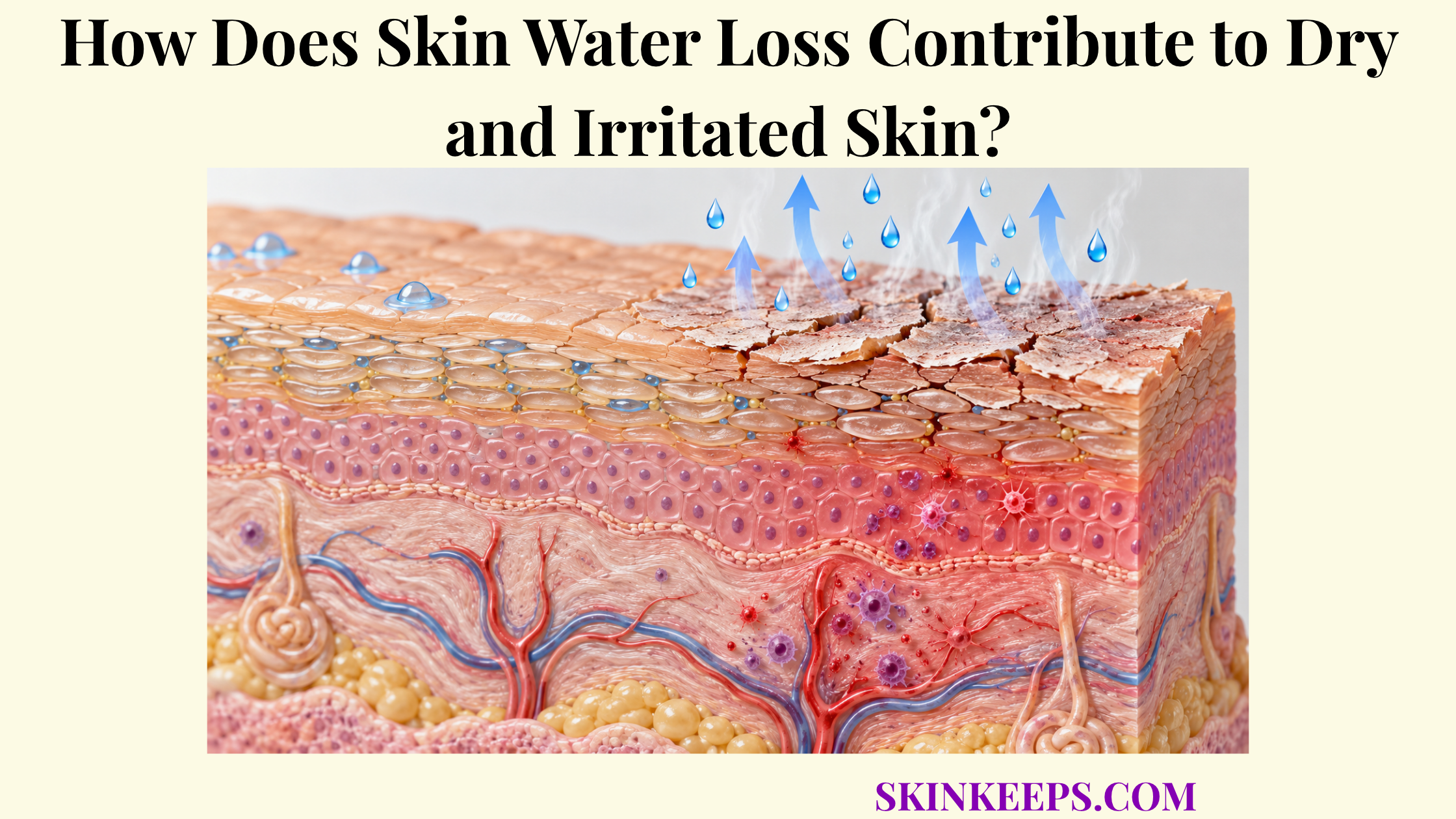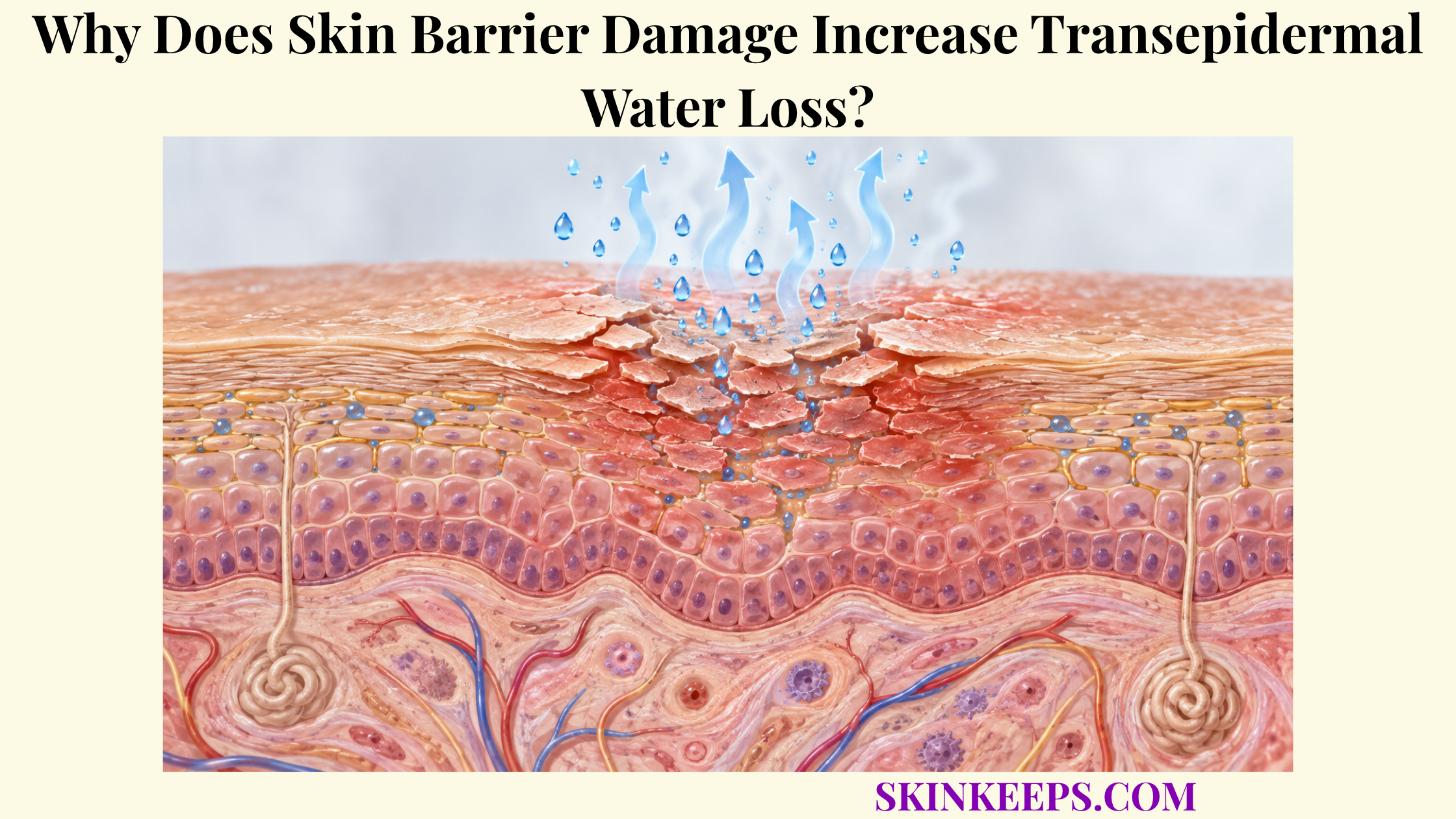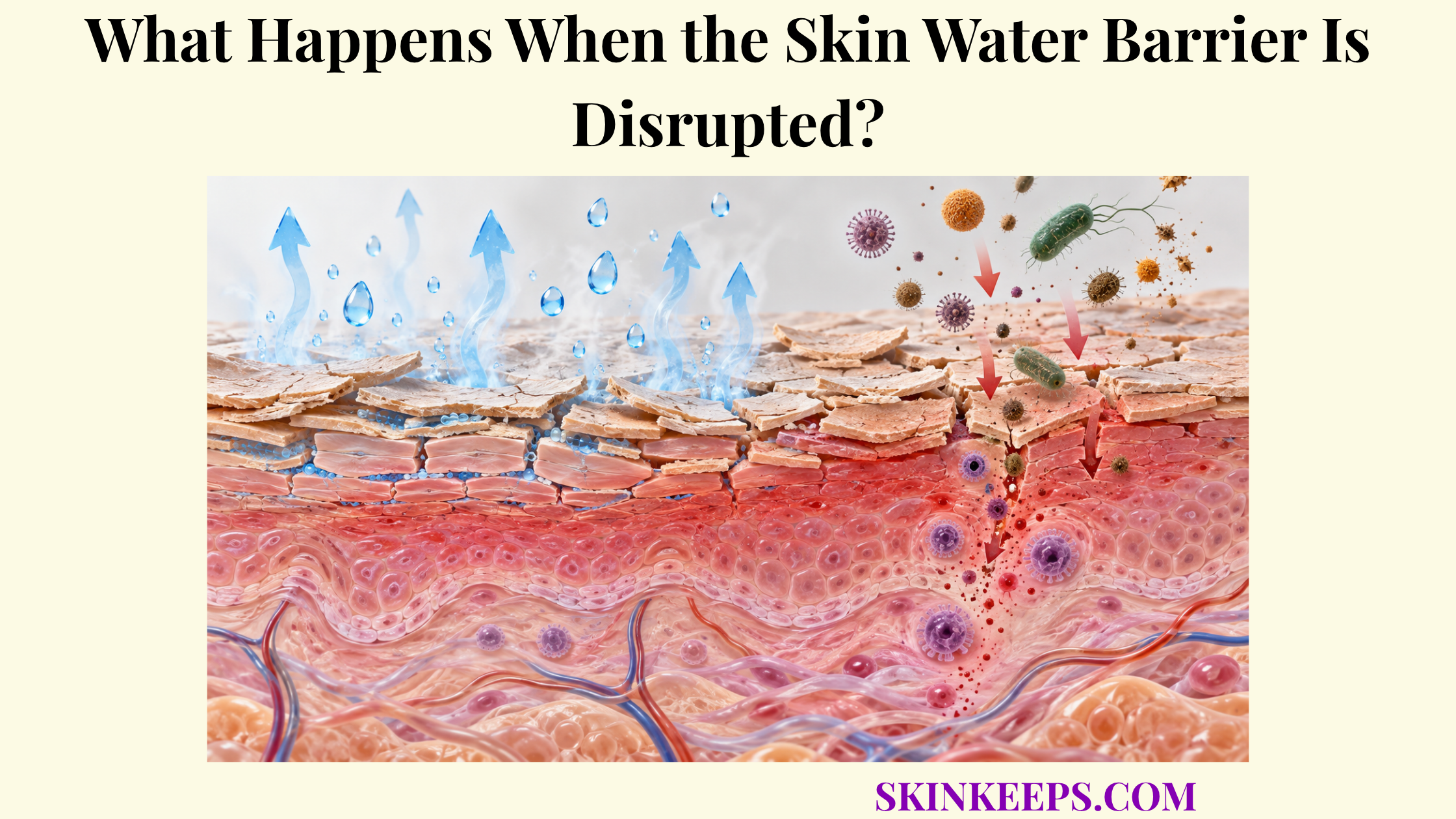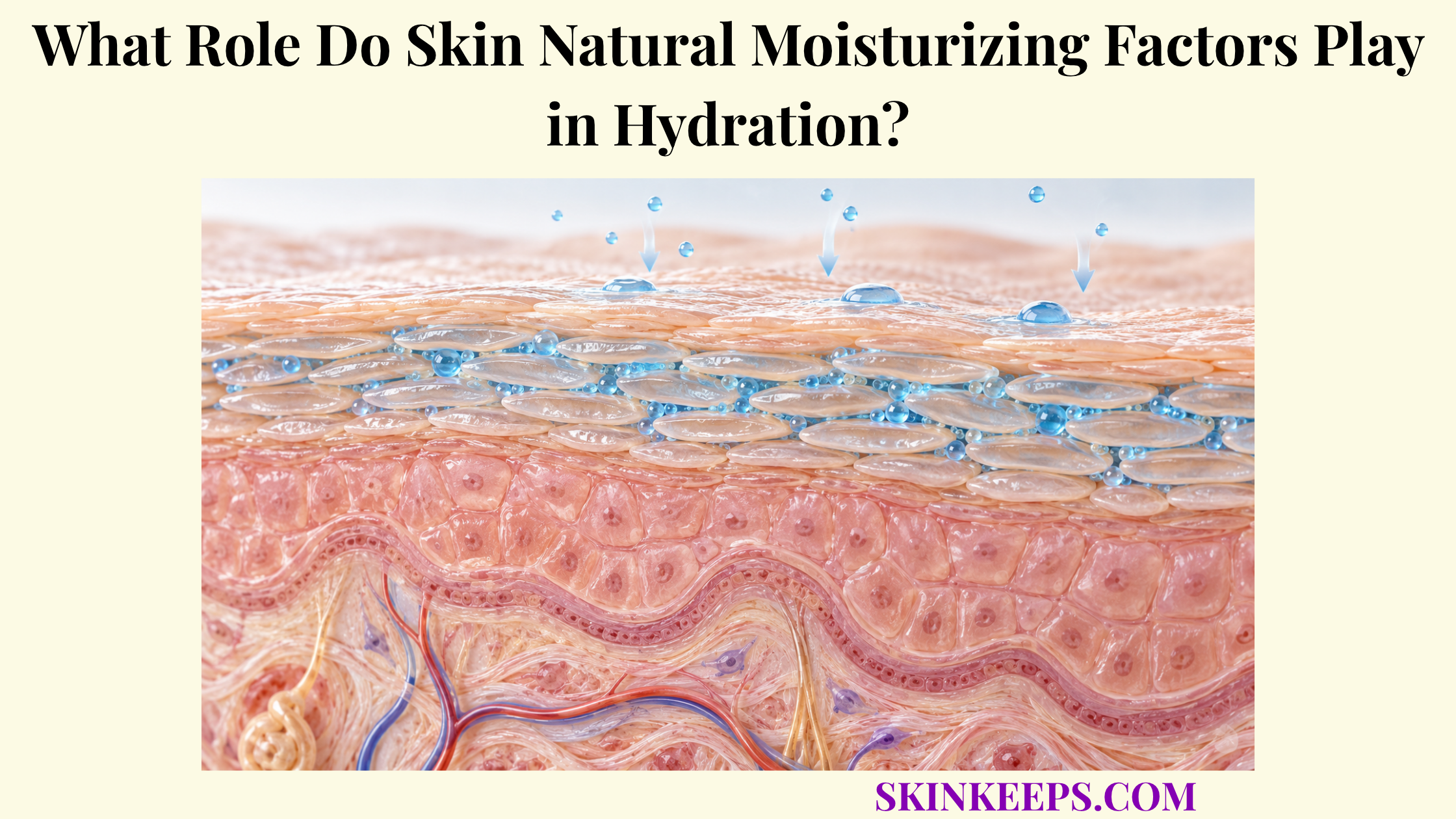
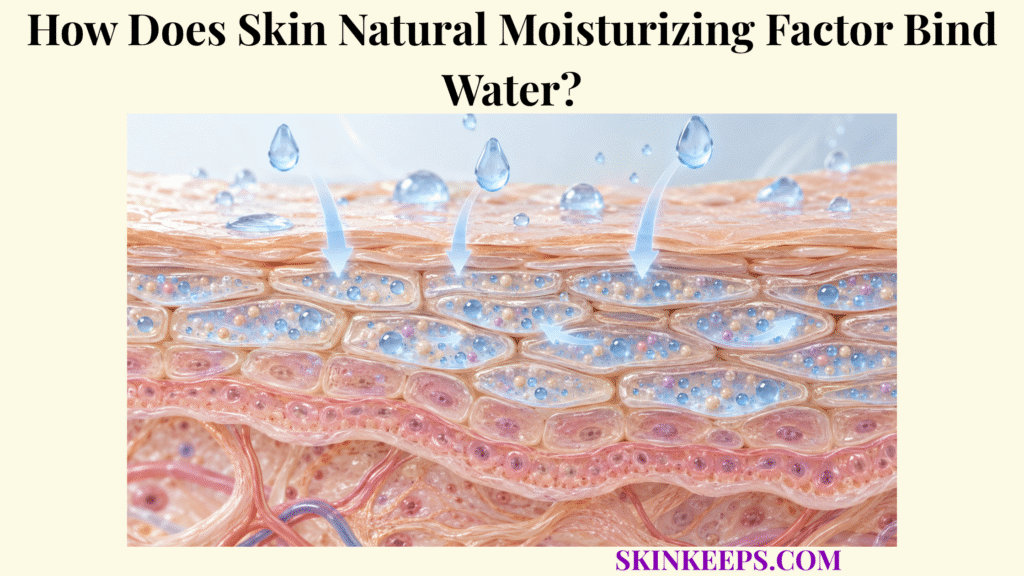
Skin natural moisturizing factor binds water through a concentrated mixture of hygroscopic and osmotically active molecules inside stratum-corneum corneocytes, where polar and ionic chemical groups interact reversibly with water and increase intracellular hydration.
NMF is not an occlusive seal and does not obtain all water from the atmosphere. Its components retain water dynamically, help plasticize the keratin-rich corneocyte matrix, support the hydration environment required for normal desquamation, and work alongside extracellular lipids that slow water escape.
Where Does Skin Natural Moisturizing Factor Hold Water?
Skin natural moisturizing factor holds water primarily inside mature stratum-corneum corneocytes, where its small soluble molecules are distributed throughout the protein-rich intracellular matrix.
Where Is NMF Located Relative to Corneocytes?
NMF is concentrated mainly inside corneocytes rather than in the extracellular lipid lamellae surrounding them. Its broader physiological role is covered under skin natural moisturizing factors.
Is NMF-Bound Water Stored in a Special Compartment?
No. Water is distributed throughout the corneocyte matrix and dynamically associates with NMF solutes, keratin, proteins, and ions rather than occupying a dedicated vesicle or fluid reservoir.
Why Does Intracorneocytic Location Matter?
Positioning NMF inside the corneocyte allows its osmotic and hygroscopic chemistry to act directly on intracellular water activity, keratin hydration, and the mechanical state of the cornified cell.
How Does Corneocyte Hydration Affect the Whole Stratum Corneum?
Because corneocytes make up most of the cellular volume of the stratum corneum, their hydration contributes strongly to tissue flexibility, roughness, swelling, and mechanical behavior. Broader whole-cell mechanics belong to skin corneocyte water retention.
How Does Skin Natural Moisturizing Factor Attract Water?
Skin natural moisturizing factor attracts and retains water because its component molecules contain polar, charged, and ionizable groups that interact favorably with water while their high intracellular concentration contributes osmotic water-holding capacity.
How Do Amino Acids Interact With Water?
Free amino acids contain amino, carboxyl, and side-chain groups capable of polar and ionic interactions with water, allowing them to contribute to corneocyte hydration and osmotic balance. Individual amino acids differ chemically and should not be treated as equivalent humectants.
Why Is PCA Strongly Hygroscopic?
Pyrrolidone carboxylic acid (PCA) is a highly polar amino-acid-derived molecule that readily associates with water and contributes substantially to the water-holding properties of the filaggrin-derived NMF fraction.
How Do Lactate and Urea Contribute?
Lactate and urea are small water-soluble molecules that expand the hygroscopic and osmotically active solute pool in superficial corneocytes. Human comparison data also indicate that sweat contributes materially to stratum-corneum lactate and urea.
How Do Salts Support Water Retention?
Dissolved sodium, potassium, and other ions become surrounded by hydration shells and contribute to osmotic conditions that influence water distribution in the stratum corneum. Higher salt concentration is not automatically better; physiological balance matters.
Does NMF Only Draw Water From the Air?
No. NMF primarily changes how water is retained within the stratum corneum; that water can originate from deeper epidermal tissue as well as equilibrate with environmental humidity. Detailed component origins belong to skin natural moisturizing factor components.
| NMF component | Major source / context | Hygroscopic or osmotic role | Hydration effect |
|---|---|---|---|
| Free amino acids | Largely filaggrin-derived | Polar / ionizable water interactions | Increase intracellular water retention |
| PCA | Mainly filaggrin-derived | Strongly hygroscopic polar solute | Supports sustained corneocyte hydration |
| UCA | Histidine / filaggrin-derived | Polar NMF component | Adds to NMF physicochemical environment |
| Lactate | Metabolic + sweat contribution | Ionic / hygroscopic solute | Supports SC water content |
| Urea | Physiologic + sweat contribution | Small polar hygroscopic molecule | Supports corneocyte hydration |
| Sodium / potassium | Multiple sources including sweat | Ionic hydration + osmotic contribution | Influence local water balance |
| Other small solutes | Mixed origins | Add total dissolved osmotic strength | Broaden NMF water-holding capacity |
NMF is a mixed-origin system; components differ in chemistry and biological source, so this table describes complementary roles rather than a universal strongest-to-weakest ranking.
How Does Skin Natural Moisturizing Factor Keep Corneocytes Hydrated?
Skin natural moisturizing factor keeps corneocytes hydrated by increasing the amount of water retained within their protein-rich matrix, which plasticizes keratin structures and reduces excessive stiffness and brittleness.
How Does Water Change Corneocyte Proteins?
Water increases molecular mobility within the keratin-rich corneocyte matrix and acts as a plasticizer, allowing cornified tissue to deform more readily under normal mechanical stress.
Why Do Poorly Hydrated Corneocytes Become Stiffer?
When water content falls, protein molecular mobility decreases and the cornified matrix becomes more rigid, increasing tissue brittleness and susceptibility to roughness or fissuring under sufficient mechanical stress.
How Does NMF Extraction Affect Corneocyte Molecular Mobility?
Experimental extraction of NMF from isolated stratum corneum reduces molecular mobility in keratin filaments and lipid structures, supporting the view that polar NMF solutes influence the physical state of hydrated cornified tissue. These isolated-tissue findings explain mechanism rather than serving as treatment guidance.
Does Maximum Corneocyte Hydration Produce Maximum Barrier Strength?
No. Physiological hydration improves flexibility, but excessive hydration can cause swelling and alter permeability, friction, and mechanical behavior, so normal function depends on balanced—not maximal—water content within the broader skin water barrier.
How Does Skin Natural Moisturizing Factor Work With Barrier Lipids?
Skin natural moisturizing factor works with barrier lipids through complementary mechanisms: NMF retains water inside corneocytes, while intercellular lipid lamellae restrict the rate at which that water diffuses out between the cells.
What Water-Control Task Does NMF Perform?
NMF increases the water-holding capacity of individual corneocytes through its concentrated pool of soluble hygroscopic and osmotically active molecules.
What Water-Control Task Do Barrier Lipids Perform?
Ceramide-, cholesterol-, and free-fatty-acid-rich lipid lamellae provide the major continuous resistance to outward water diffusion through spaces between corneocytes. Their detailed organization belongs to skin intercellular lipids.
Why Can NMF Not Replace Intercellular Lipids?
If extracellular permeability becomes too high, water can leave the stratum corneum faster than intracellular NMF can maintain normal hydration. Water-holding capacity therefore cannot compensate indefinitely for severe water-loss resistance failure.
Why Can Barrier Lipids Not Replace NMF?
Even a low-permeability lipid matrix cannot supply the intracellular osmotic and hygroscopic capacity required to keep corneocyte proteins appropriately hydrated.
How Does This Cooperation Affect TEWL?
Intercellular lipids exert the stronger direct influence on whole-barrier water flux, while NMF determines much of the water content retained within corneocytes, so hydration and TEWL are related but not identical. Detailed flux physiology belongs to skin transepidermal water loss.
How Does Skin Natural Moisturizing Factor Support Normal Desquamation?
Skin natural moisturizing factor supports normal desquamation indirectly by maintaining the water environment needed for proteases to degrade corneodesmosomal adhesion structures in an orderly manner.
What Must Happen Before a Corneocyte Can Shed?
Corneodesmosomal adhesion structures must be progressively degraded so mature surface corneocytes can detach individually or in very small groups rather than persisting as larger visible aggregates.
Why Does Water Availability Matter to Desquamation?
Desquamatory proteases operate in a hydrated biochemical environment, so inadequate free water can reduce effective corneodesmosome degradation and slow the final steps of surface shedding.
Does NMF Directly Break Corneodesmosomes Apart?
No. NMF supports water availability; proteolytic enzymes perform the actual cleavage of corneodesmosomal proteins.
Why Can Low Hydration Cause Scaling?
When corneodesmosome degradation becomes incomplete, mature corneocytes can remain attached in larger clusters and become visible as roughness, flaking, or scaling.
Is Hydration the Only Control of Desquamation?
No. Desquamation also depends on stratum-corneum pH, protease inhibitors, enzyme abundance, lipid environment, corneodesmosomal substrates, and epidermal differentiation. NMF-supported hydration is one part of that regulatory environment.
What Reduces Skin Natural Moisturizing Factor Water Binding?
Skin natural moisturizing factor water binding becomes less effective when total NMF decreases, available water falls, or barrier disruption allows retained water to escape faster than intracellular hygroscopic mechanisms can maintain hydration.
Does Low Humidity Chemically Weaken NMF?
No. Low humidity mainly reduces external water availability and increases the drying gradient; it does not necessarily reduce the intrinsic hygroscopicity of the NMF molecules that remain.
Can Low Humidity Change NMF Production?
Yes. Reconstructed human epidermis studies show that lower humidity can increase filaggrin deimination and breakdown and raise measured NMF in that model, indicating an adaptive response to drying. This does not mean low humidity preserves normal hydration in living human skin.
How Can Repeated Washing Reduce Effective NMF?
Repeated washing or prolonged water exposure can leach water-soluble NMF from superficial corneocytes under some conditions, but the magnitude depends on cleanser chemistry, temperature, duration, frequency, body site, and baseline barrier state. Human washing studies with modern mild cleansers also show that not every repeated-washing protocol causes severe barrier injury.
How Can Harsh Surfactant Exposure Affect NMF?
Strong surfactant exposure can disturb the stratum corneum and alter several NMF components, but different molecules need not change in parallel because NMF is a mixed-origin system. Concentrated irritant-challenge data should not be generalized to ordinary cleansing.
How Can Filaggrin Impairment Reduce NMF Water Binding?
Reduced filaggrin availability or altered processing lowers production of free amino acids, PCA, UCA, and related molecules, reducing the total pool of intracellular hygroscopic solutes rather than changing the intrinsic chemical affinity of every remaining molecule.
How Can Barrier Disruption Reduce Effective NMF Hydration?
Skin barrier disruption can increase outward water diffusion so that even chemically normal NMF operates against a stronger water-loss gradient. In that setting the NMF molecules remain hygroscopic, but water leaves more rapidly.
What Happens When Skin Natural Moisturizing Factor Becomes Deficient?
When skin natural moisturizing factor becomes deficient, corneocytes lose part of their intracellular hygroscopic and osmotic capacity, reducing water content and making the stratum corneum more susceptible to stiffness, roughness, abnormal scaling, and fissuring.
Why Does NMF Deficiency Lower Water-Holding Capacity?
Fewer dissolved hygroscopic molecules reduce the number of polar, ionic, and osmotically active interactions available to retain water within corneocytes. This lowers total water-holding capacity without implying that each remaining PCA or amino-acid molecule has become chemically weaker.
Why Do NMF-Deficient Corneocytes Become Stiffer?
Lower hydration reduces water-mediated plasticization of keratin and other cornified proteins, increasing rigidity and brittleness.
Why Can NMF Deficiency Increase Roughness and Scaling?
Reduced hydration alters mechanical properties and can impair normal hydration-dependent corneodesmolysis, encouraging surface corneocytes to remain attached in visible clusters.
Can NMF Deficiency Contribute to Cracking?
Yes. A dry, stiff stratum corneum is less able to accommodate mechanical deformation, which can increase susceptibility to superficial fissuring when additional barrier stresses are present.
Does Low NMF Automatically Mean the Entire Skin Barrier Has Failed?
No. Overall barrier performance also depends on intercellular lipids, corneocyte cohesion, differentiation, inflammation, environmental gradients, and transepidermal water-loss resistance.
Does Low NMF Diagnose a Skin Disease?
No. Altered NMF occurs in several dry or inflammatory skin states and varies among molecular components, so low hydration or low measured NMF does not independently identify a specific disorder. Broader consequences of persistent dehydration are discussed under skin water loss and irritation.
What Are the Key Takeaways About Skin Natural Moisturizing Factor?
The key fact about skin natural moisturizing factor is that it maintains corneocyte hydration through reversible molecular interactions and osmotic effects produced by a concentrated mixture of small hygroscopic molecules inside the stratum corneum.
NMF and barrier lipids perform complementary tasks: NMF determines much of intracellular water-holding capacity, while organized extracellular lipids determine much of resistance to water escape. Hydration then influences keratin mobility and desquamation, but the system remains dynamic and can be challenged by low water availability, NMF loss, or increased barrier permeability.
- Skin natural moisturizing factor acts mainly inside mature corneocytes.
- NMF is a mixture rather than one substance.
- NMF includes amino acids, PCA, UCA, lactate, urea, ions, and other small polar molecules.
- NMF water binding is dynamic and reversible rather than permanent covalent attachment.
- Polar and ionic groups allow NMF molecules to interact favorably with water.
- High concentrations of small NMF molecules contribute substantial osmotic water-holding capacity.
- NMF does not obtain all corneocyte water only from atmospheric humidity.
- Water also moves outward from deeper epidermal tissue.
- Much of the free-amino-acid, PCA, and UCA fraction is linked to filaggrin degradation.
- Lactate, urea, sodium, and potassium can have important non-filaggrin sources, including sweat.
- Filaggrin first performs a structural keratin-organizing function before later degradation contributes to NMF.
- NMF-supported hydration plasticizes the keratin-rich corneocyte matrix.
- Poorly hydrated corneocytes become more rigid and brittle.
- Maximum hydration is not automatically optimal barrier function.
- NMF and intercellular lipids perform different but complementary functions.
- NMF increases intracellular water holding.
- Intercellular lipids provide much of the resistance to outward water diffusion.
- NMF level and TEWL are not interchangeable measurements.
- Hydration supports the enzyme environment required for normal desquamation.
- NMF itself does not enzymatically degrade corneodesmosomes.
- Low humidity reduces water availability but does not necessarily reduce NMF amount or intrinsic hygroscopicity.
- Low humidity can stimulate adaptive filaggrin breakdown in experimental epidermal systems.
- Repeated washing or soaking can leach superficial soluble NMF under some conditions.
- Strong surfactant disruption does not affect every NMF component identically.
- Filaggrin impairment can reduce filaggrin-derived NMF.
- Barrier disruption can reduce effective hydration even when NMF molecules remain chemically functional.
- Reduced NMF can contribute to dryness, stiffness, roughness, scaling, and fissuring.
- NMF deficiency alone does not diagnose a specific skin disease or explain every form of dry skin.
What Common Questions Do People Ask About Skin Natural Moisturizing Factor?
Common questions about skin natural moisturizing factor focus on how NMF physically interacts with water, whether it draws water from the air, which molecules provide hygroscopicity, how NMF differs from barrier lipids, and what happens when its concentration falls.
How Does Skin Natural Moisturizing Factor Physically Hold Water?
NMF contains many small polar and ionic molecules that form reversible interactions with water and create substantial osmotic strength inside corneocytes, increasing the amount of water retained within the cornified-cell matrix.
Does Skin Natural Moisturizing Factor Pull Water Only From the Air?
No. NMF helps retain water already present in the stratum corneum, including water diffusing outward from deeper epidermal tissue; environmental humidity influences the equilibrium but is not the sole source of corneocyte water.
Which Skin Natural Moisturizing Factor Components Bind Water?
Important water-associated NMF components include free amino acids, PCA, lactate, urea, UCA, sodium, potassium, and other small soluble compounds, although their individual chemical mechanisms and biological sources differ.
How Is Skin Natural Moisturizing Factor Different From Barrier Lipids?
NMF mainly increases water retention inside corneocytes, whereas intercellular ceramide-, cholesterol-, and free-fatty-acid-rich lipids slow outward water diffusion through the extracellular stratum-corneum pathway.
What Happens When Skin Natural Moisturizing Factor Is Too Low?
Lower NMF reduces corneocyte water-holding capacity and can contribute to reduced flexibility, roughness, scaling, brittleness, and fissuring, although whole-barrier function also depends strongly on lipids, differentiation, inflammation, and environmental conditions.
Sources & Evidence
[PubMed] Skin Hydration: A Review on Its Molecular Mechanisms
[PMC] Protective Barriers Provided by the Epidermis
[PMC] The Discovery and Function of Filaggrin
[PubMed] Sweat Constitutes Several Natural Moisturizing Factors, Lactate, Urea, Sodium, and Potassium
Medical/Educational Disclaimer
This page explains normal stratum-corneum hydration physiology and is not medical advice. Seek professional evaluation for persistent severe dryness, painful or bleeding fissures, weeping skin, widespread inflammation, or suspected infection.