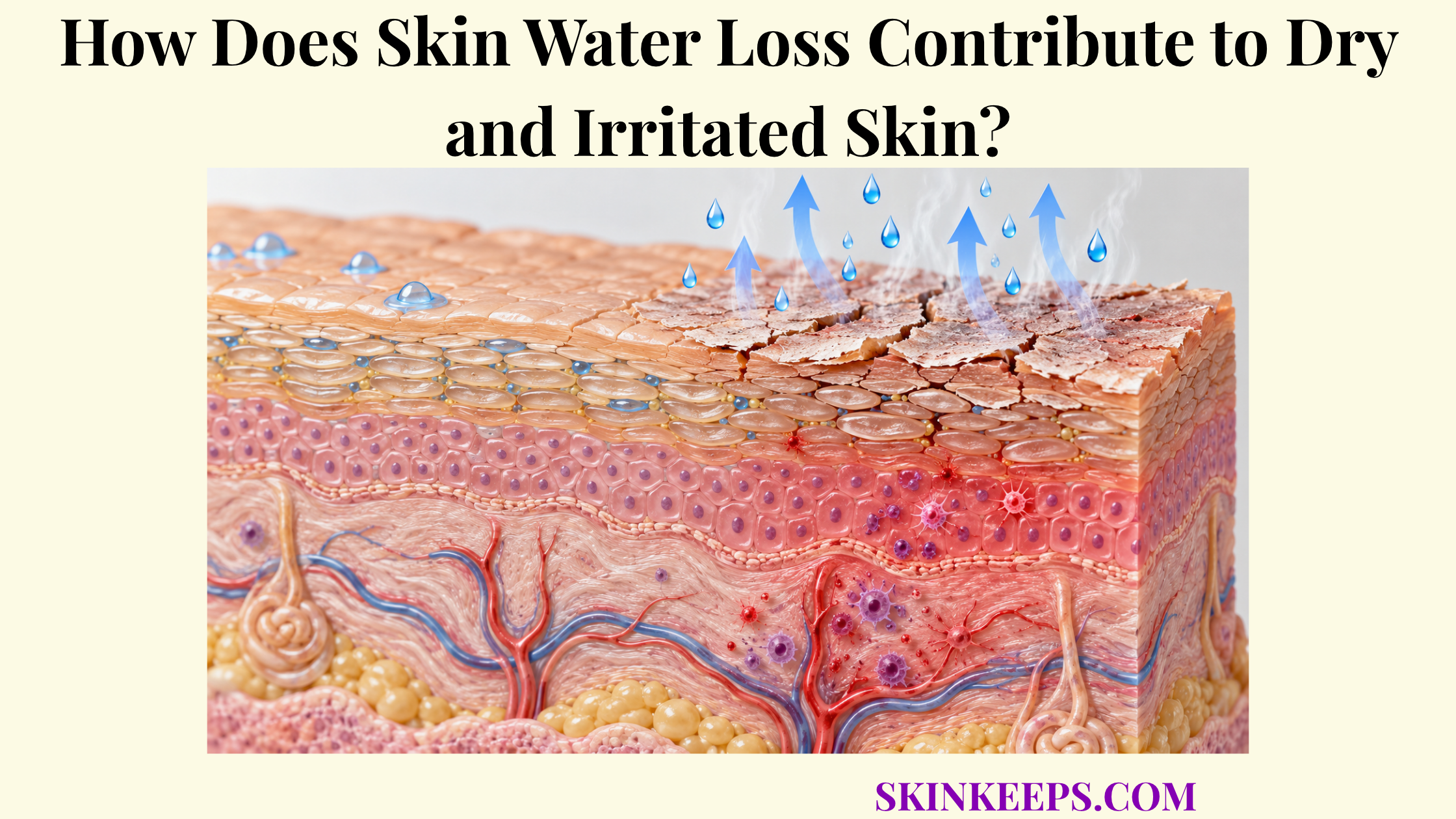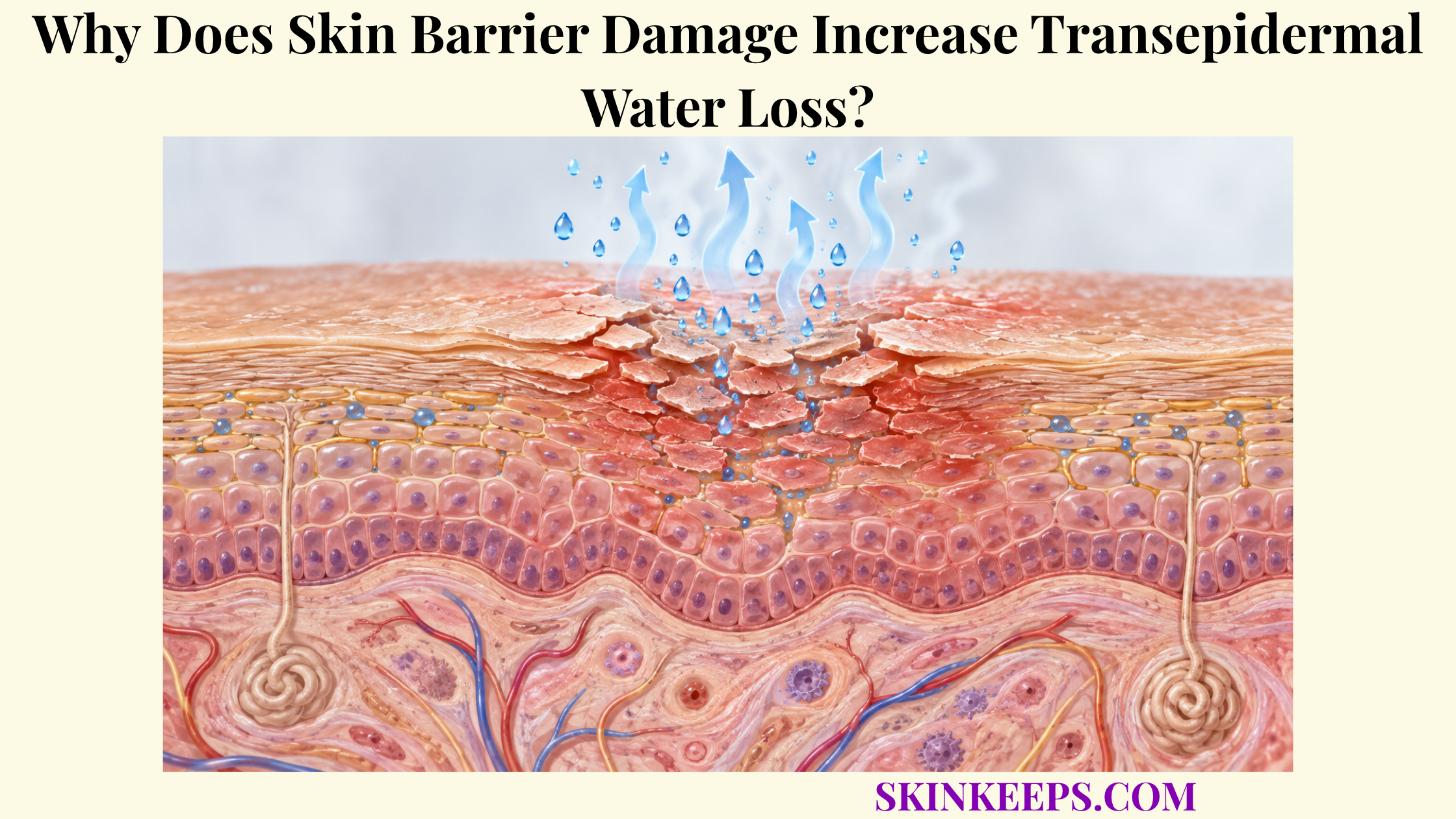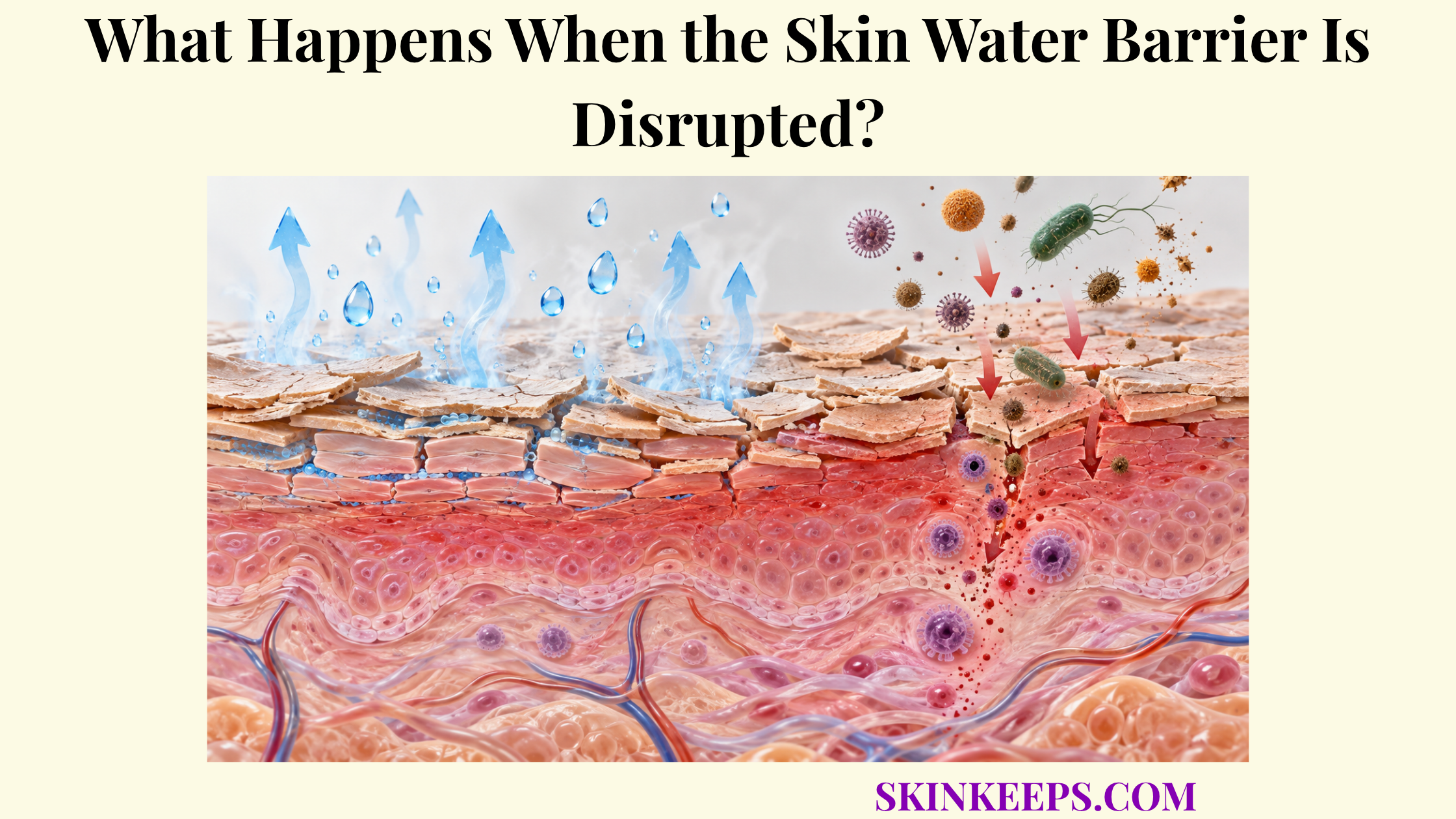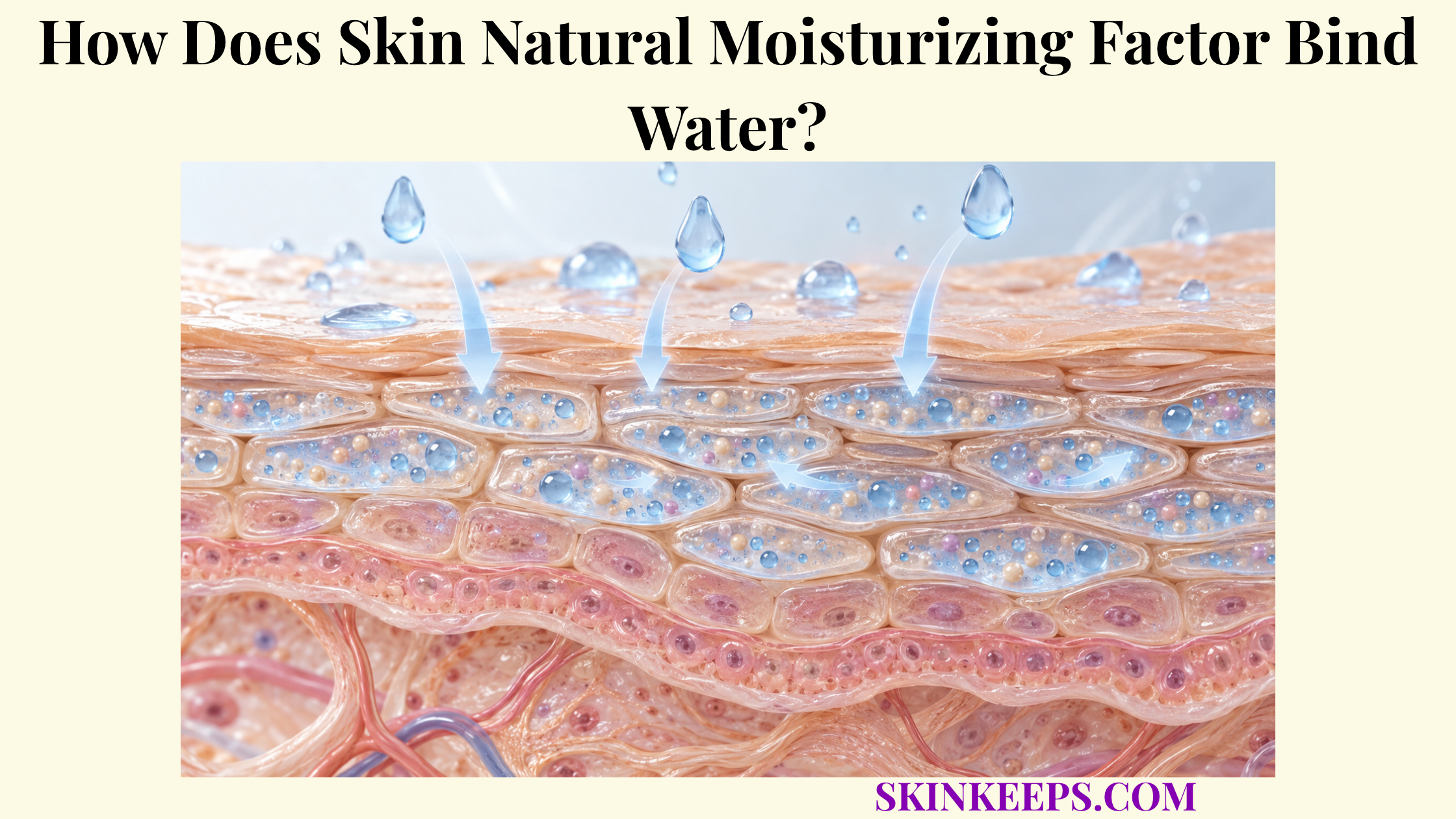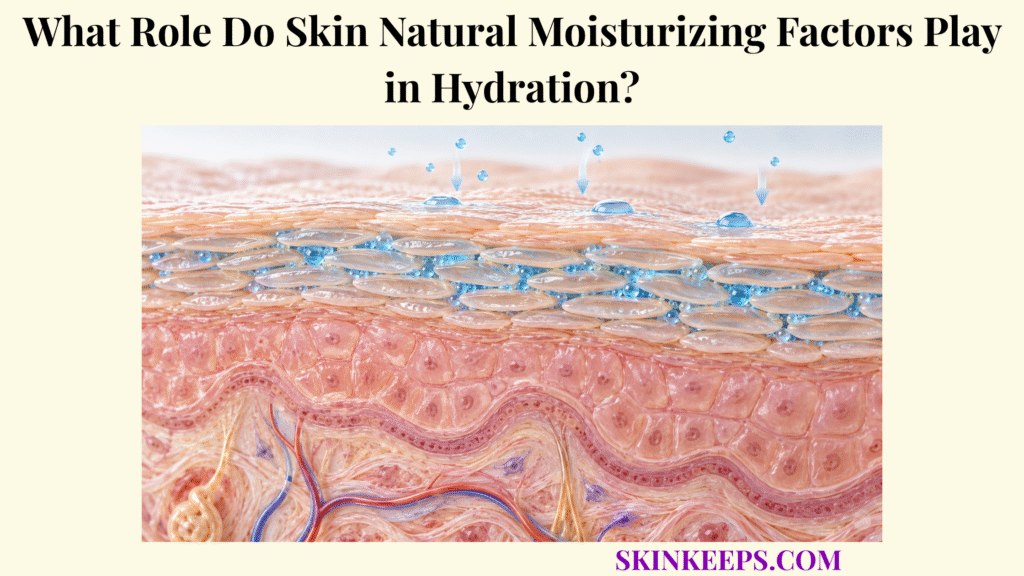
Skin natural moisturizing factors maintain hydration by concentrating small hygroscopic molecules inside stratum-corneum corneocytes, increasing their ability to retain water while surrounding intercellular lipids slow that water from escaping.
NMF is a chemically diverse intracellular mixture that includes amino acids, PCA, UCA, lactate, urea, ions, and other small solutes. Much—but not all—of the amino-acid-derived fraction comes from filaggrin, and adequate NMF-supported hydration contributes to flexibility, desquamation, and overall stratum-corneum function.
Where Do Skin Natural Moisturizing Factors Hold Water?
Skin natural moisturizing factors hold water primarily inside mature stratum-corneum corneocytes, where their high concentration of small polar and ionic molecules helps maintain the hydrated intracellular environment of the cornified cells.
Where Are Skin Natural Moisturizing Factors Located?
Natural moisturizing factor is concentrated mainly within mature corneocytes rather than in the extracellular lipid matrix, surface sebum, or dermis. This intracellular water-retention system supports the larger physiology of skin water-loss prevention and sits inside the broader skin water barrier.
How Does Intracellular NMF Affect Corneocyte Water Content?
The concentrated pool of hygroscopic solutes increases the corneocyte’s capacity to retain water against the outward drying gradient across the stratum corneum. Their combined osmotic strength and water interactions help maintain an intracellular environment that remains hydrated under ordinary physiologic conditions.
Does NMF Store Water in a Separate Reservoir?
No. NMF-associated water is distributed throughout the corneocyte’s protein- and solute-rich intracellular matrix rather than stored inside a dedicated compartment or water pocket.
How Does NMF Contribute to Surface Hydration?
Because corneocytes form the outer stratum corneum, their NMF-dependent water content contributes directly to superficial tissue hydration, flexibility, and texture. Whole-cell hydration mechanics are covered in skin corneocyte water retention.
How Do Skin Natural Moisturizing Factors Bind Water?
Skin natural moisturizing factors bind water through concentrated hygroscopic and osmotically active molecules whose polar, charged, and ionizable chemical groups interact with water inside the corneocyte.
What Does Hygroscopic Mean for Skin Natural Moisturizing Factors?
Hygroscopic NMF molecules have chemical groups that associate readily with water, allowing the corneocyte to retain more water than a comparable protein matrix without those solutes. This does not mean NMF simply “pulls water from the air”; much stratum-corneum water originates from deeper tissue.
How Do Amino Acids Bind Water?
Free amino acids contain polar and ionizable groups that interact with surrounding water and contribute to the osmotic strength of the intracellular NMF pool. No single amino acid should be treated as universally dominant across all sites and conditions.
How Does PCA Support Water Binding?
Pyrrolidone carboxylic acid (PCA) is a strongly hygroscopic amino-acid-derived component that contributes substantially to the water-holding capacity of the filaggrin-related NMF fraction. PCA is a polar small molecule, not a lipid.
How Do Lactate and Urea Support Hydration?
Lactate and urea are small water-soluble molecules that add to the hygroscopic and osmotic capacity of the corneocyte environment. They are physiologic NMF components but should not be presented as principal direct filaggrin breakdown products.
Do All NMF Components Bind Water in Exactly the Same Way?
No. NMF components differ chemically, so their hydration, osmotic, buffering, and physicochemical contributions overlap without being identical. Component-level composition belongs to skin natural moisturizing factor components, while detailed hygroscopic chemistry belongs to skin natural moisturizing factor water binding.
| NMF component | Main origin / context | Water-binding role | Hydration effect |
|---|---|---|---|
| Free amino acids | Largely filaggrin-derived | Polar / osmotic water interactions | Increase corneocyte hydration capacity |
| PCA | Mainly amino-acid / filaggrin-derived | Strong hygroscopic activity | Helps retain intracellular water |
| UCA | Histidine / filaggrin-derived | Polar NMF component; pH contribution | Supports SC physicochemical environment |
| Lactate | Metabolic / epidermal sources | Hygroscopic small molecule | Adds water-holding capacity |
| Urea | Physiologic NMF pool | Hygroscopic water association | Supports hydration and flexibility |
| Electrolytes | Multiple physiologic sources | Ionic / osmotic contribution | Supports water balance |
| Sugars / other polar solutes | Mixed sources | Additional water interaction | Broadens NMF hydration capacity |
NMF is a variable mixture rather than a fixed formula; relative composition changes with stratum-corneum depth, body site, age, environment, differentiation, and barrier state.
How Do Skin Natural Moisturizing Factors Form From Filaggrin?
Skin natural moisturizing factors form partly through a regulated maturation pathway in which profilaggrin becomes filaggrin, filaggrin first organizes keratin, and later proteolysis releases amino acids that generate important NMF components such as PCA and UCA.
Where Does Profilaggrin Begin?
Profilaggrin is stored in keratohyalin granules of differentiating granular-layer keratinocytes before it is processed during terminal epidermal differentiation. It is a large precursor protein rather than NMF itself.
What Does Filaggrin Do Before Forming NMF?
Filaggrin monomers associate with keratin intermediate filaments and help reorganize and compact the keratinocyte as it becomes a mature corneocyte. At this structural stage, intact filaggrin is not yet the low-molecular-weight NMF mixture.
How Does Filaggrin Become NMF Precursors?
After its structural role is completed, filaggrin undergoes regulated chemical modification and proteolysis into free amino acids. Subsequent metabolism generates hygroscopic derivatives such as PCA from glutamine-related products and UCA from histidine.
Does Filaggrin Produce Every NMF Component?
No. Filaggrin supplies a major amino-acid-derived fraction of NMF, while lactate, urea, ions, sugars, and other small solutes have additional physiological sources. NMF is therefore produced largely—but not exclusively—from filaggrin-related breakdown products.
Does Environmental Humidity Affect Filaggrin Processing?
Experimental reconstructed human epidermis shows that reduced humidity can accelerate selected filaggrin-processing steps and increase measured NMF in that model, suggesting an adaptive response to environmental drying. This does not mean dry conditions preserve normal hydration or universally increase NMF in intact human skin.
How Do Skin Natural Moisturizing Factors Support Barrier Function?
Skin natural moisturizing factors support barrier function indirectly by maintaining the corneocyte hydration required for tissue flexibility, normal protein behavior, hydration-dependent enzyme activity, and orderly desquamation.
How Does NMF Help Corneocytes Remain Flexible?
NMF-supported water content helps plasticize the keratin-rich corneocyte matrix, increasing molecular mobility and making the stratum corneum less brittle during normal deformation. NMF supports this mechanical behavior through hydration rather than by directly strengthening keratin.
How Does Hydration Support Normal Desquamation?
Appropriate hydration supports proteolytic processes that progressively weaken corneodesmosomes so mature corneocytes can shed in small, orderly units. Local pH, enzyme abundance, inhibitors, substrate availability, and lipid environment also influence desquamation.
Does NMF Directly Remove Corneodesmosomes?
No. NMF maintains the hydrated physicochemical environment required for normal desquamatory enzyme function; proteases perform the actual degradation of corneodesmosomal proteins.
How Can Low NMF Contribute to Scaling?
When corneocytes become too dry, hydration-dependent corneodesmosome processing can become less effective, allowing cells to remain attached in larger visible aggregates that contribute to roughness and scaling.
Does More NMF Always Mean Better Barrier Function?
Not necessarily. Normal barrier function requires balanced hydration, lipid organization, differentiation, pH, and enzyme activity rather than maximal water content or one isolated NMF measurement. Excessive hydration can also alter stratum-corneum swelling, permeability, and friction behavior.
How Do Skin Natural Moisturizing Factors Work With Barrier Lipids?
Skin natural moisturizing factors work with barrier lipids by retaining water inside corneocytes while ceramide-, cholesterol-, and free-fatty-acid-rich extracellular lamellae slow water diffusion between those cells.
What Does NMF Control?
NMF mainly controls the amount of water that individual corneocytes can retain within their intracellular environment through a concentrated pool of hygroscopic and osmotically active solutes.
What Do Intercellular Lipids Control?
Intercellular lipids provide much of the resistance that prevents water from diffusing too rapidly through the continuous extracellular stratum-corneum pathway. Their specialized lamellar architecture is covered under skin intercellular lipids.
Why Can NMF Not Replace the Lipid Barrier?
Even highly hygroscopic corneocytes cannot maintain normal hydration if water escapes through a severely permeable extracellular barrier faster than intracellular solutes can retain it. Water-holding capacity cannot substitute for adequate water-loss resistance.
Why Can Lipids Not Replace NMF?
A low-permeability lipid barrier slows water loss but does not supply the intracellular hygroscopic molecules required for optimal corneocyte water content and flexibility. Lipids and NMF therefore solve different but complementary hydration problems.
How Are NMF and TEWL Related?
NMF influences corneocyte hydration, while TEWL reflects whole-barrier passive water flux; the two are physiologically related but are not interchangeable measurements. Detailed flux interpretation belongs to skin transepidermal water loss.
What Reduces Skin Natural Moisturizing Factors?
Skin natural moisturizing factors can decline when water-soluble components are leached from superficial corneocytes, filaggrin production or processing is altered, or barrier and inflammatory changes disturb normal epidermal differentiation.
Can Washing Reduce Skin Natural Moisturizing Factors?
Repeated soaking or cleansing can reduce superficial water-soluble NMF under some conditions, although the magnitude and persistence depend on exposure type, cleanser chemistry, water temperature, duration, frequency, friction, and baseline barrier state. Every wash should not be described as “stripping” NMF.
Is NMF Loss After Water Exposure Permanent?
Not necessarily. Human experimental studies show that superficial NMF can fall after soaking and later recover, indicating dynamic replenishment rather than automatically permanent depletion. Exact recovery timing from one protocol should not be generalized to every person or exposure.
Does Low Humidity Simply Deplete NMF?
No. Low humidity increases the drying challenge, but reconstructed-human-epidermis experiments also show adaptive increases in filaggrin deimination, degradation, and NMF formation under selected dry conditions. Reduced hydration and NMF generation are therefore not the same biological process.
How Can Altered Filaggrin Processing Reduce NMF?
Reduced filaggrin availability or abnormal processing can lower the supply of amino acids, PCA, UCA, and related NMF components generated during corneocyte maturation. Reduced NMF does not by itself prove an inherited filaggrin defect.
How Can Barrier Disruption Reduce Effective NMF Hydration?
A disrupted permeability barrier can increase outward water escape and facilitate loss of small water-soluble components, reducing the ability of the remaining NMF pool to maintain normal corneocyte hydration. The broader pathway belongs to skin barrier disruption.
How Can Inflammation Affect NMF?
Inflammatory signaling can alter epidermal differentiation and filaggrin expression or processing, which can secondarily change the amount of filaggrin-derived NMF. The pattern depends on biological context and does not identify a particular inflammatory disorder from NMF level alone.
What Happens When Skin Natural Moisturizing Factors Decline?
When skin natural moisturizing factors decline, corneocytes lose part of their hygroscopic and osmotic water-holding capacity, making the stratum corneum more susceptible to dehydration, stiffness, roughness, and abnormal shedding.
Why Does Lower NMF Reduce Corneocyte Hydration?
Fewer intracellular hygroscopic solutes reduce the capacity of the corneocyte matrix to retain water against the outward environmental gradient. The resulting hydration change depends on extracellular barrier resistance as well as NMF concentration.
Why Can Low NMF Increase Roughness and Scaling?
Reduced hydration makes the stratum corneum stiffer and can impair orderly corneodesmosome degradation, allowing larger groups of corneocytes to remain attached and shed visibly.
How Does Low NMF Affect Flexibility?
Lower water content decreases protein plasticization within corneocytes, making the outer tissue less pliable and more susceptible to cracking under mechanical stress when the drying challenge becomes substantial.
Does Low NMF Alone Explain Weak Barrier Function?
No. Barrier performance also depends on extracellular lipids, corneocyte structure, cohesion, differentiation, inflammation, environmental gradients, and the rate of transepidermal water loss. Clinical dryness is therefore multifactorial.
Is Reduced NMF a Diagnosis?
No. Reduced NMF can occur in several dry or disrupted barrier states and does not by itself identify a specific genetic or inflammatory skin disorder such as filaggrin deficiency, atopic dermatitis, ichthyosis, psoriasis, or contact dermatitis.
What Are the Key Takeaways About Skin Natural Moisturizing Factors?
The key fact about skin natural moisturizing factors is that they maintain corneocyte hydration through a concentrated intracellular mixture of hygroscopic molecules, while extracellular barrier lipids perform the complementary task of slowing water escape.
Filaggrin first helps organize keratin and only later contributes amino acids, PCA, UCA, and related NMF compounds after regulated breakdown. Lactate, urea, ions, sugars, and other small solutes expand the NMF pool, whose hydration effects support flexibility and orderly desquamation without replacing lipid-barrier function.
- Skin natural moisturizing factors are concentrated mainly inside mature stratum-corneum corneocytes.
- NMF is a mixture rather than one molecule.
- NMF includes free amino acids, PCA, UCA, lactate, urea, ions, and other small polar molecules.
- NMF molecules support hydration through hygroscopic and osmotic interactions with water.
- Water associated with NMF is distributed within the corneocyte matrix rather than stored in a separate reservoir.
- Profilaggrin is processed into filaggrin during terminal epidermal differentiation.
- Filaggrin first participates in keratin organization.
- Filaggrin is later modified and degraded to generate amino acids and important NMF derivatives.
- PCA is an important hygroscopic filaggrin-related NMF component.
- UCA is also derived substantially from filaggrin / histidine processing.
- Lactate and urea are NMF components but should not simply be called direct filaggrin breakdown products.
- Not all NMF originates from filaggrin.
- NMF-supported hydration helps corneocytes remain flexible.
- Appropriate hydration supports normal desquamatory enzyme activity.
- NMF does not directly degrade corneodesmosomes.
- NMF and intercellular lipids perform different but complementary hydration functions.
- NMF primarily controls intracellular water holding.
- Intercellular lipids primarily control extracellular water diffusion.
- NMF level and TEWL are related but are not interchangeable measurements.
- Soaking or repeated washing can alter superficial NMF under some conditions.
- Short-term NMF loss after water exposure can recover.
- Low humidity increases the drying challenge but may also stimulate adaptive filaggrin processing.
- Altered filaggrin production or processing can reduce filaggrin-derived NMF.
- Inflammation can alter NMF indirectly through epidermal differentiation pathways.
- Lower NMF can contribute to reduced hydration, stiffness, roughness, and scaling.
- Reduced NMF alone does not diagnose a specific skin disorder.
- Healthy hydration requires both water-holding capacity and water-loss resistance.
What Common Questions Do People Ask About Skin Natural Moisturizing Factors?
Common questions about skin natural moisturizing factors focus on where NMF is located, what molecules it contains, how filaggrin contributes, how NMF differs from barrier lipids, and what happens when NMF levels fall.
Where Are Skin Natural Moisturizing Factors Located?
Natural moisturizing factor is concentrated mainly inside mature stratum-corneum corneocytes, where its small water-soluble molecules contribute directly to intracellular water retention.
Which Molecules Make Up Skin Natural Moisturizing Factors?
Major NMF components include free amino acids, PCA, UCA, lactate, urea, inorganic ions, sugars, and other small polar compounds, although their relative abundance varies across skin sites and conditions.
Do All Skin Natural Moisturizing Factors Come From Filaggrin?
No. Filaggrin degradation supplies much of the free-amino-acid fraction and important derivatives such as PCA and UCA, while lactate, urea, ions, and other NMF components have additional physiological sources.
How Are Skin Natural Moisturizing Factors Different From Barrier Lipids?
NMF mainly retains water inside corneocytes, whereas intercellular ceramide-, cholesterol-, and free-fatty-acid-rich lipids slow water diffusion through the extracellular stratum-corneum pathway.
What Happens When Skin Natural Moisturizing Factors Become Too Low?
Lower NMF reduces corneocyte water-holding capacity and can contribute to lower stratum-corneum hydration, stiffness, roughness, abnormal scaling, and reduced barrier resilience, although these changes can also involve lipid and inflammatory abnormalities.
Sources & Evidence
Medical/Educational Disclaimer
This page explains normal stratum-corneum hydration physiology and is not medical advice. Seek professional evaluation for persistent severe dryness, painful or bleeding fissures, weeping skin, widespread inflammation, or suspected infection.