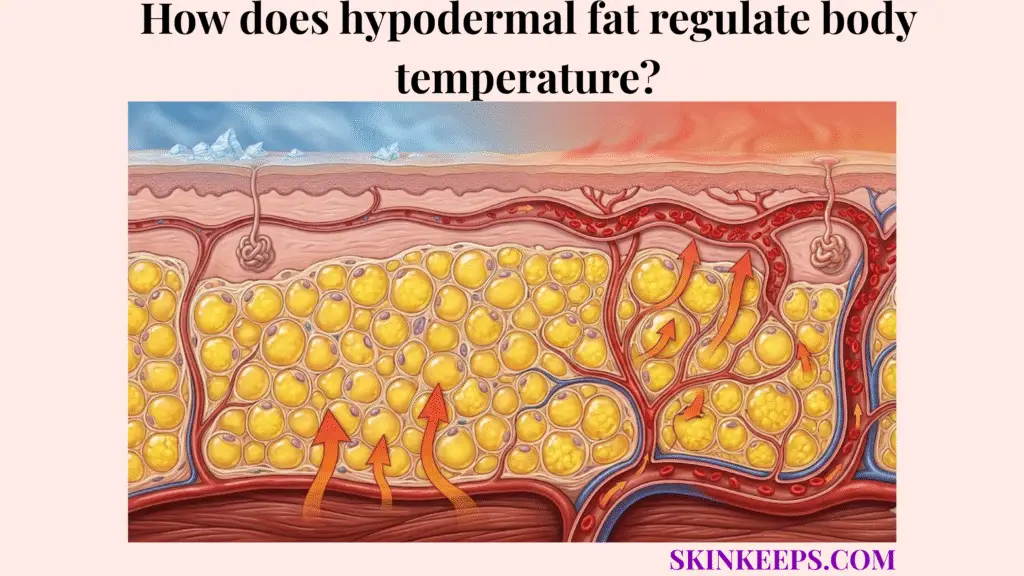
Hypodermal fat regulates body temperature by acting as an insulating layer that slows heat transfer, reduces heat loss, and helps maintain a more stable internal temperature when external conditions change.
Hypodermal fat does not regulate temperature alone. It works together with skin blood vessels, metabolism, sweating, shivering, vasoconstriction, and vasodilation, and that fat thickness and distribution affect how effective its thermal protection is.
This article will explain what hypodermal fat is, how it slows heat transfer, how it reduces heat loss, how it works with blood flow, how low and higher fat levels affect temperature regulation differently, and how it compares with other thermoregulation mechanisms.
What Is Hypodermal Fat in Body Temperature Regulation?
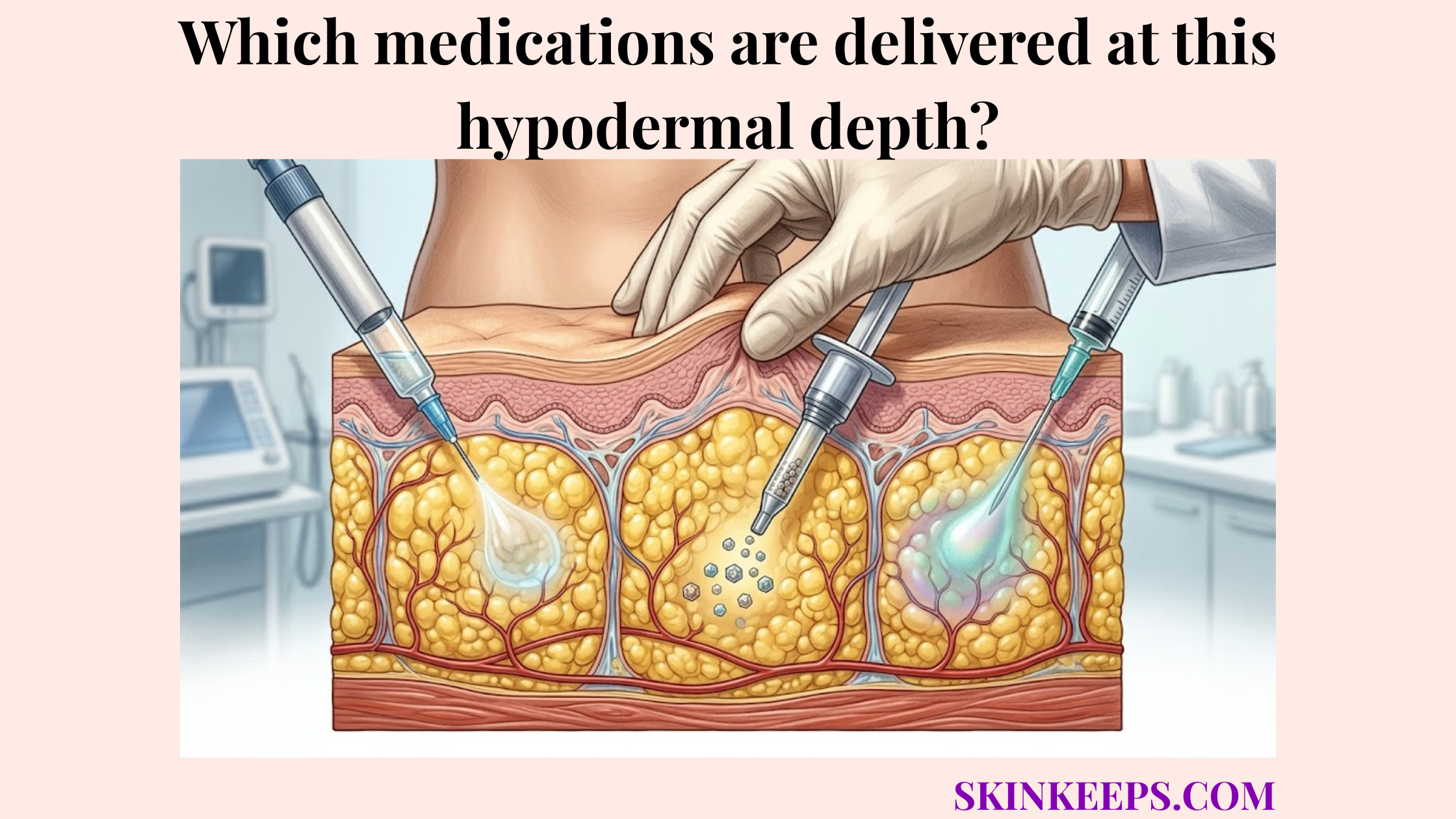
Hypodermal fat is the adipose-rich subcutaneous layer situated immediately beneath the dermis. Its anatomical position matters for insulation because it acts as a structural boundary between deep metabolic organs and the skin surface. Its thermal role consists mainly of passive insulation, cushioning, and resistance to heat transfer, although exploring whether brown fat can generate heat within the hypodermis provides important context on active biological heat generation.
Where Is Hypodermal Fat Located in Body Temperature Regulation?
The hypodermal fat layer is located precisely beneath the dermis and directly above deeper muscles and fascia. This location matters for thermal function because it forms an intermediate barrier between the deeper warm tissues and the much cooler outside environment. Because of this specific position, it plays an important physiological role in limiting how quickly heat escapes from inside the body.
What Makes Hypodermal Fat Different From the Dermis in Body Temperature Regulation?
Hypodermal fat is different from the dermis in body temperature regulation because the dermis participates actively in circulation-based heat exchange, while the much deeper, adipose-rich hypodermis contributes almost exclusively to passive insulation. Consequently, the dermis helps manage heat transfer actively through blood flow, while hypodermal fat mainly supports thermal stability by resisting passive heat loss.
Why Does Adipose Tissue Form the Main Insulating Layer in Body Temperature Regulation?
Adipose tissue forms the main insulating layer simply because it is a relatively poor conductor of heat. Physiologically, poor heat conduction means that internal heat moves through adipose tissue much more slowly than it travels through more vascular or highly hydrated tissues. El-Brawany et al. (2009) reported in [PubMed] that subcutaneous fat thermal conductivity has been measured around 0.23 W/m·K, helping explain why subcutaneous fat acts as an insulator to preserve internal warmth.
Why Does Hypodermal Fat Matter in Body Temperature Regulation?
Hypodermal fat matters profoundly because it physically reduces passive heat loss and helps protect absolute core temperature stability. It does not just “keep the body warm” statically; it expands from simple insulation to buffering, actively slowing how quickly environmental temperature changes affect deep internal tissues. Its functional importance is framed most clearly by context: its role becomes especially vital in cold conditions, during rapid cooling events, or when the body urgently needs time to activate other thermoregulation responses.
| Function | How hypodermal fat performs it | Effect on body temperature regulation | What happens if weakened |
|---|---|---|---|
| Insulation | Resists heat transfer | Helps conserve body heat | Faster cooling |
| Heat transfer slowing | Creates subcutaneous resistance | Protects core temperature | Less thermal stability |
| Heat loss reduction | Lowers passive heat escape | Better cold tolerance | Greater cold sensitivity |
| Thermal buffering | Slows sudden temperature shifts | More stable internal temperature | Reduced thermal resilience |
| Cold-exposure support | Works with vasoconstriction and shivering | Stronger cold defense | Earlier thermal stress |
Why Does Hypodermal Fat Help Conserve Body Heat?
Hypodermal fat helps conserve body heat by forcefully resisting the outward movement of warmth from deeper tissues toward the skin surface. Because this mechanism makes it harder for heat to reach the surface, less heat is available to escape into the environment. This specific conservation role becomes especially important in cooler environments where the biological risk of heat loss is substantially greater.
Why Does Hypodermal Fat Help Stabilize Internal Body Temperature?
Hypodermal fat stabilizes internal temperature by reducing abrupt heat movement between the body core and the outside environment. This stability matters because a slower rate of heat transfer gives the body much more time to respond efficiently through vasoconstriction, shivering, or behavioral adjustments. Thermal stability therefore depends not only on how much heat is lost overall, but critically on how fast that loss happens.
When Does Hypodermal Fat Matter Most in Body Temperature Regulation?
Hypodermal fat matters most when passive heat loss becomes a direct threat, especially during prolonged cold exposure. Cold environments make insulation more valuable because the colder the environment becomes relative to the body, the greater the tendency for heat to aggressively leave the body. The hypodermis provides practical, life-saving context when environmental conditions change quickly or when the body cannot immediately compensate by other means.
How Does Hypodermal Fat Regulate Body Temperature by Slowing Heat Transfer?
Hypodermal fat slows heat transfer because subcutaneous adipose tissue possesses naturally low thermal conductivity. Slowing heat transfer physically means that heat from deeper, warmer tissue does not move outward toward the skin surface as quickly. By reliably slowing this outward heat transfer, hypodermal fat helps preserve crucial internal warmth and drastically reduces rapid, dangerous cooling.
Why Is Hypodermal Fat a Poor Conductor in Body Temperature Regulation?
Hypodermal fat is a poor conductor because adipose tissue does not transmit thermal energy efficiently across its structure. Tissues that conduct heat poorly provide a highly reliable natural barrier against rapid thermal movement. This poor conductivity is the core physical reason why subcutaneous fat functions so well as a biological thermal insulator.
How Does Slower Heat Transfer Protect Core Temperature in Body Temperature Regulation?
Slower heat transfer protects core temperature by safely reducing how fast vital heat leaves the deeper tissues. This deeply matters because core organs like the heart and brain function best only within a very narrow, tightly regulated temperature range. Insulation protects the core indirectly by significantly reducing the speed of thermal loss directly through the body wall.
Why Does Reduced Heat Movement Make Hypodermal Fat Important in Cold Exposure?
Cold exposure drastically increases the physical heat gradient pulling energy between the warm body and the freezing environment. The stronger this outward heat gradient becomes, the more useful a poor-conducting subcutaneous layer becomes to prevent rapid draining. Hypodermal fat continuously helps resist that aggressive outward pull of heat and therefore becomes vitally important in the cold.
How Does Hypodermal Fat Regulate Body Temperature by Reducing Heat Loss?
Hypodermal fat regulates body temperature by reducing heat loss through physically limiting how much internal heat can reach the skin surface and ultimately leave the body into the air or water. It supports thermal regulation mainly by reducing passive heat escape, not by actively generating new heat. This passive reduction directly helps reduce rapid cooling, improves overall thermal protection in cold conditions, and supports internal temperature stability, which becomes obvious when understanding how hypodermal fat reduces heat loss from the body.
How Does Hypodermal Fat Reduce Heat Loss From the Skin Surface?
Hypodermal fat reduces heat loss from the skin surface by sharply decreasing how much internal heat arrives there in the first place. If less internal heat reaches the surface, significantly less heat can be lost through the physical pathways of radiation, convection, or conduction. The surface ultimately loses less heat because the hypodermis successfully limits the upstream movement of heat from below.
Why Does Hypodermal Fat Reduce Rapid Cooling in Body Temperature Regulation?
Hypodermal fat reduces rapid cooling because thick insulation physically slows the speed of thermal escape from the body. Rapid cooling is dangerous because it can severely challenge internal temperature balance long before active, nervous-system responses fully engage. Insulation ensures that the body cools much more gradually rather than suffering abrupt, system-shocking temperature drops.
How Does Hypodermal Fat Support Thermal Protection During Low Environmental Temperature?
Hypodermal fat supports thermal protection during low environmental temperature by actively reducing the speed and overall extent of passive heat loss as the environment aggressively tries to pull heat away. This support is strongest when combined with active vasoconstriction, shivering, and external protection such as clothing, especially since Koop (2023) reported in [StatPearls] that typical heat loss proportions are approximately 60% radiation, 22% evaporation, and 15% conduction plus convection.
How Does Hypodermal Fat Regulate Body Temperature With Blood Flow Control?
Hypodermal fat regulates body temperature with blood flow control by acting as the physical barrier that resists heat loss, while active blood flow determines exactly how much heat is delivered to the skin surface in the first place. Circulating blood flow determines exactly how much heat safely reaches the upper skin surface. Subcutaneous insulation determines how easily that surface-delivered heat escapes into the atmosphere, perfectly illustrating what role blood flow plays in hypodermal heat retention.
How Does Skin Blood Flow Interact With Hypodermal Fat in Body Temperature Regulation?
Skin blood flow interacts with hypodermal fat in body temperature regulation by physically carrying thermal energy outward from the deep core toward the periphery, while hypodermal fat structurally resists the passive escape of that blood-transported heat. Thermoregulation depends completely on both how much heat is brought to the surface and how easily it escapes into the air.
Why Does Reduced Blood Flow Help Hypodermal Fat Conserve Heat in Body Temperature Regulation?
Reduced blood flow helps hypodermal fat conserve heat in body temperature regulation because vasoconstriction sharply limits how much warm blood reaches the superficial skin surface. This directly strengthens the insulation effect of hypodermal fat because much less heat is available near the surface to be lost. Vasoconstriction and subcutaneous insulation perfectly reinforce each other during periods of freezing cold to protect the body core.
How Does Increased Blood Flow Change Heat Release Despite Hypodermal Fat in Body Temperature Regulation?
Increased blood flow changes heat release despite hypodermal fat in body temperature regulation by utilizing vasodilation to aggressively increase the volume of heat delivered directly to the surface. This can successfully increase heat release even though hypodermal fat still provides its baseline insulation. Insulation is important, but it does not completely block heat release when the body actively tries to cool itself through vascular expansion.
Why Does Hypodermal Fat Not Regulate Body Temperature Alone?
Hypodermal fat does not regulate body temperature alone because it is a passive insulating support, not the complete, autonomous thermoregulation system. Body temperature is centrally regulated by the hypothalamus and actively managed through sweating, shivering, vasoconstriction, and vasodilation. Hypodermal fat matters most when it works seamlessly alongside those powerful active systems.
Why Does Hypodermal Fat Protect Body Temperature Regulation From Rapid Environmental Change?
Hypodermal fat protects against rapid environmental change because it acts as a dynamic thermal buffer, not just a static insulator. Buffering means that the fat layer actively slows the speed at which outside temperature changes affect the delicate internal tissues. The slower the thermal change occurs, the easier it is for the body to safely maintain its core temperature.
How Does Hypodermal Fat Buffer Sudden Cold Exposure in Body Temperature Regulation?
Hypodermal fat buffers sudden cold exposure in body temperature regulation by significantly slowing the pace of heat loss rather than letting internal cooling occur immediately. Sudden cold exposure creates an abrupt, shocking demand for immediate heat conservation. This crucial buffering protects the body while active, energy-intensive cold-defense mechanisms begin to wake up and work.
Why Does Hypodermal Fat Support Gradual Temperature Change Instead of Abrupt Heat Loss?
Hypodermal fat supports gradual temperature change instead of abrupt heat loss because adipose tissue fundamentally resists heat conduction. This physical resistance means that freezing environmental cold affects the core much more gradually. This gradual change is one of the main reasons hypodermal fat supports overall temperature stability.
How Does Thermal Buffering Improve Body Temperature Regulation Stability?
Thermal buffering improves body temperature regulation stability by directly reducing the dangerous speed of internal thermal disruption. Slower physiological disruption makes bodily compensation, like shivering, much easier to manage safely. Buffering ultimately supports far steadier, highly controlled core-temperature maintenance, ensuring less rapid deviation from the body’s established thermal set point.
How Does Low Hypodermal Fat Impair Body Temperature Regulation?
Low hypodermal fat impairs body temperature regulation by radically reducing bodily insulation, meaning internal heat escapes much more easily. This physiological lack directly increases cold sensitivity and severely lowers overall thermal resilience. The main problems created by low body fat are faster heat loss, weaker buffering, and a much greater, faster dependence on active defenses to stay alive.
Why Does Low Hypodermal Fat Increase Heat Loss in Body Temperature Regulation?
Low hypodermal fat increases heat loss in body temperature regulation because less subcutaneous fat simply means less physical resistance to outward heat transfer. With less insulation in the way, more heat can easily move from core tissues toward the skin and into the environment. This structural deficit makes passive heat loss dramatically easier and faster.
How Does Low Hypodermal Fat Increase Cold Sensitivity in Body Temperature Regulation?
Low hypodermal fat increases cold sensitivity in body temperature regulation because people with less insulating fat simply lose their body heat faster. This means their bodies must rely sooner and more heavily on uncomfortable vasoconstriction, shivering, and behavioral protection. This links reduced physical insulation directly to increased subjective cold sensitivity and a noticeably lower tolerance to cold environments.
Why Does Reduced Insulation Weaken Thermal Resilience in Body Temperature Regulation?
Reduced insulation weakens thermal resilience in body temperature regulation by removing the passive physical protection needed against severe environmental cooling. Thermal resilience means the ability to tolerate harsh thermal stress without suffering rapid internal disruption. People with reduced subcutaneous fat may therefore need much more external support, like heavy clothing, in freezing conditions.
Can Excess Hypodermal Fat Change Body Temperature Regulation?
Excess hypodermal fat can change body temperature regulation by vastly improving insulation in freezing conditions while simultaneously making heat release dangerously less efficient when the body overheats. This reveals the central thermal tradeoff: what helps conserve life during cold exposure becomes a strict limitation during extreme heat exposure.
| Fat level | Insulation strength | Heat loss tendency | Cold tolerance | Heat release efficiency | Thermal stability |
|---|---|---|---|---|---|
| Low | Weak | Higher | Lower | Easier | Less buffered |
| Moderate | Balanced | Controlled | Better | Usually manageable | More stable |
| Higher | Stronger | Lower | Better in cold | Can be less efficient in heat | More buffered |
How Can Thicker Hypodermal Fat Improve Insulation in Body Temperature Regulation?
Thicker hypodermal fat improves insulation in body temperature regulation by physically increasing the distance and the thermal resistance that heat must cross to leave the body. This added depth massively reduces passive heat loss and supports much better tolerance to freezing conditions. Greater physical insulation can substantially improve survival and comfort protection against severe cold environments.
Why Can Excess Hypodermal Fat Complicate Heat Release in Body Temperature Regulation?
Excess hypodermal fat can complicate heat release in body temperature regulation because the exact same tissue that expertly slows heat escape in the cold also blocks and slows heat dissipation in the heat. When the body desperately needs to release heat, heavy insulation quickly becomes a biological disadvantage. This is why excess insulation heavily complicates thermal regulation during environmental heat stress or intense cardiovascular exercise.
How Does Excess Insulation Affect Thermal Comfort in Body Temperature Regulation?
Excess insulation affects thermal comfort in body temperature regulation by greatly improving comfort in the cold while severely reducing comfort and safety in warm conditions. Thermal comfort depends on successfully conserving heat when cold and efficiently releasing heat when hot. Speakman and Westerterp (2018) reported in [PubMed] that higher adiposity increases susceptibility to heat illness risk while also offering an insulation advantage in cold conditions.
Which Factors Affect Hypodermal Fat Regulation of Body Temperature?
The primary factors that affect hypodermal fat regulation of body temperature include body composition, chronological age, sex-related morphology, and regional fat distribution, alongside external variables like clothing and physical activity. Its effectiveness is also heavily affected by metabolic heat production. Hypodermal insulation always works inside a much larger physiologic and environmental context, not in a biological vacuum.
How Do Fat Thickness and Body Composition Affect Hypodermal Fat Regulation of Body Temperature?
Fat thickness and body composition affect hypodermal fat regulation of body temperature because thicker fat deposits directly increase overall physical insulation and thermal defense, whereas leaner bodies lose deep internal heat much more easily. Body composition fundamentally changes the biological strength of passive thermal protection.
How Do Age, Metabolism, and Fat Distribution Affect Hypodermal Fat Regulation of Body Temperature?
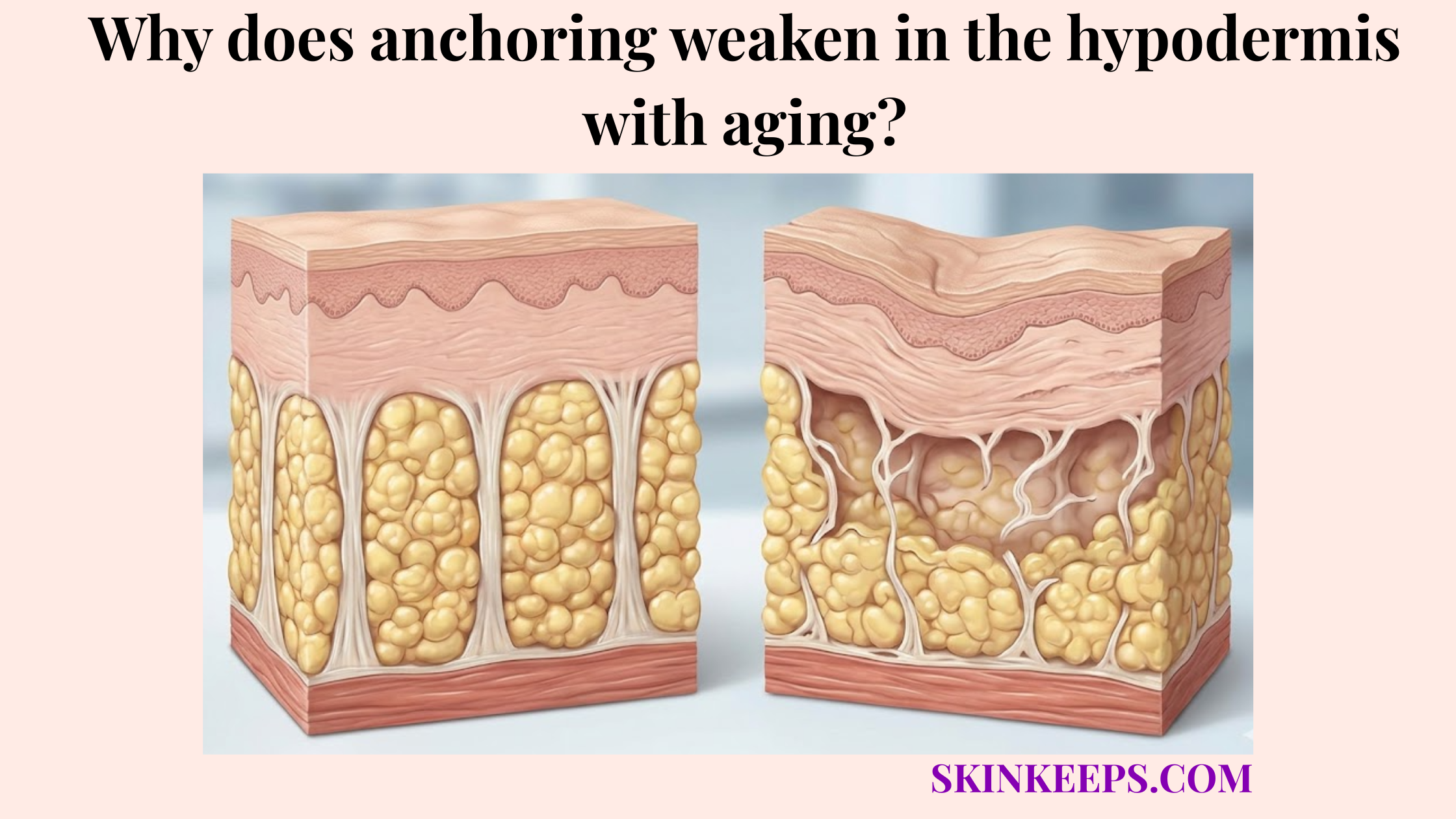
Age, metabolism, and fat distribution affect hypodermal fat regulation of body temperature because aging thins out subcutaneous fat and weakens vascular responses, while metabolic state completely changes internal heat production. Reduced metabolic resilience can make weak insulation much more consequential and dangerous for older individuals.
How Do Environment, Clothing, and Activity Level Affect Hypodermal Fat Regulation of Body Temperature?
Environment, clothing, and activity level affect hypodermal fat regulation of body temperature because factors like cold or water aggressively increase the body’s need for insulation, while clothing supplements it and physical activity changes internal heat production. Physical activity raises deep heat production and completely changes whether insulation helps or hinders in that moment.
How Does Hypodermal Fat Compare With Other Body Temperature Regulation Mechanisms?
Hypodermal fat compares with other body temperature regulation mechanisms by acting firmly as a passive thermoregulation barrier, while sweating, shivering, vasoconstriction, and vasodilation act as highly active, energy-burning responses. The strongest and safest temperature regulation happens when fat insulation works seamlessly together with active thermoeffector systems.
How Does Hypodermal Fat Compare With Sweating in Body Temperature Regulation?
Hypodermal fat compares with sweating in body temperature regulation because fat strictly changes passive heat movement, whereas sweating actively cools the overheated body through rapid liquid evaporation. Sweating is completely dominant in extreme heat, while fat insulation is far more helpful in cold or neutral conditions.
How Does Hypodermal Fat Compare With Shivering and Vasomotor Responses in Body Temperature Regulation?
Hypodermal fat compares with shivering and vasomotor responses in body temperature regulation by perfectly complementing these active systems; it changes how efficiently heat moves through the body wall without generating new heat or altering blood flow directly. Shivering actively generates internal heat, while vasoconstriction and vasodilation actively change blood-flow–based heat transfer.
How Does Fat Distribution Change Body Temperature Regulation?
Fat distribution changes body temperature regulation because physical insulation is not uniform across the entire human body, meaning regional fat thickness alters local heat retention capabilities and local heat loss rates across different parts of the body. Body temperature regulation is therefore partly regional as well as broadly systemic.
Why Does Regional Hypodermal Fat Distribution Change Body Temperature Regulation?
Regional hypodermal fat distribution changes body temperature regulation because local fat thickness determines exact local insulation strength. This uneven padding means some body areas are naturally much better protected than others. Regional distribution structurally matters, not just the overall total body fat percentage.
How Do Body Areas With Less Hypodermal Fat Lose Heat Faster in Body Temperature Regulation?
Body areas with less hypodermal fat lose heat faster in body temperature regulation because thinner subcutaneous regions provide significantly less resistance to outward heat flow. Those unprotected regions consequently cool down more easily and much more rapidly. Regional anatomy directly and predictably affects local heat loss patterns.
How Does Hypodermal Fat Support Body Temperature Regulation During Cold Exposure?
Hypodermal fat supports body temperature regulation during cold exposure by continuously slowing passive outward heat movement when the environment aggressively drains it. Cold exposure massively increases the physiological need to conserve internal heat, making subcutaneous insulation incredibly valuable to survival. Freezing cold is the exact setting in which hypodermal fat’s biological function becomes most obvious and necessary.
Why Does Hypodermal Fat Become More Important During Cold Body Temperature Regulation?
Hypodermal fat becomes more important during cold body temperature regulation because cold aggressively increases the outward thermal heat gradient between the warm body and the freezing environment. A stronger heat gradient makes a thick layer of insulation vastly more valuable. Cold conditions physically expose the life-saving protective value of subcutaneous fat.
How Does Hypodermal Fat Help Preserve Core Warmth During Cold Body Temperature Regulation?
Hypodermal fat helps preserve core warmth during cold body temperature regulation by aggressively slowing the movement of heat away from the deep, critical tissues. This physical blockade helps preserve the warmth of the central core and internal organs. This crucial deep support becomes strongest and most necessary when external temperatures are dangerously low.
How Does Hypodermal Fat Influence Body Temperature Regulation During Heat Exposure?
Hypodermal fat influences body temperature regulation during heat exposure by becoming a biological limitation, as its thick insulation can make rapid heat release dangerously less efficient. During heat exposure, the body’s biological goal shifts entirely from heat conservation to rapid heat release. Active cooling mechanisms matter vastly more in severe heat stress than passive insulation does.
How Does Hypodermal Fat Affect Heat Dissipation in Body Temperature Regulation?
Hypodermal fat affects heat dissipation in body temperature regulation by dangerously slowing passive outward heat movement when the body is overheating. This thermal blockade raises the body’s strict reliance on heavy sweating and extreme vasodilation. Insulation can heavily reduce overall cooling efficiency in the sweltering heat.
How Does the Body Overcome Insulation When Body Temperature Regulation Requires Heat Release?
The body overcomes insulation when body temperature regulation requires heat release by rapidly increasing blood flow to the superficial skin to bypass the deep fat, and heavily relying on sweating to dump thermal energy into the air. Active heat-loss systems can successfully compensate for heavy insulation, but they may have to work dangerously harder.
How Can Healthy Hypodermal Fat Support Body Temperature Regulation?
Healthy hypodermal fat supports body temperature regulation by maintaining balanced subcutaneous padding that provides total thermal stability without causing extreme biological tradeoffs in cold or heat. Strong circulation, excellent metabolic health, and intact active thermoregulation improve how useful this insulation actually becomes. Healthy hypodermal fat helps the most when it operates as part of a well-functioning, responsive whole-body system.
Key Takeaways About Hypodermal Fat Regulation of Body Temperature
The key takeaways about hypodermal fat regulation of body temperature are that it serves as the body’s main subcutaneous insulating layer. It successfully slows heat transfer, powerfully reduces passive heat loss, and supports vital thermal stability. It works tightly with blood flow and other thermoregulation systems, while too little or too much fat creates distinctly different thermal tradeoffs.
Quick Answers About Hypodermal Fat Regulation of Body Temperature
These quick answers clarify the most common short questions about insulation, circulation, cold sensitivity, and heat release. Each FAQ answer provides a short, physiological explanation that gets straight to the point. Remember that hypodermal fat is important, but it is still only one part of full-body thermoregulation.
What is the main temperature-regulation role of hypodermal fat?
The main temperature-regulation role of hypodermal fat is to provide passive thermal insulation. It drastically slows heat transfer from the body core to the environment.
Is hypodermal fat the same as the dermis?
No. The dermis is a highly vascular connective-tissue layer, while hypodermal fat is the adipose-rich subcutaneous layer beneath it that provides passive insulation.
Does hypodermal fat regulate body temperature by itself?
No. Hypodermal fat provides passive resistance to heat movement, but it relies on active physiological responses like sweating, shivering, and blood flow for complete thermoregulation.
Why does low hypodermal fat make people feel cold more easily?
Low hypodermal fat weakens the body’s physical insulation, accelerating passive heat loss and forcing the nervous system to depend more quickly on active cold defenses.
Can more body fat help in cold weather?
Yes. Higher subcutaneous fat increases the physical resistance to heat movement, which successfully lowers passive heat escape and strongly improves cold tolerance.
Can more body fat make heat harder to tolerate?
Yes. The same adipose tissue that slows heat loss in winter can actively restrict necessary heat release in summer, compromising cooling efficiency during heat stress.
How does blood flow interact with hypodermal fat?
Skin blood flow controls how much heat is actively delivered to the surface, while hypodermal fat acts as a physical barrier resisting the passive escape of that internal heat.
Why is clothing still important if hypodermal fat already insulates?
Clothing provides essential external insulation because hypodermal fat alone cannot prevent dangerous heat loss during severe cold or rapidly moving wind exposure.
Does age affect hypodermal fat temperature protection?
Yes. Subcutaneous fat often thins out with age, leaving older adults with reduced insulation, faster heat loss, and a significantly higher sensitivity to cold environments.
How does fat distribution change local heat loss?
Local insulation depends on regional fat thickness. Thinner areas, such as the face and extremities, provide less thermal resistance and therefore lose heat much faster than the padded torso.
Conclusion
Hypodermal fat regulates body temperature by efficiently slowing heat transfer, reducing passive heat loss, and buffering sudden thermal change. It works completely in tandem with blood flow, sweating, shivering, and central thermoregulatory control rather than acting independently. Hypodermal fat functions ultimately as a vital subcutaneous insulating and stabilizing layer that beautifully supports, but does not replace, full-body thermoregulation.