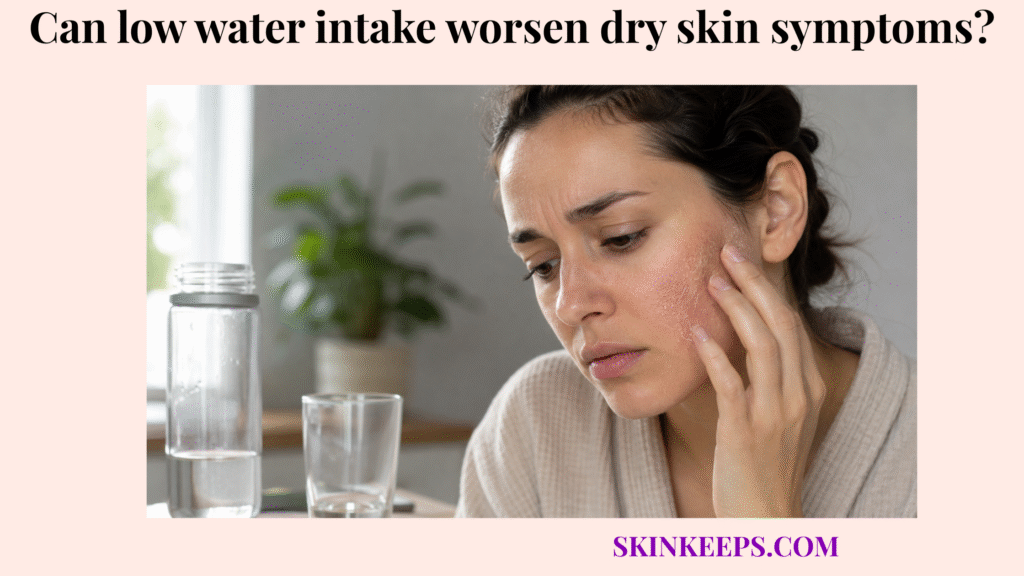
Yes, low water intake can worsen dry skin symptoms when it contributes to overall dehydration, making the skin feel tighter, duller, less flexible, or less comfortable. This does not mean every case of dry skin is caused by not drinking enough water, because many dry-skin patterns begin in the skin barrier rather than in total body fluid intake.
This article explains how body dehydration may affect skin comfort, why low water intake and dry skin are related but not identical, why drinking water alone does not repair the skin barrier, when water intake matters more, what else commonly worsens dryness, and when persistent dryness needs broader evaluation.
How can low water intake worsen dry skin symptoms?
Low water intake can worsen dry skin symptoms by reducing overall hydration support, which may make the skin feel less flexible, tighter, duller, or more uncomfortable. This effect is most relevant when the person is genuinely under-hydrated. Low water intake is one possible modifier within dry skin, but it should not be treated as the only explanation for persistent dryness.
Body hydration can influence comfort, but the skin still needs an intact outer barrier to hold water at the surface. If the barrier is weak, water may not stay in the outer layer efficiently. Hydration status should be connected to comfort without claiming water intake alone repairs dry skin.
How body dehydration can reduce skin comfort
Body dehydration can reduce skin comfort by lowering the general fluid support the skin depends on to feel flexible, smooth, and less tight. This does not mean low water intake always causes dry skin. It means dehydration can make existing dryness feel more uncomfortable, dull, sensitive, or tight.
Why under-hydrated skin may feel tighter or less flexible
Under-hydrated skin may feel tighter or less flexible because the outer layer has less water support available for comfortable movement and surface smoothness. This sensation may be more obvious during heat, illness, sweating, travel, or long periods of low fluid intake. The pattern should be corrected with balanced hydration and barrier support, not water-only advice.
| Low-Water Effect | What May Happen | Dry-Skin Symptom |
|---|---|---|
| Lower body hydration | Skin may feel less flexible | Tightness |
| Reduced fluid support | Surface may look duller | Flat or tired appearance |
| Dehydration stress | Comfort drops | More sensitivity |
| Poor hydration habits | Dryness feels harder to manage | Rough or uncomfortable skin |
Is low water intake the same as dry skin?
Low water intake is not the same as dry skin because low water intake affects body hydration, while dry skin usually involves the skin barrier, surface lipids, and moisture retention. Someone can drink enough water and still have dry skin if the outer barrier lacks enough lipid support or is repeatedly irritated. Hydration status belongs near biological and medical factors that contribute to dry skin, but this page isolates water intake rather than all internal causes.
Someone can also be dehydrated without having classic dry skin as a skin type. The two problems can overlap, but they require different support. Body hydration needs fluid intake, while dry skin usually needs moisturizer, barrier care, and trigger control.
| Factor | Low Body Hydration | Dry Skin |
|---|---|---|
| Main issue | Not enough body fluid support | Weak moisture barrier or low lipid support |
| Common feel | Thirst, dry mouth, fatigue, less skin comfort | Tightness, roughness, flaking, itching |
| Skin type link | Can affect any skin type | Often a skin type or condition tendency |
| Best support | Adequate fluid intake | Moisturizer, barrier care, trigger control |
| Can overlap? | Yes | Yes |
Why does drinking water alone not always fix dry skin?
Drinking water alone does not always fix dry skin because the outer skin barrier must still trap moisture, maintain lipids, and protect against irritation. Water intake supports the body, but moisturizer supports the skin surface. If the barrier is disrupted, the skin may continue to feel dry even when fluid intake is adequate.
Dry skin often persists when triggers continue. Harsh weather, hot showers, soaps, aging, medication effects, and medical conditions can all keep the barrier uncomfortable. Barrier dryness often worsens when hot showers worsen dryness by removing surface comfort after the skin is already dehydrated.
Why the skin barrier must still trap moisture
The skin barrier must still trap moisture because water inside the body does not automatically stay in the outer skin layer without barrier lipids and surface support. A weak barrier can lose comfort even when the body is adequately hydrated. That is why topical barrier support remains necessary.
Why lipids, ceramides, and moisturizers matter for dry skin
Lipids, ceramides, and moisturizers matter for dry skin because they help the outer layer reduce water loss and remain more comfortable between washes. These surface supports help dry skin feel less tight, rough, and irritated. Water intake supports the body, while moisturizers help the skin hold comfort at the surface.
| Myth | Better Explanation |
|---|---|
| Dry skin always means you are not drinking enough water | Dry skin often comes from barrier or lipid problems |
| Drinking more water replaces moisturizer | Water intake does not seal the outer skin barrier |
| If you drink enough, dry skin disappears | Dryness may persist if triggers continue |
| Only internal hydration matters | External barrier care is still necessary |
When is water intake more likely to matter for dry skin?
Water intake is more likely to matter for dry skin when the person is genuinely dehydrated, sweating heavily, exposed to heat, ill, fasting, traveling, or showing signs of low body fluid support. In these situations, dryness may feel worse because the body has less hydration reserve. The skin may feel tighter, duller, or less comfortable.
This clue list should not become a diagnosis tool. Dry mouth, dark urine, dizziness, fatigue, heavy sweating, heat exposure, or illness can make hydration status more relevant. If symptoms are severe or persistent, the reader should seek appropriate medical advice rather than treating water intake as the only solution.
Water Intake May Matter More When
What else usually worsens dry skin besides low water intake?
Dry skin is often worsened by stronger drivers than low water intake, including harsh soaps, hot showers, low humidity, cold or windy weather, aging, genetics, medications, and medical conditions. These factors act directly on the skin barrier or change how well the skin holds moisture. Low fluid intake may make discomfort worse, while environmental factors that worsen dry skin can still be the stronger trigger.
This section should stay short because it supports the page without turning it into a general causes article. Dryness can also begin after treatment changes because medications cause dry skin as a side effect in some people. Persistent or unusual dryness should be redirected to proper evaluation.
Common Stronger Dry-Skin Drivers
How should dry skin be supported if low water intake may be involved?
Dry skin should be supported with consistent fluid intake, gentle cleansing, immediate moisturizing, trigger control, and barrier protection when low water intake may be involved. This combined approach supports the body internally and the skin barrier externally. Drinking fluids may help if the body is under-hydrated, but moisturizer is still needed when the outer layer is dry, flaky, cracked, or irritated.
Product hype is unnecessary here. Use gentle, fragrance-free cleansing, avoid hot water and harsh soaps, apply moisturizer after washing, and protect skin from low humidity, wind, and sun. Dryness that persists despite fluids and moisturizer may overlap with medical conditions linked with chronic dry skin, especially when body symptoms are present.
Hydration-Support Checklist
When does dry skin need more than hydration support?
Dry skin needs more than hydration support when it persists despite adequate fluids and moisturizing, becomes severe, cracks, bleeds, burns, stings, scales thickly, or appears with body symptoms. These signs suggest the issue may involve barrier damage, inflammation, medication effects, or a medical condition. Water intake alone is not enough for these patterns.
Dryness that cracks, bleeds, or does not improve may fit the escalation pattern where persistent dry skin needs a dermatologist. Body symptoms such as fatigue, weight changes, excessive thirst, frequent urination, swelling, or persistent widespread itch should move the issue beyond ordinary hydration advice.
Medical Warning Checklist
What should you remember about low water intake and dry skin?
The main point to remember is that low water intake can worsen dry skin symptoms when it contributes to dehydration, but it is rarely the only factor behind dry skin. Drinking enough water supports general hydration, but it does not replace moisturizer. Dry skin usually still needs barrier care, lipid support, and trigger control.
Final Takeaways
FAQs
Can low water intake worsen dry skin symptoms?
Yes, low water intake can worsen dry skin symptoms when it contributes to dehydration and makes the skin feel tighter, duller, less flexible, or less comfortable.
Is low water intake the same as dry skin?
No, low water intake affects body hydration, while dry skin usually involves the skin barrier, surface lipids, and moisture retention.
Can drinking more water fix dry skin?
Drinking more water may help if the body is dehydrated, but it usually does not fix dry skin when the main problem is barrier damage, low lipids, weather, soaps, aging, medications, or a medical condition.
Why can skin still be dry when I drink enough water?
Skin can still be dry when you drink enough water because the outer barrier may not be holding moisture properly or may lack enough lipid support.
When does water intake matter more for dry skin?
Water intake matters more when dehydration is likely, such as during heat, heavy sweating, illness, fasting, travel, exercise, dry mouth, dark urine, dizziness, or fatigue.
What helps dry skin if low water intake may be involved?
Consistent fluid intake, gentle cleansing, immediate moisturizing, avoiding hot water, and protecting the skin from low humidity, wind, and sun can help.
When does dry skin need more than hydration?
Dry skin needs more than hydration when it persists despite fluids and moisturizer, becomes painful, cracked, bleeding, severely itchy, swollen, oozing, thickly scaled, or appears with body symptoms.
Conclusion
Low water intake can worsen dry skin symptoms when it contributes to dehydration, but dry skin usually also needs barrier support, moisturizer, and trigger control. Drinking enough water supports general hydration, yet it does not replace the skin’s need for surface lipids, moisturizers, and protection from harsh triggers.
Persistent, painful, cracked, bleeding, widespread, or body-symptom-linked dryness should be evaluated instead of being treated as a water-intake issue only. The safest interpretation is balanced: fluids can support comfort, but barrier care protects the dry skin surface.