
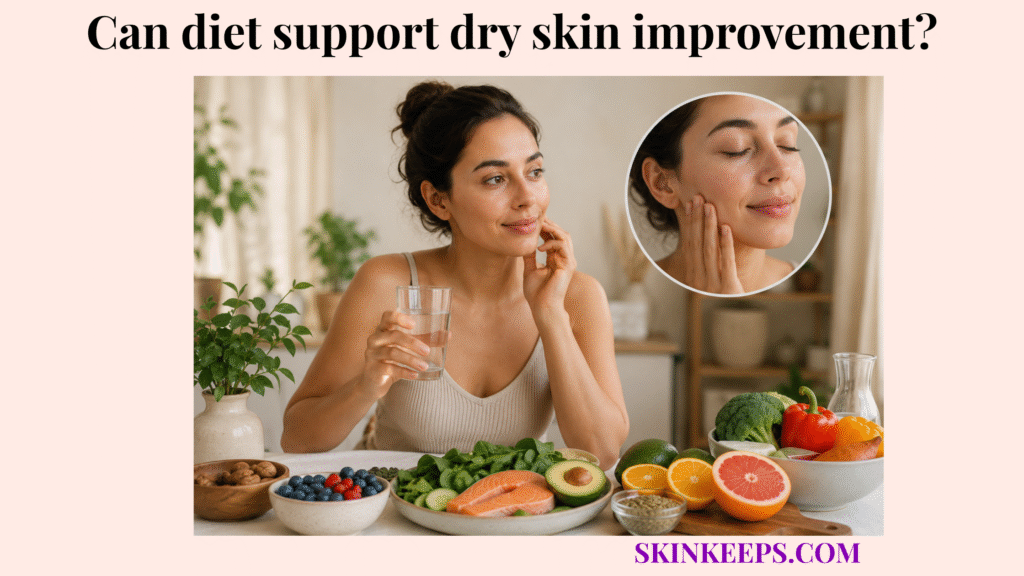
Yes, diet can support dry skin improvement by providing nutrients that help maintain the skin barrier, support tissue repair, assist whole-body hydration, and balance inflammatory stress. Helpful patterns include enough fluids, adequate protein, essential fatty acids, omega-3-rich foods, colorful fruits and vegetables, zinc-containing foods, and balanced meals.
Diet alone usually cannot fix dry skin when the main problem is barrier damage, harsh cleansing, hot showers, low humidity, medications, or an underlying skin condition. This article explains healthy fats, protein, vitamins, minerals, water-rich foods, diet stressors, diet myths, skincare pairing, and when dry skin needs professional evaluation.
How Can Diet Support Dry Skin Improvement?
Diet can support dry skin improvement by supplying nutrients involved in barrier lipid support, tissue repair, hydration status, antioxidant defense, and inflammation balance. Diet support should be framed inside the broader needs of dry skin, where barrier comfort depends on both internal support and topical care. Nutrients support skin-maintenance systems, but they do not replace direct moisture sealing.
Food can help the body maintain skin structure and repair capacity, while moisturizer protects the outer layer directly. Hot showers, harsh soaps, low humidity, wind, and repeated washing can still dry the surface even when the diet is balanced. That is why diet works best as one support layer instead of a standalone fix.
How Nutrients Support the Dry Skin Barrier
Nutrients support the dry skin barrier by helping the body maintain barrier lipids, repair tissue, and protect skin cells from avoidable nutritional gaps. Barrier lipids, protein, vitamins, minerals, and fluids all play support roles in skin function. No single nutrient should be framed as a dry-skin cure or used to diagnose deficiency from dry skin alone.
Why Diet Helps Best When Paired With Topical Moisture Care
Diet helps best when paired with topical moisture care because dry skin often needs direct barrier support from gentle cleansing, moisturizer, and protection from stripping triggers. Nutrition supports internal maintenance, but moisturizer seals the outer layer directly. Harsh cleansing, hot showers, low humidity, and wind can overwhelm diet-only support.
| Diet Support Area | What It Helps | Dry-Skin Relevance |
|---|---|---|
| Healthy fats | Barrier lipid support | Less dry, fragile-feeling skin |
| Protein | Skin repair and renewal | Better recovery from dryness stress |
| Vitamins | Antioxidant and tissue support | Supports overall skin function |
| Minerals | Repair and immune support | Helps resilience |
| Fluids | Whole-body hydration support | Helps comfort when dehydration contributes |
| Anti-inflammatory foods | Inflammation balance | Useful for irritated dry-skin patterns |
Which Healthy Fats Support Dry Skin Barrier Comfort?
Healthy fats can support dry skin barrier comfort because essential fatty acids help the body maintain lipid-related skin functions and balanced inflammatory responses. Essential fatty acids are supportive nutrients, not instant surface moisturizers. Very low-fat eating patterns can reduce dietary support for barrier-related systems, but excessive fat intake is not the answer.
Omega-3-rich foods may support irritated dry skin by contributing to a diet pattern that helps regulate inflammatory stress. Examples include fatty fish, chia seeds, flaxseed, and walnuts. Evidence for barrier support should be treated cautiously because omega-3 foods should not be promised as a dry-skin cure.
Why Essential Fatty Acids Matter for Barrier Support
Essential fatty acids matter for barrier support because the skin barrier depends partly on lipid structure, and extremely low-fat eating patterns may reduce dietary support for that system. Healthy fats can support barrier lipid comfort when they are part of balanced meals. This does not mean all fats are equal or that more fat always improves dry skin.
How Omega-3-Rich Foods May Support Irritated Dry Skin
Omega-3-rich foods may support irritated dry skin by contributing to a diet pattern that helps regulate inflammatory stress. Fatty fish, chia, flax, and walnuts are practical food examples. They may support comfort patterns, but they should not be used as a substitute for moisturizer or medical care when symptoms are severe.
| Food Direction | Why It May Help Dry Skin |
|---|---|
| Fatty fish | Omega-3 support |
| Chia seeds or flaxseed | Plant-based fatty acid support |
| Walnuts | Healthy fat and antioxidant support |
| Avocado | Balanced fat and nutrient support |
| Olive oil | Supports a balanced anti-inflammatory diet pattern |
Why Does Protein Matter for Dry Skin Repair?
Protein matters for dry skin repair because the body needs amino acids to maintain and rebuild skin tissue after dryness, cracking, irritation, or slow recovery. Protein is repair support, not a beauty hack. Very low protein intake can make recovery harder when the skin is already stressed by dryness.
The goal is adequate protein from regular meals, not high-protein dieting. Eggs, fish, chicken, beans, lentils, yogurt if tolerated, tofu, nuts, and seeds can all contribute. People with medical dietary restrictions should follow professional guidance rather than self-adjusting protein aggressively.
Protein-Support Foods
- Eggs.
- Fish.
- Chicken.
- Beans.
- Lentils.
- Yogurt if tolerated.
- Tofu.
- Nuts and seeds.
Which Vitamins and Minerals May Support Dry Skin Health?
Vitamins and minerals may support dry skin health by helping with skin renewal, collagen support, antioxidant defense, immune function, and repair processes. These nutrients are part of skin-support biology, not guaranteed dryness cures. Food-first nutrition is safer than assuming every dry patch means a supplement deficiency.
Vitamin A supports renewal, vitamin C supports collagen and repair biology, vitamin E and selenium support antioxidant defense, vitamin D supports skin and immune function, and zinc supports repair and immune activity. Supplements should not be presented as automatic solutions because they are most useful when there is a real gap, deficiency, or clinician-guided need.
| Nutrient | Skin-Support Role |
|---|---|
| Vitamin A | Skin renewal support |
| Vitamin C | Collagen and repair support |
| Vitamin E | Antioxidant support |
| Vitamin D | Skin and immune function support |
| Zinc | Repair and immune support |
| Selenium | Antioxidant support |
Can Water-Rich Foods Help Dry Skin?
Water-rich foods can help dry skin indirectly by supporting whole-body hydration, but they do not replace moisturizer or barrier repair. Hydration from food and fluids matters most when low water intake can worsen dry skin symptoms during heat, illness, fasting, or exercise. Water-rich foods support internal hydration status, not direct barrier sealing.
Dry skin can remain rough, tight, or flaky even when fluid intake is adequate because the outer skin layer may still need moisturizer and protection from triggers. Fluids and water-rich foods are useful support, but they should not be sold as a cure. Moisture sealing still has to happen at the skin surface.
Water-Rich Foods
- Cucumber.
- Watermelon.
- Oranges.
- Berries.
- Leafy greens.
- Soups.
- Yogurt if tolerated.
- Herbal teas.
Which Eating Patterns May Worsen Dry Skin Comfort?
Eating patterns may worsen dry skin comfort when they reduce healthy fats, protein, fluids, fruits, vegetables, or overall nutrient adequacy for long enough to affect skin support. This is about nutritional support, not diet-shaming or weight-loss advice. Restrictive patterns can make the body’s support systems weaker when skin is already stressed.
Heavy alcohol intake, very low-fat eating, very low-protein intake, poor fluid intake during heat or illness, and low fruit or vegetable intake can all reduce support for hydration, repair, and antioxidant balance. The solution is usually balanced adequacy, not extreme diet correction. People with medical, cultural, or personal dietary limits should adapt within safe guidance.
Dry-Skin Diet Stressors
- Very low-fat dieting.
- Very low-protein intake.
- Highly restrictive diets.
- Heavy alcohol intake.
- Diets low in fruits and vegetables.
- Not drinking enough fluids during heat, illness, fasting, or exercise.
- Skipping meals when nutrient intake becomes poor.
What Diet Myths About Dry Skin Should Be Avoided?
Diet myths about dry skin should be avoided because dry skin is usually influenced by both internal nutrition support and external barrier stress. Drinking water alone, one “skin food,” or a supplement stack cannot reliably repair barrier damage. Food can support the body, but the outer layer still needs direct care.
The strongest myth correction is balance: diet can help, but it should not replace skincare or medical evaluation. Supplements may help only when there is a real dietary gap, deficiency, or clinician-guided reason. One food cannot overcome hot showers, harsh cleansing, low humidity, medication effects, or an active skin condition.
| Myth | Better Explanation |
|---|---|
| Drinking water alone cures dry skin | Barrier repair and moisturizer still matter |
| Supplements always fix dryness | Only helpful when there is a real need or deficiency |
| All fats are bad for skin | Healthy fats can support barrier function |
| Dry skin is only a diet problem | Weather, soaps, age, genetics, and medical factors also matter |
| One “skin food” solves dryness | Overall diet pattern matters more than one food |
How Should Diet Support Be Paired With Dry-Skin Care?
Diet support should be paired with dry-skin care because nutrition helps the body maintain skin function while topical care directly protects the outer barrier. Diet works best alongside dry skin care tips that reduce stripping, friction, and irritation. The pairing prevents the weak assumption that food alone can seal a damaged outer layer.
Moisturizer still matters because moisturizer should be applied to dry skin before post-wash tightness returns. Topical support remains important when moisturizer ingredients for very dry skin need to hydrate, smooth, and seal the outer layer. Diet and skincare solve different parts of the dry-skin problem.
Diet + Skincare Support Checklist
- Eat enough protein daily.
- Include healthy fats regularly.
- Add colorful fruits and vegetables.
- Drink fluids consistently.
- Avoid extreme low-fat or restrictive diets.
- Use a gentle cleanser.
- Moisturize after washing.
- Protect skin from hot water, harsh soaps, low humidity, and wind.
- Ask a clinician if dryness is severe, sudden, widespread, or linked with other symptoms.
When Is Dry Skin Not Likely to Improve From Diet Alone?
Dry skin is not likely to improve from diet alone when the dryness is severe, painful, cracked, bleeding, oozing, crusted, medication-linked, sudden, widespread, or paired with other body symptoms. Diet alone cannot overcome repeated barrier stripping when harsh soaps remove natural lipids in dry skin. Unusual dryness may need medical evaluation, not repeated diet changes.
Professional review becomes important when persistent dry skin needs a dermatologist instead of repeated diet changes. Fatigue, weight changes, excessive thirst, frequent urination, medication changes, or recurring patches can point beyond ordinary diet support. This section should guide safety without diagnosing any condition.
Diet Alone Is Not Enough When
- Skin is cracked or bleeding.
- Severe itching is present.
- Burning, pain, swelling, oozing, or crusting appears.
- Dryness keeps returning in the same patches.
- Symptoms suggest eczema, dermatitis, psoriasis, allergy, infection, or another condition.
- Dryness starts after medication changes.
- Dryness appears with fatigue, weight changes, excessive thirst, frequent urination, or other body symptoms.
What Should You Remember About Diet and Dry Skin Improvement?
Diet can support dry skin improvement, but it should be treated as one support layer, not a standalone cure. Healthy fats, protein, vitamins, minerals, and fluids help support skin function. Moisturizer and barrier care are still essential when the outer skin layer feels tight, rough, flaky, cracked, or irritated.
Final Takeaways
- Diet can support dry skin improvement, but it is not a standalone cure.
- Healthy fats, protein, vitamins, minerals, and fluids help support skin function.
- Moisturizer and barrier care are still essential.
- Extreme dieting, low fat intake, poor protein intake, and low fluid intake may worsen dry skin comfort.
- Supplements should not be presented as automatic solutions.
- Persistent, painful, cracked, bleeding, or medically unusual dryness needs professional evaluation.
Frequently Asked Questions
Can Diet Fix Dry Skin by Itself?
Diet usually cannot fix dry skin by itself because dry skin often involves barrier damage, harsh cleansing, hot water, low humidity, medications, or skin conditions. Diet can support skin function, but moisturizer, gentle cleansing, and trigger control still matter.
Are Omega-3 Foods Good for Dry Skin?
Omega-3-rich foods may support dry skin comfort by contributing to barrier and inflammation-balance support. Food examples include fatty fish, chia, flax, and walnuts, but omega-3 foods should not be promised as a dry-skin cure.
Does Drinking More Water Cure Dry Skin?
Drinking more water does not usually cure dry skin unless dehydration is contributing to the problem. Fluids support whole-body hydration, but moisturizer and barrier care are still needed when the outer skin layer is dry or irritated.
Can Low Protein Intake Worsen Dry Skin Recovery?
Very low protein intake can make dry skin recovery harder because protein supports tissue maintenance and repair. The goal is adequacy, not high-protein dieting, with foods such as eggs, fish, beans, lentils, tofu, nuts, and seeds.
Should Supplements Be Used for Dry Skin?
Supplements should not be treated as automatic dry-skin solutions because they are most useful when there is a real deficiency, dietary gap, or clinician-guided need. Food-first nutrition and professional review are safer when dryness is persistent or medically unusual.
Conclusion
Diet can support dry skin improvement by providing healthy fats, protein, fluids, vitamins, minerals, and antioxidant-rich foods that help maintain skin function. These nutrients can support barrier lipids, tissue repair, hydration status, and inflammation balance, especially when the overall diet has been low, restrictive, or unbalanced.
Diet is still only one support layer. Dry skin usually also needs moisturizer, gentle cleansing, protection from hot water and harsh soaps, and professional evaluation when dryness is severe, sudden, painful, cracked, bleeding, oozing, persistent, medication-linked, or paired with other body symptoms.