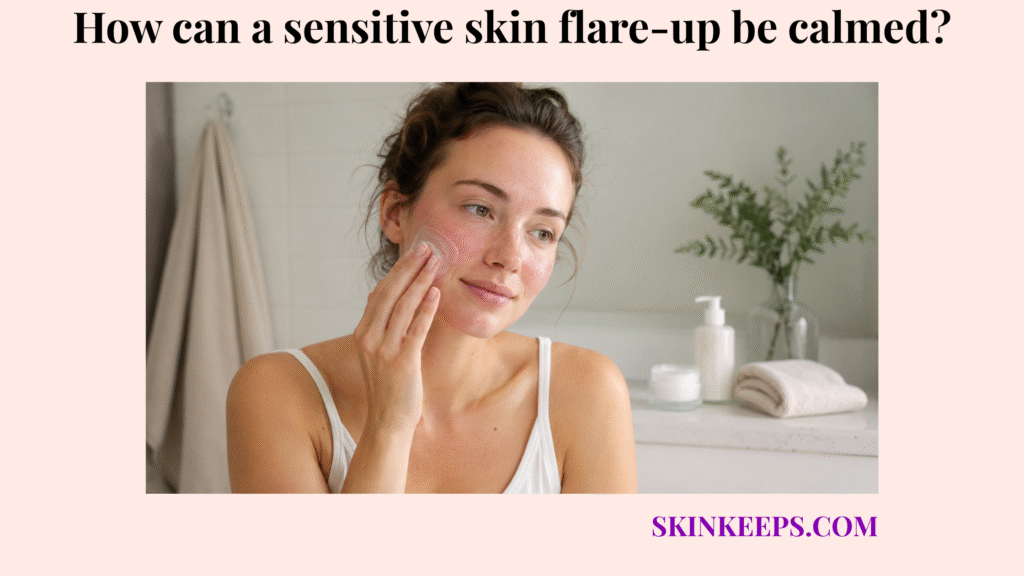
A sensitive skin flare-up can be calmed by stopping the newest or most likely trigger, simplifying the routine, avoiding heat, scrubbing, fragrance, exfoliants, and strong actives, and supporting the skin with gentle care that is already tolerated. A flare-up means the skin is already reacting, so the first goal is to reduce irritation, lower trigger confusion, and protect the skin from repeated stress while symptoms are monitored.
This article moves step by step from recognizing flare-up signs to removing the likely trigger, simplifying care, reducing heat and friction, supporting barrier comfort, reintroducing products slowly, tracking symptoms, and knowing when professional care is needed.
What Does a Sensitive Skin Flare-Up Look or Feel Like?
A sensitive skin flare-up can feel like burning, stinging, itching, tightness, heat, peeling, rash-like bumps, redness, darker irritation, swelling, or raw discomfort. Not every flare looks the same, so the important first step is to notice whether symptoms are stronger or more persistent than the skin’s usual baseline.
How Do Flare-Ups Differ From Everyday Mild Sensitivity?
A flare-up differs from everyday mild sensitivity because symptoms are stronger, more persistent, more visible, or more clearly connected to a recent trigger.
Why Should Early Symptoms Be Taken Seriously?
Early symptoms should be taken seriously because continuing the same trigger can make irritation harder to calm and harder to interpret. Once the flare is recognized, the next priority is to stop making the reaction harder to read.
| Flare-up sign | What it may suggest |
|---|---|
| Burning | Strong irritation or barrier stress. |
| Stinging | Product intolerance or reactive skin. |
| Itching | Irritation, dryness, or sensitivity reaction. |
| Tightness | Moisture loss or barrier discomfort. |
| Peeling | Overuse of actives, dryness, or irritation. |
| Redness or darker irritation | Inflammatory response. |
| Rash-like bumps | Product reaction or dermatitis-like pattern. |
| Swelling | Allergy-like or stronger inflammatory concern. |
| Oozing, crusting, or blistering | Needs professional evaluation. |
Sensitive-Skin Flare-Up Response Flow
This visual shows the safest first logic: recognize the flare, stop the suspected trigger, simplify care, protect the skin, and monitor warning signs.
Figure 1. Flare-up care begins with trigger reduction, not with adding many new products.
What Should Be Done First During a Sensitive Skin Flare-Up?
The first step during a sensitive skin flare-up is to stop the newest or most likely trigger and avoid adding more products. Once the suspected trigger is paused, the next step is to return to the basic care tips that help calm and protect sensitive skin instead of adding several new products at once.
First Response Checklist
- Stop the newest suspected product.
- Pause exfoliants, scrubs, retinoids, and strong actives.
- Avoid fragrance and essential-oil products.
- Avoid hot water.
- Avoid rubbing, scratching, or picking.
- Cleanse only if needed.
- Use a tolerated moisturizer if the skin feels dry or tight.
- Protect the area from sun, heat, wind, sweat, and friction.
- Watch whether symptoms improve, spread, or worsen.
After the suspected trigger is paused, simplifying the routine helps prevent the flare from being fed by extra formulas or friction.
Why Does Simplifying the Routine Help Calm a Flare-Up?
Simplifying the routine helps calm a flare-up because irritated sensitive skin often cannot tolerate the same number of products it tolerated before the reaction started. Fewer steps reduce ingredient exposure, rubbing, active overlap, and trigger confusion.
| Step type | During a flare-up |
|---|---|
| Gentle cleanser | Use only if needed and tolerated. |
| Moisturizer | Keep if it calms and does not sting strongly. |
| Sunscreen | Use a tolerated option when sun exposure is expected. |
| Exfoliant | Pause. |
| Retinoid | Pause if it worsens irritation. |
| Fragranced product | Avoid. |
| Mask or peel | Avoid. |
| New serum | Do not introduce during flare. |
| Makeup | Reduce if it worsens rubbing or removal stress. |
Once the routine is simplified, the next question is whether the skin needs gentle rinsing or whether more washing would make the flare worse.
Should Sensitive Skin Be Rinsed During a Flare-Up?
Sensitive skin can be gently rinsed during a flare-up if a product is actively burning, stinging strongly, or clearly worsening the reaction. Gentle rinsing can help remove a burning product, but repeated washing can turn into harsh cleansing habits that keep the flare irritated.
| Situation | Better direction |
|---|---|
| Product is actively burning | Gently rinse it off. |
| Skin is only mildly tight | Avoid repeated washing. |
| Cleanser caused the flare | Stop that cleanser and simplify. |
| Sweat or residue is present | Rinse gently without scrubbing. |
| Skin is raw or cracked | Avoid harsh cleansing and seek help if severe. |
| Water itself burns | Professional evaluation may be needed. |
If heat or burning remains after the suspected trigger is removed, gentle cooling may help comfort the skin without adding another product.
Can Cool Compresses Help Calm Sensitive Skin Flare-Ups?
A cool compress may help some sensitive skin flare-ups feel less hot, itchy, or burning, but it should be gentle and brief. Cool does not mean icy, and direct ice or DIY mixtures can add stress while the skin is already reactive.
Cool Comfort Checklist
- Use a clean, soft cloth.
- Use cool water, not ice.
- Apply briefly.
- Do not rub the skin.
- Stop if the compress increases burning.
- Avoid lemon, essential oils, alcohol, or DIY mixtures.
- Follow with a tolerated moisturizer if the skin feels dry.
After heat and burning are reduced, the skin may still feel tight or dry, which is where a tolerated moisturizer can support comfort.
How Can Moisturizer Help Calm a Sensitive Skin Flare-Up?
A tolerated moisturizer can help calm a sensitive skin flare-up by reducing tightness, dryness, roughness, and barrier discomfort. When dryness and tightness are part of the flare, moisturizer ingredients that support sensitive skin may help comfort the surface if the formula is already tolerated.
| Skin condition | Moisturizer direction |
|---|---|
| Tight and dry | Use a tolerated moisturizer. |
| Raw or stinging | Choose the simplest tolerated option. |
| Flaky | Moisturize instead of scrubbing flakes. |
| Wind-chapped | Consider richer protection if tolerated. |
| Oily but burning | Use lightweight barrier support if tolerated. |
| Moisturizer burns strongly | Stop and reassess; professional help may be needed if persistent. |
Moisturizer can support comfort, but the flare will be harder to calm if the skin is still exposed to scrubs, strong actives, fragrance, or friction.
What Should Be Avoided While a Sensitive Skin Flare-Up Is Active?
During an active sensitive skin flare-up, avoid products and behaviors that add friction, heat, strong actives, fragrance, or new variables. During an active flare, it is safer to pause optional products that contain irritating skincare ingredients than to keep testing the skin while it is already reactive.
| Avoid during flare | Why it may worsen symptoms |
|---|---|
| Scrubs | Add friction to irritated skin. |
| Exfoliating acids | May increase burning and peeling. |
| Retinoids | Can worsen dryness or irritation during a flare. |
| Fragrance | Adds optional irritation exposure. |
| Essential oils | Natural scent compounds can still irritate. |
| Hot water | Can increase burning and tightness. |
| Rough towels | Add mechanical irritation. |
| New products | Create trigger confusion. |
| Heavy product layering | Can trap heat or add more variables. |
| Picking or scratching | Can damage the barrier further. |
After product-related irritants are paused, the flare also needs protection from environmental and mechanical triggers that can keep reactivating the same area.
How Can Heat, Sweat, Wind, and Friction Be Reduced During a Flare-Up?
Heat, sweat, wind, and friction can be reduced during a flare-up by keeping the skin cool, protected, and free from repeated rubbing. Active sensitive skin may stay irritated longer when it is exposed to overheating, sweat, wind, cold air, rough fabrics, masks, towels, or makeup-removal friction.
| Exposure | Flare-calming adjustment |
|---|---|
| Heat | Stay cool and avoid overheating. |
| Sweat | Rinse gently when needed; avoid scrubbing. |
| Wind | Cover or protect exposed skin when possible. |
| Cold air | Support barrier comfort before dryness worsens. |
| Sun | Use shade, clothing, and tolerated sunscreen. |
| Friction | Avoid tight fabric, rough towels, and rubbing. |
| Makeup removal | Remove gently or reduce makeup during flare. |
Once the skin is protected from repeated stress, it becomes easier to look backward and identify what may have started the flare.
How Can Someone Identify What Triggered the Flare-Up?
Someone can identify a likely flare-up trigger by reviewing what changed shortly before the reaction began. The trigger may be a new product, increased product frequency, hot water, sweat, friction, shaving, fragrance exposure, exfoliation, retinoid use, sunscreen, cleanser, or a weather shift.
| Recent change | Possible flare connection |
|---|---|
| New cleanser | Tightness, burning, or dryness after washing. |
| New moisturizer | Itching, rash, bumps, or swelling after application. |
| New sunscreen | Burning, eye stinging, or rash-like irritation. |
| Exfoliant increase | Peeling, rawness, or moisturizer stinging. |
| Retinoid use | Dryness, flaking, burning, or tightness. |
| Fragrance exposure | Itching, rash, or discomfort. |
| Hot water | Burning and tightness. |
| Wind or cold | Chapping and roughness. |
| Sweat and heat | Itching, flushing, or stinging. |
| Fabric friction | Localized irritation where rubbing occurs. |
After the likely trigger is identified and reduced, the next step is to watch whether the flare moves from active irritation into gradual calming.
How Long Can a Sensitive Skin Flare-Up Take to Calm?
A sensitive skin flare-up may calm after the trigger is removed and the routine is simplified, but stronger, repeated, or condition-related flares may last longer and need professional assessment. The useful question is whether symptoms are improving, unchanged, worsening, spreading, or returning.
| Flare stage | What to watch |
|---|---|
| Early irritation | Stinging, heat, tightness, itching. |
| Active flare | Burning, rash-like texture, swelling, peeling. |
| Calming phase | Less heat, less itching, less product discomfort. |
| Recovery phase | Basic products feel more comfortable. |
| Re-trigger phase | Symptoms return after product or exposure reappears. |
| Unresolved flare | Symptoms persist, spread, or worsen. |
When the skin begins to calm, the next risk is restarting too many products too quickly and triggering the flare again.
When Should Products Be Reintroduced After a Flare-Up Calms?
Products should be reintroduced only after burning, stinging, itching, rawness, and strong product discomfort have calmed. After the flare calms, readers may patch test new products before wider use so the next reaction pattern is easier to understand.
Product Reintroduction Checklist
- Wait until burning, stinging, itching, and rawness have calmed.
- Keep the core routine stable first.
- Add one product at a time.
- Start with the most necessary product.
- Avoid restarting strong actives first.
- Use lower frequency for active products.
- Watch for delayed reactions.
- Stop the newest product if symptoms return.
- Track the timing of any repeated flare.
Slow reintroduction is easier when the reader knows which signs show the flare is truly improving.
How Can Someone Tell If the Flare-Up Is Improving?
A sensitive skin flare-up is likely improving when burning, itching, heat, tightness, rawness, and product discomfort gradually decrease. Improvement should be judged by symptom direction, not by one good moment.
Flare-Up Improvement Signs
- Burning decreases.
- Itching becomes less frequent.
- Skin feels less hot or raw.
- Tightness improves.
- Moisturizer no longer stings.
- Redness or darker irritation fades gradually.
- Peeling slows.
- Skin feels less reactive to water.
- No new swelling or rash appears.
- The flare does not spread.
If these signs are not improving, the reader should check whether any common flare-management mistake is keeping the skin irritated.
What Mistakes Make Sensitive Skin Flare-Ups Last Longer?
Sensitive skin flare-ups can last longer when the trigger continues, the skin is scrubbed, hot water is used, or too many products are added at once. Many mistakes come from trying to fix the flare too aggressively.
| Mistake | Why it backfires |
|---|---|
| Adding many soothing products at once | Creates more irritation variables. |
| Scrubbing flakes | Damages an already stressed barrier. |
| Using hot water | Can worsen burning and tightness. |
| Continuing the suspected trigger | Prolongs the flare. |
| Treating burning as proof a product works | Misreads irritation. |
| Restarting actives too quickly | Can trigger relapse. |
| Covering irritation with heavy makeup | May add friction and removal stress. |
| Ignoring swelling, oozing, or blistering | May delay needed evaluation. |
Because flare-ups often involve several possible triggers, tracking helps separate the real pattern from guesswork.
How Should a Sensitive Skin Flare-Up Be Tracked?
A sensitive skin flare-up should be tracked by recording symptoms, location, recent product changes, environmental exposure, and what improves or worsens the reaction. Tracking does not diagnose the condition, but it can make patterns easier to discuss if professional care becomes necessary.
Sensitive-Skin Flare-Up Tracking Worksheet
- Date flare started.
- Main symptoms.
- Location of flare.
- New products used recently.
- Products used more often than usual.
- Cleansing method and water temperature.
- Exfoliants, retinoids, or strong actives used.
- Sun, wind, heat, sweat, or friction exposure.
- Makeup, sunscreen, or shaving changes.
- Products stopped during flare.
- Products that seemed to help.
- Products that worsened symptoms.
- Time needed for improvement.
- Whether symptoms returned after reintroduction.
- Photos of visible changes if needed.
If tracking shows spreading, severe, repeated, or unresolved symptoms, the flare should not be managed as a simple product mismatch.
Calm, Track, Reintroduce Framework
This visual shows the connected sequence after the first response: reduce exposure, watch symptom direction, reintroduce slowly, and escalate when warning signs appear.
Figure 2. A calmer flare-up strategy connects symptom tracking with slow reintroduction and clear safety boundaries.
When Should a Sensitive Skin Flare-Up Be Professionally Evaluated?
A sensitive skin flare-up should be professionally evaluated when symptoms are severe, persistent, spreading, swollen, blistering, painful, eye-area related, or repeatedly returning. Severe, spreading, swollen, blistering, painful, eye-area, or recurring flare-ups are reasons to see a dermatologist.
Professional Evaluation Warning Signs
- Skin swells, blisters, oozes, crusts, or bleeds.
- Rash spreads beyond the original area.
- Burning, pain, or itching is severe or persistent.
- Eye or eyelid reactions occur.
- Skin becomes cracked, raw, or infected-looking.
- Water or basic products sting or burn.
- Symptoms disrupt sleep or daily comfort.
- The flare keeps returning after simple care.
- Several gentle products trigger similar reactions.
- Eczema, dermatitis, allergy, rosacea, infection, or another condition may be involved.
Urgent Safety Note
Breathing difficulty, throat tightness, faintness, or rapid facial, lip, or tongue swelling requires emergency medical care.
After the safety boundary is clear, the article can close by summarizing the calm, reduce, protect, track, and evaluate framework.
What Should You Remember About Calming a Sensitive Skin Flare-Up?
A sensitive skin flare-up should be calmed by reducing irritation, not by adding many new products.
What Should You Remember?
- Stop the newest or most likely trigger.
- Simplify the routine while the skin is actively reacting.
- Avoid hot water, scrubs, fragrance, exfoliants, strong actives, and friction.
- Rinse gently only when a product is actively burning or residue needs removal.
- Use a cool compress briefly if heat, burning, or itching is present.
- Use a tolerated moisturizer if the skin feels dry, tight, or rough.
- Protect the skin from sun, heat, wind, sweat, and rubbing.
- Reintroduce products slowly only after the flare calms.
- Track symptoms, recent changes, and re-trigger patterns.
- Seek professional evaluation for severe, spreading, swollen, blistering, oozing, painful, eye-area, persistent, or recurring flare-ups.
Frequently Asked Questions
What Is the First Thing to Do During a Sensitive Skin Flare-Up?
The first thing to do is stop the newest or most likely trigger and avoid adding more products. This reduces exposure and makes the reaction easier to monitor.
Should Sensitive Skin Be Washed During a Flare-Up?
Sensitive skin should be gently rinsed if a product is actively burning or residue needs removal. Repeated washing, hot water, and scrubbing can make the flare worse.
Can Moisturizer Help a Sensitive Skin Flare-Up?
A tolerated moisturizer can help if the skin feels dry, tight, rough, or uncomfortable. If the moisturizer burns strongly, causes swelling, or worsens rash-like symptoms, it should be stopped and reassessed.
Should Actives Be Used During a Sensitive Skin Flare-Up?
Strong actives such as exfoliating acids and retinoids should usually be paused if they worsen burning, peeling, tightness, or irritation. Restarting them too soon can trigger relapse.
How Do You Know a Sensitive Skin Flare-Up Is Improving?
A flare-up may be improving when burning, itching, heat, tightness, product discomfort, peeling, and visible irritation gradually decrease without spreading or new swelling.
When Should a Sensitive Skin Flare-Up Be Checked Professionally?
A flare-up should be checked when it is severe, persistent, spreading, swollen, blistering, oozing, painful, affects the eyes, keeps returning, or reacts to water or several gentle products.
Conclusion
A sensitive skin flare-up is best calmed by stopping the likely trigger, simplifying care, reducing friction and heat, and supporting comfort with products the skin already tolerates. The first step is to reduce the pressure on the skin by pausing the suspected trigger, avoiding new products, and keeping cleansing gentle instead of scrubbing or repeatedly washing.
Once the skin is calmer, the focus should shift to slow reintroduction and tracking. If symptoms spread, swell, blister, ooze, become painful, affect the eyes, or keep returning, the flare should be professionally evaluated. The safest flare-up strategy is to calm first, simplify next, protect consistently, reintroduce slowly, and seek help when the skin shows warning signs.
Sources & Evidence
American Academy of Dermatology — How to Test Skin-Care Products
Supports washing off a reacting product, avoiding reuse, comfort measures, and seeking help for severe reactions.
[AAD]American Academy of Dermatology — Contact Dermatitis Tips
Supports avoiding the cause, not scratching, and using cool compresses for contact dermatitis discomfort.
[AAD]DermNet — Irritant Contact Dermatitis
Supports the role of water, friction, sweating, heat, and cumulative irritant exposure in irritation.
[DermNet]DermNet — Contact Reactions to Cosmetics
Supports cosmetic reactions involving the face, lips, eyes, ears, and neck, including swelling, itching, and delayed rash patterns.
[DermNet]DermNet — Allergic Contact Dermatitis
Supports delayed allergic skin reaction patterns and the need for professional assessment when allergy is suspected.
[DermNet]Mayo Clinic — Contact Dermatitis
Supports common symptoms and triggers including cosmetics and fragrances, and the need for care when symptoms persist or worsen.
[Mayo Clinic]DermNet — Textile Contact Dermatitis
Supports the role of fabric rubbing and sweating in worsening dermatitis-like irritation.
[DermNet]Disclaimer: This article provides general educational information and does not diagnose or treat irritant contact dermatitis, allergic contact dermatitis, eczema, rosacea, acne, infection, sunburn, or another skin condition. Stop using clearly irritating products and seek professional advice for severe, persistent, recurrent, spreading, blistering, swollen, oozing, bleeding, painful, or eye-area reactions. Breathing difficulty, throat tightness, faintness, or rapid facial, lip, or tongue swelling requires urgent medical care.