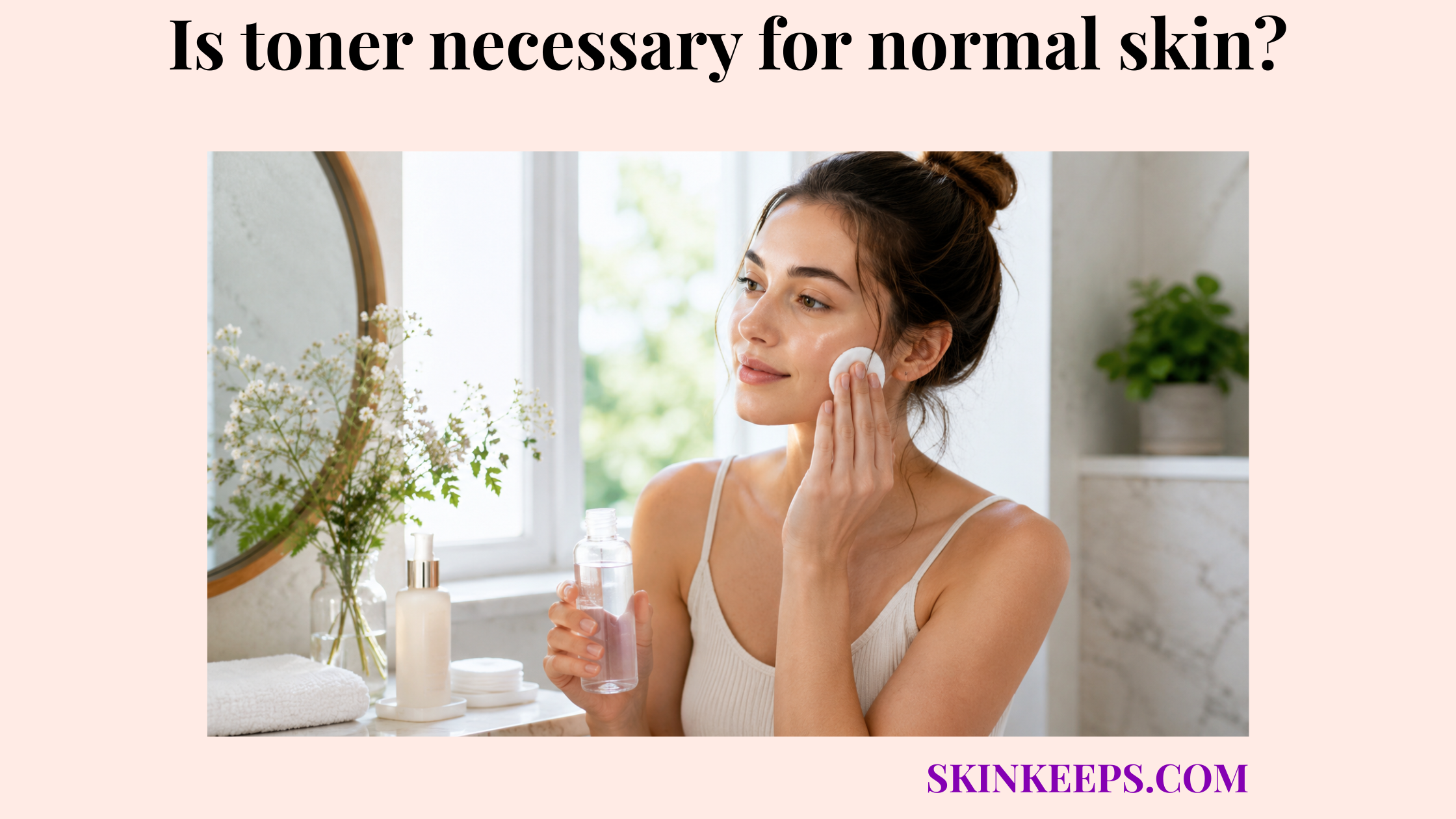

The five primary skin types are normal, dry, oily, combination, and sensitive, and each type is defined by a different pattern of oil production, water retention, barrier strength, and product reactivity. Understanding your skin type helps explain why your skin may feel tight, look shiny, react easily, stay balanced, or show different needs across the face.
This guide explains how to test your skin type at home, recognize defining traits, understand biological and environmental factors, compare benefits, and build care routines that match your skin’s baseline. The goal is not to label flaws but to help you choose products that support your barrier instead of working against it.
| Skin Type |
|---|
| Normal |
| Dry |
| Oily |
| Combination |
| Sensitive |
Why is identifying your specific skin type critically important for barrier health?
Identifying your specific skin type is critically important for barrier health because products that do not match your oil level, hydration needs, or reactivity pattern can worsen dryness, shine, clogged pores, or irritation. Utilizing a personalized skincare protocol ensures the lipid barrier remains intact. This tailored approach prevents the unnecessary aggravation of common skin type characteristics.
The Danger of “Blind” Skincare
The danger of “blind” skincare is that harsh or mismatched formulas can push the skin away from its baseline needs, making dryness, oiliness, irritation, or breakouts more likely. For instance, foaming acne cleansers may be too stripping for some dry or sensitive skin profiles. Conversely, heavy occlusives may feel too rich for an oily or congestion-prone epidermal profile.
Preserving the Acid Mantle
Preserving the acid mantle means choosing cleansers and leave-on products that support the skin’s naturally acidic surface instead of repeatedly disturbing barrier comfort. This delicate film helps regulate the stratum corneum and prevents harmful microbial overgrowth. The skin surface is normally acidic, and many dermatology sources describe the acid mantle as commonly sitting around pH 4.5–5.5, although exact values vary by body site, age, sex, and measurement method. [Journal of Integrative Dermatology]
How can you quickly test and know your exact skin type at home?
You can quickly test and know your skin type at home by performing a bare-faced wash test that lets your skin show its natural oil, tightness, shine, and reactivity without product interference. This simple screening tool helps you observe how your skin behaves naturally. If you prefer to skip the manual evaluation, you can use our advanced digital tool for a faster, data-driven analysis of your exact epidermal profile. However, conditions like eczema, rosacea, or dermatitis may require a proper dermatologist evaluation to differentiate from standard skin types.
The “Bare-Faced” Wash Test
The bare-faced wash test works by cleansing the face gently, patting it dry, and waiting about 30 minutes without applying moisturizer, serum, sunscreen, or makeup. Using a mild cleanser ensures you do not artificially strip the skin barrier prior to observation. Observing the skin under normal indoor conditions during this 30-minute window allows your natural sebaceous activity and water retention pattern to emerge clearly.
Reading Your Diagnostic Results
Reading your diagnostic results means comparing how your skin feels and looks after the waiting period: tight and flaky suggests dry skin, shiny all over suggests oily skin, oily only in the T-zone suggests combination skin, reactive redness suggests sensitive skin, and comfort suggests normal skin. These visual and tactile cues outline your foundational skin profile. Remember that a sensitive trigger response can overlap with any of the other four primary skin types.
| Test Method | Wait Time | Physical Sensation | Visual Result | Suggested Type |
|---|---|---|---|---|
| Wash & wait | 30 minutes | Tight, itchy, or flaky | Dull, rough, small-looking pores | Dry |
| Wash & wait | 30 minutes | Greasy or heavy | Shiny all over, visible pores | Oily |
| Wash & wait | 30 minutes | Tight cheeks, oily center | Shiny T-zone, more balanced cheeks | Combination |
| Wash & wait | 30 minutes | Burning, stinging, or hot | Redness, flushing, blotchy reaction | Sensitive |
| Wash & wait | 30 minutes | Comfortable and soft | Balanced, no excess shine or tightness | Normal |
What are the defining physical characteristics of the five primary skin classifications?
The defining physical characteristics of the five primary skin classifications are differences in shine, flaking, pore visibility, texture, comfort, and reactivity. Recognizing these distinct traits helps you map out your exact routine tolerance. While some variation naturally occurs, these patterns commonly dictate how your skin responds to the environment.
The Moisture and Sebum Extremes
The moisture and sebum extremes are dry skin and oily skin: dry skin often shows tightness, roughness, or flaking, while oily skin often shows shine, enlarged-looking pores, and comedone-prone areas. Because dry skin shows low oil, barrier water loss, and tight flaky texture, it frequently struggles with transepidermal water loss (TEWL). Conversely, oily skin shows excess sebum, visible shine, and breakout-prone pores driven by higher sebaceous gland activity.
The Adaptive and Reactive Profiles
The adaptive and reactive profiles are normal skin, combination skin, and sensitive skin: normal skin usually feels comfortable, combination skin changes by facial zone, and sensitive skin reacts more easily to triggers. Typically, normal skin stays balanced through even texture and stable oil levels without extreme fluctuations. While combination skin splits between T-zone oil and cheek balance, sensitive skin reacts through barrier weakness and trigger response, leading to visible erythema.
| Skin Type | Visible Traits | Physical Sensation | Pore Pattern |
|---|---|---|---|
| Normal | Smooth-looking texture, even-looking tone | Comfortable, supple | Fine or less visible |
| Dry | Flaking, dullness, rough patches | Tight, rough, less elastic | Small-looking or less visible |
| Oily | Overall shine, blackheads/comedones | Greasy or heavy | Enlarged-looking or more visible |
| Combination | Shiny forehead/nose/chin, drier cheeks | Mixed: oily center, tighter cheeks | More visible in T-zone |
| Sensitive | Redness, flushing, scaling, blotchiness | Stinging, burning, itching, reactive | Varies |
Which biological and environmental factors determine your specific epidermal skin type?
Biological and environmental factors that determine your epidermal skin type include genetics, hormones, age, climate, humidity, cleansing habits, product exposure, and underlying skin conditions. Your skin type is a dynamic pattern that can evolve over time rather than a fixed destiny. Assessing both internal triggers and external habits clarifies why your skin behaves a certain way.
Intrinsic (Internal) Factors
Intrinsic factors include genetics, hormone changes, age, and underlying skin conditions, which can influence sebaceous activity, water retention, barrier strength, and reactivity. Genetic predispositions lay the baseline for sebum production, while hormonal fluctuations like androgen shifts often increase oiliness. Furthermore, age-related changes, including menopause, commonly decrease natural lipid production and worsen dryness.
Extrinsic (External) Factors
Extrinsic factors include humidity, temperature, wind, sun exposure, cleansing frequency, exfoliation habits, and irritating ingredients that can temporarily shift how the skin feels and behaves. Low humidity and harsh cold weather rapidly deplete surface moisture, exacerbating dry tightness. Conversely, over-cleansing the skin barrier strips essential oils, leaving the skin vulnerable to product mismatch and temporary irritation.
What are the unique biological benefits of each foundational skin profile?
The unique biological benefits of each foundational skin profile are the practical advantages that can come with its oil level, barrier behavior, product tolerance, or early warning response. Every skin type pattern offers distinct strengths when cared for properly. Recognizing these benefits shifts the focus from finding a “cure” to supporting the skin’s natural framework.
The Resiliency of Oily and Normal Skin Types
The resiliency of oily and normal skin types is that oily skin may retain surface softness through sebum, while normal skin often tolerates simple routines with fewer visible extremes. Oily skin may show fine lines less prominently in some individuals due to this constant lipid coating. Sebum can act as a delivery pathway for vitamin E to the stratum corneum, which supports framing sebum as protective in moderation rather than purely problematic. [Oregon State University]
The Clarity of Dry and Sensitive Skin Types
The clarity of dry and sensitive skin types is that dry skin may show less oily shine, while sensitive skin can help people notice triggers early and build gentler routines. Although dry skin experiences less overall grease, it can still develop clogged pores or occasional breakouts. Meanwhile, a sensitive skin profile encourages careful ingredient selection and diligent patch testing to avoid unnecessary barrier stress.
How must you customize your daily care routine to optimize your predominant skin type?
You must customize your daily care routine by matching cleanser strength, moisturizer texture, active ingredients, and sunscreen choice to your skin’s oil level, hydration needs, and reactivity pattern. Aligning your products carefully ensures you provide exact barrier support without overloading the tissue. For persistent symptoms like scaling, acne, or rosacea, dermatologist-guided advice remains vital.
Routines for Dry and Sensitive Skin Types
Routines for dry and sensitive skin types should prioritize barrier support by using gentle cleansers, moisturizers with barrier-friendly ingredients, and soothing formulas that avoid common irritants. Dry skin benefits immensely from rich creams containing ceramides, squalane, shea butter, glycerin, and hyaluronic acid. Sensitive skin requires fragrance-free formulas with calming additions like colloidal oatmeal or Centella asiatica, while avoiding high-alcohol astringents.
Routines for Oily, Normal, and Combination Skin Types
Routines for oily, normal, and combination skin types should use lightweight hydration, non-greasy textures, and targeted actives only where they match the skin’s needs. Oily skin responds well to water creams and salicylic acid (BHA), which helps reduce oil buildup and clogged pores. Combination skin requires zone-based care, applying lighter gels to the oily T-zone and richer lotions to drier U-zone cheeks.
| Skin Type | Best Cleanser | Best Moisturizer | Ingredients / Habits to Limit |
|---|---|---|---|
| Normal | Gentle gel or cream cleanser | Light lotion or balanced cream | Overly harsh scrubs or unnecessary strong actives |
| Dry | Cream, milk, or balm cleanser | Rich cream with ceramides, squalane, glycerin | High-alcohol astringents, harsh foaming cleansers |
| Oily | Gentle gel or salicylic acid cleanser if tolerated | Oil-free gel or water cream | Heavy greasy layers if they clog pores |
| Combination | Balancing gel or gentle cleanser | Gel on oily zones, lotion/cream on dry zones | One heavy product across the whole face |
| Sensitive | Fragrance-free cream/milk cleanser | Hypoallergenic, barrier-support moisturizer | Fragrance, essential oils, high-strength acids |
What daily checklist helps maintain the health of all five core skin types?
A daily checklist for maintaining all five core skin types includes broad-spectrum SPF protection, gentle cleansing, appropriate moisturization, careful active-ingredient testing, and consistent routine evaluation. Establishing these foundational habits ensures the skin barrier remains fortified against daily environmental stress.
Sticking to a balanced daily skincare routine prevents easily avoidable irritation.
Universal Protection Rules
Universal protection rules include using broad-spectrum SPF 30 or higher, cleansing gently, avoiding unnecessary irritation, and protecting the skin barrier from repeated stress. UV exposure actively contributes to sunburn, heightened skin cancer risk, and early signs of skin aging.
AAD guidance recommends selecting sunscreen labeled broad-spectrum with SPF 30 or higher and water resistance when needed, because broad-spectrum products protect against both UVA and UVB rays. [AAD]
Hydration and Consistency
Hydration and consistency help maintain skin-type balance by supporting barrier comfort and giving products enough time to show whether they are helping or irritating the skin. Even oily skin requires appropriate, lightweight hydration to function optimally.
Human epidermal turnover is often discussed as longer than the popular 28-day myth, with one review estimating human epidermal turnover around 40–56 days, so routine evaluation should be patient and realistic. [PMC]
Daily Universal Skin Type Maintenance Checklist
FAQs About the Five Different Skin Types
What are the five main skin types?
The five main skin types are normal, dry, oily, combination, and sensitive. Each type reflects a different pattern of oil production, hydration, barrier strength, and reactivity. Some people may also have overlapping patterns, such as dry-sensitive or oily-sensitive skin.
How can I know my skin type at home?
You can estimate your skin type at home with a bare-faced wash test. Cleanse gently, wait about 30 minutes without applying products, then observe tightness, shine, redness, oil distribution, and comfort. This test suggests a pattern but does not replace medical diagnosis.
Can skin type change over time?
Yes. Skin type can change with age, hormones, climate, medications, health conditions, stress, cleansing habits, and product use. A person who once had oily skin may later experience dryness, and combination patterns can shift by season.
Is sensitive skin a skin type or a condition?
Sensitive skin is best treated as a reactivity pattern that can overlap with normal, dry, oily, or combination skin. It often involves stinging, burning, flushing, itching, or intolerance to certain triggers, but persistent reactions should be evaluated by a dermatologist.
Does oily skin need moisturizer?
Yes. Oily skin can still need moisturizer because water balance and oil production are different. Lightweight gel or water-cream moisturizers can support comfort without adding heavy residue, especially when cleansers or acne-focused products make the skin feel tight.
Does dry skin always mean dehydration?
No. Dry skin usually refers to low oil or barrier lipid support, while dehydration refers to low water content. A person can have oily but dehydrated skin, or dry skin that needs both humectants and lipid-supporting moisturizers.
What is the most important rule for every skin type?
The most important rule for every skin type is to protect the barrier consistently. That means gentle cleansing, appropriate moisturizer, broad-spectrum sunscreen, and avoiding repeated irritation from harsh products, unnecessary actives, or aggressive exfoliation.
Conclusion
The five primary skin types are normal, dry, oily, combination, and sensitive, and each profile needs care that matches its oil level, hydration pattern, barrier strength, and reactivity. Identifying your type helps you choose cleansers, moisturizers, sunscreen, and active ingredients with less guesswork and fewer avoidable irritation risks.
At SkinKeeps, we explain skin through evidence-based structure, function, and care. Build your routine around your biological baseline so you can support your barrier instead of fighting your skin.