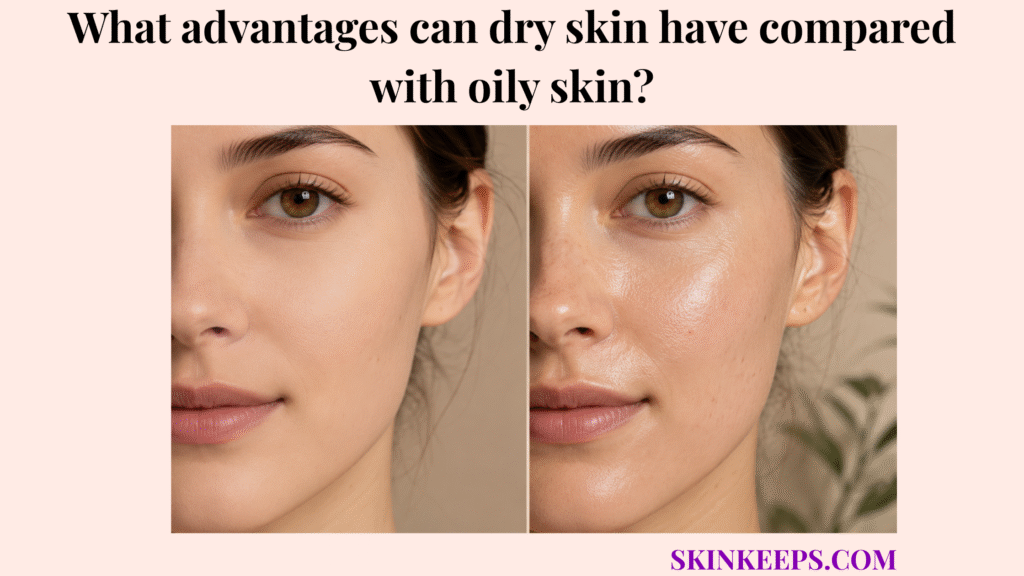
Dry skin can have advantages compared with oily skin because it usually produces less surface oil, creates less greasy shine, often shows smaller-looking pores, and may experience less sebum-driven congestion. Dry skin may also help makeup or skincare finishes look more matte for longer, but it is more prone to tightness, flaking, dullness, sensitivity, and barrier discomfort.
This article compares dry skin and oily skin across shine, oil buildup, pore visibility, congestion, makeup wear, routine simplicity, and tradeoffs. The goal is not to make skin drier, but to keep dry skin moisturized, comfortable, and protected.
Why Can Dry Skin Have Advantages Compared With Oily Skin?
Dry skin can have advantages compared with oily skin because lower surface oil can reduce visible shine, greasy buildup, oil-related pore congestion, and makeup breakdown. Sebum is the skin’s natural oil, and it helps lubricate and protect the skin. The advantage appears when lower sebum activity means less surface oil becomes visibly shiny or heavy during the day.
These advantages start with the basic behavior of dry skin, which usually has lower oil levels and a higher need for moisture support. The comparison becomes clearer beside oily skin, where higher sebum activity often creates more visible shine and greasy buildup. The tradeoff is that too little surface oil can make dry skin feel tight, rough, or less comfortable.
How Lower Sebum Production Reduces Greasy Shine
Lower sebum production reduces greasy shine because less oil spreads across the skin surface during the day. Surface oil reflects light, so lower surface oil can create a more matte appearance. This can be useful visually, but low oil is not automatically healthier if the skin feels tight or rough.
Why Dry Skin May Look Less Oily Throughout the Day
Dry skin may look less oily throughout the day because it has less oil breakthrough across the forehead, nose, cheeks, and chin. Oil breakthrough means oil becoming visible on the surface after cleansing, skincare, or makeup has been applied. Dry skin can still look dull if moisture support is low, so less oil does not always mean a smoother-looking surface.
| Feature | Dry Skin Advantage | Oily Skin Challenge |
|---|---|---|
| Surface shine | Usually less shiny | More visible grease |
| Pore appearance | Often smaller-looking pores | Pores may look larger |
| Makeup wear | Less oil breakdown | Makeup may separate faster |
| Congestion pattern | Less oil-heavy buildup | More blackheads or clogged pores |
| Main tradeoff | Dryness and tightness | Shine and oil control |
How Does Reduced Shine Benefit Dry Skin?
Reduced shine benefits dry skin by helping the face look more matte, less greasy, and less reflective during the day. Shine is mainly a visible surface-oil effect, so lower oil flow can make dry skin look calmer in photos, makeup, or natural light. Matte skin is not automatically healthy skin, because dry skin can also look dull or rough if moisture support is weak.
A lower-shine appearance is one reason dry skin is often less prone to oily shine during the day. That advantage works best when the surface is moisturized enough to stay smooth. Without enough moisture, less shine can turn into flat dullness rather than a healthy matte finish.
Why Dry Skin Often Keeps a More Matte Appearance
Dry skin often keeps a more matte appearance because lower oil flow creates less reflective shine on the skin surface. This can be a practical benefit for people who dislike a slick or greasy look during the day. The benefit stays realistic only when the skin surface remains comfortable.
Dry flakes and rough patches can interrupt a smooth matte appearance. A face can look less oily and still look uneven if the barrier is under-supported. The best version of this advantage is moisturized dry skin, not increasingly dry skin.
Why Less Oil Breakthrough Can Make the Face Look Calmer
Less oil breakthrough can make the face look calmer because the skin surface is less likely to develop a greasy or slick finish. In this context, calmer means less slickness, less shine, and less visible oil pooling. It does not mean dry skin is less inflamed by default.
The balancing point is that dry skin can look dull, tight, or textured when moisture is low. A calm-looking surface still needs barrier comfort. Matte appearance should not be chased at the expense of flexibility.
Can Dry Skin Have Smaller-Looking Pores Than Oily Skin?
Dry skin can have smaller-looking pores than oily skin because lower surface oil and less sebum buildup often make pore openings less noticeable. Pore visibility can be affected by genetics, oil flow, congestion, shine, and texture. Dry skin does not physically shrink pores, but less oil can make pore edges less highlighted.
Pores may look less obvious when surface oil is low, which connects to why small or nearly invisible pores are common in dry skin. The limitation is that dry flakes or rough texture can make the surface look uneven even when pores are less noticeable. Smaller-looking pores are therefore a visible pattern, not a guarantee of smoother skin.
| Factor | Dry Skin | Oily Skin |
|---|---|---|
| Sebum flow | Lower | Higher |
| Pore shine | Less highlighted | More highlighted |
| Congestion | Less oil-heavy buildup | More oil-related buildup |
| Visual pore size | Often less noticeable | Often more noticeable |
| Main issue | Roughness or flaking | Enlarged-looking pores or blackheads |
Does Dry Skin Have Less Oil-Related Congestion?
Dry skin may have less oil-related congestion than oily skin because lower sebum flow can reduce greasy pore buildup. Sebum-driven congestion is only one congestion pathway, so dry skin should not be described as acne-proof. Lower oil can reduce some oil-heavy buildup while other triggers still create clogged-looking pores.
Lower sebum can reduce oil-heavy buildup, which explains why dry skin is sometimes less prone to acne breakouts without making dry skin acne-proof. Acne and clogged pores are multifactorial, so irritation, dead skin buildup, hormones, products, and barrier stress can still matter. The advantage is narrower than “dry skin has no breakouts.”
Why Less Sebum Can Mean Less Greasy Pore Buildup
Less sebum can mean less greasy pore buildup because oil can mix with dead skin cells inside pores. When less surface oil is present, some sebum-driven congestion may be less visible or less frequent. This does not remove every acne pathway.
The limit is that dry skin can still develop clogged pores from dead skin buildup, friction, irritation, or products that feel too heavy. The right comparison is lower oil-related congestion, not complete breakout protection. That distinction keeps the article realistic.
Why Dry Skin Can Still Get Clogged From Heavy Products
Dry skin can still get clogged when heavy products, dead skin buildup, or irritation create congestion without high oil production. Rich products may support dryness, but they may feel too heavy for some people or some facial zones. Low oil does not guarantee clear pores.
This correction matters because dry skin often needs moisture support, but not every heavy layer suits every person. A product can reduce tightness and still create buildup if the texture is wrong for the skin. The practical goal is comfort without unnecessary congestion.
How Can Dry Skin Help Makeup Last Differently Than Oily Skin?
Dry skin can help makeup last differently than oily skin because less oil breakthrough may reduce foundation separation, shine, and midday sliding. Oil can break through a makeup base and make foundation separate faster in oily zones. Dry skin may keep a matte finish longer when the surface is properly moisturized first.
Makeup may stay matte longer because makeup can smudge less on dry skin when there is less oil breaking through the base. The tradeoff is that flaking, roughness, and patchy texture can make makeup look uneven. This is a makeup-wear comparison, not a makeup tutorial or product recommendation.
| Makeup Issue | Dry Skin Pattern | Oily Skin Pattern |
|---|---|---|
| Shine breakthrough | Usually lower | More common |
| Foundation separation | Less oil-driven separation | More likely in oily zones |
| Matte finish | Easier to maintain | Often needs blotting or powder |
| Texture risk | Dry flakes can show | Oil can break down makeup |
| Best prep | Moisturizer first | Oil-control and lightweight prep |
What Routine Advantages Can Dry Skin Have?
Dry skin can have routine advantages because it often needs less shine control, less blotting, and fewer oil-control touch-ups than oily skin. This can make daily skin appearance feel more stable for people who dislike midday grease. Dry skin still needs moisture-focused care, so the routine advantage is about oil control, not total simplicity.
Routine Advantages
- Less need for midday blotting.
- Less frequent shine-control touch-up.
- Less concern about heavy oil breakthrough.
- Less dependence on mattifying products.
- Lower risk of makeup sliding from sebum.
- Easier to maintain a natural matte finish.
Simpler shine control does not mean dry skin is easier in every way. Dry skin can still need careful cleansing, moisturizing, and barrier protection. The routine is often less oil-control focused but more comfort focused.
What Tradeoffs Balance the Advantages of Dry Skin?
The advantages of dry skin are balanced by tradeoffs such as tightness, rough texture, flaking, dullness, and barrier discomfort. Every visible benefit can carry a downside when the skin lacks enough moisture support. The goal is not maximum dryness, because a very dry surface can look dull and feel uncomfortable.
Less shine may help appearance, but too little oil support can make the skin feel tight after cleansing. Smaller-looking pores may be useful visually, but roughness and flakes can become more noticeable. A balanced article must show both sides rather than arguing that dry skin is better.
| Dry Skin Advantage | Tradeoff to Watch |
|---|---|
| Less shine | More tightness |
| Smaller-looking pores | More rough texture |
| Less greasy buildup | More flaking risk |
| More matte finish | More dullness risk |
| Less oil breakthrough | More barrier discomfort |
How Should Dry Skin Preserve Its Advantages Without Becoming Uncomfortable?
Dry skin should preserve its advantages by supporting the skin barrier, avoiding harsh cleansing habits, and moisturizing before tightness or flaking becomes obvious. This approach keeps the lower-shine benefits while reducing roughness, flakes, and barrier discomfort. The aim is comfort preservation, not making the skin drier.
A balanced routine still matters because dry skin care tips should protect comfort instead of chasing a drier, flatter finish. Gentle cleansing, moisturizer timing, avoiding hot water, avoiding harsh soaps, sunscreen, and careful makeup prep all help keep dry skin wearable. No single step should promise to fix chronic dryness.
Dry-Skin Preservation Checklist
- Use a gentle cleanser.
- Avoid harsh soaps and hot water.
- Moisturize immediately after washing.
- Use cream or ointment when dryness is obvious.
- Avoid over-exfoliating rough areas.
- Use sunscreen on exposed skin.
- Choose makeup prep that hydrates without creating heaviness.
- Judge success by comfort, not just matte appearance.
What Should You Remember About Dry Skin Advantages?
Dry skin advantages are real but limited: dry skin may look less shiny, show smaller-looking pores, and experience less oil breakthrough, but it still needs moisture and barrier protection. Dry skin is not better than oily skin, and oily skin is not worse than dry skin. Each skin type has a different balance of visible benefits and comfort needs.
Final Takeaways
- Dry skin can have real advantages compared with oily skin.
- It usually has less shine and less greasy buildup.
- Pores may look smaller or less visible.
- Makeup may stay more matte because there is less oil breakthrough.
- Dry skin still has major tradeoffs: tightness, flakes, dullness, sensitivity, and cracking.
- The best goal is not drier skin. The goal is comfortable, moisturized dry skin with a stable barrier.
Frequently Asked Questions
Is Dry Skin Better Than Oily Skin?
Dry skin is not better than oily skin because each skin type has advantages, limits, and care needs. Dry skin may look less shiny and may show smaller-looking pores, but it can also become tight, flaky, dull, rough, and uncomfortable.
Can Dry Skin Have Fewer Breakouts Than Oily Skin?
Dry skin may have fewer sebum-driven breakouts than oily skin, but it can still develop clogged pores. Lower oil can reduce oil-heavy buildup, while heavy products, dead skin buildup, irritation, or unsuitable skincare habits can still clog dry skin.
Why Does Makeup Sometimes Last Longer On Dry Skin?
Makeup can sometimes last longer on dry skin because there is less oil breakthrough to separate foundation or create shine. Dry flakes and rough texture can still make makeup look uneven if the skin is not moisturized first.
What Is The Biggest Disadvantage Of Dry Skin?
The biggest disadvantage of dry skin is barrier discomfort, especially tightness, flaking, roughness, dullness, or irritation. Dry skin advantages only stay useful when the skin remains moisturized, protected, and comfortable.
Conclusion
Dry skin can have useful advantages compared with oily skin, especially less shine, smaller-looking pores, less greasy buildup, and more stable matte makeup wear. These benefits are most noticeable when the skin barrier is comfortable and the surface is not rough, flaky, or irritated.
The goal is not to make skin drier. The better goal is to keep dry skin moisturized, protected, and balanced so its lower-shine advantages do not turn into tightness, dullness, or barrier discomfort.