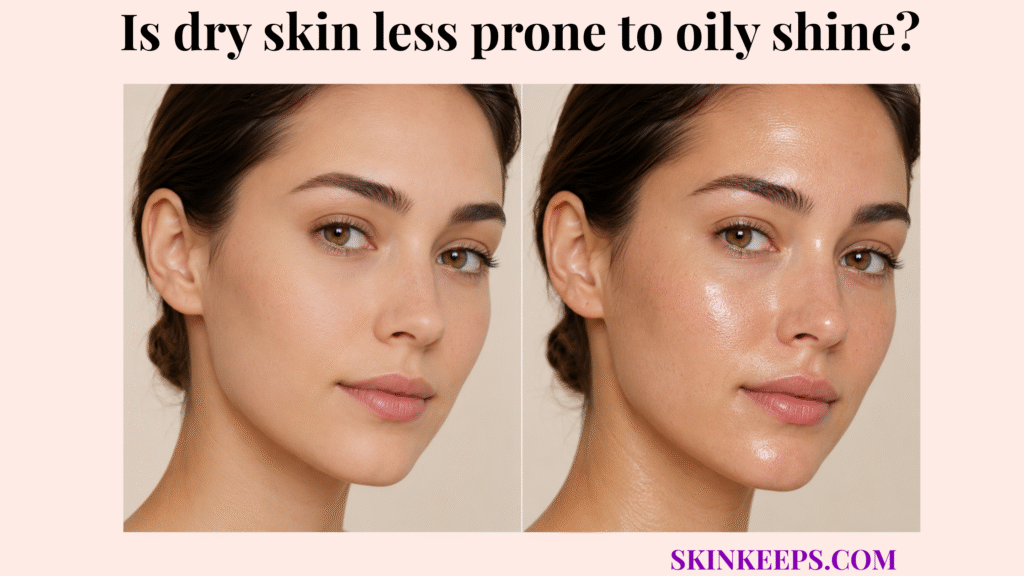
Yes, dry skin is usually less prone to oily shine because it produces less sebum than oily skin. With less surface oil, dry skin often looks more matte and has less greasy reflection across the forehead, nose, and chin.
Dry skin can still look shiny in tight, stretched, irritated, dehydrated-looking, over-cleansed, or product-coated ways. This article explains oily shine vs dry shine, dry-skin dullness, trigger habits, matte comfort care, and warning signs.
Why Is Dry Skin Usually Less Prone to Oily Shine?
Dry skin is usually less prone to oily shine because lower sebum output creates less surface oil for greasy reflection. Sebum is the skin’s natural oil, and oily shine comes from visible surface oil rather than moisture alone. Lower shine is a common dry-skin pattern, not an absolute rule.
This lower-shine pattern fits the broader behavior of dry skin, where oil levels are usually lower and moisture support matters more. The contrast is clearer beside oily skin, where higher sebum activity can make shine more visible through the day. Less shine can be useful, but it does not prove the barrier is comfortable.
How Lower Sebum Output Reduces Greasy Reflection
Lower sebum output reduces greasy reflection because less oil spreads across the skin surface and reflects light. A thinner surface oil film can make the skin look less slick and less reflective. Sebum is not bad because it also helps lubricate the skin, but excess surface oil can increase visible shine.
Why Dry Skin Often Looks More Matte Than Oily Skin
Dry skin often looks more matte than oily skin because it usually has a thinner surface oil film and less midday oil breakthrough. This can make the forehead, nose, and chin look less greasy compared with skin that produces more visible oil. The matte appearance is a visible oil pattern, not a diagnosis of skin health.
The tradeoff is that matte skin can still feel tight, rough, or uncomfortable. Dry skin may look less shiny and still need moisture support. Comfortable matte skin should feel flexible rather than stripped.
| Skin Factor | Dry Skin Pattern | Visible Result |
|---|---|---|
| Sebum output | Lower | Less greasy shine |
| Surface oil film | Thinner | More matte finish |
| T-zone oil breakthrough | Usually lower | Less midday shine |
| Pore oil buildup | Usually less obvious | Less reflective pore texture |
| Main tradeoff | Low lubrication | Tightness or dullness |
How Is Oily Shine Different From Dry-Skin Dullness?
Oily shine is different from dry-skin dullness because oily shine comes from surface oil, while dry-skin dullness comes from rough, dry, or uneven texture. Oily shine often looks greasy, reflective, or slick. Dry-skin dullness can look flat, ashy, muted, or tired without feeling oily.
True oily shine differs from persistent facial shine in oily skin because it feels slick and often builds as surface oil increases. Dry skin can look flat instead of greasy, which is why dry skin may look dull or rough when texture and moisture support are weak. Lower shine can look matte, but matte does not automatically mean healthy.
| Feature | Oily Shine | Dry-Skin Dullness |
|---|---|---|
| Main cause | Excess sebum on the surface | Rough, dry, uneven texture |
| Visual look | Greasy, reflective, slick | Flat, tired, ashy, or muted |
| Common area | T-zone | Cheeks, mouth area, hands, legs, or whole face |
| Skin feel | Slippery or coated | Tight, rough, or uncomfortable |
| Main need | Oil control without stripping | Moisture and barrier support |
Can Dry Skin Still Look Shiny?
Dry skin can still look shiny, but that shine is usually different from true oily shine. Shine can come from tightness, irritation, over-exfoliation, product film, or dehydrated-looking glossiness. These shine types can look reflective even when the skin does not feel greasy.
Tight shine often appears after cleansing, especially when dry skin feels tight after washing instead of comfortable. Product-film shine may come from skincare, sunscreen, or makeup residue rather than sebum. The useful question is whether the surface feels slick or tight.
Dry-Shine Patterns
- Tight, stretched shine after washing.
- Smooth but irritated shine after over-exfoliation.
- Reflective shine from product film.
- Shiny patches over rough or cracked skin.
- Dehydrated-looking shine where the skin looks glossy but feels uncomfortable.
How Can You Tell Dry Shine From Oily Shine?
You can tell dry shine from oily shine by checking how the skin feels, when the shine appears, whether oil transfers, and whether the surface feels comfortable. Dry shine often feels tight, rough, or uncomfortable. Oily shine often feels slick, greasy, or transferable.
Blotting paper can be a practical clue, but it is not a medical test. Visible oil transfer suggests oily shine, while little transfer with tightness suggests dry shine. Timing also matters because oily shine often builds through the day, while dry shine may appear after washing, irritation, or product layering.
| Clue | Dry Shine | Oily Shine |
|---|---|---|
| Touch | Tight, dry, or rough | Slick, greasy, transferable |
| Timing | Often after washing or irritation | Builds through the day |
| Flakes | May appear | Less typical unless dehydrated-oily |
| Blotting paper | Little oil transfer | Visible oil transfer |
| Comfort | Often uncomfortable | May feel heavy or greasy |
| Best response | Moisturizer and barrier care | Gentle cleansing and oil control |
Which Habits Can Make Dry Skin Lose Its Comfortable Matte Finish?
Dry skin can lose its comfortable matte finish when cleansing, water temperature, exfoliation, moisturizer habits, or product layering create tightness, irritation, or artificial shine. The visible result may look glossy, but the feel is often uncomfortable rather than oily. The goal is to preserve a matte appearance without stripping the surface.
Hot water can turn a matte surface into a tight glossy surface because hot showers can worsen dryness and increase barrier discomfort. Heavy product layering can create product-film shine, while over-exfoliation can create a glossy but irritated surface. These patterns are different from ordinary oily shine.
| Habit | What Happens | Result |
|---|---|---|
| Harsh cleansing | Removes limited surface lipids | Tight, shiny, uncomfortable skin |
| Hot water | Worsens dryness and tightness | Stretched-looking shine |
| Over-exfoliation | Smooths too aggressively | Glossy but irritated surface |
| Skipping moisturizer | Leaves skin water-poor | Dull or tight appearance |
| Heavy product layering | Adds artificial shine | Product shine, not oil shine |
How Should Dry Skin Stay Matte Without Becoming Uncomfortable?
Dry skin should stay matte without becoming uncomfortable by protecting the barrier, using gentle cleansing, and treating tight shine as a dryness signal rather than an oil problem. A matte finish is safest when the skin feels flexible and calm. Strong oil-control habits can make dry skin tighter if they strip too much surface support.
A matte finish is safest when it fits within dry skin care tips that protect comfort rather than stripping surface oil aggressively. Gentle cleanser, avoiding hot water, moisturizing after washing, comfortable sunscreen texture, and avoiding over-exfoliation all support the page goal. No specific product brand is needed to explain the mechanism.
Matte-But-Comfortable Checklist
- Use a gentle cleanser.
- Avoid hot water and harsh soaps.
- Moisturize immediately after washing.
- Choose cream or lotion based on dryness level.
- Avoid over-exfoliating to chase smoothness.
- Use sunscreen that does not leave a heavy greasy film.
- Treat tight shine as barrier stress, not as oiliness.
- Judge success by comfort, not only by matte appearance.
When Is Shine on Dry Skin a Warning Sign?
Shine on dry skin can be a warning sign when it appears with burning, stinging, prolonged tightness, cracking, bleeding, swelling, oozing, crusting, or recurring dry patches. These signs may reflect barrier stress, irritation, or another issue that needs review if persistent or worsening. The point is not to diagnose the cause from shine alone.
Professional review may be useful when the shiny dry area is painful, unexplained, recurring, or does not improve with gentle care. Shine with discomfort is more important than shine by itself. The concern level rises when the surface breaks, oozes, crusts, or keeps returning in the same place.
Warning Signs
- Shine appears with burning or stinging.
- Skin feels tight for hours after washing.
- Flaking, cracking, or bleeding appears.
- Skin becomes red, darkened, swollen, oozing, or crusted.
- Dry patches keep returning.
- Moisturizer does not improve the tight glossy look.
- You suspect dermatitis, eczema, over-exfoliation, or irritation.
What Should You Remember About Dry Skin and Oily Shine?
Dry skin is usually less prone to oily shine because lower sebum output creates less greasy reflection, but dry skin can still look shiny when the barrier is tight, irritated, dehydrated-looking, or product-coated. The distinction depends on feel, timing, oil transfer, flakes, and comfort. The goal is comfortable dry skin, not stripped matte skin.
Final Takeaways
- Dry skin is usually less prone to oily shine.
- Lower sebum output means less greasy reflection.
- Dry skin often looks matte, but matte does not always mean healthy.
- Dry skin can still look shiny when tight, dehydrated-looking, irritated, or over-exfoliated.
- Oily shine feels slick; dry shine often feels tight or uncomfortable.
- The goal is comfortable dry skin, not stripped matte skin.
Frequently Asked Questions
Is Dry Skin Always Matte?
Dry skin is not always matte because it can look shiny when the surface is tight, irritated, over-cleansed, or coated with product film. Dry skin is usually less oily, but shine can come from non-oil causes.
Why Does My Dry Skin Look Shiny After Washing?
Dry skin may look shiny after washing when cleansing removes surface lipids and leaves the skin tight or stretched. Tight shine after washing is more likely a dryness or barrier-comfort signal than true oily shine.
How Can I Tell If Shine Is Oil or Dryness?
Shine is more likely oil-related if the skin feels slick and transfers oil, while dry shine usually feels tight, rough, or uncomfortable. Timing, feel, flakes, and blotting transfer can help separate the patterns.
Should Dry Skin Use Oil-Control Products to Stay Matte?
Dry skin usually should not chase matte skin with strong oil-control products because over-stripping can worsen tightness and barrier discomfort. Dry skin should focus on gentle cleansing, moisture support, and comfortable texture rather than aggressive shine control.
Can Moisturizer Make Dry Skin Look Shiny?
Moisturizer can make dry skin look shiny if the formula leaves a visible film, but that shine is not the same as oily shine from sebum. The right finish should feel comfortable, not greasy or tight.
Conclusion
Dry skin is usually less prone to oily shine because lower sebum output leaves less surface oil available to create greasy reflection. That lower-oil pattern often creates a more matte appearance, especially compared with oily skin that develops shine through the day.
Dry skin can still look shiny when it is tight, over-cleansed, irritated, dehydrated-looking, or coated by product film. The goal is not stripped matte skin; the better goal is comfortable dry skin with enough moisture and barrier support to look calm without feeling tight.