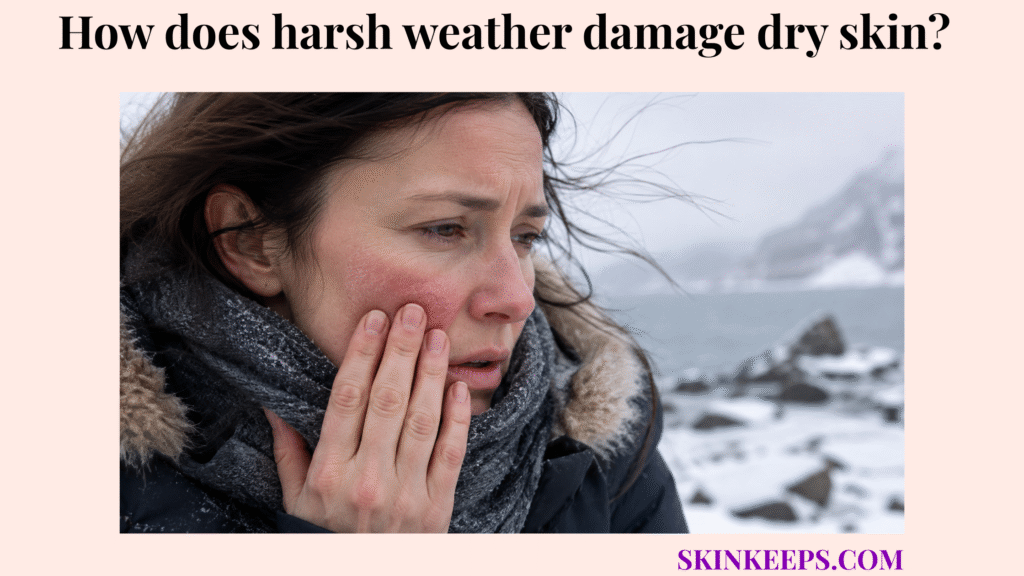
Harsh weather damages dry skin by increasing moisture loss, weakening barrier comfort, and exposing the skin to cold air, wind, low humidity, sun, dry indoor air, and sudden temperature changes. These conditions can make the outer skin layer less flexible, so dryness may show up as tightness, roughness, itching, flaking, stinging, cracking, or irritation.
This article explains how harsh weather affects the dry-skin barrier, why cold weather and wind cause different types of discomfort, how low humidity and dry indoor air weaken moisture balance, how sudden temperature changes increase irritation, and how to protect vulnerable areas before symptoms become severe.
How does harsh weather damage the dry skin barrier?
Harsh weather damages the dry skin barrier by exposing the outer layer to moisture loss, friction, temperature stress, and environmental irritation. Dry skin is already more vulnerable to comfort loss, so weather stress can make it feel tighter and look rougher faster than balanced skin. Harsh weather sits inside the wider group of environmental factors that worsen dry skin, but this page focuses on combined weather stress rather than one single trigger.
Weather damage becomes more noticeable when several triggers overlap. Cold air may reduce comfort, wind may add friction, low humidity may increase moisture loss, and sun exposure may add slower surface stress. Together, these conditions can make dry skin less flexible and more prone to flaking, scaling, or cracking.
How weather exposure increases moisture loss
Weather exposure increases moisture loss by placing dry skin in conditions where the outer layer struggles to hold enough water for comfort. Cold air, wind, low humidity, and dry indoor air can all make the skin feel less supported. This moisture loss can make tightness and roughness appear faster during harsh seasons.
Why dry skin becomes less flexible in harsh conditions
Dry skin becomes less flexible in harsh conditions because moisture loss and surface stress make the outer layer tighter, rougher, and less tolerant of movement or friction. Less flexibility makes ordinary facial movement, hand movement, clothing contact, or wind exposure feel more irritating. This is why weather-damaged dry skin can crack or sting when stress continues.
| Weather Factor | What It Does | Dry-Skin Result |
|---|---|---|
| Cold air | Reduces surface comfort | Tightness and roughness |
| Wind | Adds friction and exposure stress | Irritation and stinging |
| Low humidity | Pulls moisture from skin | Flaking and itching |
| Sudden temperature shifts | Makes the barrier less stable | Redness or sensitivity |
| Sun exposure | Adds surface damage over time | Rough, dry, uneven texture |
Why does cold weather make dry skin worse?
Cold weather makes dry skin worse by reducing surface comfort, increasing tightness, and exposing the barrier to low-moisture conditions that make the outer layer feel less flexible. This is why dry skin often feels pulled or rough during winter conditions. Weather stress is one reason dry skin can feel tighter and less comfortable in certain seasons.
Cold weather often becomes worse when the skin moves between outdoor cold and indoor heated air. The outdoor environment may reduce comfort, while indoor heat can keep the surrounding air dry for long periods. This combination can make dry skin feel tight even after moisturizer.
How cold air reduces moisture around the skin
Cold air reduces moisture around the skin by creating a drier surrounding environment that makes the outer layer lose comfort more easily. The skin does not need extreme weather to feel this change. Even ordinary winter exposure can make dry-prone areas feel tighter when moisture support is low.
Why dry skin feels tighter in winter conditions
Dry skin feels tighter in winter conditions because cold air and dry indoor heat make the outer layer less flexible and more prone to surface pulling. This pulling can appear after being outside, after coming indoors, or after washing in a heated room. The pattern is often strongest on exposed areas such as hands, cheeks, and lips.
How does wind irritate dry skin?
Wind irritates dry skin by adding friction, exposure stress, and surface dryness to areas that already lack enough barrier comfort. This irritation often appears on exposed areas such as the cheeks, lips, hands, and legs. Wind can make dry skin sting or burn when the barrier is already weakened.
Wind damage is not only about cold temperature. Even mild wind can increase discomfort when dry skin is already rough, flaky, or cracked. The key mechanism is friction and exposure, not just low humidity or winter temperature.
Wind Damage Guide
How do low humidity and dry indoor air weaken dry skin?
Low humidity and dry indoor air weaken dry skin by reducing surrounding moisture, which makes water leave the outer skin layer more easily. This effect can happen outdoors in dry climates and indoors when heating or air conditioning keeps the air dry. Dry indoor air can worsen weather-related tightness because low humidity reduces skin moisture even when the person is indoors.
Dry bedrooms can make morning tightness more noticeable because the skin spends hours in a low-moisture environment. This does not mean humidity is the only weather factor, but it is a major reason dry skin often feels worse during winter or in climate-controlled spaces.
| Dry-Air Source | Barrier Effect |
|---|---|
| Outdoor low humidity | Moisture leaves the skin faster |
| Indoor heating | Keeps air dry for long hours |
| Air conditioning | Can reduce surface comfort |
| Dry bedrooms | Can worsen morning tightness |
How do sudden temperature changes affect dry skin?
Sudden temperature changes affect dry skin by forcing the barrier to adjust quickly between cold, warm, dry, or heated environments. This quick change can make dry skin feel less stable and more reactive. The effect is often worse when the skin is already dry before the temperature shift happens.
Repeated movement between outdoor cold and indoor heat can increase tightness, redness, or sensitivity. This should be understood as barrier stress and irritation, not dramatic “shock” language. Cold exposure is different from bathing-related dryness, but hot showers worsen dryness when people use heat to recover after being outside.
Why moving from cold outdoor air to heated rooms stresses dry skin
Moving from cold outdoor air to heated rooms stresses dry skin because the barrier shifts from outdoor cold to indoor dry heat before it has recovered comfort. This shift can make the skin feel tight even after the person is no longer outside. The issue is the repeated environmental change, not one dramatic weather event.
Why repeated temperature shifts can increase irritation
Repeated temperature shifts can increase irritation because dry skin becomes less tolerant when the outer layer is exposed to changing moisture and temperature conditions throughout the day. Each shift can add a small amount of stress. Over time, that stress may appear as redness, darker irritation, stinging, or roughness.
What does weather-damaged dry skin look or feel like?
Weather-damaged dry skin can look or feel tight, rough, flaky, scaly, itchy, stinging, red, darker irritated, ashy, cracked, or less comfortable than usual. These signs appear because harsh weather weakens surface comfort and makes the outer layer less flexible. When weather exposure leads to visible shedding, dry skin flaking and scaling can help explain the surface changes.
The severity can range from mild tightness to deeper fissures. Lighter skin may show redness more clearly, while deeper skin tones may show gray, ashy, or darker irritated patches. These observations help describe the pattern without diagnosing eczema, psoriasis, or infection without warning signs.
Common Signs
Which areas are most vulnerable to harsh-weather dryness?
The areas most vulnerable to harsh-weather dryness are exposed or friction-prone areas such as the face, lips, hands, knuckles, cheeks, around the mouth, neck, shins, feet, and elbows. These areas often lose comfort first because they are exposed to wind, cold, handwashing, clothing friction, or dry air. The lips and hands are especially vulnerable because they face repeated exposure throughout the day.
Body location can reveal the likely trigger. Cheeks and lips may worsen with wind, hands may worsen with cold and washing, and shins may worsen with dry air and friction from clothing. The section should stay practical and observational.
Common Exposed or Vulnerable Areas
How can dry skin be protected from harsh weather?
Dry skin can be protected from harsh weather by moisturizing before exposure, shielding vulnerable areas, reducing wind and cold contact, supporting indoor humidity, and keeping cleansing gentle. Protection works best when it begins before the skin becomes cracked or irritated. A simple routine can reduce tightness, roughness, and friction-related discomfort.
Outdoor exposure can include UV stress, so sun exposure worsens dryness through a slower surface-damage pathway than wind or cold air. After coming indoors, the skin should not be scrubbed or exposed to long hot water. Moisturizer, balm, gloves, and gentle cleansing work together better than one single fix.
Weather-Protection Checklist
When does harsh-weather dry skin need professional care?
Harsh-weather dry skin needs professional care when it cracks, bleeds, becomes severely itchy, painful, burning, persistently stinging, swollen, oozing, crusted, infection-looking, or does not improve after protective care. These signs suggest the issue may be stronger than ordinary weather dryness. The safest direction is evaluation without diagnosing the reader.
Persistent or recurrent patches may overlap with eczema, dermatitis, psoriasis, allergy, infection, or another condition. Dryness that cracks, bleeds, or keeps returning may fit the escalation pattern where persistent dry skin needs a dermatologist. Delaying care is not worth it when the skin is painful, inflamed, or not improving.
Warning Signs
What should you remember about harsh weather and dry skin?
The main point to remember is that harsh weather can damage dry skin when cold air, wind, low humidity, indoor heating, sun exposure, and temperature shifts create moisture loss and barrier stress together. The damage is most obvious when several stressors affect the same exposed areas. Protection works best when it starts before cracking or severe irritation appears.
Final Takeaways
FAQs
How does harsh weather damage dry skin?
Harsh weather damages dry skin by increasing moisture loss, weakening barrier comfort, and exposing the skin to cold air, wind, low humidity, sun, dry indoor air, and sudden temperature changes.
Why does cold weather make dry skin tighter?
Cold weather makes dry skin tighter because the outer layer becomes less flexible and less comfortable in low-moisture conditions.
Can wind irritate dry skin?
Yes, wind can irritate dry skin by adding friction and exposure stress to areas that already have weak barrier comfort.
How does low humidity affect dry skin?
Low humidity affects dry skin by making moisture leave the outer layer more easily, which can increase tightness, itching, and flaking.
Can indoor heating worsen dry skin?
Yes, indoor heating can worsen dry skin because it keeps indoor air dry for long periods and can increase morning tightness.
Which areas are most affected by harsh-weather dryness?
The face, lips, hands, knuckles, cheeks, around the mouth, neck, shins, feet, and elbows are commonly affected because they are exposed or friction-prone.
When should harsh-weather dry skin be checked?
Harsh-weather dry skin should be checked when it cracks, bleeds, becomes painful, burns, oozes, crusts, or does not improve after protective care.
Conclusion
Harsh weather can damage dry skin when cold air, wind, low humidity, indoor heating, sun exposure, and temperature shifts create moisture loss and barrier stress together. This combined exposure can make dry skin tighter, rougher, itchier, flakier, more sensitive, and more likely to crack.
The best response is to moisturize early, shield exposed areas, reduce wind and cold exposure, keep cleansing gentle, avoid long hot water after cold exposure, and seek professional care if symptoms become painful, bleeding, oozing, crusted, or persistent.