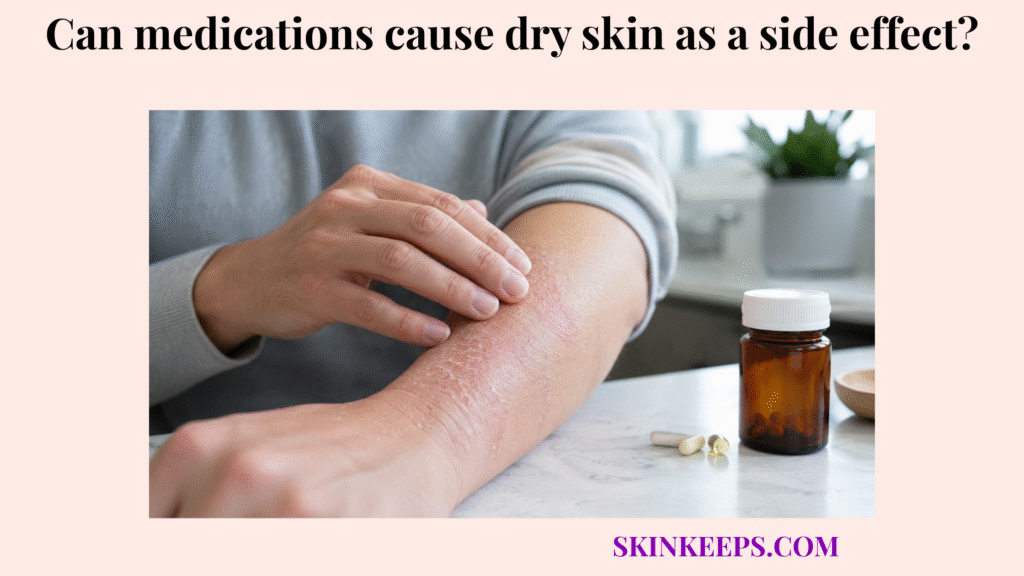
Yes, medications can cause dry skin as a side effect when they reduce oil production, change fluid balance, speed skin turnover, irritate the barrier, or increase sun sensitivity. The strongest clue is timing: dryness begins or worsens after a new medication, dose change, acne treatment, cancer treatment, or medication combination.
This article explains how medication-related dry skin happens, which medication categories are commonly linked with dryness, why acne treatments and fluid-changing medications deserve special attention, how to separate ordinary dryness from medication-related dryness, what not to do, how to support the skin safely, and when to ask a doctor or pharmacist.
How can medications cause dry skin as a side effect?
Medications can cause dry skin as a side effect by reducing surface oil, lowering moisture support, changing skin renewal, irritating the barrier, or increasing photosensitivity. This effect may feel like tightness, roughness, flaking, peeling, stinging, burning, redness, or a more sensitive barrier. Medication side effects are one pathway within dry skin, but this page focuses specifically on timing after treatment changes.
Medication dryness does not always appear the same way. Acne treatments may cause peeling or irritation, fluid-changing medications may make dryness appear with thirst or dry mouth, and photosensitizing medications may make exposed areas feel rougher after sun exposure. Mayo Clinic describes dry skin as rough, itchy, flaky, or scaly and notes that dry skin has many causes. Mayo Clinic
How medications can reduce oil or moisture support
Medications can reduce oil or moisture support by changing sebum output, fluid balance, sweating, or the skin’s ability to maintain surface comfort. Reduced oil support can make skin feel less flexible and more easily rough after cleansing. Moisture-support changes become more meaningful when they begin after a medication start or dose change.
How treatment-related dryness can weaken skin comfort
Treatment-related dryness can weaken skin comfort by making the outer layer tighter, more reactive, more peel-prone, or less tolerant of normal cleansing and skincare. This pattern can make products that were once comfortable feel irritating. A medication-related timeline should be discussed with a doctor or pharmacist rather than treated as proof that the medication is unsafe.
| Medication Effect | What Changes | Dry-Skin Result |
|---|---|---|
| Reduced oil production | Less surface lubrication | Tightness and roughness |
| Fluid-balance changes | Less skin hydration support | Dry or flaky feel |
| Faster skin turnover | More peeling or irritation | Scaling or sensitivity |
| Barrier irritation | Skin becomes more reactive | Stinging, burning, redness |
| Photosensitivity | Sun exposure irritates more easily | Dry, rough, inflamed patches |
Which medication types are commonly linked with dry skin?
Medication types commonly linked with dry skin include acne medications, retinoids, diuretics, antihistamines, some long-term cardiovascular medications, cancer treatments, and hormonal medications. These categories do not affect everyone the same way, and the same category can cause dryness through different mechanisms. Medication-related dryness belongs near biological and medical factors that contribute to dry skin, but it deserves its own page because the trigger is treatment exposure.
The purpose is not to create a dangerous self-diagnosis list. The purpose is to help readers notice patterns and prepare questions for a clinician or pharmacist. A prescribed medication should not be stopped, skipped, reduced, or dose-adjusted without professional guidance.
| Medication Category | Possible Dry-Skin Pattern |
|---|---|
| Acne medications | Peeling, dryness, sensitivity, irritation |
| Retinoids | Dryness, flaking, barrier sensitivity |
| Diuretics | Dryness linked with fluid-balance changes |
| Antihistamines | Drier skin or mucous membranes in some people |
| Cholesterol medications | Dryness may occur in some users |
| Blood pressure medications | Dryness or skin changes may occur in some cases |
| Cancer treatments | Dryness, sensitivity, peeling, or barrier changes |
| Hormonal medications | Skin oil and moisture balance may shift |
Why do acne medications often cause dry skin?
Acne medications often cause dry skin because many acne treatments reduce oiliness, speed skin-cell turnover, fight acne-related inflammation, or irritate the barrier during adjustment. This dryness may appear as peeling, flaking, tightness, stinging, burning, or sensitivity. Medication-related peeling may look similar to dry skin flaking and scaling, but the timing after a new treatment can change the interpretation.
Acne-treatment dryness does not automatically mean the treatment is wrong, but severe irritation, swelling, blistering, cracking, or pain should be discussed with a clinician. The reader should not combine multiple drying acne products to “push through” irritation. AAD notes that benzoyl peroxide and retinoids are acne treatments, and its isotretinoin guidance lists dryness such as dry skin, chapped lips, and dry or irritated eyes as common during isotretinoin use. AAD AAD
Why retinoids can cause peeling and dryness during adjustment
Retinoids can cause peeling and dryness during adjustment because they change skin-cell turnover and can temporarily make the outer layer more sensitive. This adjustment pattern may include flaking, tightness, stinging, or irritation. Severe reactions should be discussed with the prescribing clinician instead of being ignored.
Why benzoyl peroxide or other acne treatments can irritate dry skin
Benzoyl peroxide or other acne treatments can irritate dry skin because they may add dryness, stinging, peeling, or redness when the barrier is already stressed. This can happen more easily when acne products are layered too aggressively. A gentler routine and clinician guidance are safer than increasing multiple drying products at once.
How can fluid-changing medications contribute to dry skin?
Fluid-changing medications can contribute to dry skin when they alter hydration balance, increase fluid loss, or make dryness more noticeable on the lips, mouth, hands, legs, or face. This pattern may appear with thirst, dry mouth, or a general sense that the skin is less comfortable than before. Fluid-changing medications should be viewed as possible contributors, not automatic causes in every person.
Older adults may notice medication-related dryness more strongly because age-related moisture retention and medication use can overlap. Hydration and moisturizer may help, but persistent symptoms should be reviewed with a doctor or pharmacist, especially after a new medication or dose change. NHS notes that furosemide can make people pee more than normal and feel thirsty, and advises speaking with a doctor or pharmacist if peeing a lot remains a problem. NHS
Fluid-Balance Guide
How is medication-related dry skin different from ordinary dryness?
Medication-related dry skin differs from ordinary dryness because it often begins or worsens after starting a medication, changing a dose, adding a treatment, or combining drying therapies. Ordinary dryness is more often linked to weather, washing, soaps, or aging. Disease-linked dryness is covered separately under medical conditions linked with chronic dry skin, while this section focuses on medication side effects.
The strongest clue is timing, not the symptom alone. Tightness, roughness, flaking, peeling, stinging, or burning can happen for many reasons, but a clear medication timeline changes the next step. Tracking symptoms and asking a clinician is safer than guessing.
| Feature | Ordinary Dryness | Possible Medication-Related Dryness |
|---|---|---|
| Timing | Linked to weather, washing, soaps, or aging | Starts or worsens after a medication change |
| Pattern | Often seasonal or exposure-based | May persist despite environmental changes |
| Symptoms | Tightness, roughness, flaking | Dryness plus peeling, sensitivity, or widespread change |
| Response to moisturizer | Often improves | May improve only partly |
| Next step | Adjust care habits | Discuss medication timing with clinician |
What should someone avoid doing if medication causes dry skin?
Someone should avoid stopping prescription medication, changing the dose, adding more drying treatments, scrubbing peeling skin, or ignoring severe symptoms when medication may be causing dry skin. These actions can make the skin worse or create safety problems unrelated to the skin. The safer move is to document the timing and ask a doctor or pharmacist.
A medication-related barrier can feel worse when harsh soaps remove natural lipids during cleansing. Peeling skin should be handled gently, not scrubbed away. If swelling, blistering, oozing, painful cracks, severe rash, or eye, mouth, or genital dryness appears, the reader should contact a clinician promptly.
What Not to Do
How can medication-related dry skin be supported?
Medication-related dry skin can be supported with gentle cleansing, fragrance-free moisturizer, reduced exfoliation, sun protection when needed, and clinician guidance about whether dryness is expected. Supportive care should reduce barrier stress without interfering with the medication plan. The goal is comfort and protection while the medication question is reviewed professionally.
Medication irritation may overlap with dry skin stinging or burning, especially when the skin becomes reactive after treatment changes. If the medication increases sun sensitivity, exposed skin may need stricter sunscreen use and protection. Mayo Clinic notes that cracked dry skin may need medical treatment to prevent infection when cracks open. Mayo Clinic
Support Checklist
When should medication-related dry skin be discussed with a doctor or pharmacist?
Medication-related dry skin should be discussed with a doctor or pharmacist when dryness starts after a new medication, worsens after a dose change, becomes severe, or affects comfort, sleep, healing, or sensitive areas. This discussion is especially important when cracks, bleeding, pain, rash, swelling, oozing, crusting, blistering, or widespread peeling appears. A pharmacist can also help identify whether a medication is known to cause dryness or photosensitivity.
Dryness that cracks, bleeds, becomes painful, or persists may fit the escalation pattern where persistent dry skin needs a dermatologist. The reader should also ask for help if dryness affects eyes, lips, mouth, or genital areas, or if they are unsure whether the medication should be continued.
Doctor or Pharmacist Discussion Signs
What should someone track before asking about medication-related dry skin?
Someone should track medication name, dose, start date, dose changes, dryness location, symptom severity, skincare products, bathing habits, photos, and other symptoms before asking about medication-related dry skin. These details help a doctor or pharmacist compare symptom timing with medication timing. The clearer the timeline, the easier it is to decide whether the dryness may be treatment-related.
The tracking should include whether peeling, itching, cracking, burning, dry mouth, dry eyes, fatigue, rash, or swelling appeared after starting or changing medication. Product and bathing details matter because ordinary dry-skin triggers can overlap with medication effects.
Medication Review Checklist
What should you remember about medications and dry skin?
The main point to remember is that medications can cause or worsen dry skin as a side effect, especially when dryness begins or intensifies after a medication start or dose change. The strongest clue is timing, but timing still needs professional review. Prescription medication should not be stopped, skipped, or dose-adjusted without medical advice.
Final Takeaways
FAQs
Can medications cause dry skin as a side effect?
Yes, medications can cause dry skin as a side effect when they reduce oil production, change fluid balance, speed skin turnover, irritate the barrier, or increase sun sensitivity.
Which medications are commonly linked with dry skin?
Acne medications, retinoids, diuretics, antihistamines, some long-term cardiovascular medications, cancer treatments, and hormonal medications may be linked with dryness in some people.
Why do acne medications cause dryness?
Acne medications can cause dryness because they may reduce oiliness, speed skin-cell turnover, irritate the barrier, or increase peeling during adjustment.
How do I know if dry skin is medication-related?
Dry skin may be medication-related if it begins or worsens after starting a medication, changing a dose, adding a treatment, or combining drying therapies.
Should I stop medication if it causes dry skin?
No, prescription medication should not be stopped, skipped, or dose-adjusted without speaking to a doctor or pharmacist.
What helps medication-related dry skin?
Gentle cleansing, fragrance-free moisturizer, avoiding hot water, pausing unnecessary exfoliation, protecting cracked areas, and using sunscreen when needed can support medication-related dry skin.
When should medication-related dry skin be discussed with a clinician?
Medication-related dry skin should be discussed when it becomes severe, painful, cracked, bleeding, blistering, widespread, persistent, or affects the eyes, lips, mouth, or genital areas.
Conclusion
Medications can cause or worsen dry skin as a side effect when they affect oil production, fluid balance, skin renewal, barrier tolerance, or sun sensitivity. The most useful clue is timing: dryness that begins or worsens after starting a medication, changing a dose, or adding a new treatment should be tracked and discussed with a doctor or pharmacist.
The safest approach is to support the barrier with gentle care while avoiding any medication changes unless a clinician recommends them. This keeps the page focused on medication-induced dry skin as a side-effect pattern rather than medical-condition diagnosis or unsafe self-adjustment.