Yes, sebum supports the skin’s natural moisture barrier in oily skin by adding surface lubrication and contributing to the protective lipid film, but it is only one part of the full barrier system. This matters because oily skin can have plenty of surface oil while still needing hydration, an intact stratum corneum, and healthy barrier lipids.
This guideline explains how sebum supports the moisture barrier, how it works alongside the stratum corneum, why oily skin can still become barrier-damaged, and which lightweight ingredients support barrier function without adding heavy grease. It also gives a daily routine for preserving barrier comfort while keeping shine and congestion under control.
How does sebum support the moisture barrier in oily skin?
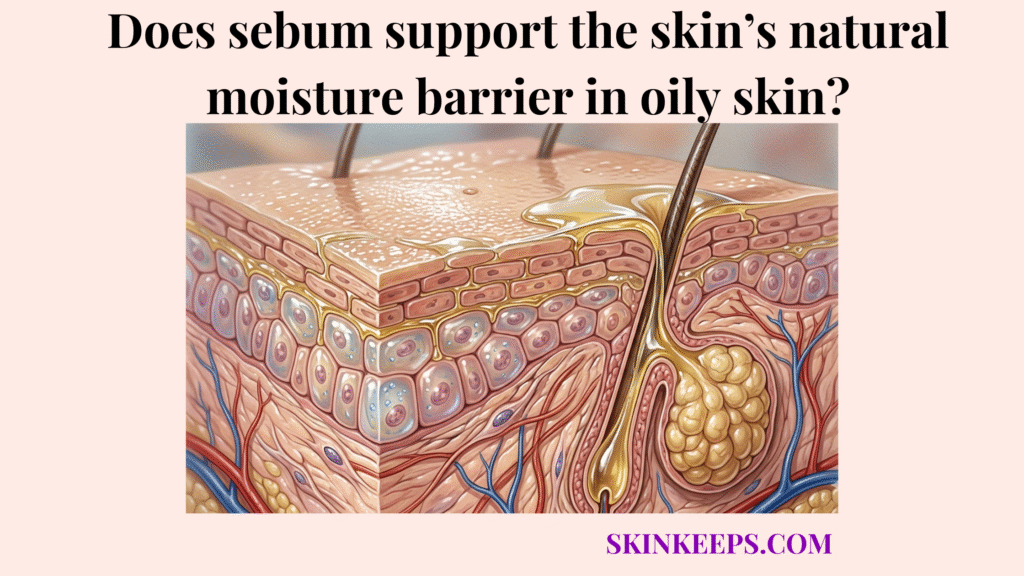
Sebum supports the moisture barrier in oily skin by adding surface lipids that lubricate the outer layer and help maintain a more comfortable protective film. A 2025 review describes sebum as having a dual role in skin homeostasis, maintaining barrier function and providing antimicrobial defense. This supports the idea that sebum is helpful, but only as part of a broader skin-barrier system. [PMC]
This sebum support becomes less helpful when oil is excessive or dysregulated. Excess sebum can build up around pores and contribute to shine, congestion, or acne-prone symptoms. That is why this page should explain sebum as supportive, not as automatically protective in every amount.
How sebum lubricates the surface of oily skin
Sebum lubricates the surface of oily skin by coating the stratum corneum with a thin lipid film that reduces friction and roughness. This thin lipid film provides immediate tactile slip to the outermost layer. The added slip prevents mechanical stressors from physically dragging against vulnerable skin cells. Minimizing this abrasive drag explains why oily profiles rarely suffer from raw, dry-feeling friction.
How sebum contributes to the skin’s protective lipid film
Sebum contributes to the skin’s protective lipid film by adding sebaceous lipids to the surface layer that interacts with other skin-surface lipids. Skin-surface lipid research states that skin surface lipids synergistically support skin barrier homeostasis and that sebum is a waxy mixture that moisturizes and protects the skin. [ScienceDirect]
Why sebum supports comfort but does not guarantee barrier health
Sebum supports comfort but does not guarantee barrier health because the full moisture barrier also requires organized stratum corneum lipids, intact corneocytes, and adequate water balance. Exploring oily skin less dryness illustrates that sebum reduces some classic dry-feeling friction but does not prevent dehydration. The presence of oil cannot offset severe structural degradation below the surface.
| Sebum Function | What It Does | Barrier-Related Benefit |
|---|---|---|
| Surface lubrication | Coats the outer skin layer | Reduces roughness and friction |
| Lipid film support | Adds oil to the skin surface | Helps reduce dry-feeling tightness |
| Environmental buffering | Helps support surface comfort | May reduce some friction-related stress |
| Excess sebum | Builds up beyond useful lubrication | Can worsen shine, congestion, and acne risk |
How does sebum work with the stratum corneum barrier?
Sebum works with the stratum corneum barrier by adding a surface lipid contribution while the stratum corneum provides the main organized structure for moisture control. Skin-surface lipid research explains that the stratum corneum lipid matrix is primarily composed of ceramides, non-esterified fatty acids, and cholesterol, while sebum is a separate waxy mixture of acylglycerols, wax esters, fatty acids, squalene, cholesterol, and cholesterol esters. This distinction is the backbone of the article. [ScienceDirect]
This stratum corneum partnership prevents the article from over-crediting sebum. Sebum contributes surface support, but the stratum corneum controls the deeper moisture-barrier architecture. The writer should repeatedly clarify that surface oil and barrier structure are related but not identical.
Why the stratum corneum is the main moisture-control layer
The stratum corneum is the main moisture-control layer because its corneocytes and lipid matrix regulate how much water escapes from the skin. These barrier lipids form a highly structured, impermeable intercellular mortar. This dense mortar halts evaporation effectively, a feat that liquid surface oil cannot accomplish on its own.
How sebum complements epidermal barrier lipids
Sebum complements epidermal barrier lipids by adding a surface-level lipid contribution without replacing ceramides, cholesterol, or fatty acids inside the stratum corneum matrix. This surface-level seal acts as the first line of defense against the environment. The synergy between the internal matrix and the external oil optimizes overall barrier resilience.
Why oily skin still needs an intact outer barrier
Oily skin still needs an intact outer barrier because excess surface oil cannot repair structural disruption inside the stratum corneum by itself. If the structural mortar breaks down, the tissue remains fundamentally compromised. An abundance of grease cannot seal micro-cracks in a failing epidermal shield.
| Barrier Component | Main Source | Main Role | What It Cannot Do Alone |
|---|---|---|---|
| Sebum | Sebaceous glands | Surface lubrication and lipid film support | Cannot replace full barrier structure |
| Ceramides | Epidermal barrier lipids | Help organize water-retaining barrier layers | Do not control sebum output |
| Cholesterol and fatty acids | Stratum corneum lipid matrix | Support barrier structure and TEWL control | Do not replace hydration |
| Water in stratum corneum | Skin hydration system | Supports flexibility and comfort | Does not equal oiliness |
Why can oily skin still have a weak moisture barrier?
Oily skin can still have a weak moisture barrier because high sebum output does not automatically mean the stratum corneum is hydrated, organized, or irritation-resistant. This is why oily skin can feel greasy and tight at the same time. The oil sits on the surface, while the barrier underneath may be dehydrated or irritated.
Acne-prone oily skin can also show barrier stress. Harsh actives, repeated cleansing, and over-exfoliation may lower tolerance even when oil remains high. This creates the pattern of skin that looks shiny but stings from basic products.
Why excess sebum does not equal strong barrier function
Excess sebum does not equal strong barrier function because barrier strength depends on structured epidermal lipids, hydration, and stratum corneum integrity. A flood of surface oil simply cannot substitute for the precise, brick-and-mortar cellular arrangement. When this matrix is deficient, the tissue remains highly vulnerable to moisture loss.
Why oily skin can feel greasy but still tight or irritated
Oily skin can feel greasy but still tight or irritated when surface oil remains visible while the stratum corneum lacks water or has reduced tolerance. This surface oil continues to flow from the sebaceous glands regardless of how parched the underlying tissue feels. The ongoing flow creates a slick coating over a structurally compromised, dehydrated matrix. Selecting an appropriate oily skin moisturizer restores necessary water balance with lightweight hydration support.
Why acne-prone oily skin may still show barrier stress
Acne-prone oily skin may still show barrier stress because inflammation, strong treatments, and aggressive cleansing can weaken tolerance despite ongoing oil production. This intense regimen constantly challenges the tissue’s recuperative limits. The prolonged chemical bombardment ensures the barrier stays chronically inflamed and weak.
| Sign | What It Suggests |
|---|---|
| Shine with tightness | Surface oil is present, but hydration or barrier comfort may be low |
| Stinging from basic products | The stratum corneum may be irritated or less tolerant |
| Flaking with oil | Dehydration or over-treatment may coexist with sebum |
| Rapid irritation after actives | Barrier tolerance may be reduced |
| Greasy but uncomfortable skin | Oil control and barrier support are out of balance |
Which habits damage the moisture barrier in oily skin?
Habits that damage the moisture barrier in oily skin include harsh cleansing, alcohol-heavy toners, over-exfoliation, skipped hydration, and aggressive oil-control routines. AAD recommends cleansing oily skin up to twice daily and after sweating, avoiding scrubbing, choosing oil-free and non-comedogenic products, and reducing or stopping oil-control products if irritation develops. This supports barrier preservation rather than extreme oil removal. [AAD]
These habits damage oily skin because they target oil without respecting the barrier system. The result is not truly balanced skin. The result is often skin that still looks shiny but feels stripped, stinging, flaky, or unstable.
How harsh cleansing weakens oily skin’s moisture barrier
Harsh cleansing weakens oily skin’s moisture barrier by removing too much surface lipid support and increasing irritation risk. Identifying oily skin harsh products highlights how alkaline formulas and aggressive surfactants chemically degrade this delicate shield. The chemical degradation routinely initiates a devastating cycle of discomfort and rebound shine.
How over-exfoliation disrupts oily skin’s barrier stability
Over-exfoliation disrupts oily skin’s barrier stability by removing surface layers faster than the skin can comfortably tolerate. Treating oily skin over-exfoliating requires acknowledging that excessive cell shedding compromises protective tolerance long-term. This frantic renewal forces the skin into a state of chronic alarm.
How skipping lightweight hydration can worsen barrier discomfort
Skipping lightweight hydration can worsen barrier discomfort because oily skin still needs water support even when sebum is present. Neglecting this crucial water support severely handicaps the cells’ functional abilities. The tissue simply cannot repair itself effectively while fundamentally parched.
| Habit | What It Disrupts | Common Result |
|---|---|---|
| Harsh foaming cleansers | Surface lipids and comfort | Tight but oily skin |
| Alcohol-heavy toners | Hydration balance and tolerance | Stinging, dryness, unstable shine |
| Over-exfoliation | Stratum corneum stability | Shiny, sensitive, flaky skin |
| Skipping moisturizer | Water support | Oily but dehydrated skin |
| Chasing total matte dryness | Balanced sebum support | Less comfort and more irritation risk |
Which ingredients support the moisture barrier in oily skin without adding grease?
Ingredients that support the moisture barrier in oily skin without adding grease include humectants, niacinamide, lightweight ceramides, and oil-free non-comedogenic moisturizers. Humectants such as glycerin and hyaluronic acid support water balance because they improve hydration rather than adding heavy oil. A clinical hydration study describes glycerin and hyaluronic acid as well-known substances able to improve skin hydration. [PMC]
Niacinamide can also fit an oily barrier-support routine when oil feels unstable. A clinical study found topical 2% niacinamide may reduce facial sebum-related measurements in studied groups. This makes niacinamide useful as an oil-balance support ingredient, not as a replacement for hydration or barrier lipids. [PubMed]
How glycerin and hyaluronic acid support water balance
Glycerin and hyaluronic acid support water balance by helping the stratum corneum hold water without adding heavy surface grease. These potent water-binders alleviate tight discomfort rapidly and cleanly. Their sheer texture integrates seamlessly underneath natural oil flow.
How niacinamide supports barrier comfort and oil balance
Niacinamide supports barrier comfort and oil balance by helping oily skin feel more stable while reducing visible oil instability. The compound fortifies the skin’s surface integrity, minimizing reactive flushing. The minimized reactivity significantly improves daily tolerance to environmental shifts.
How lightweight ceramides help oily skin repair barrier stress
Lightweight ceramides help oily skin repair barrier stress by supporting the lipid structure that sebum alone cannot replace. Research on skin-surface lipids explains that the stratum corneum lipid matrix is primarily composed of ceramides, non-esterified fatty acids, and cholesterol, which supports the role of ceramide-containing formulas in barrier support. [ScienceDirect]
Why non-comedogenic textures matter for oily, barrier-stressed skin
Non-comedogenic textures matter for oily, barrier-stressed skin because they provide barrier support without increasing the risk of pore congestion. Evaluating oily skin product formulations allows users to confidently select gels, fluids, and oil-free lotions that hydrate safely. The right texture delivers robust protection without exacerbating acne-prone tendencies.
| Ingredient or Texture | Main Role | Best Fit for Oily Skin |
|---|---|---|
| Glycerin | Humectant water support | Oily but tight skin |
| Hyaluronic acid | Lightweight hydration | Dehydrated oily skin |
| Niacinamide | Barrier comfort and oil-balance support | Oily, reactive skin |
| Lightweight ceramides | Barrier lipid support | Over-cleansed or over-exfoliated oily skin |
| Oil-free non-comedogenic moisturizer | Hydration without clogging focus | Acne-prone oily skin |
How should oily skin preserve its natural moisture barrier every day?
Oily skin should preserve its natural moisture barrier every day by cleansing gently, replacing water loss with lightweight hydration, and protecting the surface without stripping away all sebum. AAD recommends cleansing oily skin up to twice daily and after sweating, avoiding scrubbing, choosing oil-free and non-comedogenic products, applying moisturizer after cleansing, and wearing sunscreen outdoors. This routine protects barrier comfort while still managing oil. [AAD]
The goal is stable barrier function, not total matte dryness. If the skin feels comfortable, tolerates products, and stays less irritated, the barrier is improving even if some natural shine remains. This is where oily skin care tips can continue the daily routine after the reader understands the barrier logic.
What a morning barrier-support routine should include
A morning barrier-support routine should include gentle cleansing, lightweight hydration, and broad-spectrum sunscreen that protects without adding heavy residue. AAD recommends a moisturizer with broad-spectrum sunscreen and SPF 30 or higher for oily skin. [AAD]
What an evening routine should do after oil, sunscreen, and buildup
An evening routine should remove oil, sunscreen, and daily buildup without stripping the barrier into tightness or irritation. This gentle purification clears the slate without triggering intense TEWL spikes. Respecting this evening balance allows the stratum corneum to repair itself effectively overnight.
How to protect the barrier while still controlling shine
You can protect the barrier while still controlling shine by using gentle oil management rather than removing every trace of sebum. A controlled approach stabilizes the lipid film gracefully. Opting for blotters over strong soaps flawlessly preserves this crucial environmental shield.
Daily Moisture-Barrier Support for Oily Skin
What should you remember about sebum and the moisture barrier in oily skin?
The main point to remember is that sebum supports oily skin’s surface moisture barrier, but it does not replace hydration, ceramides, or a healthy stratum corneum.
Key Takeaways
- Sebum does support oily skin’s surface moisture barrier.
- Sebum lubricates the surface and contributes to the protective lipid film.
- Sebum does not replace hydration, ceramides, cholesterol, fatty acids, or a healthy stratum corneum.
- Oily skin can still be dehydrated or barrier-damaged.
- Excess sebum can worsen shine, congestion, and acne risk.
- The goal is not to remove all sebum; the goal is to preserve balanced barrier function.
- Lightweight hydration and gentle cleansing protect oily skin better than harsh oil stripping.
FAQs
Does sebum support the skin’s natural moisture barrier in oily skin?
Yes, sebum supports the skin’s natural moisture barrier by adding surface lubrication and contributing to the protective lipid film. However, sebum is only one part of the full barrier system.
Is sebum the same as the moisture barrier?
No, sebum is not the same as the moisture barrier. Sebum contributes surface oil, while the full moisture barrier depends on the stratum corneum, hydration, and organized lipids such as ceramides, cholesterol, and fatty acids.
Can oily skin still have barrier damage?
Yes, oily skin can still have barrier damage. High sebum output does not guarantee that the stratum corneum is hydrated, intact, or tolerant of harsh products.
What lipids are important in the stratum corneum barrier?
The stratum corneum lipid matrix is primarily composed of ceramides, non-esterified fatty acids, and cholesterol. Sebum is a separate waxy lipid mixture that contributes to the skin surface but does not replace this matrix. [ScienceDirect]
Does oily skin still need moisturizer?
Yes, oily skin can still need moisturizer because sebum does not replace water balance. AAD recommends applying moisturizer after cleansing and choosing oil-free and non-comedogenic products for oily skin. [AAD]
Which ingredients support the moisture barrier in oily skin?
Glycerin, hyaluronic acid, niacinamide, lightweight ceramides, and oil-free non-comedogenic moisturizers can support the moisture barrier without adding heavy grease.
Does niacinamide help oily barrier-stressed skin?
Niacinamide may help oily barrier-stressed skin by supporting comfort and oil balance. A clinical study found topical 2% niacinamide may reduce facial sebum-related measurements in studied groups. [PubMed]
How often should oily skin cleanse to protect the barrier?
AAD recommends cleansing oily skin up to twice daily and after sweating while avoiding scrubbing. [AAD]
Conclusion
Sebum supports the skin’s natural moisture barrier in oily skin by contributing surface lubrication and lipid-film comfort, but it is not the whole barrier system. A healthy oily-skin barrier still needs an intact stratum corneum, adequate hydration, and organized epidermal lipids. When the routine strips too much oil or ignores hydration, oily skin can become shiny, tight, irritated, and barrier-stressed at the same time.
The goal is balanced barrier function, not total oil removal. At SkinKeeps, we detail the physiological reality behind these components so readers can implement strategies that repair and protect without triggering rebound congestion.