
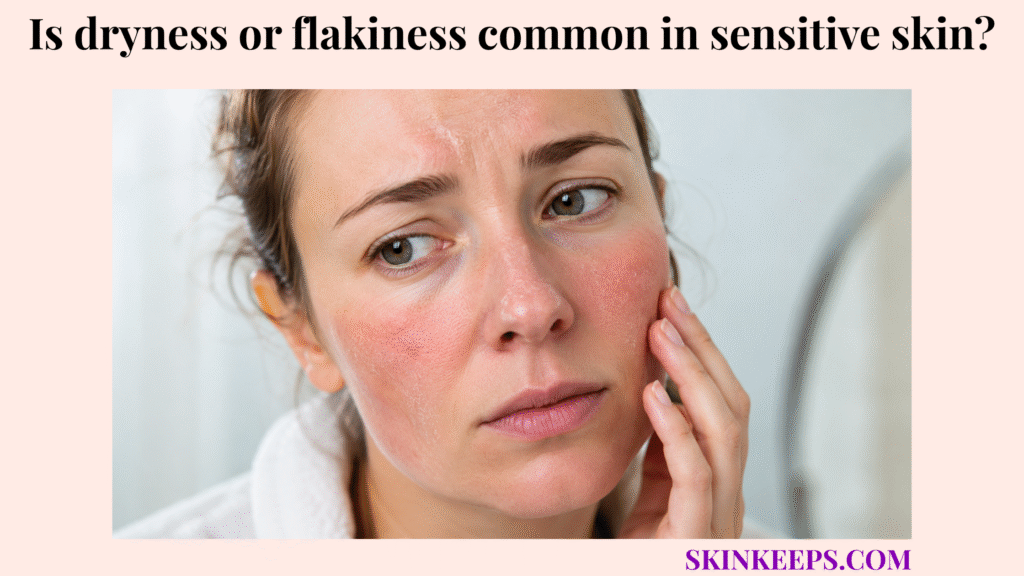
Yes, dryness and flakiness can be common in sensitive skin because sensitive skin often has a reactive or weakened barrier that loses moisture more easily and becomes irritated by products, weather, hot water, fragrance, exfoliants, retinoids, shaving, or friction.
Sensitive skin is not always naturally dry, because oily or combination skin can also become dry, flaky, tight, peeling, or irritated after triggers disrupt the barrier. This article explains why sensitive skin becomes dry or flaky, how it differs from ordinary dry skin, which triggers matter, how product-triggered flaking behaves, how flakiness can look across skin tones, how to calm the barrier, what mistakes to avoid, when to seek evaluation, and how to track reactions.
Why Are Dryness and Flakiness Common in Sensitive Skin?
Dryness and flakiness are common in sensitive skin because a reactive or weakened barrier can lose moisture more easily and become flaky after irritation. Dryness and flakiness should be understood inside the broader pattern of sensitive skin, where products, weather, friction, and heat can lower skin tolerance.
Sensitive skin can dry out from barrier weakness, product irritation, fragrance exposure, over-exfoliation, and weather exposure. The flakes may be visible, while stinging, burning, itching, or tightness may be the sensory clues that the barrier is stressed.
How a Weakened Barrier Makes Sensitive Skin Lose Moisture More Easily
A weakened barrier makes sensitive skin lose moisture more easily because the outer layer cannot hold comfort as reliably after stress. Flaking often begins with barrier behavior, especially when sensitive skin has a compromised barrier that loses comfort after contact stress.
Moisture loss can show as tightness, dryness, roughness, and flakes. Barrier weakness is an important explanation, but it is not the only possible cause of flaky or peeling skin.
Why Irritation Can Turn Sensitive Skin Flaky Even If It Is Not Naturally Dry
Irritation can turn sensitive skin flaky even if it is not naturally dry because the outer layer may peel or shed after product, weather, hot water, or friction stress. Oily and combination skin can still become flaky after over-cleansing, acids, retinoids, fragrance, shaving, or friction.
That means flaking should not be treated automatically as a dry skin type problem. It may be a sign that the skin is reacting to something that disrupted the barrier.
| Sensitive-Skin Change | What Happens | Visible or Sensory Result |
|---|---|---|
| Barrier weakness | Moisture escapes more easily. | Tightness and dryness. |
| Product irritation | Surface becomes reactive. | Flaking or peeling. |
| Fragrance exposure | Barrier may inflame. | Roughness or redness/darker irritation. |
| Over-exfoliation | Outer layer becomes stressed. | Peeling and stinging. |
| Weather exposure | Skin loses comfort faster. | Dry, rough, flaky patches. |
How Is Sensitive-Skin Flakiness Different From Ordinary Dry Skin?
Sensitive-skin flakiness is different from ordinary dry skin because it is often driven by irritation, barrier reactivity, or product triggers rather than only low moisture support. Sensitive-skin flaking should be separated from ordinary dry skin, especially when flakes appear only after products or over-treatment.
Ordinary dry skin is more moisture-support focused, while sensitive-skin flakiness often appears with stinging, burning, itching, redness, darker irritation, or product intolerance. The distinction matters because treating every flake like ordinary dryness can miss a trigger pattern.
| Feature | Sensitive-Skin Flakiness | Ordinary Dry Skin |
|---|---|---|
| Main driver | Irritation or barrier reactivity. | Low moisture/lipid support. |
| Trigger pattern | Often appears after products or exposure. | Often appears with weather, washing, or low humidity. |
| Sensation | Stinging, burning, itching, or redness may occur. | Tightness, roughness, or mild itching. |
| Skin type | Can happen in oily, combination, or dry skin. | Usually dry-skin tendency. |
| Best focus | Calm irritation and repair barrier. | Moisturize and reduce moisture loss. |
Which Triggers Commonly Make Sensitive Skin Dry or Flaky?
Triggers that commonly make sensitive skin dry or flaky include harsh cleansers, fragrance, strong acids, retinoids, hot water, cold wind, shaving, friction, over-washing, and over-exfoliation. Trigger pattern matters because external triggers can worsen sensitive skin reactions in predictable ways.
A repeat trigger pattern matters more than one isolated flaky day. Product-triggered flakes are especially important because the timing, location, and repeat reaction may show what the skin is not tolerating.
| Trigger | Common Sensitive-Skin Response |
|---|---|
| Harsh cleanser | Tightness, dryness, stinging. |
| Fragrance | Flaking, itching, rash-like irritation. |
| Strong acids | Peeling, burning, redness/darker irritation. |
| Retinoids | Dryness, peeling, sensitivity flare. |
| Hot water | Tight, stripped, flaky skin. |
| Cold wind | Roughness, chapping, dryness. |
| Shaving or friction | Localized flaky irritation. |
| Over-washing | Dry, reactive barrier. |
Can Sensitive Skin Be Oily and Still Become Flaky?
Sensitive skin can be oily, combination, or acne-prone and still become flaky when the barrier is irritated. Flakes do not always mean the skin type is dry.
In oily or combination sensitive skin, flakes may mean the skin is over-cleansed, over-treated, over-exfoliated, or reacting to a product rather than naturally dry. Treating those flakes with stronger acne products or more exfoliation can make the barrier more reactive.
What Does Product-Triggered Flakiness Suggest in Sensitive Skin?
Product-triggered flakiness suggests sensitive-skin irritation when flakes begin after a new or repeated product and appear with stinging, burning, itching, redness, darker irritation, or peeling. Dry or flaky areas can still belong to the wider group of visible sensitive-skin reactions when they appear after repeat triggers.
Timing and location matter. Flaking that appears only where a cleanser, moisturizer, fragrance, acid, retinoid, acne product, shaving product, or cosmetic was applied is more meaningful than random dryness.
Improvement after stopping the product and recurrence after reuse are strong clues. That pattern does not diagnose allergy or dermatitis, but it does mean the trigger should not be ignored.
Product-Triggered Flaking Clues
How Can Dryness and Flakiness Look Different Across Skin Tones?
Dryness and flakiness can look different across skin tones because irritation may appear as pink, red, red-brown, dull, ashy, grayish, darker, purple-brown, chalky, rough, or peeling patches. Texture clues are important because sensitive skin texture can become rough, bumpy, peeling, or swollen-looking after irritation.
On deeper skin tones, flaking may look more ashy, grayish, darker, purple-brown, or chalky than bright red. Roughness, peeling, tightness, itching, stinging, or texture change may be more obvious than color alone.
| Skin Tone Context | Dryness or Flakiness May Look Like |
|---|---|
| Lighter skin | Pink, red, flaky, or irritated. |
| Medium skin | Red-brown, dull, uneven, or flaky. |
| Deeper skin | Ashy, grayish, darker, purple-brown, or chalky patches. |
| Any skin tone | Roughness, peeling, tightness, itching, or stinging may be more obvious than color alone. |
How Should Dry or Flaky Sensitive Skin Be Calmed?
Dry or flaky sensitive skin should be calmed by stopping the likely trigger, simplifying care, avoiding hot water and strong actives, and supporting the barrier with gentle, fragrance-free basics. The priority is to reduce irritation before trying to smooth the flakes.
Do not keep using a product that repeatedly stings, burns, or worsens flakes. Slow reintroduction is safer after the skin looks and feels calmer.
Barrier-Calming Checklist
What Mistakes Make Sensitive-Skin Flakiness Worse?
Sensitive-skin flakiness gets worse when the response adds more friction, more actives, more product changes, or less barrier support. The dangerous assumption is that visible flakes always need to be scrubbed or dissolved.
Scrubbing, stronger acids, harsh acne products, frequent product switching, skipped moisturizer, and treating all flakes as ordinary dryness can backfire. These actions make the trigger harder to identify and can leave the barrier more reactive.
| Mistake | Why It Backfires |
|---|---|
| Scrubbing flakes off | Increases irritation and barrier damage. |
| Adding more acids | Can worsen peeling and burning. |
| Using harsh acne products on flaky skin | Makes the barrier more reactive. |
| Switching many products at once | Makes the trigger harder to identify. |
| Skipping moisturizer | Leaves the barrier unsupported. |
| Treating all flakes as ordinary dryness | Misses product irritation or dermatitis clues. |
When Is Dryness or Flakiness in Sensitive Skin More Than Ordinary Sensitivity?
Dryness or flakiness in sensitive skin is more than ordinary sensitivity when flaking is severe, spreading, painful, swollen, oozing, crusted, blistering, bleeding, sleep-disrupting, or persistent despite stopping triggers. These signs deserve professional evaluation instead of stronger products or more exfoliation.
Professional review becomes important when sensitive skin needs a dermatologist instead of repeated product guessing. The goal is not to self-diagnose eczema, dermatitis, allergy, infection, psoriasis, or rosacea; the goal is to avoid ignoring warning signs.
Dermatologist Warning Checklist
How Should Someone Track Dry or Flaky Sensitive-Skin Reactions?
Someone should track dry or flaky sensitive-skin reactions by recording the product or exposure before flaking, timing, location, sensations, repeat triggers, duration, photos, and what improved or worsened the reaction. Tracking helps identify patterns before the flakes settle or fade.
Photos can help when reactions are short-lived or skin-tone-subtle. Tracking is not a diagnosis tool; it is a way to organize trigger clues and avoid repeating the same irritating pattern.
Reaction Tracking Checklist
What Should You Remember About Dryness, Flakiness, and Sensitive Skin?
Dryness and flakiness can be common in sensitive skin, but they usually matter most when they follow a repeatable trigger pattern or appear with irritation signs. Flakes can reflect barrier irritation, not just a naturally dry skin type.
Final Takeaways
- Dryness and flakiness can be common in sensitive skin.
- Sensitive-skin flaking often reflects barrier irritation, not just a naturally dry skin type.
- Oily or combination sensitive skin can still become flaky after harsh products or over-treatment.
- Product-triggered flakes are a major clue in sensitive skin.
- Scrubbing flakes usually makes sensitive skin worse.
- Severe, painful, swollen, oozing, bleeding, or persistent flaking needs professional evaluation.
Frequently Asked Questions
Does Sensitive Skin Always Become Dry or Flaky?
Sensitive skin does not always become dry or flaky because sensitivity can also appear as stinging, burning, itching, redness, flushing, bumps, or swelling. Dryness and flakiness are common when the barrier is stressed, but sensitive skin can be oily, combination, or normal-looking between triggers.
Can Oily Sensitive Skin Still Flake?
Oily sensitive skin can still flake when the barrier is irritated by over-cleansing, acne products, acids, retinoids, hot water, or friction. Surface flakes do not always mean the skin needs stronger oil control; they may mean the skin needs barrier calming.
Why Does My Sensitive Skin Peel After Products?
Sensitive skin may peel after products when fragrance, acids, retinoids, harsh cleansers, or active ingredients exceed the skin’s tolerance. Stopping the likely trigger, simplifying care, and tracking whether the reaction returns after reuse can help clarify the pattern without self-diagnosing allergy or dermatitis.
Should I Scrub Flakes Off Sensitive Skin?
You should not scrub flakes off sensitive skin because friction can worsen barrier damage, burning, stinging, redness, darker irritation, and more flaking. Gentle care, pausing strong actives, moisturizing, and protecting the skin are safer while it calms.
When Should Flaky Sensitive Skin Be Checked?
Flaky sensitive skin should be checked when flaking is severe, spreading, painful, swollen, oozing, crusted, blistering, bleeding, sleep-disrupting, or persistent after stopping triggers. Evaluation helps separate sensitivity from dermatitis, eczema, allergy, infection, psoriasis, or rosacea.
Conclusion
Dryness and flakiness can be common in sensitive skin when barrier disruption makes the outer layer lose moisture, peel, sting, burn, itch, or react after triggers. Harsh cleansers, fragrance, strong acids, retinoids, hot water, cold wind, shaving, friction, over-washing, and over-exfoliation can all make sensitive skin dry or flaky.
Flakes are clues, not diagnoses. Sensitive-skin flaking is more concerning when it is product-triggered, severe, spreading, painful, swollen, oozing, crusted, blistering, bleeding, sleep-disrupting, persistent, or repeatedly returning in the same areas.