
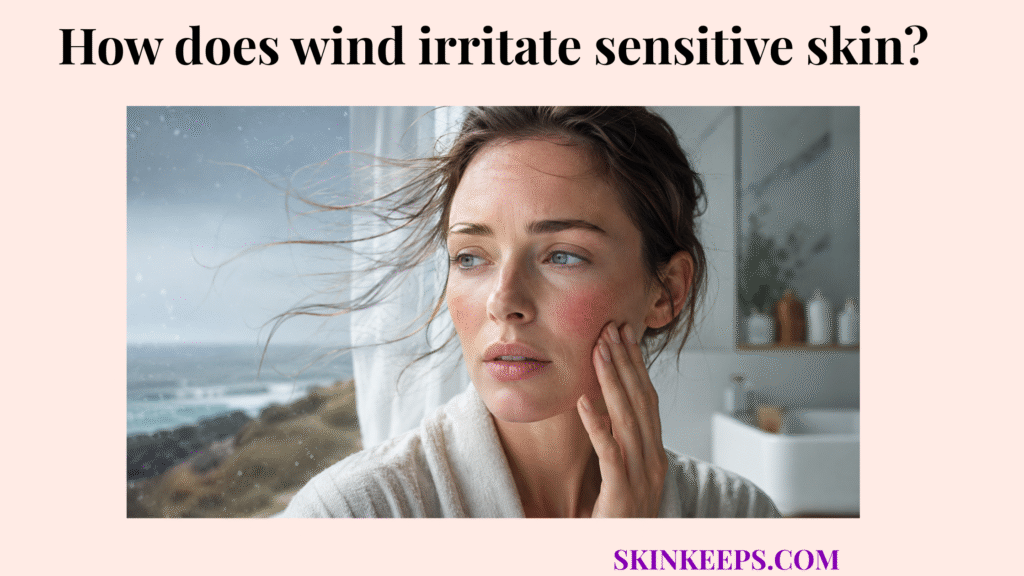
Wind can irritate sensitive skin by drying the surface, increasing moisture loss, creating friction-like stress, and making exposed areas feel raw, tight, stingy, burny, rough, or chapped.
Sensitive skin may react more strongly when wind combines with cold air, low humidity, sun exposure, pollution, sweat, shaving, harsh cleansers, retinoids, exfoliants, rough fabrics, or a weakened skin barrier. This article explains why wind irritates sensitive skin, which areas react most, how cold wind and dry wind differ, which symptoms suggest wind irritation, how wind differs from product irritation, why products may sting afterward, how wind trigger-stacking works, how to protect and calm the skin, what mistakes to avoid, how to track reactions, and when professional evaluation is safer.
Why Does Wind Irritate Sensitive Skin?
Wind irritates sensitive skin because moving air can increase surface moisture loss, dry exposed areas, and create friction-like stress on a reactive barrier. Wind-related irritation should be interpreted inside the broader pattern of sensitive skin, where barrier weakness, trigger response, and product intolerance can overlap.
Wind is one part of the broader weather pattern because weather changes can trigger sensitive skin reactions through cold, heat, humidity, and temperature shifts. This page stays focused on wind as a specific environmental stressor.
How Wind Increases Surface Moisture Loss
Wind increases surface moisture loss by drying exposed skin and making the barrier feel tighter, rougher, flakier, or less comfortable after outdoor exposure. Cold air, low humidity, direct airflow, and uncovered areas can make this pattern feel stronger.
This moisture-loss pattern does not prove permanent barrier damage. Wind often feels harsher when sensitive skin has a compromised barrier that loses comfort easily.
Why Wind Can Feel Like Friction on Reactive Skin
Wind can feel like friction on reactive skin because repeated moving air may leave the surface raw, tender, stingy, or more sensitive to products afterward. This is environmental stress, not literal rubbing.
Cheeks, lips, hands, eyelids, and the neck may react first because they are often exposed. Windburn, dermatitis, allergy, rosacea, infection, or cold injury should not be diagnosed from wind exposure alone.
| Wind Effect | How It May Irritate Sensitive Skin |
|---|---|
| Surface drying | Skin may feel tight, rough, or flaky. |
| Moisture loss | Barrier comfort may weaken faster. |
| Friction-like exposure | Skin may feel raw, tender, or stingy. |
| Cold wind exposure | Chapping, burning, or redness/darker irritation may appear. |
| Wind plus sun | Heat, dryness, and irritation may increase. |
| Wind plus pollution | Particles and dryness may worsen discomfort. |
| Wind plus weak barrier | Products may sting more afterward. |
Which Areas of Sensitive Skin React Most to Wind?
Wind usually affects exposed areas first because they receive direct environmental stress. Cheeks, lips, nose area, eyelids, neck, hands, and around the mouth may sting, tighten, chap, crack, flake, or feel tender after wind exposure.
Covered areas may react less unless sweat, friction, tight fabrics, masks, scarves, collars, or rough textures are also involved. Wind protection can be undermined when certain fabrics irritate sensitive skin through scarves, collars, masks, or rough textures.
| Exposed Area | Common Wind-Related Reaction |
|---|---|
| Cheeks | Stinging, tightness, redness or darker irritation. |
| Lips | Chapping, cracking, burning. |
| Nose area | Dryness, peeling, soreness. |
| Eyelids | Tenderness, dryness, irritation. |
| Neck | Roughness, tightness, itching. |
| Hands | Chapping, cracking, rawness. |
| Around the mouth | Tightness, flaking, irritation. |
How Does Cold Wind Affect Sensitive Skin Differently?
Cold wind can be especially irritating because it combines wind exposure with low temperature and often low humidity. Cheeks, lips, hands, and eyelids may feel raw, stiff, chapped, stingy, burny, or uncomfortable after exposure.
Cold wind to indoor heat can also create a temperature-shift pattern. The skin may feel tight outside and then burn or sting when products are applied after coming indoors.
Cold-Wind Clues
- Skin stings after outdoor exposure.
- Lips or hands chap quickly.
- Cheeks feel raw or tight.
- Moisturizer burns after coming indoors.
- Flaking appears on exposed areas.
- Skin feels worse after moving from cold wind to indoor heat.
Can Warm or Dry Wind Irritate Sensitive Skin Too?
Warm, dry, dusty, coastal, or fast-moving air can irritate sensitive skin too, even when the weather is not cold. Dry wind may create tightness and roughness, while hot or dusty wind may add warmth, itch, grit, or surface discomfort.
Air-conditioned airflow can also dry exposed areas or irritate the eye-area in some people. Dusty or urban wind can stack with residue because pollution can affect sensitive skin when particles and dryness combine.
| Wind Condition | Possible Sensitive-Skin Response |
|---|---|
| Dry wind | Tightness, roughness, moisture loss. |
| Hot wind | Warmth, flushing, burning, dryness. |
| Dusty wind | Itching, gritty discomfort, irritation. |
| Coastal wind | Dryness, sting, salt-air discomfort in some people. |
| Air-conditioned airflow | Tightness, dryness, eye-area irritation. |
What Symptoms Suggest Wind Is Irritating Sensitive Skin?
Symptoms that suggest wind is irritating sensitive skin include tightness after outdoor exposure, stinging on exposed areas, burning after coming indoors, rawness, chapping, flaking, itching, redness, or darker irritation. These symptoms are clues, not diagnoses.
Each symptom should be read with timing, location, wind type, product use, and overlapping triggers. Moisture loss, exposed-area stress, temperature shift, dryness, dust, or inflammation response may all contribute.
| Symptom | What It May Suggest |
|---|---|
| Tightness after outdoor exposure | Wind-related moisture loss. |
| Stinging on cheeks or hands | Exposed-area barrier stress. |
| Burning after coming indoors | Wind plus temperature shift reaction. |
| Raw feeling | Friction-like environmental irritation. |
| Chapping | Surface dryness and barrier stress. |
| Flaking | Wind-related dryness or irritation. |
| Itching | Dryness, dust, or barrier discomfort. |
| Redness or darker irritation | Visible inflammation response. |
How Is Wind Irritation Different From Product Irritation?
Wind irritation is different from product irritation because wind irritation follows an exposure pattern, while product irritation follows a formula or application pattern. The main clue is whether symptoms appear after windy outdoor exposure or after a specific product.
Both can overlap when wind makes products sting afterward. A product can still be the trigger if the same formula repeatedly causes discomfort even without wind exposure.
| Feature | Wind Irritation | Product Irritation |
|---|---|---|
| Main clue | Worsens after outdoor wind exposure. | Starts after using a specific product. |
| Location | Exposed areas react first. | Usually where product was applied. |
| Timing | Often after being outside or in direct airflow. | Often soon after application. |
| Pattern | Worse with cold, dry, dusty, or windy conditions. | Repeats with the same formula. |
| First step | Protect exposed skin and calm barrier. | Stop suspected product. |
Simple rule: Wind irritation follows exposure pattern, while product irritation follows application pattern.
Can Wind Make Skincare Products Sting Afterward?
Wind can make skincare products sting afterward because sensitive skin may temporarily tolerate formulas less well after exposed-area barrier stress. Cleanser, moisturizer, sunscreen, or active products may feel harsher after wind has dried or irritated the surface.
Product irritation can still overlap if the same formula repeatedly causes discomfort. Cleansing after wind needs caution because harsh cleansing habits can trigger sensitive skin when the surface is already dry or raw.
Post-Wind Product Sensitivity Clues
- Moisturizer stings after being outside.
- Cleanser feels harsher than usual.
- Sunscreen burns on wind-exposed areas.
- Actives feel stronger after outdoor exposure.
- Skin feels tight before any product is applied.
- Products feel normal again once the skin calms.
What Is Wind Trigger-Stacking in Sensitive Skin?
Wind trigger-stacking happens when wind combines with other exposures and creates a stronger reaction than wind alone. The flare may come from combined exposures, not one single cause.
Cold air, low humidity, sun, pollution, sweat, shaving, harsh cleansers, retinoids, and exfoliants can all add to wind-related irritation. Tracking the stack helps prevent blaming every reaction on one product.
| Trigger Combination | Possible Reaction |
|---|---|
| Wind + cold air | Chapping, tightness, stinging. |
| Wind + low humidity | Roughness, flakes, dryness. |
| Wind + sun | Heat, redness/darker irritation, burning. |
| Wind + pollution | Itching, dullness, irritation. |
| Wind + sweat | Prickling, stinging, friction discomfort. |
| Wind + shaving | Rawness, tenderness, burning. |
| Wind + harsh cleanser | Tightness, moisturizer stinging. |
| Wind + retinoids or exfoliants | Peeling, burning, sensitivity flare. |
How Can Sensitive Skin Be Protected From Wind Irritation?
Sensitive skin can be protected from wind irritation by reducing exposed-area stress, avoiding harsh cleansing, and supporting barrier comfort before and after windy exposure. This is prevention guidance, not a full skincare routine.
Protecting lips, cheeks, hands, neck, and eyelids when possible may reduce repeated exposure. Reducing friction from scarves, masks, collars, or rough fabrics can also matter when wind and fabric contact overlap.
Wind Protection Checklist
- Protect exposed areas before going outside.
- Avoid harsh cleansing before or after wind exposure.
- Use lukewarm water instead of hot water.
- Moisturize if skin feels tight or dry.
- Reduce exfoliants or strong actives during windy periods.
- Avoid scrubbing wind-irritated skin.
- Protect lips, cheeks, hands, neck, and eyelids when possible.
- Reduce friction from scarves, masks, collars, or rough fabrics.
- Cleanse gently after dusty or polluted wind exposure.
- Track whether wind repeatedly triggers symptoms.
What Should Someone Do After Wind Irritates Sensitive Skin?
After wind irritates sensitive skin, the safest response is to reduce repeat exposure, avoid heat and friction, and support the barrier gently without adding strong treatments. The goal is to calm the surface, not to scrub or exfoliate wind irritation away.
A gentle cleanser may be used only if needed, and a simple moisturizer may help if tolerated. Strong actives, fragrance, hot water, and repeated rubbing are more likely to worsen raw wind-exposed areas.
Post-Wind Calming Checklist
- Move away from the exposure when possible.
- Avoid hot water.
- Do not scrub rough or chapped areas.
- Use a gentle cleanser only if needed.
- Apply a simple moisturizer if tolerated.
- Pause strong actives until the skin feels calm.
- Avoid fragranced products on irritated areas.
- Protect the skin from repeat exposure while it recovers.
- Watch for worsening swelling, cracking, oozing, or pain.
What Mistakes Make Wind-Irritated Sensitive Skin Worse?
Wind-irritated sensitive skin can worsen when the response adds hot water, scrubbing, strong actives, fragrance, over-cleansing, or repeated exposure before the skin calms. These actions add new irritation to areas already stressed by moving air.
Blaming only skincare products can also miss the exposure pattern. Wind may be the hidden trigger, especially when symptoms return during windy days or after direct airflow.
| Mistake | Why It Backfires |
|---|---|
| Using hot water after cold wind | Can increase burning and tightness. |
| Scrubbing chapped skin | Adds friction and barrier damage. |
| Applying strong actives on raw areas | Can intensify stinging and peeling. |
| Ignoring lip and hand protection | Exposed areas may crack faster. |
| Using fragrance on irritated skin | May worsen itching or burning. |
| Over-cleansing after dusty wind | Can strip the barrier further. |
| Blaming only skincare products | Wind exposure may be the hidden trigger. |
How Should Someone Track Wind-Related Sensitive Skin Reactions?
Someone should track wind-related sensitive skin reactions by recording wind exposure, wind type, time outdoors or in direct airflow, exposed areas affected, symptoms, products used, overlapping triggers, duration, and what helped the skin calm. Tracking is pattern recognition, not diagnosis.
Photos can help if visible changes appear. The best record connects wind type, exposure length, affected areas, product stinging afterward, and whether sun, sweat, pollution, shaving, or strong actives were also involved.
Wind Reaction Tracking Checklist
When Should Wind-Related Sensitive Skin Irritation Be Professionally Evaluated?
Wind-related sensitive skin irritation should be professionally evaluated when symptoms are severe, persistent, worsening, painful, swollen, blistering, oozing, crusted, bleeding, spreading, eye-area related, infected-looking, or recurring. These signs are stronger than ordinary wind discomfort.
Professional review becomes important when sensitive skin needs a dermatologist instead of repeated wind or product guessing. Evaluation helps separate ordinary wind irritation from eczema, dermatitis, allergy, rosacea, infection, cold injury, windburn, or another concern.
Professional Evaluation Warning Signs
What Should You Remember About Wind and Sensitive Skin?
Wind can irritate sensitive skin by increasing dryness, moisture loss, and friction-like surface stress on exposed areas. Exposed areas such as cheeks, lips, eyelids, neck, and hands often react first.
Final Takeaways
- Wind can irritate sensitive skin by increasing dryness, moisture loss, and friction-like surface stress.
- Exposed areas such as cheeks, lips, eyelids, neck, and hands often react first.
- Cold wind, dry wind, dusty wind, and direct airflow can all worsen sensitivity.
- Wind can make familiar products sting afterward if the barrier is stressed.
- Wind often stacks with cold, sun, pollution, sweat, shaving, or strong actives.
- Severe, persistent, painful, swollen, bleeding, blistering, oozing, or recurring reactions should be professionally evaluated.
Frequently Asked Questions
Can Wind Make Sensitive Skin Sting?
Wind can make sensitive skin sting when moving air dries exposed areas and creates friction-like stress on a reactive barrier. Cheeks, hands, lips, and other uncovered areas may feel more stingy after cold wind or dry wind.
Why Does My Moisturizer Burn After Wind Exposure?
Moisturizer may burn after wind exposure because the skin barrier may already be dry, raw, or temporarily stressed. Product irritation can still overlap if the same moisturizer repeatedly burns even without wind.
Can Wind Cause Chapped Sensitive Skin?
Wind can contribute to chapped sensitive skin by increasing surface drying and moisture loss on exposed areas. Lips, hands, cheeks, and around the mouth may chap faster, and cracking, bleeding, oozing, or severe pain should be evaluated.
Is Wind Irritation the Same as Product Irritation?
Wind irritation is not the same as product irritation because wind irritation follows exposure patterns, while product irritation follows application patterns. Wind may make a familiar product sting afterward, but repeated formula reactions still matter.
Can Wind and Pollution Irritate Sensitive Skin Together?
Wind and pollution can irritate sensitive skin together when moving air, particles, dryness, and surface residue combine. Dusty wind, urban wind, and traffic exposure may need gentle cleansing after exposure without over-cleansing.
When Should Wind-Related Skin Irritation Be Checked?
Wind-related skin irritation should be checked when symptoms are severe, persistent, worsening, painful, swollen, blistering, oozing, crusted, bleeding, spreading, eye-area related, infected-looking, or recurring. Evaluation helps separate ordinary wind irritation from another concern.
Conclusion
Wind can irritate sensitive skin by drying exposed areas, increasing moisture loss, and creating friction-like surface stress. Cheeks, lips, eyelids, neck, hands, and areas around the mouth may feel raw, tight, stingy, burny, rough, chapped, flaky, or more reactive after wind exposure.
Wind irritation is an exposure clue, not a diagnosis. If reactions are severe, persistent, worsening, painful, swollen, blistering, oozing, crusted, bleeding, spreading, eye-area related, infected-looking, or recurring, professional evaluation is safer than repeated wind or product guessing.