
What detects light touch in the dermis near the surface?
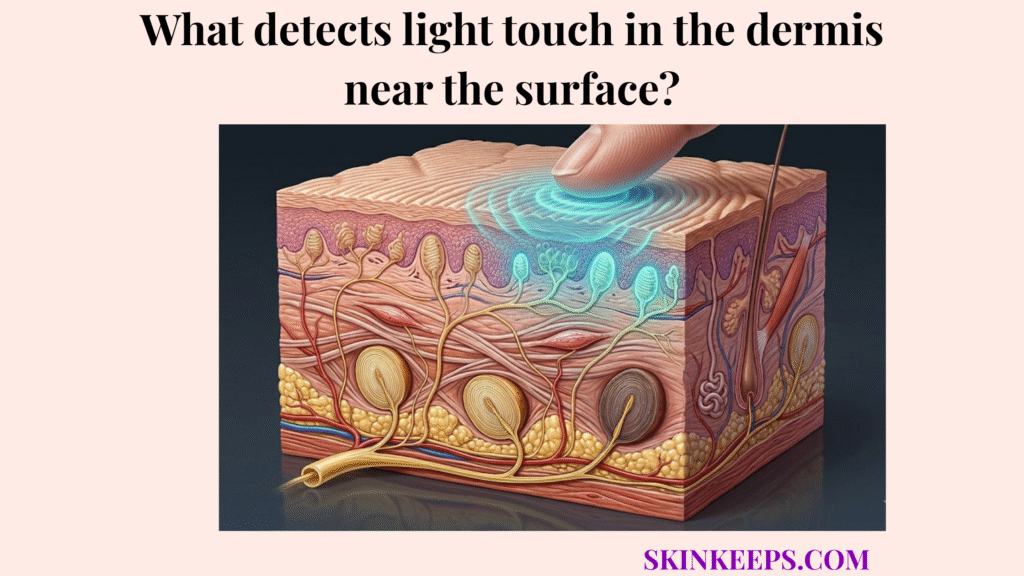
What Detects Light Touch in the Dermis Near the Surface? Meissner’s Corpuscles Explained The main structure that detects light touch in the dermis near the surface is the Meissner’s corpuscle, a superficial mechanoreceptor specialized for gentle contact, flutter, slip, and low-force skin deformation. Meissner’s corpuscles detect light touch with extreme efficiency, making them especially important […]
Which receptors in the dermis detect touch and pressure?
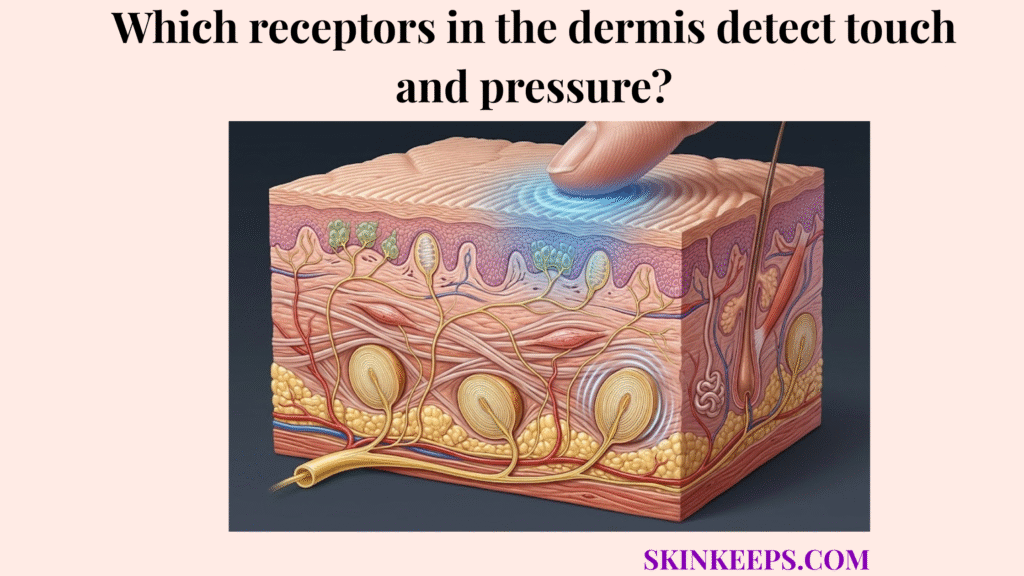
Which Receptors in the Dermis Detect Touch and Pressure? The receptors in the dermis that detect touch and pressure are primarily Meissner corpuscles, Pacinian corpuscles, and Ruffini endings, with each mechanoreceptor—a specialized sensory organ that responds to mechanical stress—specialized for a different form of mechanical input based on dermal depth, structural organization, and sensory role. […]
Why Does Collagen Density Decrease in the Dermis With Age?
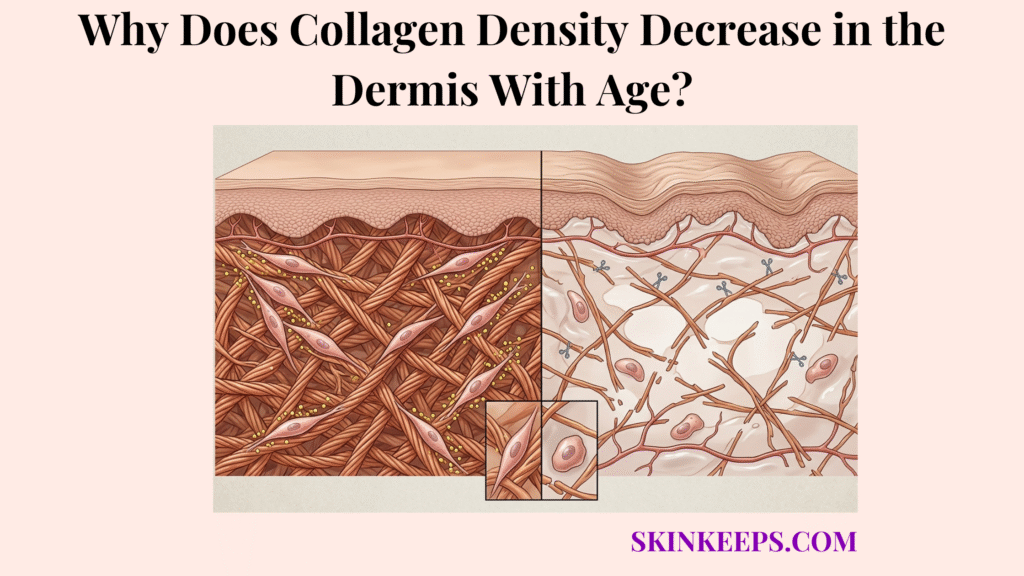
Why Does Collagen Density Decrease in the Dermis With Age? Collagen density decreases in the dermis with age because the skin gradually produces, maintains, and replaces collagen less efficiently over time. As fibroblast activity weakens, matrix repair slows, and collagen damage accumulates, the dermis loses some of the dense supportive framework that once kept the […]
How Are Elastin Fibers Arranged in the Dermal Matrix?
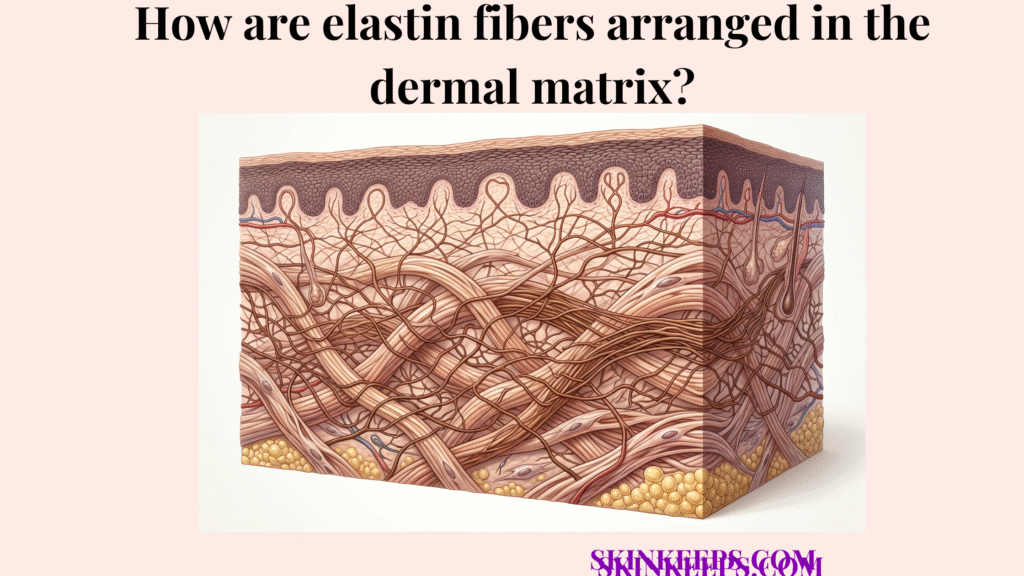
How Are Elastin Fibers Arranged in the Dermal Matrix? Architecture Explained Elastin fibers are arranged in the dermal matrix as a branching elastic network that runs through both the upper and deeper dermis. This network is finer near the superficial dermis and more substantial in the deeper dermis, where it helps the skin stretch and […]
Which Dermal Layer Contains Dense Collagen Fibers?
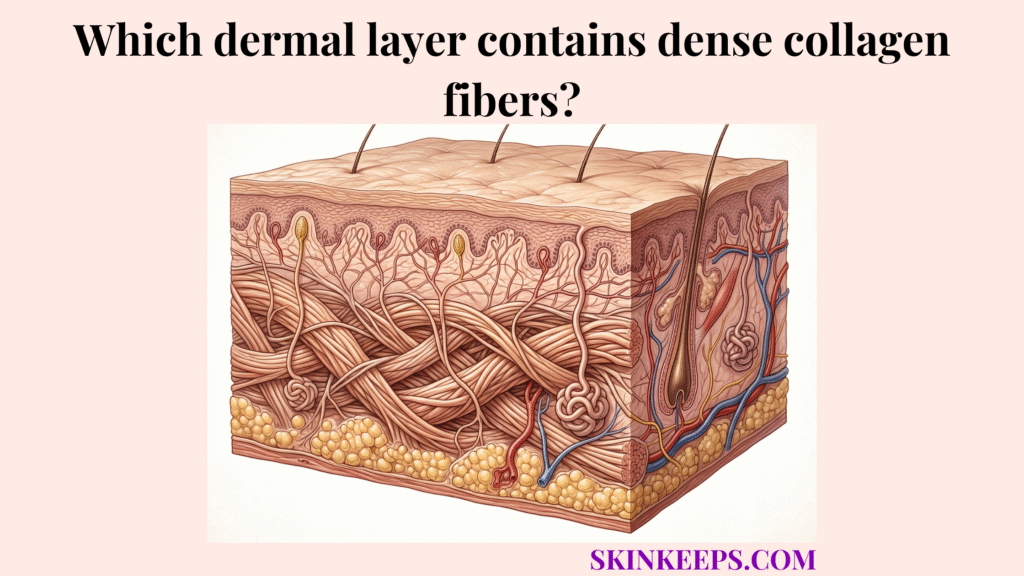
Which Dermal Layer Contains Dense Collagen Fibers? Architecture Explained The dermal layer that contains dense collagen fibers is the reticular dermis, the deeper and thicker portion of the dermis. This layer contains larger, denser collagen bundles that give the skin most of its tensile strength and structural firmness. Standard histology references describe the reticular dermis […]
Where are collagen and elastin organized within the dermis?
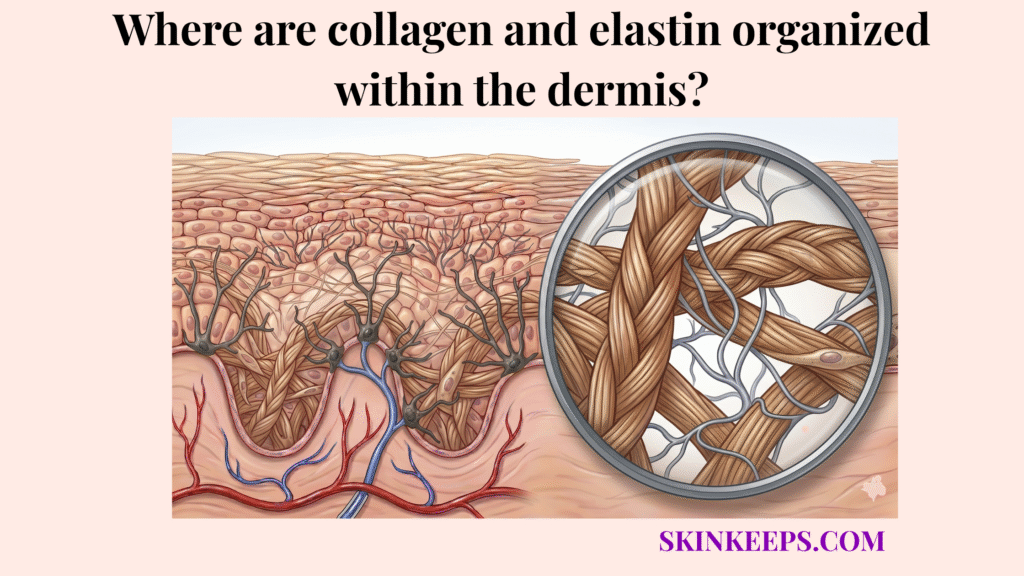
Where Are Collagen and Elastin Organized Within the Dermis? Architecture Explained Collagen and elastin are organized throughout the dermis—the connective-tissue layer beneath the epidermis—but they are not arranged in the same way or with the same density in every dermal layer. Collagen forms the main structural framework of the dermis, while elastin forms a supportive […]
What Is the Function of Merkel Cells in the Epidermis?
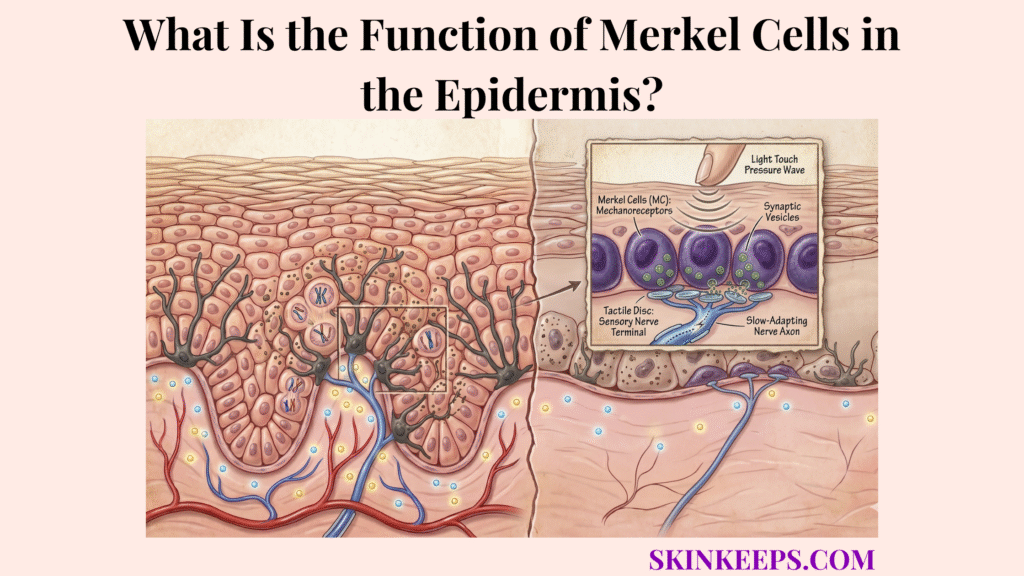
Merkel Cells: Function, Location & Role in Touch Merkel cells are specialized touch-sensitive cells located in the stratum basale, the deepest layer of the epidermis. Their main function is to work with sensory nerve endings to detect sustained light pressure and fine tactile details such as edges, shapes, and textures. Together with associated sensory afferents, […]
Do melanocyte numbers decrease in the epidermis with age?
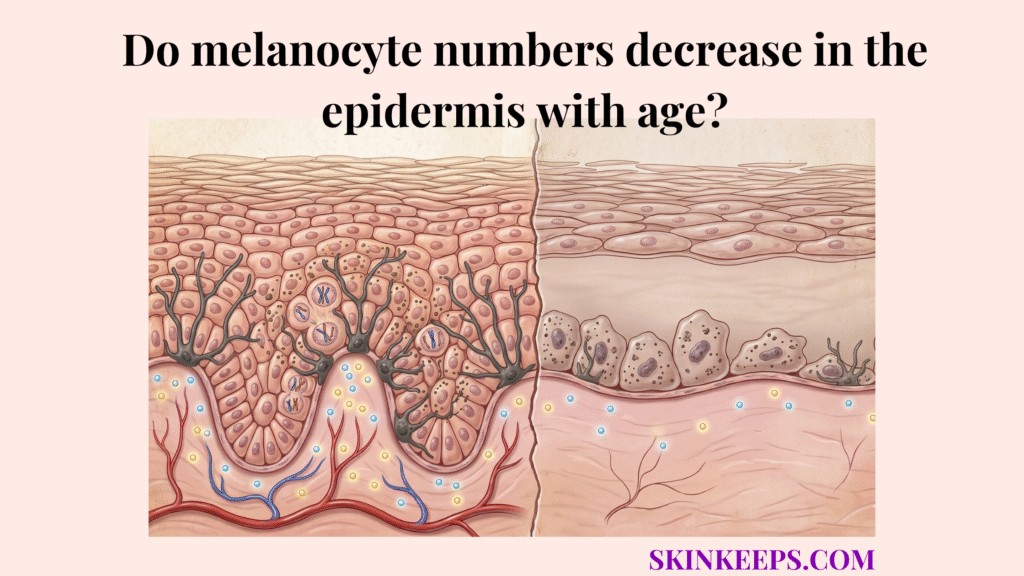
Do Melanocyte Numbers Decrease in the Epidermis With Age? Biology Explained Yes, melanocyte numbers generally decrease in the epidermis with age. As these pigment-producing cells become fewer and less evenly distributed over time, the skin’s pigment response, UV protection, and color uniformity often change as well. Explain that this decline does not always create simpler […]
Why does epidermal turnover time increase over time?
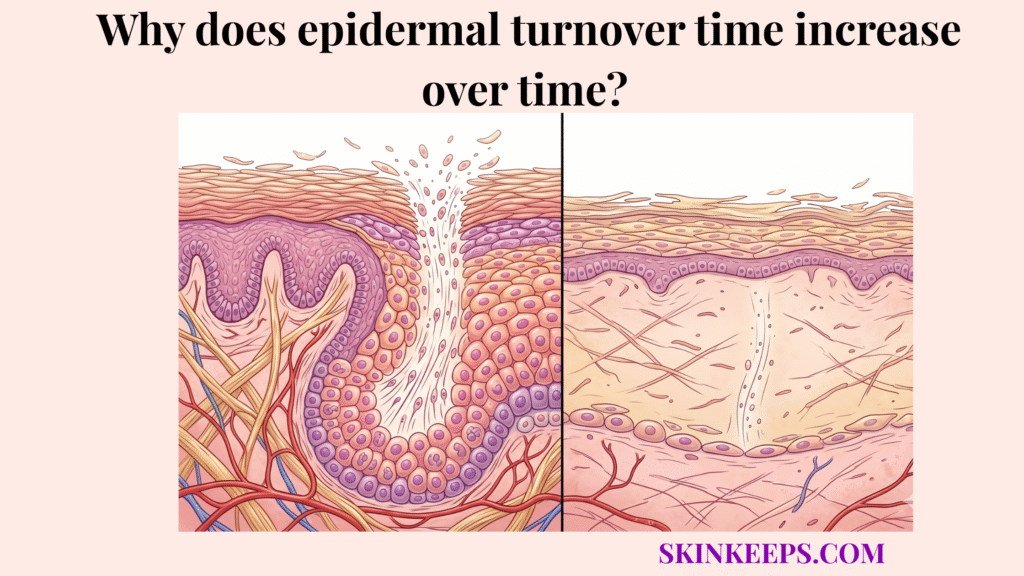
Why Does Epidermal Turnover Time Increase Over Time? Cycle Lengthening Explained Epidermal turnover time increases over time because the skin gradually produces, moves, and sheds epidermal cells less efficiently. As basal-cell division slows, upward migration becomes less robust, and surface-cell shedding becomes less orderly, the full renewal cycle takes longer to complete. Classic turnover work […]
How does cell division decline in the epidermal basal layer?
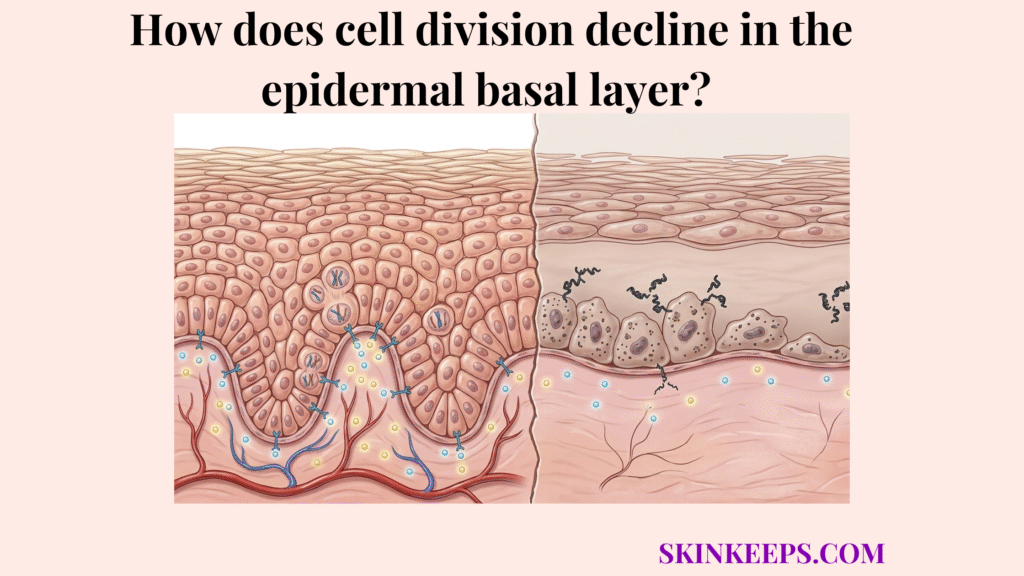
How Does Cell Division Decline in the Epidermal Basal Layer? Cell division declines in the epidermal basal layer when the skin’s renewal cells become less efficient at entering, sustaining, and completing mitosis over time. As basal-cell signaling weakens, metabolic support falls, and the renewal reserve becomes less robust, fewer fresh keratinocytes are produced and the […]