
Can full sensory function return after dermal nerve damage?
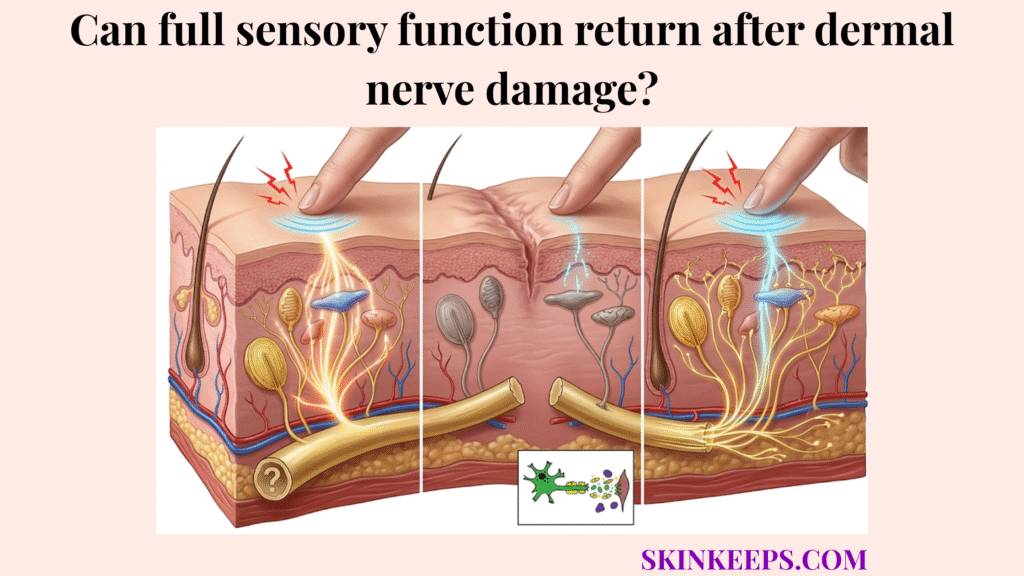
Can Full Sensory Function Return After Dermal Nerve Damage? Factors and Probability Full sensory function can return after dermal nerve damage, but it depends on whether the regenerating nerve reconnects accurately, travels the correct distance successfully, and heals in a supportive tissue environment. Numbness, tingling, hypersensitivity, or altered touch can persist even when the skin […]
Which factors slow dermal nerve recovery?
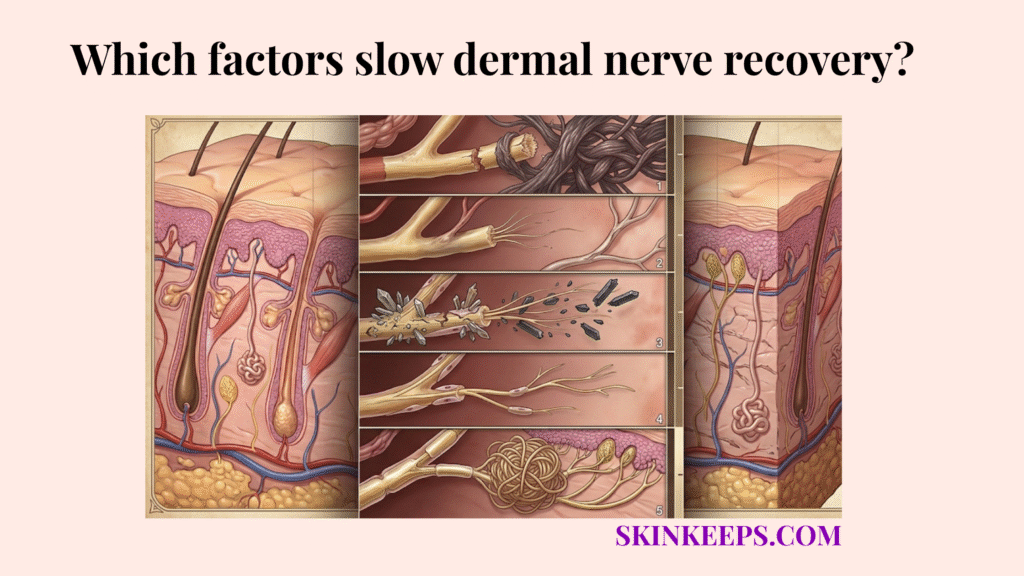
Which Factors Slow Dermal Nerve Recovery? Biological and Clinical Impediments The main factors that slow dermal nerve recovery are poor glycemic control, reduced perfusion, chronic inflammation, fibrosis or scarring, metabolic deficiency, and age-related repair slowdown, because these conditions interfere with the nerve’s need for a clean path, strong blood supply, and steady metabolic support during […]
What is the typical regeneration rate of dermal nerve fibers?
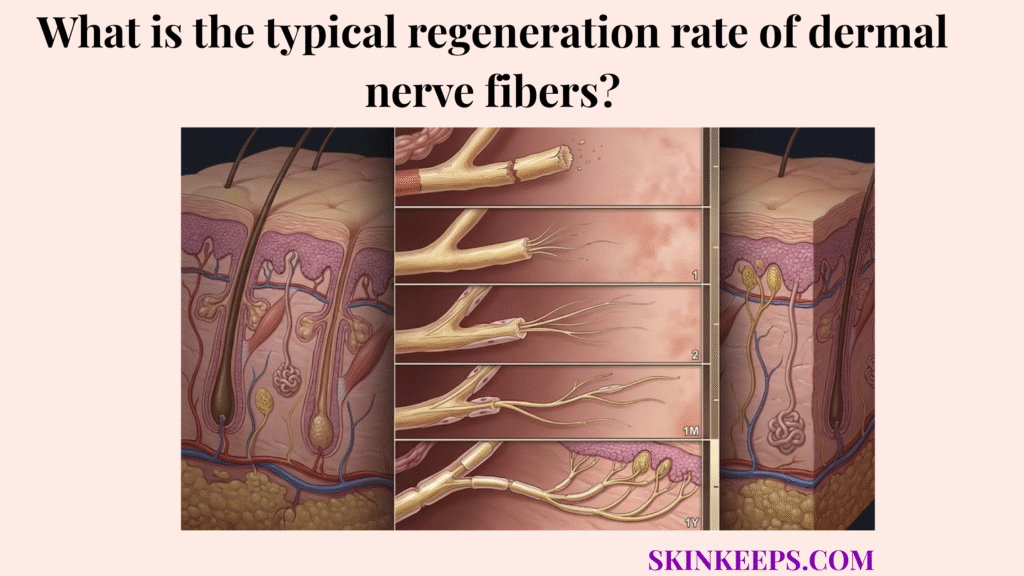
What Is the Typical Regeneration Rate of Dermal Nerve Fibers? Timeline and Optimization The typical regeneration rate of dermal nerve fibers is about 1 millimeter per day, or roughly 1 inch per month, under favorable conditions, which is why sensory recovery is usually counted in weeks or months rather than days. This slow pace reflects […]
How do dermal nerves regenerate after injury?
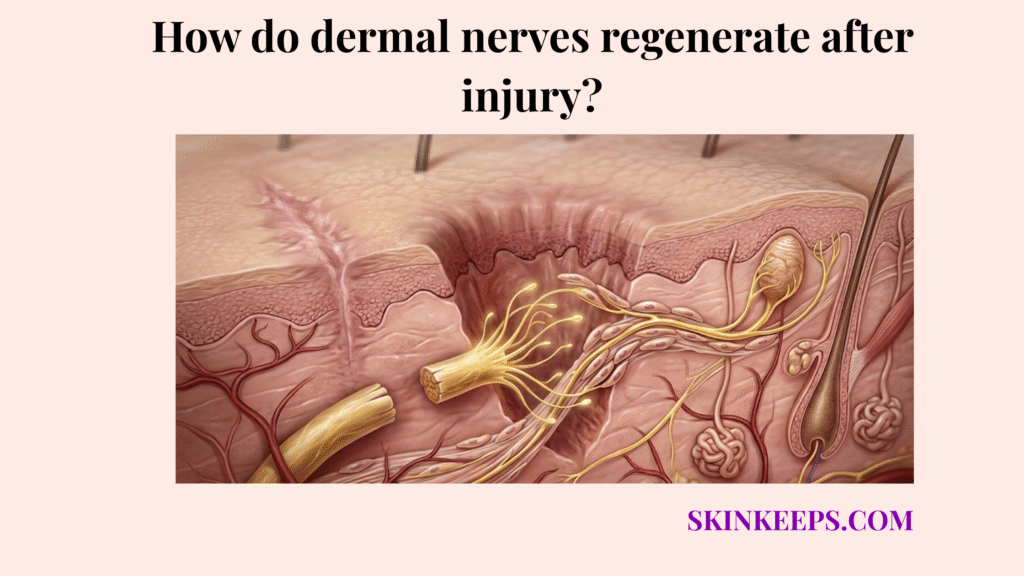
How Do Dermal Nerves Regenerate After Injury? Mechanisms and Recovery Explained Dermal nerves regenerate after injury through a staged repair process in which the damaged distal segment is first broken down and cleared away, then guided regrowth begins from the surviving proximal nerve stump. Patients are often confused when a laceration or deep scrape visibly […]
Which receptors transmit sharp vs dull pain in the dermis?
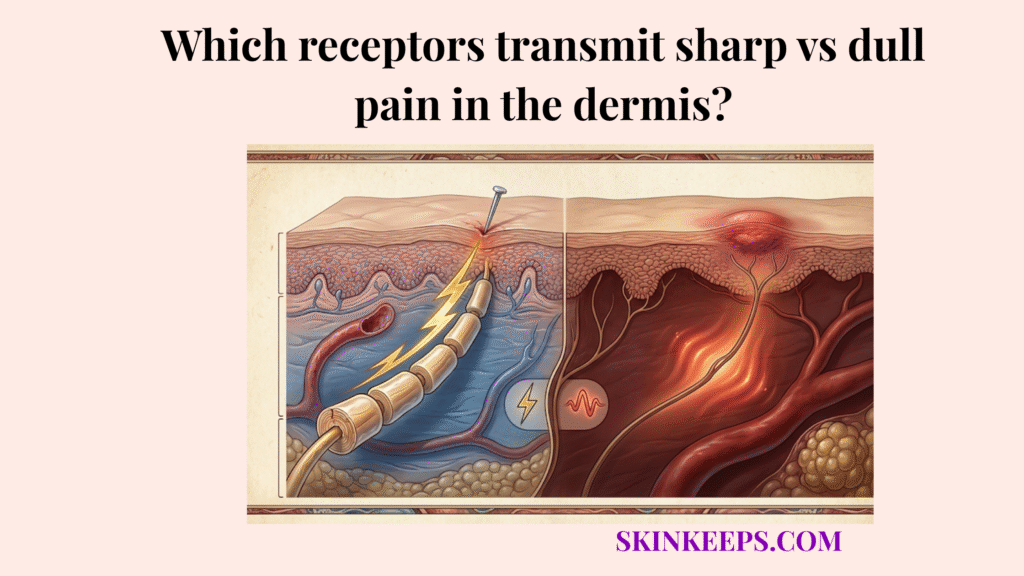
Which Receptors Transmit Sharp vs. Dull Pain in the Dermis? Fibers and Speed Explained Receptors transmit sharp vs. dull pain through two main nerve-fiber pathways: A-delta fibers, which carry fast, sharp, well-localized pain, and C-fibers, which carry slower, duller, burning, or aching pain. Pain is not carried at one speed or in one form. The […]
How does injury depth affect dermal pain perception?
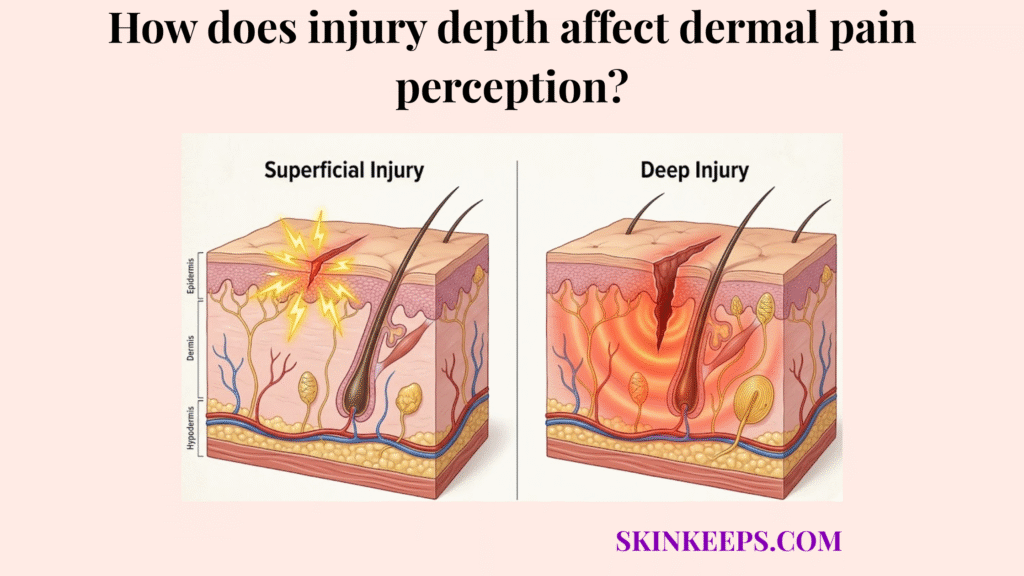
How Does Injury Depth Affect Dermal Pain Perception? Mechanisms and Intensity Injury depth affects dermal pain perception because different skin depths contain different densities and exposure patterns of sensory endings, so shallow injuries often produce sharp stinging pain while deeper injuries more often produce duller, heavier, or throbbing pain. A simple paper cut or a […]
Why are superficial dermal nerve endings more reactive?
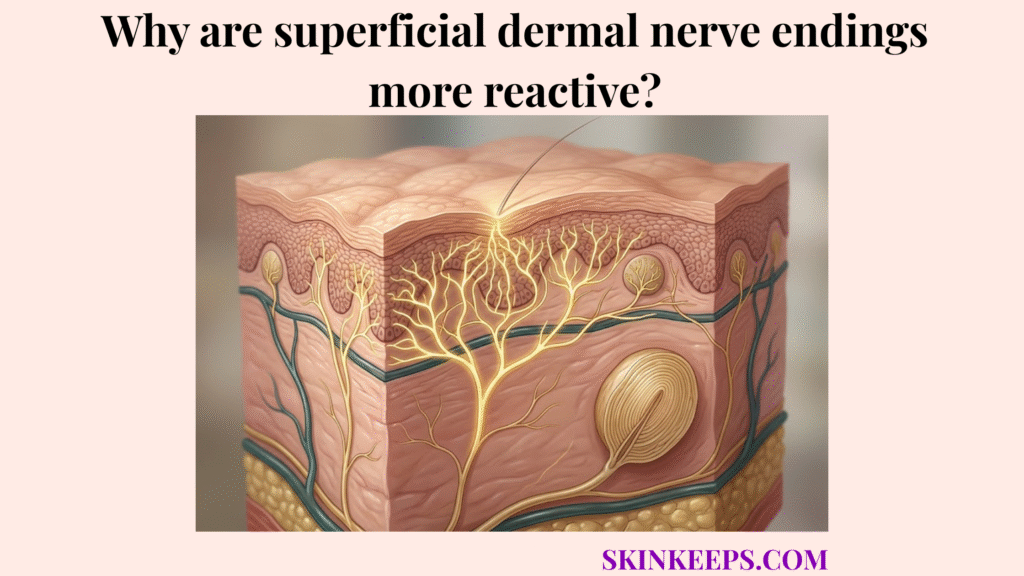
Why Are Superficial Dermal Nerve Endings More Reactive? Mechanics and Sensitivity Superficial dermal nerve endings are more reactive because they sit close to the epidermal surface, where even minor injury can expose them to air, movement, temperature change, and chemical irritation. A paper cut or superficial scrape can sting far more than a deeper bruise […]
Why do certain skin injuries produce more pain than others?
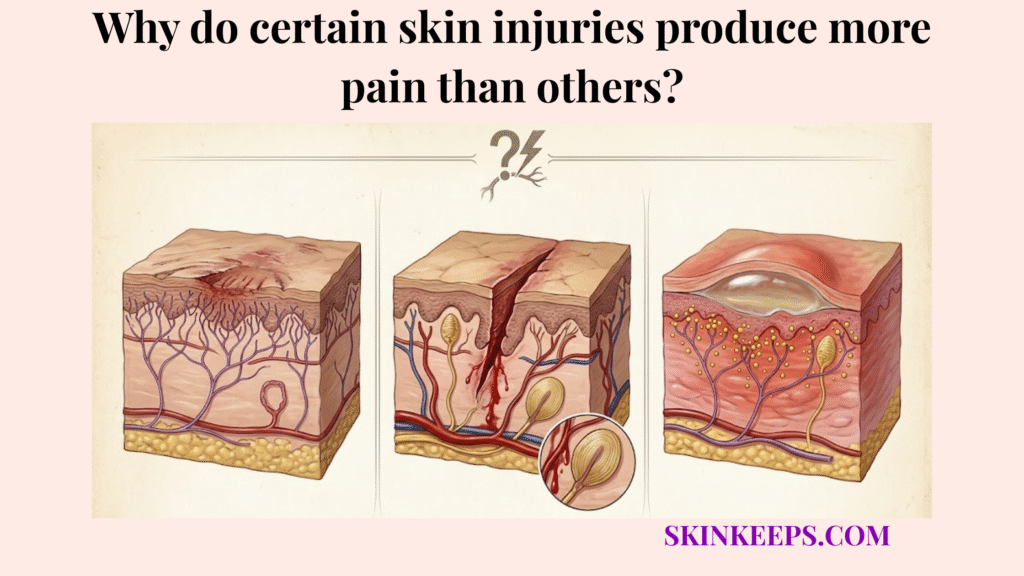
Why Certain Skin Injuries Produce More Pain Than Others: Mechanisms and Management Certain skin injuries produce more pain because pain depends on how many nerve endings are activated, how exposed those nerve endings remain, and where on the body the injury occurs. A tiny wound like a paper cut can hurt intensely if it occurs […]
How does receptor density vary across dermal regions of the body?
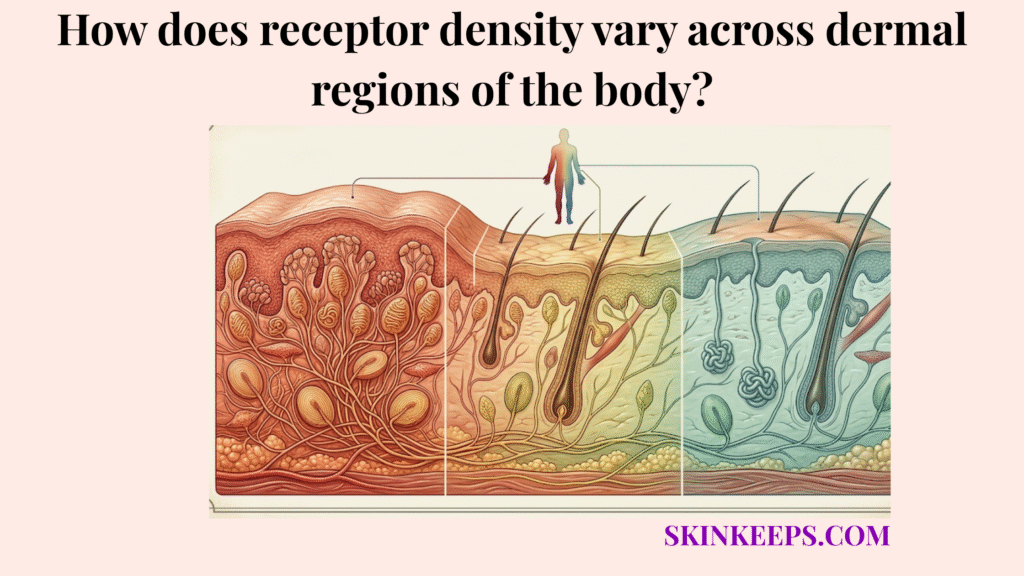
How Does Receptor Density Vary Across Dermal Regions of the Body? Mapping and Mechanics Receptor density varies across dermal regions because the body does not need the same level of tactile precision everywhere, so areas such as the fingertips, lips, and tongue receive denser sensory input than broader lower-resolution regions such as the back and […]
Which receptors respond to deep pressure in the dermis?
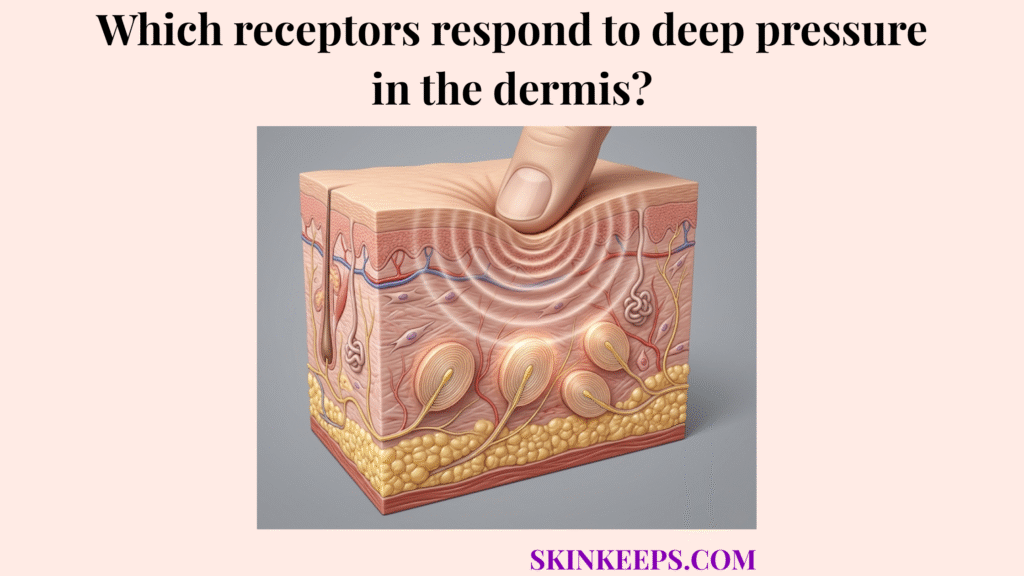
Which Receptors Respond to Deep Pressure in the Dermis? Pacinian Corpuscles Explained The main receptors that respond to deep pressure in the dermis are Pacinian corpuscles, which detect strong mechanical compression and high-frequency vibration rather than delicate surface touch. A vibrating mobile phone or firm compression from a massage feels distinctly different from a soft […]