
How do hormones increase skin oiliness?
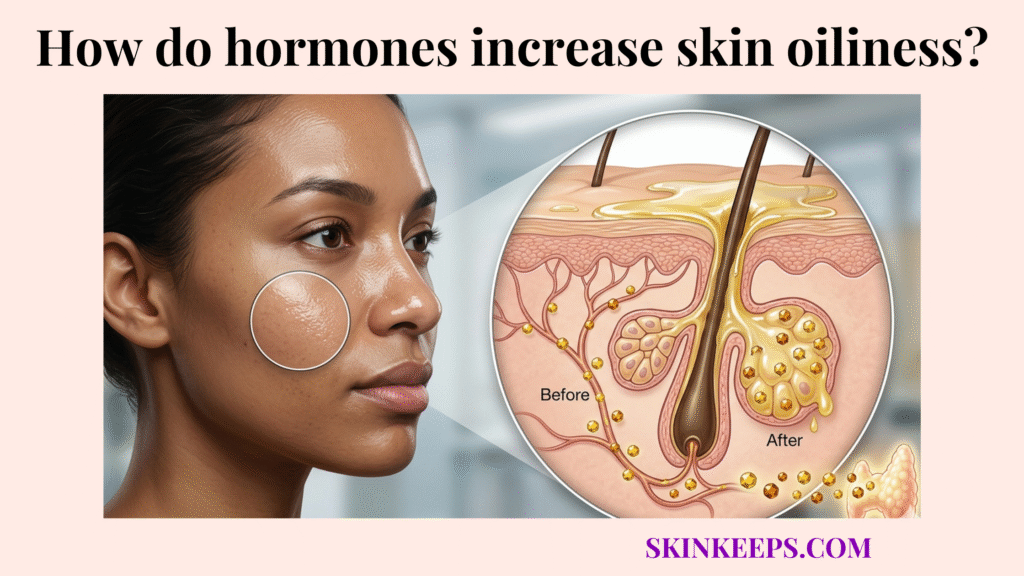
How Do Hormones Increase Skin Oiliness? | SkinKeeps Hormones increase skin oiliness when androgen signals stimulate sebaceous glands to produce more sebum, while local skin enzymes can strengthen that hormonal effect inside the gland. This internal process explains why cleansing can remove surface oil temporarily without stopping the deeper signaling that creates new oil. This […]
How does genetics influence oily skin?
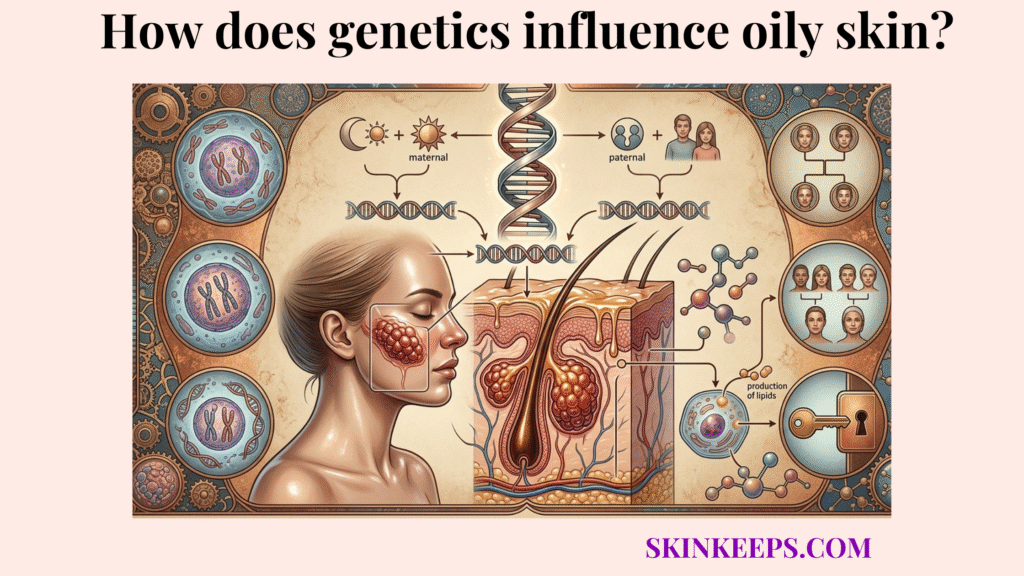
How Does Genetics Influence Oily Skin? | SkinKeeps Genetics influence oily skin by shaping a person’s baseline sebaceous tendency, hormone responsiveness, and likelihood of showing visible oil-prone traits such as shine or more noticeable pores. This inherited tendency means oiliness can appear even when cleansing habits are appropriate and surface hygiene is consistent. This guideline […]
How do sebaceous glands increase sebum production in oil skin?
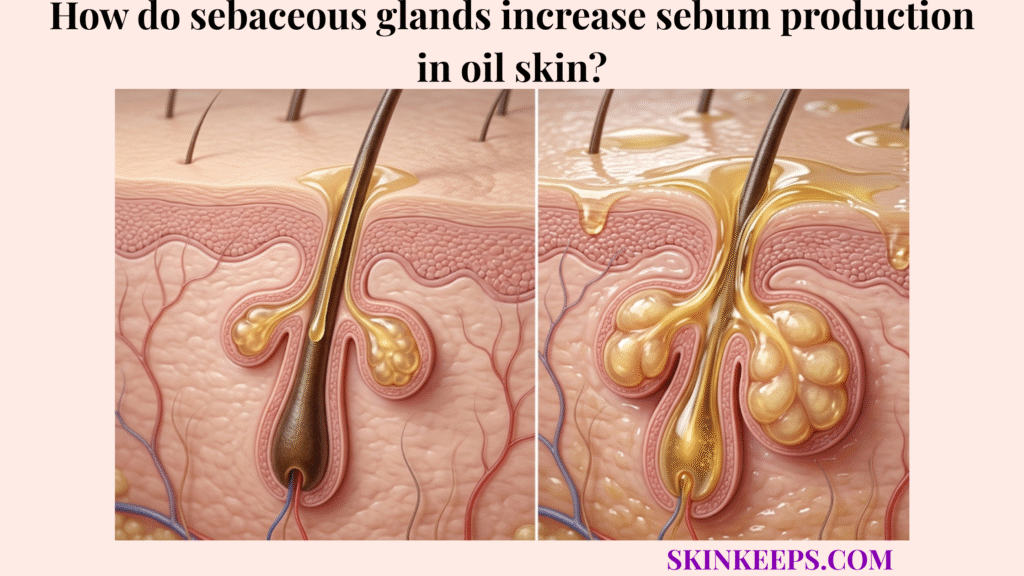
How Do Sebaceous Glands Increase Sebum Production in Oily Skin? | SkinKeeps Sebaceous glands increase sebum production in oily skin when sebocytes mature, accumulate lipids, respond to androgen signaling, and release more surface oil through holocrine secretion. This process happens inside the sebaceous follicle, so visible oiliness is not a hygiene failure or simply surface […]
Which internal and external factors drive oily skin?
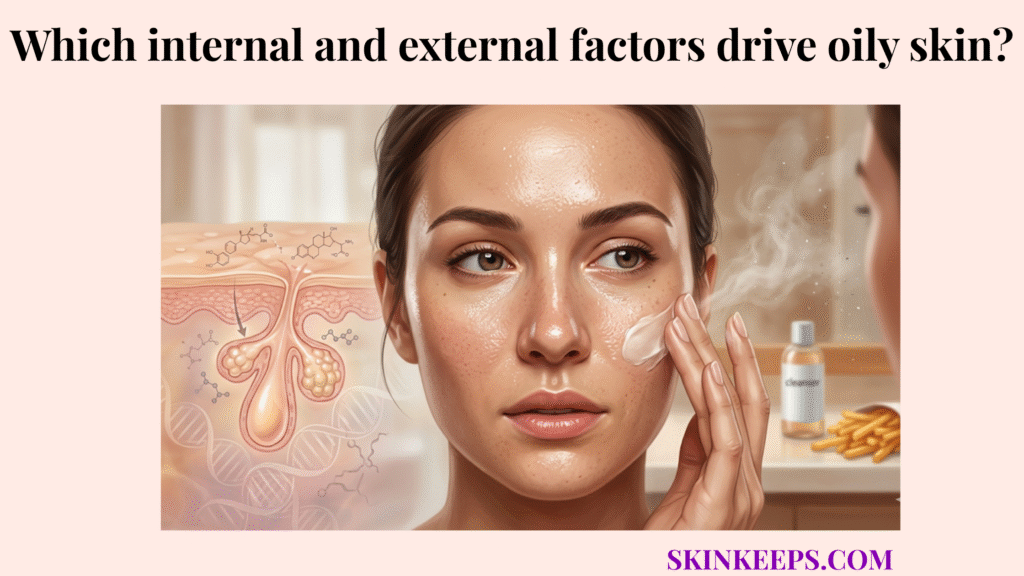
Which Internal and External Factors Drive Oily Skin? | SkinKeeps Oily skin is driven by internal factors such as genetics and hormones, while external factors such as heat, humidity, stress, diet patterns, and harsh skincare can amplify how oily the skin looks or feels. This distinction matters because some factors set the sebaceous baseline, while […]
Are fine lines less visible on oily skin?
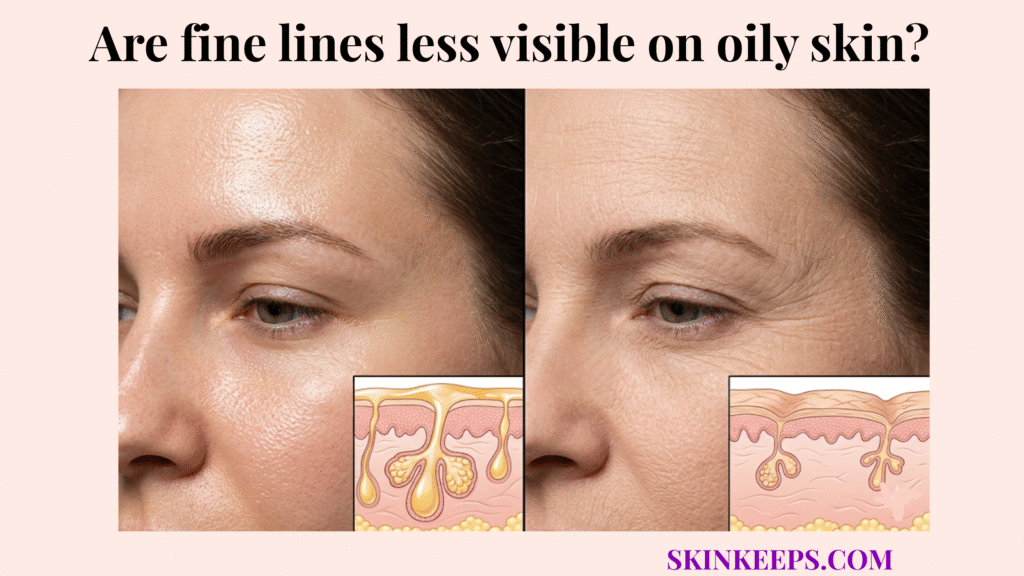
Are Fine Lines Less Visible on Oily Skin? | SkinKeeps Yes, fine lines can appear less visible on oily skin because surface sebum can reduce visible dryness, soften texture, and change how light reflects from shallow creases. This visual effect is strongest for superficial fine lines, not deep wrinkles caused by collagen and elastin changes. […]
Can oily skin sometimes look dull instead of glowing?
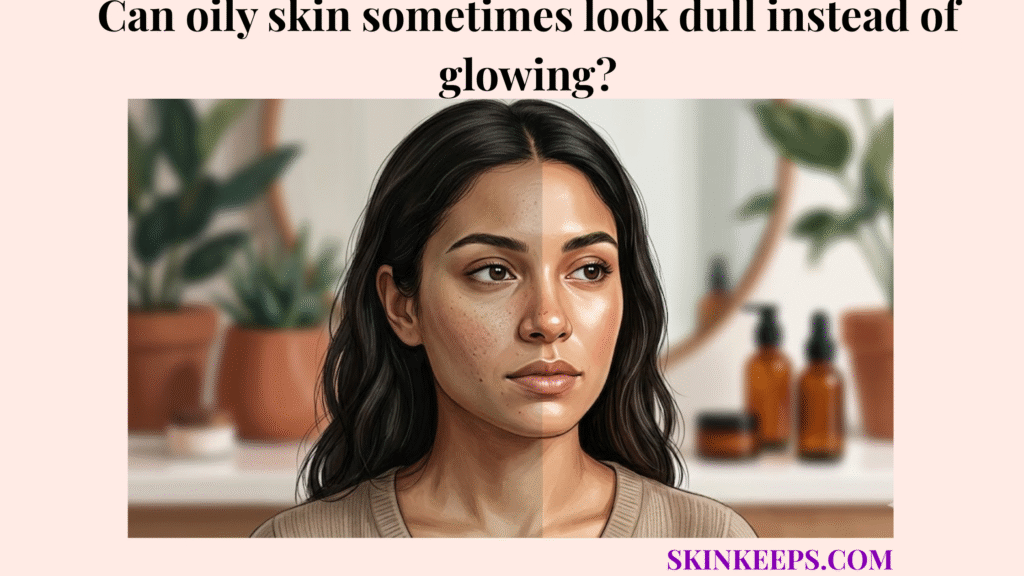
Can Oily Skin Sometimes Look Dull Instead of Glowing? | SkinKeeps Yes, oily skin can look dull instead of glowing when surface oil sits over uneven texture, retained buildup, low water balance, or late-day residue. This happens because shine and radiance are not the same visual state: oil can create glare, while smooth hydrated texture […]
Are blackheads and breakouts more common in oily skin?
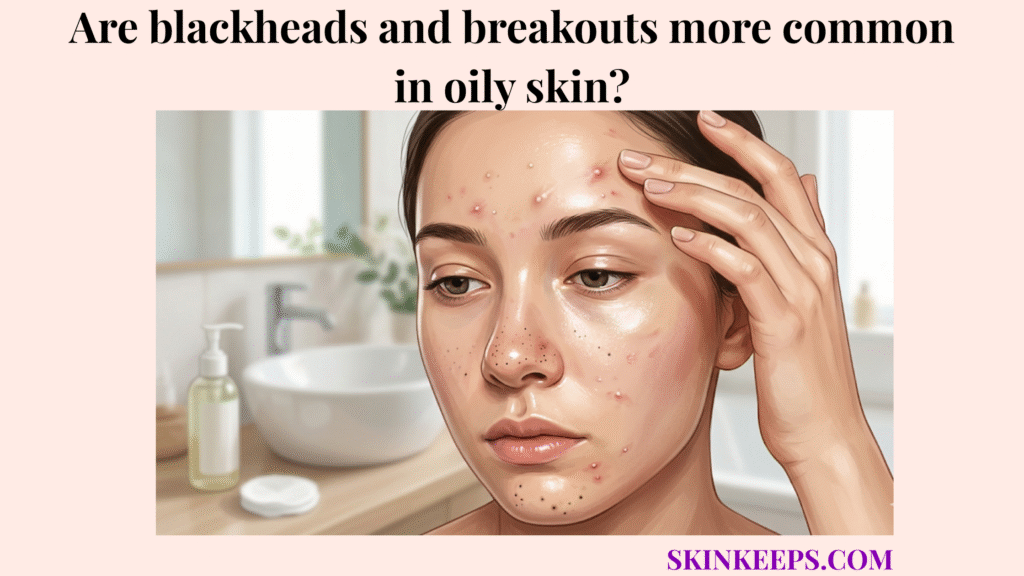
Are Blackheads and Breakouts More Common in Oily Skin? | SkinKeeps Yes, blackheads and breakouts are more common in oily skin because excess sebum makes follicles more likely to trap dead skin cells and form comedones. This congestion pattern does not mean the face is dirty; it means oil and keratin are getting retained inside […]
Does makeup slide off more easily on oily skin?
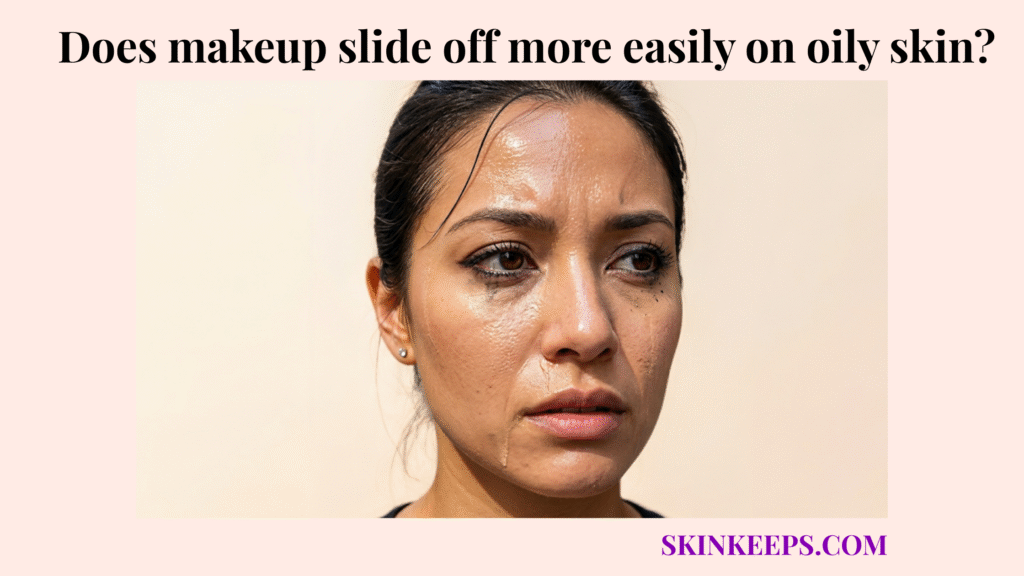
Does Makeup Slide Off More Easily on Oily Skin? | SkinKeeps Yes, makeup often slides off oily skin more easily because surface sebum reduces cosmetic grip, weakens film stability, and makes the skin surface more slippery during wear. This sliding happens because makeup needs friction and surface contact to stay even, while oil reduces both. […]
Does oily skin feel greasy throughout the day?
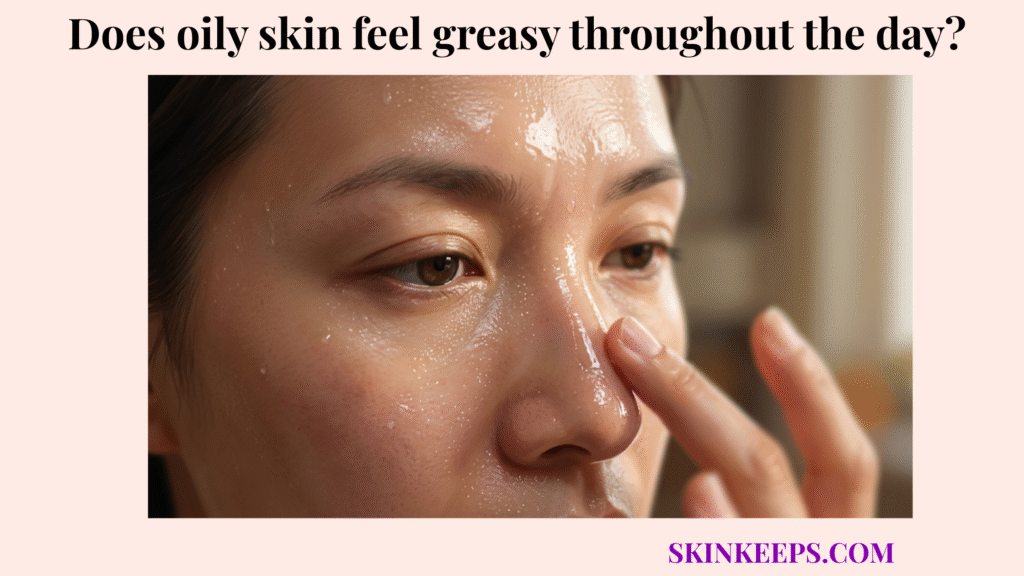
Does Oily Skin Feel Greasy Throughout the Day? | SkinKeeps Yes, oily skin can feel greasy throughout the day when sebum repeatedly returns to the skin surface and forms a slick, heavy, film-like layer. This greasy feel is a tactile sign, so it should be judged by surface sensation as much as by visible shine. […]
Is persistent facial shine a key sign of oily skin?
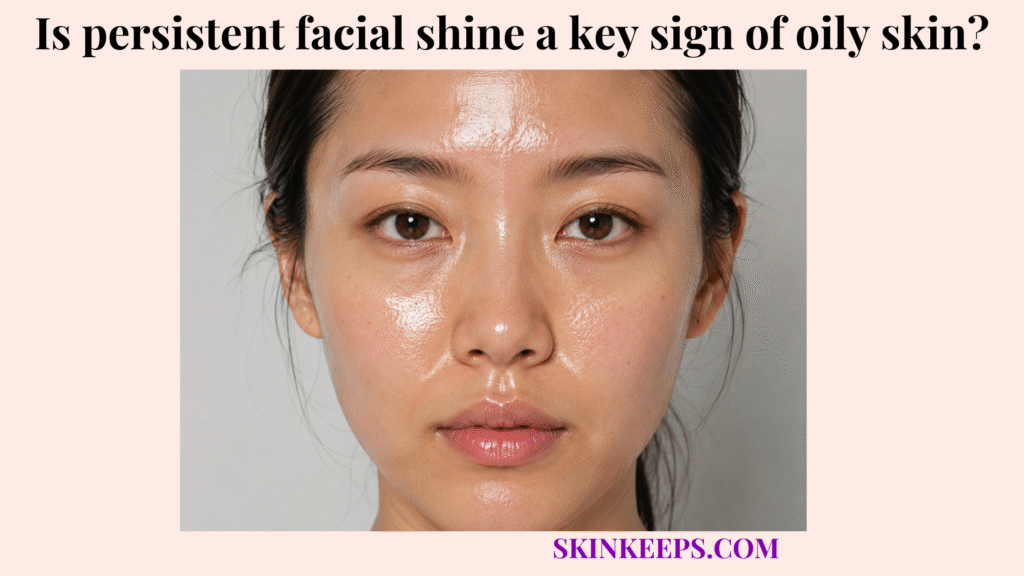
Is Persistent Facial Shine a Key Sign of Oily Skin? | SkinKeeps Yes, persistent facial shine is a key sign of oily skin when the shine returns repeatedly from sebum rather than appearing only from sweat, skincare, or makeup. This repeated shine matters because true oiliness creates a greasy surface film that keeps reappearing after […]